Glave, Kaoma Discuss African Environmental History and Heritage
A church in Chicago brings a farmers market to a food desert. A pastor in California makes his church eco-friendly and saves energy costs in the process. Rev. Otis Moss III, pastor of Trinity United Church of Christ, says, “There is a demand—biblically, theologically—for environmental stewardship.”
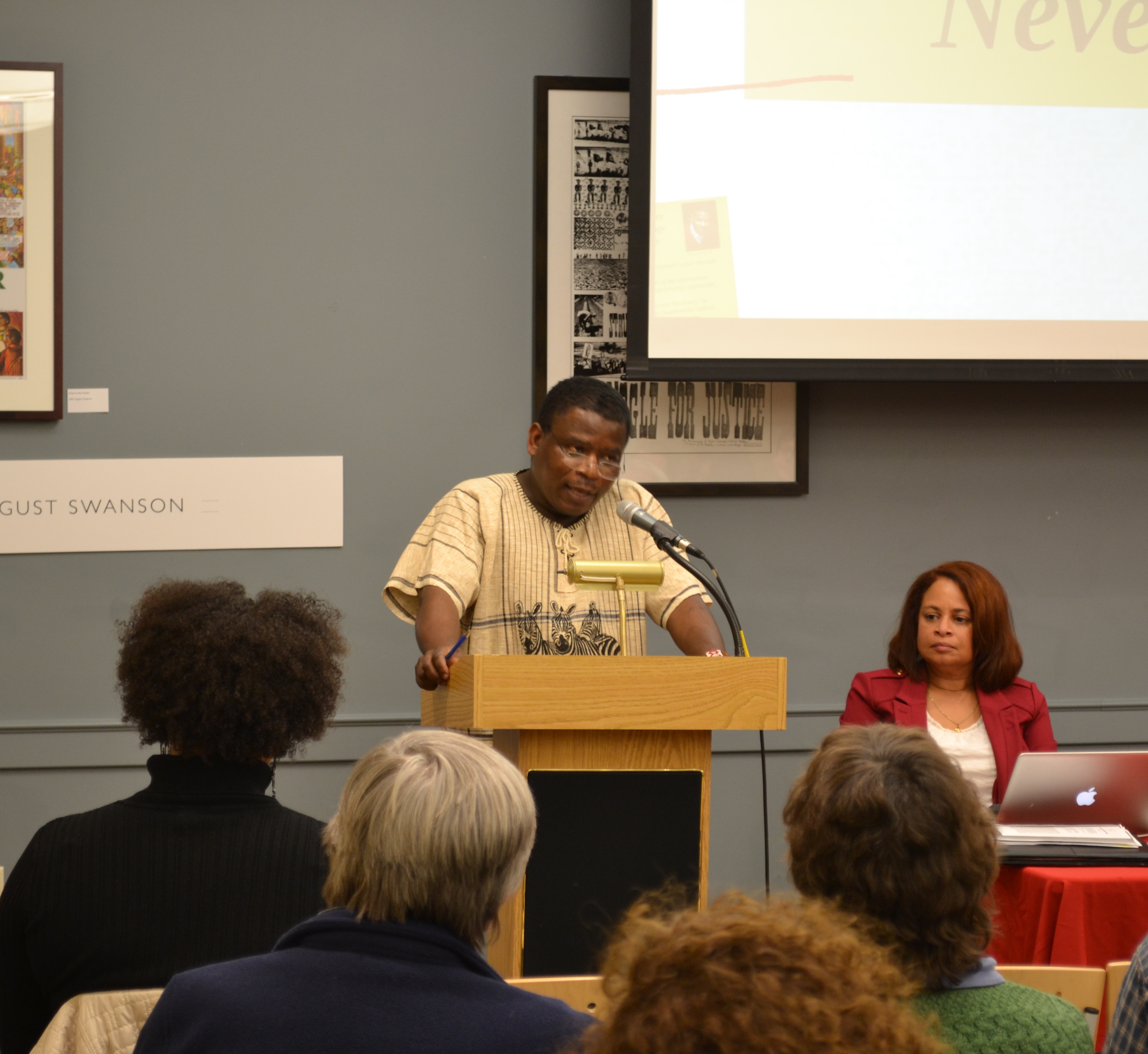
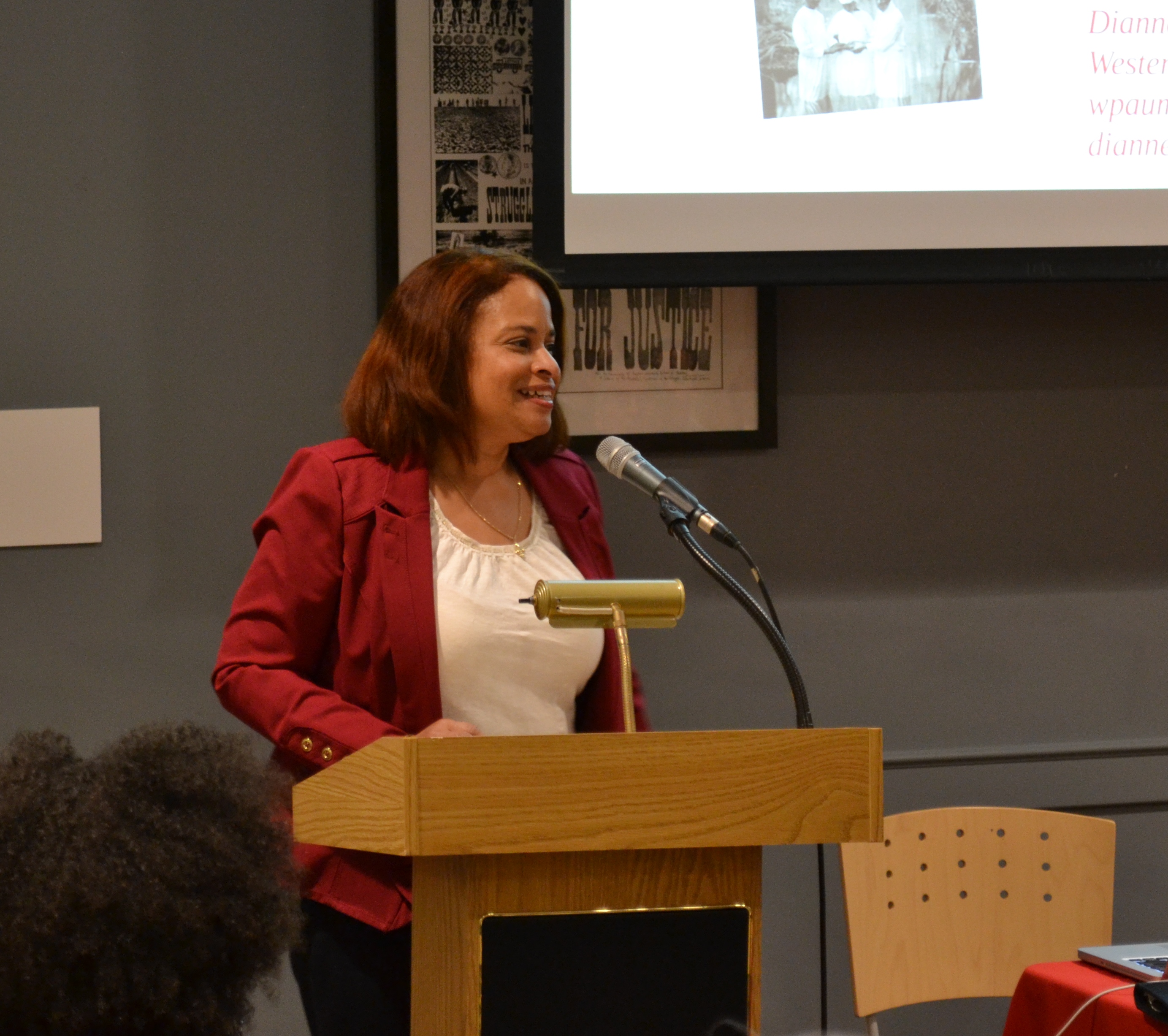 Dianne Glave, coordinator of diversity development with the Western Pennsylvania United Methodist Church Conference Center, featured these voices as an example of the transformative environmental leadership going on in the space of black churches. Speaking to an audience of over 60 people at “The Black Church Never Left the Outdoors: Eco-Justice and Environmentalism,” Glave and her discussion partner, Kapya John Kaoma (STH ’10), discussed the relationship between nature, the environment, and African spirituality. The event was free and open to the public thanks to the generous support of the Lowell Institute.
Glave, author of Rooted in the Earth: Reclaiming the African American Environmental Heritage, traced the history of the African-American relationship to nature and the environment, starting with Africa and tracing the thread through the Nat Turner rebellion and folk art.
“There is a long history, with theology and history as the foundation, where African-Americans have been immersed in the environment, where African-Americans have had to survive the environment,” she said. “The core of the relationship has been through survival and fully understanding and immersing oneself in the environment.”
African spirituality emphasized the interconnectedness of human, spiritual and environmental realms, the life and death of planting cycles, and the fact that both harm and care affect living beings. After the Middle Passage to North America, brush arbors became an important outdoor meeting place and refuge for enslaved people. Glave traced environmental imagery in the writings of Nat Turner and the narrative of Harriet Ann Jacobs. The paintings of African-American folk artist Clementine Hunter depict religious rituals, such as baptism, placed among the environmental markers of a Southern landscape.
 “The environment was central to the experiences of African-Americans and it hasn’t disappeared,” Glave said. “It continues.”
Kaoma—a scholar, pastor and activist for international human rights—drew on the roots of African spirituality to call for a new theological relationship with the environment: “We need to reexamine our spiritualities from the perspective of the outdoors.”
A fear of impending ecological catastrophe is not a firm foundation for an ecotheology, he argued. “Our foundation for ecotheology is built on the command that God gives to us as mortal beings to care for God’s own sacred garden,” said Kaoma. “The church is invited to care for that which God said, It was very good. I believe that this is a spiritual challenge.”
The discussion that followed, moderated by environmental leader and STH student Mariama White-Hammond (MDiv ’16), touched on the Flint water crisis, the place of ecotheology in an increasingly urbanized world, and the transformative relationship of worship and liturgy to these issues.
Responding to a question about Genesis 1:28, in which God tells humans “have dominion” over the earth, Kaoma said, “We need to move away from just taking one verse as the center of our theology. It is not our garden. It is not our air. It is God’s air and our duty is to do what God created us for, and that is tend the earth.” Glave noted that systemic racism and poverty are also tied to issues of environmental justice and asked, “What are our white allies prepared to do to step into the void so we can create these alliances?”
Boston University extends its thanks to Glave, Kaoma and the Lowell Institute for making this discussion possible.