Alumni News
A Witness and a Martyr
This article was originally published in the 2026 issue of focus magazine, the annual publication of the BU School of Theology. This article can be found on page 8. By Marc Chalufour.
10 years after the assassination of Vincent Machozi ('15), the STH community reflects on his legacy
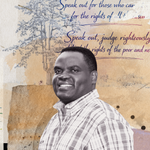
Vincent Machozi arrived at Boston University’s School of Theology in 2006. He had spent the previous three years earning a master’s degree at Boston College, after fleeing his native Democratic Republic of the Congo (DRC), where his efforts to call attention to human rights atrocities and the exploitation of the country’s natural resources had made him a target for military and rebel groups.
“His commitment was to peace and reconciliation on the ground in Congo,” says Dana Robert, one of Machozi’s PhD advisors. And BU, the alma mater of Martin Luther King, Jr. (GRS’55, Hon.’59) among other civil and human rights leaders, could help him develop the skills he needed for that mission. He’d planned to earn a PhD in social ethics and mission studies at STH, then return to DRC.
But by 2012, Machozi (’15) had decided to pause his studies and return home. Robert, a William Fairfield Warren Distinguished Professor and director of the BU Center for Global Christianity & Mission, recalls the last time she saw him, standing outside Marsh Chapel. “He told me that he was going to take a leave and go back [to DRC], that they needed him, they needed his leadership,” she says. “When my students tell me God is calling them to do something, I believe them. This was coming out of the core of his being.”
Machozi had launched the website Beni Lubero while in Boston, publishing graphic accounts and photographs of violence in DRC. He wanted to show the world what was happening there and didn’t flinch from assigning blame to powerful officials. He’d even accused Joseph Kabila, the president of DRC, of working with Rwandan militias who were terrorizing the eastern region of the country. Soon after his return to DRC, three members of the Assumptionist Catholic religious order, which Machozi had joined as a teenager, disappeared and were presumed murdered. Undeterred, Machozi began moving between safe houses as he continued to report on human rights atrocities and the plunder of the country’s natural resources such as coltan.
In 2015, realizing he would not return to BU, he accepted a master’s degree in sacred theology.
On March 20, 2016—Palm Sunday—a group of armed men found Machozi in a small village where local leaders had gathered to discuss peace. Witnesses said they wore DRC military uniforms. Machozi’s last words before they shot him were, “Why are you killing me?” Beni Lubero published photos of his body.
A decade later, the people who knew Machozi best during his time at BU recall him with clarity. They cite the strength and consistency of his character. They describe him as humble, quiet, calm, peaceful, strong, and respected. And they still hope that his memory will bring peace to people who are suffering.
“The whole definition of mission studies is crossing boundaries to serve people and to serve God and to witness,” Robert says. “And, of course, a witness is a martyr, a martyr is a witness.”
Destined to Lead
Vincent Machozi was born in the small village of Vitungwe-Isale in the province of North Kivu in eastern DRC. The resource-rich region spans open savanna and dense mountain rainforest and holds large deposits of gold, diamonds, and other minerals, like coltan, a metallic ore used in the manufacture of cell phones and computers. North Kivu also shares a border with Uganda and Rwanda, making it vulnerable to rebel incursions.
After joining the Assumptionists as a teenager, Machozi studied in France, where he was ordained as a priest before returning to DRC in 1994. That same year, Rwanda’s genocide sent refugees fleeing into North Kivu, destabilizing the region. A Rwandan-sponsored invasion followed two years later. “There’s been constant war ever since,” says Timothy Longman, a professor of international relations and political science and associate dean for academic affairs at BU’s Frederick S. Pardee School of Global Studies.
Violence and mass displacement have led to catastrophic humanitarian crises in DRC. The International Rescue Committee attributes approximately 5.8 million excess deaths in DRC between 1998 and 2007 to violence and conditions like malaria, pneumonia, and malnutrition exacerbated by the unrest.
Longman visited DRC in 2000 during a civil war. “People would say, ‘We’re a wealthy country with a poor population.’ There was real frustration,” he says. “The region that [Machozi] was from never saw peace, and nobody seemed to notice. It did not get a lot of attention from the world. His experience is a warning to us that if we don’t care about what’s happening in the rest of the world, terrible things will continue to happen.”
Against the backdrop of violence and instability, Machozi became an important figure in his region. “A Catholic priest in Africa is a community leader,” says Robert, pointing out that the continent has more Christians than any other. “The church infrastructure is more reliable and more powerful than the government infrastructure. The church is more functional.”
Friend, Scholar, Witness
BU offered Machozi the chance to further develop the skills he would need to bring change to his country. “The School of Theology is a school where people go because they want to transform the world,” Longman says. “It was the heart of BU originally, and I think helped to set the stage for BU as an inclusive and progressive place.”
At STH, Machozi studied with Robert and with John Hart, a professor emeritus of Christian ethics. The school had just launched a conflict transformation program, and he was one of the first to enroll. He also worked at the African Studies Center (ASC) at the College of Arts & Sciences (and now part of Pardee) and developed friendships with peers from other African nations.
Derrick Muwina recalls joining Machozi at one of the ASC’s weekly Walter Rodney Seminars. A visiting professor was discussing China’s burgeoning relationships in Africa— including mining in DRC—and how she saw them as an improvement upon Western exploitation of the continent. The discussion had nearly ended when Machozi asked, “Why don’t you just leave us alone?” Muwina (’10,’18), a priest and rector in the Episcopal Diocese of Massachusetts, remembers the room going silent. “I think that he really made a point. He was much more clear about what was going on than most people in academia.”
Even as Machozi progressed with his PhD studies, he remained focused on calling attention to what was happening in DRC. With a network of sources risking their own safety to send him photographs, Machozi was exposing DRC’s ongoing atrocities on Beni Lubero. “I was pierced by the weight of the work he was doing,” says Elizabeth J. A. Siwo-Okundi, another friend from STH and an organizer of his memorial service. “It was something you don’t want to see—and that was the point.
“He reminds us of what is actually going on out there that we don’t pay attention to. And his life is a witness to what it means to be a peacemaker, to offer your life for something greater than yourself.”
—Derrick Muwina (’10,’18), friend
“For some people, their presence is the impact. He was definitely one of those people,” she says.
But Siwo-Okundi (’05,’18), a visiting researcher in the ASC, also worries that the power of Machozi’s image could overshadow what he fought for. “There’s a fear when someone is killed: Have they become a martyr on paper, but what caused their death is forgotten? My hope is that we remember Machozi from a human perspective and that he does not become a trophy.”
Muwina’s native Zambia borders DRC, but he has never had to fear for his safety if he returns. From Machozi he learned that people who come from more peaceful places need to consider how they can help the world’s most vulnerable. Machozi put “a spotlight on parts of the world that are usually ignored. His life is a witness to what it means to be a peacemaker, to offer your life for something greater than yourself,” Muwina says.
Going Home
Machozi told few people that he was leaving BU. Most found out weeks or months later and few had the opportunity to speak with him again. “Missionaries who love the people are prepared to suffer the same fate as the people,” says Robert. “If the people are poor and being murdered, the missionary expects to be poor and be murdered. That’s what it means to follow Jesus to the cross. That’s what Dr. King stood for…. In terms of Boston University tradition, [Machozi] is part of a cloud of witnesses that hover over the school.”
Unfortunately, little has changed in DRC since Machozi’s death, and his pleas to pay attention to what is happening there remain as relevant as ever. On its 2024 Global Peace Index, the Institute for Economics & Peace ranked DRC 158th out of 163 developed nations—between the warring countries of Russia and Ukraine. And, despite a US-brokered peace deal between DRC and Rwanda in 2025, the United Nations reported that hundreds of civilians were killed or kidnapped in the weeks after the deal was signed. “We all benefit from DRC’s resources on a daily basis but have not taken the time to learn about what is really happening there. It’s never-ending. There seems no light in sight,” Siwo- Okundi says. “Machozi’s decision to go home was so that we can have a direct association with DRC. We need to journey to DRC with him, otherwise it’s as though we do not care.” She recalls Machozi’s final words before he was killed— “Why are you killing me?”—and says, “We must ask, ‘Why did they?’ We must wrestle with that in a profound way and not let that go unanswered.”
Colloquium honors Machozi’s legacy of peacemaking
BU represented just a small portion of Machozi’s life, but his community at the University is keeping his legacy alive. The first Fr. Vincent Machozi Colloquium: Ecologies of Peacemaking, was held February 26–28, 2026, with the goal of making it a semiregular event. Dana Robert delivered a plenary address, “The Legacy of Father Vincent Machozi,” and panel discussions covered topics related to issues like climate justice, peacemaking, and social movements.
This story relies on reporting by Art Jahnke for BU Today and Bostonia in 2016.
Prof. Timothy Adkins-Jones published in Christian Century
The following is an excerpt from the Christian Century article “The limits of our convictions (Romans 14:1-12)” by Assistant Professor of Homiletics Timothy Adkins-Jones ('09,'21) published on September 11, 2026. The views and opinions expressed herein are those of the author and do not necessarily reflect the views of Boston University School of Theology, its employees, faculty, or students.
Christians have various ways of expressing a key idea: that there are some tenets of the faith that we must agree upon and others that are more fluidly understood. Somewhat counterintuitively, Paul’s instruction on how we should manage our interactions around these differing beliefs is not to hold our convictions more lightly. Instead, we are told to hold fast to our beliefs and in effect to believe what we believe even more vehemently.
The line that feels most instructive in this week’s passage comes in verse 5: “Let all be fully convinced in their own minds.” Believe what you believe, believe it in full—but believe it for yourself. This is a verse that should resonate with these days of virtual echo chambers and algorithmic reinforcement. Not only can we believe what we believe, but often we can find a community of people who believe it too. There is part of me, then, that wishes Paul challenged this, that he offered some more convicting words for our times.
...
Alum Dr. Pamela Jolly (’09) has published “A Different Kind of Wealth”
Alum Dr. Pamela Jolly has recently published her latest book titled, "A Different Kind of Wealth."
Find an excerpt of the new book below:
A Different Kind of Wealth invites readers to rethink wealth in a divided, uncertain, and rapidly changing world. Through twelve historic inflection points in America’s journey, Dr. Pamela Jolly helps readers examine how inherited moments of change still live within us—shaping how we see ourselves, one another, and the future we are responsible for building.
Written for people of all backgrounds, this book is a historical reflection, a guided inquiry, and a call to own and invest your difference. Dr. Jolly invites readers to consider how history, identity, family, culture, experience, and personal conviction shape the way they move through the world and participate in America’s unfolding story.
At its heart, A Different Kind of Wealth reminds us that every life carries a unique story embedded within America’s shared legacy narrative. When we understand how that inherited legacy lives within us, our difference becomes more than something to name; it becomes something to steward, invest, and offer toward the future wealth of our nation."
Dr. Pamela C.V. Jolly is a strategist, author, speaker, and founder of Torch Enterprises Inc., a strategic investment and advisory firm focused on ownership, legacy wealth, and the long-term systems that shape economic outcomes. For more than two decades, she has worked with entrepreneurs, institutions, communities, and leaders across the country, helping them think more clearly about wealth, identity, strategy, and impact.
Her work lives at the intersection of finance, history, culture, faith, and systems thinking. Through research, writing, and advisory practice, Dr. Jolly invites people to examine the stories they have inherited, the opportunities they are responsible for stewarding, and the future they are called to help build.
A graduate of Hampton University, the Wharton School of the University of Pennsylvania, Boston University School of Theology, and the Graduate Theological Foundation, she brings a rare convergence of business strategy, theological reflection, and culturally grounded inquiry to everything she does. She is also the creator of the NarrowRoad™ framework — a body of work designed to help individuals and communities create, build, grow, and expand wealth with greater clarity and purpose.
Mr. James McCloy (’61)
This obituary was originally published by Campbell Funerals Homes through Legacy and can be found here
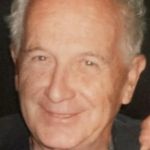 Rev. James McCloy, 92 of Rockport, passed away on Thursday, August 6. Born in Boston, he was the son of the late James and Grace (Combe) McCloy and beloved husband of the late June (Reposa) McCloy. He was predeceased by a son, Glenn James McCloy, who passed in 1993.
James is survived by daughter, Shelley McCloy Vassallo and her husband, Richard of Rockport; son, Andrew McCloy of Rockport; sister, Elizabeth McCloy Longmoore; six grandchildren, Andrew Vassallo, Dillon Vassallo, James Vassallo, Emma McCloy, Nina McCloy, and Cameron Bloy; and three great-grandchildren, Ari Vassallo, Cole Vassallo, and Emmett Vassallo.
A private funeral service will be held on Friday, August 14, at Locust Grove Cemetery in Gloucester. In lieu of flowers, donations may be made to the Jimmy Fund at Dana-Farber Cancer Institute at danafarber.jimmyfund.org. Arrangements by the Campbell Funeral Home, 61 Middle Street, Gloucester. Condolences at www.campbellfuneral.com.
Nursery Carers, Part Time, United First Parish Church: Quincy, MA
Job Description
Do you love working with young children? United First Parish Church in Quincy is seeking two Nursery Carers to create a safe, inclusive, and nurturing Sunday morning nursery space for the 2026-27 church year!
About UFPC:
United First Parish Church (UFPC) is a Unitarian Universalist congregation where thoughtful and caring people from many faith backgrounds gather for spiritual growth and learning, to build community, and to live our values of love and compassion in the wider world. We are also known as the "Church of the Presidents," and are a historic site in Quincy. UFPC is located directly across from the Quincy Center stop on the MBTA Red Line.
About the Position:
Compensation: $20/hr
Schedule: 10:15am-12pm (with occasional special events throughout the church year if available)
Key Responsibilities:
-Maintain a caring, calm, and supportive presence with children and families.
Assist with drop-off and pick-up; help children transition comfortably into the nursery space
-Learn and follow all safety and emergency procedures
Qualifications:
Experience caring for infants and toddlers in a childcare, preschool, or similar setting
Current AHA child and infant CPR certification preferred but not required (we can sponsor!)
Experience supporting neurodivergent children preferred.
To apply, please email your resume and a short statement of interest (a paragraph is great!) to Elizabeth Foster, Director of Religious Education and Family Ministry, at efoster@ufpc.org.
See full posting on our website for more information, and please feel free to reach out with any questions!
Additional Information
President, Full Time, The Seattle School of Theology and Psychology: Seattle, WA
Job Description
The President serves as the chief executive officer of The Seattle School of Theology & Psychology and is entrusted by the Board of Trustees with the overall leadership, mission, and flourishing of the institution. The President provides strategic, spiritual, and organizational leadership, ensuring that the School remains faithful to its mission while cultivating the relationships, resources, and institutional capacities necessary for long-term sustainability and impact.
As the primary steward of the institution's vision, the President works collaboratively with the Board of Trustees, Executive Council, faculty, staff, students, alumni, donors, and external partners to strengthen the School's educational mission, deepen its public witness, and advance its service to the Church and the wider world. The President serves as the principal representative and spokesperson for the institution, fostering a culture of formation, collaboration, innovation, and faithful stewardship consistent with the School's mission and values.
The President of The Seattle School provides overall direction and leadership to maintain a focus on mission, coordinate and guide efforts necessary to accomplish the mission and secure and manage resources that the mission requires. The president gives essential attention to institutional ethos, creating a shared vision, development of systems for planning, research, and policy formation, developing relationships with appropriate judicatories, regulatory agencies, and other public constituencies important to the school, and leads the way for the school to become a learning community.
The President provides spiritual direction for employees and students and is responsible to the Board of Trustees to create and maintain the spiritual and educational climate complementary to the school’s core values and stated goals. The President serves as a non-voting member of the Board of Trustees and as a member of the Executive Committee and provides a key link between the Board and the institution. Finally, the President serves on the faculty and provides leadership in the overall curriculum.
Nature of the Position:
The President regularly represents the School in local (Seattle, WA), national, and international settings. The position requires travel and engagement with a wide range of constituencies in support of the institution's mission.
Primary Responsibilities -
Mission and Institutional Stewardship:
-Provide visionary leadership that advances the mission, values, and long-term strategic direction of the School.
-Foster an institutional culture that reflects the School's commitments to formation, integration, and sustainability.
-Ensure the overall health, integrity, and effectiveness of the institution.
Governance:
-Serve as the chief executive officer accountable to the Board of Directors.
-Partner with the Board in strategic planning, governance, institutional assessment, and policy development.
-Provide timely information and counsel to support effective governance.
Executive Leadership:
-Lead, develop, and support the executive leadership team.
-Ensure effective organizational alignment, collaboration, and accountability across all divisions of the School.
-Oversee strategic planning and institutional performance while delegating operational leadership appropriately.
Financial Stewardship and Advancement:
-Ensure responsible stewardship of institutional resources.
-Cultivate philanthropic support, strategic partnerships, and other resources necessary to sustain and advance the mission.
-Promote financial resilience through sound planning and responsible leadership.
External Leadership:
-Represent the School with churches, academic institutions, accrediting bodies, foundations, donors, and the broader public.
-Strengthen the School's reputation, influence, and strategic partnerships.
-Serve as a public advocate for the mission and work of The Seattle School.
Educational and Spiritual Leadership:
-Champion the educational vision and theological identity of the School.
-Support excellence in teaching, scholarship, formation, and student experience.
-Foster the spiritual life of the institutional community through presence, discernment, and leadership.
Qualifications -
The successful candidate will demonstrate:
-A mature Christian faith and commitment to the mission of The Seattle School.
-Minimum of five years of executive leadership experience in higher education, nonprofit, ministry, or a similarly complex organization.
-Demonstrated ability to lead organizational change, strategic planning, and institutional growth.
-Proven capacity to cultivate relationships with boards, donors, partners, and diverse constituencies.
-Demonstrated experience in fundraising, donor engagement, advancement, and resource development to support institutional priorities and long-term sustainability.
-Exceptional communication, organizational, and relational leadership skills.
-Doctorate strongly preferred. Master’s required, which preferably includes integration of theology, psychology and/or business.
Leadership Relationships:
The President is accountable to the Board of Directors and provides leadership to the Executive Council and the institution as a whole. The President delegates operational authority to executive leaders while maintaining responsibility for the overall mission, strategic direction, institutional effectiveness, and public leadership of the School.
This job description should be read in conjunction with The Seattle School’s President Profile, which further defines the qualifications, leadership expectations, and institutional priorities associated with the President role. Found at theseattleschool.edu/presidential-search/
Additional Information
View important supporting documents and apply online at https://theseattleschool.edu/presidential-search/
Reverend Bruce E. Petrick (’89)
This obituary was originally published by Saginaw News and can be found here
 Bruce was born on March 27, 1963, in Port Huron, Michigan to Gayle and Mary (Greig) Petrick. Bruce graduated from Marysville high school and went on to earn a bachelor's degree from Michigan State University. After graduation Bruce moved to Boston where he earned a master's degree in theological studies from the University of Boston. Bruce was a United Methodist minister for several years at different churches in Michigan.
Later, Bruce went to Wayne State University and graduated with a Juris Doctorate. He practiced law at several law offices over the years. Bruce spent most of his career as a defense attorney. He was an advocate for people with disabilities. Bruce won the Eileen and Lou Vescio Leadership, Advocacy and Family Support Award for his dedication to helping those that suffered from mental illness, emotional disturbance, or a developmental disability.
Aside from his profession, Bruce enjoyed backpacking and kayaking.
Bruce is survived by his brother, Stewart Petrick (Kathy); and sister, Peg Pennington ( Mark deceased). Uncle to Sarah Mosher (Derek), Chad, and Amy Pennington, Doug, and Gayle Petrick.
Bruce's remains were donated to Northern Michigan University and a private family service will be held at a later date.
To plant trees in memory, please visit the Sympathy Store.
BUSTH announces Faculty Publications and Presentations for September 2026
The School of Theology is pleased to announce the following faculty publications, grants, and scholarly presentations for September 2026:
- Timothy Adkins-Jones ('09,'21)
-
Let the Church Say Amen!: Practicing a Black Communal Homiletic. Fortress Press, 2026.
-
“September 6: 23rd Sunday in Ordinary Time.” The Christian Century, Sept. 2026, p. 25.
-
“September 13: 24th Sunday in Ordinary Time.” The Christian Century, Sept. 2026, p. 26.
-
- James McCarty
-
“Restorative Justice,” St. Andrews Encyclopaedia of Theology, Eds. Brendan N. Wolfe et al. https://www.saet.ac.uk/Christianity/RestorativeJustice
-
- Dana Robert
- Lecture: “Walking Together in Witness: From Harare 1985 to Pretoria 2026.” Plenary address, International Association for Mission Studies, 16th General Assembly. University of South Africa, Pretoria, South Africa. July 17, 2026.
- Lecture: “M.L. “Inus” Daneel: Mission Studies at UNISA and the Earthkeeping Mission, 1980-1995.” Department of Department of Christian Spirituality, Church History and Missiology, University of South Africa. Pretoria, South Africa, July 30, 2026.
- Dana Robert, et al
- M.L. “Inus” Daneel, Dana L. Robert, and Luke B. Donner. Ecomission in Zimbabwe: African Independent Churches and the Ecotheology of Inus Daneel. Luviri Occasional Papers No. 7 (Zomba, Malawi: Luviri Press, 2026).
- Steven Sandage, et al
- Brown, E. M., Taylor, J. M., Burgess, D. L., Cabell, A. L., Captari, L. E., Sandage, S. J., Wang, D. C., Davis, D. E., & Hook, J. N. (2026). Burnout, racial trauma, and protective experiences of Black psychologists and counselors. Psychological Trauma: Theory, Research, Practice, and Policy, 18(6), 1170–1179. https://doi-org.ezproxy.bu.edu/10.1037/tra0001726
- Manalili, M. M. C., & Sandage, S. J. (2026). Suffering, trauma, and relational integration: Re-Envisioning spiritual care and psychoanalysis in a decolonial age. Religions, 17(8), 954. https://doi.org/10.3390/rel17080954
- Gerstenblith, J.A., Stein, L.B., Sandage, S.J., Jankowski, P.J., Klein, D.S., & Tanchel, S. (2026). “Holding preciousness and brokenness”: Spiritual changes and struggles in rabbinical students during the Israel-Hamas war following October 7. Pastoral Psychology. https://doi.org/10.1007/s11089- 026-01324-9
- Sandage, S.J., & Manalili, M.M.C. (2026). Relational integration of psychology and Christian theology in spiritual care. In D.S. Schipani (Ed.), Wisdom traditions in spiritual care: Integrative explorations on normativity (pp. 129- 149). Wipf & Stock.
- Captari, L.E., Sandage, S.J., Rupert, D., & Crabtree, S.A. (2026). Spiritual and religious competencies in psychotherapy coursework and supervision. In J.M. Currier, J. Fox, and C. Vieten (Eds.), Handbook of training in spiritual and religious competencies in mental health professions (pp. 285-296). Oxford University Press.
- emilie townes
-
Lecture: The Cadbury Lectures: Recentering the Theological Canon, “Colored Orneriness as Critical Companion to U.S. Democracy,” “Shadowboxing the Ridiculous,” “Recentering the Theological Canon” University of Birmingham, Birmingham, UK, 19-32 May 2026.
- Honor: Women in Leadership Trailblazer Award, Association of Theological Schools, 24 June 2026
- Honor: Doctor of Humane Letters, Honoris Causa, Meadville Lombard Theological School, 31 May 2026
-
- Claire Wolfteich
- Presentation: “Spiritual Knowing and Women’s Bodies: Contrasting Simone Weil and Dorothy Day,” International Colloquium, Society for the Study of Christian Spirituality, Dublin, Ireland, June 10, 2026.
- Presentation: “Learning Sabbath: Sustaining Religious Leaders in Public Vocations of Care and Justice,” International Religion and Society Conference, University of Malta, May 29, 2026.
- Peng Yin
-
Persisting in the Good: Thomas Aquinas and Early Chinese Ethics. Oxford University Press, 2026.
-
- Luther Young, Jr.
- Presentation: “Legacy Reimagined: Black LGBTQ Perspectives on Politics, Social Engagement, and the Church.” Academic paper presented at the Association for the Sociology of Religion Annual Meeting, New York, NY, August 2026.
- Presentation: “Connecting with Your Higher Power: Diversity in Faith, Religion, and Spirituality.” Keynote address at Advance Conference, Camp Christian, Marysville, OH, July 2026.
- Presentation: Floyd-Thomas, Juan, Terence Alexander Lee, Napoleon Harris V, David Malcolm McGruder, Kevin Williams, Robert Clark Williams Jr., and Luther Young. “Keeping Our Heads Above Water: Mannish Allies in Good Faith and Partnership.” Panel for Womanists at the Inkwell, Martha’s Vineyard, MA, July 2026.
BUSTH announces Distinguished Alumni for 2026
The Boston University School of Theology (BUSTH) is pleased to announce this year’s Distinguished Alumni for 2026. A list of previous winners can be found on the BUSTH website.
“The 2026 Distinguished Alumni are communal leaders extraordinaire. Exceptionally integrating academic excellence, compassionate outreach, and organizational genius, they have cultivated transformative communities across the globe by fostering wholistic well-being, coordinating humanitarian relief, and equipping churches, groups, and leaders to meet the challenges of today with wisdom, courage, and insight toward healing and reconnection,” says G. Sujin Pak, dean. “We are grateful for your leadership and celebrate you!”
A celebration of these alums and their achievements will be part of our annual Community Day, scheduled for Wednesday, September 16, 2026. Please register for our Community Day by responding on this page.
2026 School of Theology Distinguished Alumni
Dr. Charles S. Brown (’73)
Reverend John Calhoun (’96)
Reverend Mary J. Scifres (’91)
In the category of Emerging Leader:
Dr. Charles Daniels, Jr. (’20)
2026 Distinguished Alumni Biographies
 Dr. Charles Sumner Brown (ThD’73) is Distinguished Professor of Christian Ethics at Payne Theological Seminary in Wilberforce, Ohio, and a lifelong champion of scholarship, faith, and service. Born in Plant City, Florida, he built a formidable academic foundation: an A.B. from Morehouse College (1956), an M.Div. cum laude from United Theological Seminary (1962), a Doctor of Theology from Boston University (1973), and an Honorary Doctor of Humane Letters from Central State University (1993).
His career reflects a rare breadth of leadership across academia, ministry, and community life. Dr. Brown has served as Professor of Church & Society at United Theological Seminary, Associate Professor of Practical Theology (with tenure) at Yale University Divinity School, and Adjunct Associate Professor of Community Health at Wright State University Medical School. His civic service includes the Governing Board of The Dayton Foundation, the Greater Southwestern Ohio Urban League, and the presidency of the Ohio Baptist General Convention.
A devoted family man, Dr. Brown is married to Joan Marie Steed and is the proud father of two sons, Charles Sumner Jr. and Gene Mitchell.
Dr. Brown's life of scholarship, faith, and service embodies the character and grace of a Gentleman Scholar of Distinction.

For the past 26 years, the Rev. John Calhoun (MDiv’96) has served as a missionary with the General Board of Global Ministries of the United Methodist Church. His most recent assignment, from 2020 through May 2026, was as pastor of the English-Speaking United Methodist Church of Vienna, Austria, a multicultural congregation of about 300 members and friends from nearly 40 countries.
Before his pastoral role in Austria, John served in mission with the United Methodist Church in Ukraine, overseeing a local outreach ministry in Kyiv, then establishing a new faith community for international students displaced to Kyiv from eastern Ukraine following the 2014 Russian invasion. He also provided leadership for the founding of the Institute for Multicultural Ministry, an initiative of Global Ministries to equip pastors in Europe serving churches engaging with migrants and refugees.
From 2001 to 2005, John was assigned as pastor of the Moscow Protestant Chaplaincy, an international, interdenominational Protestant congregation in Moscow, Russia. He then served in the office of humanitarian relief and church development of the Methodist Church in Kenya, and as the coordinator of World Week for Peace in Palestine Israel, an advocacy ministry of the World Council of Churches.
Before joining Global Ministries, John served pastoral roles in congregations in New York City, Berlin, and Jerusalem. Born and raised in Atlanta, Georgia, John earned his undergraduate degree in Russian and economics from Georgetown University. He received a Master of Divinity degree from Boston University School of Theology. John and his wife Noel have two adult sons.
 Rev. Mary J. Scifres (MDiv/MSM’91) is an executive leadership coach, consultant, author, and United Methodist pastor whose career has focused on helping leaders and organizations navigate change with clarity, purpose, and renewed vision.
Scifres earned her Master of Sacred Music and Master of Divinity Magna Cum Laude from Boston University after completing her bachelor’s degree at the University of Indianapolis. She later received advanced certification in Organizational Development and Leadership from Southern Methodist University and has continued extensive professional training in leadership, coaching, conflict competence, and emotional intelligence.
Over more than three decades of ministry and organizational leadership, Scifres has become known for guiding congregations, organizations, and executive leaders through periods of transition, conflict, growth, and transformation. As an executive coach and consultant, she helps leaders strengthen their leadership presence, build healthier teams, clarify mission and vision, and translate opportunities into meaningful impact.
Scifres is also an acclaimed speaker, teacher, and author of more than 75 published works. An ordained elder in The United Methodist Church, she currently serves as Interim Lead Pastor of Hollywood United Methodist Church while continuing her national work in executive leadership coaching and organizational development.
Emerging Leader
 Dr. Charles C. Daniels, Jr. (MDiv’20) is a Licensed Independent Clinical Social Worker, scholar, author, and nationally recognized leader whose work sits at the intersection of fatherhood, mental health, and racial equity. He is the co-founder and CEO of Fathers’ UpLift, the nation’s first mental health and substance use treatment organization built specifically to serve fathers and families, helping men overcome barriers, strengthen their emotional well-being, and become more engaged in their children’s lives.
For more than a decade, Dr. Daniels has worked extensively with Black fathers and families, addressing the trauma, stigma, and systemic barriers that can contribute to father absence and family disconnection. His work challenges deficit-based narratives about fathers by focusing on their capacity to heal, reconnect, and remain present.
He is the author of Present: The Crisis of American Fatherhood and the Power of Showing Up (Convergent, Penguin Random House), which examines why fathers disengage, the barriers that can keep them away, and the courageous journeys of men working to reconnect with their children. Through his clinical practice, research, writing, and advocacy, Dr. Daniels is helping reshape how communities and systems understand, engage, and support fathers.
Hannah Dias (’28) featured in UMNews article about equipping Hispanic-Latino youth for leadership
The following is an excerpt from the article “Equipping Hispanic-Latino Youth for Leadership” featuring Hannah Dias ('28), published by UMNews. Photo and article by the Rev. Gustavo Vásquez, UM News.
...
Hanna Dias, a Brazilian graduate student at Boston University School of Theology who served as a facilitator, said the program also affirms participants’ cultural identity.
As an Afro-Brazilian woman studying in the United States, Dias understands the challenges of adapting to a new culture while remaining true to one’s identity.
“I didn’t come to this country to stop being Brazilian,” she said. “I came to study and serve my community with the knowledge I gain here.”
...