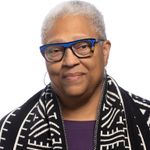
 emilie m. townes, Martin Luther King, Jr. Professor of Religion & Black Studies
I did not grow up celebrating Juneteenth in the Black community of Durham, NC. The community did not start celebrating the day until 2006, long after I left home for college in 1973. So, for me, I learned about Juneteenth when I began educating myself about Black history and Black religious history in graduate school, feeling the need to fill in the gaps I knew existed because the religious world I grew up in was missing from the academic study of religion I was exposed to. Juneteenth became and remains a touchstone for me, underscoring the importance of passing our history on to the following generations and the ways in which the freedom it represents is a partial reality today and a North Star goal that we all should continue to pursue.
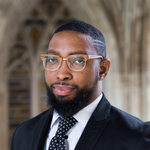
 Luther Young, Jr., Assistant Professor of Religion & Society
In addition to commemorating Juneteenth, we celebrate Pride and African American Music Appreciation Month. To me, this tripartite of celebrations perfectly communicates a crucial point: the fight for Black liberation and LGBTQ+ liberation have always been intertwined, even though our histories often tell them separately. My scholarship examines the interrelatedness of religion, race, gender, and sexuality, and June’s overlapping observances reveal why this matters. When we tell the story of Black history without centering queer Black people, we deny the full humanity and contributions of those who built the very institutions and traditions we celebrate. Music has been crucial to Black liberation movements, from spirituals sung during slavery and protest music during the Civil Rights Movement to the resistance anthems of rap and the empowering tunes of jazz, hip-hop, and R&B—many of which were created, arranged, and performed by queer Black artists. I am heartened that these facts are gaining visibility and that these stories are being reclaimed. Juneteenth celebrates the retrieval of those left behind, those whose liberation was delayed but not denied. Juneteenth commemorates the freedom of all Black people. Unless this includes LGBTQ+ people, Juneteenth has yet to be fully realized. So today, let us not leave behind any of our siblings in the continued march toward liberation.
 Timothy Adkins-Jones (’09,’21), Assistant Professor of Homiletics
For me, Juneteenth functions as a reminder that the work of freedom fighting is never done; it takes new forms in new contexts, but it is an ever-present struggle. I grew up with vague recollections of Juneteenth, but it was solidified as an annual event during the planning for a Black History program I helped produce in High School. Ever since I’ve been intrigued by what seems to be the most American of holidays, a day where we all must be reminded that no one is free unless everyone is free. The work we do with Preaching and Protest, and even in celebrating Proclamation and the Black Experience, mirrors the truth telling and Black Joy that emanates from and through Juneteenth. I’m excited that all Americans are learning more and more about this day, and pray that we all are inspired to do more freedom work.

Shively T. J. Smith, Associate Professor of New Testament; Director, PhD program
What is in a day? June 19 is an American haunting of sorts. It is an eerie reminder of how even when freedom, citizenship, and access are supposedly granted, they can be denied or, at the very least, delayed. The Emancipation Proclamation was signed on January 1, 1863, but it took 2.5 years, June 19, 1865, for those enslaved in Texas to know of their freedom. I can’t help but ponder how uncertain freedom and citizenship must have felt among the African American enslaved masses embracing with celebration their newly declared freedom. I take a breath and realize the same tentativeness remains. I hope today encourages you to consider how your theological beliefs—your God Talk—”talk back” to such fragility and proclaim, “Each of us is a collage piece making up the images of God. We are necessary. We deserve dignity. We should fight for the freedom that ensures thriving for all in this life and the life to come.”
 Joshua Lawrence Lazard (’26), PhD
 Andrew E. Kimble (’19), Director of Lifelong Learning; Associate Director of Alumni & Donor Relations; Associate Director of Diversity, Equity, and Inclusion
This article was originally published on June 18, 2024 and was updated on June 18, 2026 with additional entries.