Alumni News
BUSTH Alumnus Rev. James Lawson (’60) Visits the Past

The Rev. James Lawson catches up with his reading at the Boston University School of Theology, in Boston, Mass., June 7, 1960, where he has started the summer session. The Rev. Mr. Lawson, a Methodist minister, was expelled by Vanderbilt University, Nashville, Tenn., last March for his role in lunch counter sit-in demonstrations against segregation. TheDean of Vanderbilt University Divinity School and ten of the faculty resigned in protest.
Pastor, Full-time, First Mennonite Church of Denver: Denver, CO
Position Title: Pastor Reports To: FMC Leadership Board Employment Status: Full-time (40 hours per week)
I. Position Overview The Pastor of First Mennonite Church of Denver (FMC) will serve as the spiritual, community and organizational leader of the congregation. Grounded in Anabaptist theology, the pastor will provide worship leadership, faith formation, pastoral care, administration and outreach while helping the congregation discern its evolving role as an urban Mennonite church. This position requires a collaborative, relational, and spiritually anchored leader who can work effectively with lay leadership, staff, and the broader community. The pastor will be responsible for leading worship, offering pastoral care, supporting spiritual formation, and ensuring clear and effective administration and decision-making. FMC is committed to healing and renewal following a period of pastoral transition and seeks a pastor who can help unify, nurture, and empower the congregation for the next chapter of its ministry.
II. Qualifications and Competencies A. Required Qualifications (Must be demonstrably met at the time of application)
● Ordained or credentialed minister in good standing with Mennonite Church USA (MC USA) or a compatible Christian tradition.
● Master’s degree (M.Div., M.T.S., or equivalent) in theology, divinity, spiritual leadership, or a related field.
● Dedication to maintaining and honoring the Anabaptist/Mennonite faith tradition, emphasizing peacemaking, discipleship, and social justice. Additionally, foster an open1 minded approach to diverse faith expressions while guiding the congregation in thoughtful and constructive theological discussions and decision-making.
● Minimum of 5 years of experience in a pastoral, associate, or transitional ministerial role in a congregational setting.
● Ability to engage a theologically and generationally diverse congregation, facilitating dialogue and unity.
● Experience in pastoral care, including crisis response, funeral planning and grief support.
● Strong leadership and organizational skills, including the ability to collaborate with lay leaders and church staff.
● Commitment to ethical pastoral leadership, fiscal responsibility, confidentiality, and professional boundaries. B. Preferred Qualifications (Candidates need not meet all but should demonstrate openness to these areas)
● Spanish language proficiency (or a willingness to develop language skills) to support engagement with FMC’s Spanish-speaking members and neighbors.
● Experience in urban ministry, intercultural engagement, or community-based justice work.
● Training or experience in restorative justice, conflict transformation, or trauma-informed pastoral care.
● Leadership experience in nonprofit or faith-based organizations. C. Personal Attributes
● A visionary leader who: ○ Is passionate about servant leadership ○ Is self-reflective, compassionate, grounded and spiritually mature ○ Demonstrates critical thinking and collaborative decision making ○ Has strong conflict resolution and crisis care skills ○ Has established self-care practices and strong boundaries
III. Primary Responsibilities A. Worship Leadership & Preaching
● Serve as primary preacher at least three Sundays per month, ensuring sermons are Christ-centered, Anabaptist-informed, socially relevant, and inspire faith and action.
● Work with the Worship Team to develop meaningful, creative, participatory worship experiences. Encourage lay leadership in preaching, scripture reading, music and other worship elements.
● Guide and nurture congregants as they navigate their personal spiritual, emotional, and service paths.
● Support FMC as an open, welcoming and inclusive congregation. Model advocacy in affirming the membership, leadership, marriage vows and family units who identify as LGBTQ.
● Be present at Lenten, Easter, Advent and Christmas services, unless advance arrangements are made.
● Officiate at baptisms, weddings, funerals, and other sacramental rites. B. Pastoral Care & Community Building
● Provide nurturing pastoral care to members experiencing grief, illness, family transitions, or crisis.
● Maintain an active pastoral presence with special attention to: ○ Elderly members (80+ years old) ○ Newer attendees ○ Families with children ○ Spanish-speaking and immigrant communities
● Work alongside the Care Team to coordinate and prioritize high quality and ongoing visitation and congregational support. C. Spiritual Formation & Discipleship
● Develop and implement teachings/opportunities that foster spiritual growth to deepen faith and relationship with God, self and others. Collaborate with lay leadership to develop and offer theological teaching and spiritual formation opportunities for all ages, including: ○ Adult education (Bible study, book studies, theological discussions, or current issues forums). ○ New member and baptismal classes. ○ Leadership development training for lay leaders and committees. ○ Oversight and guidance for meaningful children’s faith formation.
● Foster a culture of servant leadership: equip members to articulate their faith and engage in actions of peacemaking, justice and service. D. Leadership, Administration & Decision-Making
● Pastoral Oversight, Supervision: Oversee daily operations, supervise specific staff, and cultivate a culture of support for church employees, volunteers, and lay leaders to carry out the church’s vision effectively.
● Pastoral Visioning: Establish with the Leadership Board and congregation a shared vision for the congregation and work to establish short and long-term goals. Provide strategic oversight to guide the church towards fulfilling the vision/mission.
● Facilitative Leadership and Shared Governance: Serve as a collaborative leader working alongside the Leadership Board and/or staff to ensure shared decision-making while providing spiritual and operational leadership. Uphold and advance the priorities established by the Leadership Board. Ensure the congregation is included in decisionmaking when appropriate.
● Communication: Maintain open and timely communication with the congregation, lay leaders, and staff.
● Stewardship: Actively contribute to annual budgeting and planning efforts. E. Community Engagement & Church Growth
● Develop intentional outreach strategies to welcome and integrate new members, especially young adults and families. ● Strengthen FMC’s urban Mennonite identity by providing leadership, vision and fostering relationships with justice initiatives, nonprofits, and interfaith partners including FMC’s Direct Assistance Program and immigrant support efforts. F. Denominational Involvement
● Serve as FMC’s representative within the Mountain States Mennonite Conference (MSMC) annual meetings and MC USA conventions.
● Participate in MSMC pastoral peer groups and stewardship training, and serve on conference committees as time allows.
● Engage in continuing education, boundary training, and professional development activities provided by MSMC, MC USA, or other useful resources.
IV. Work Expectations & Support A. Workload & Compensation
● Competitive salary, housing allowance and benefits aligned with MC USA and MSMC pastoral compensation guidelines.
● Full-time position (40 hours per week), including: ○ One regular day off per week. ○ Four weeks of vacation annually ○ Two weeks of study leave ○ Continuing education allowance ○ Provision for sabbatical leave.
Website: https://www.fmcdenver.org/new-page-1
Prof. Shelly Rambo promoted to Full Professor
The following is an excerpt from the BU Today article “23 Charles River Campus Faculty Promoted to Full Professor” featuring Professor of Theology Shelly Rambo, published on May 21, 2025.
...
Among the nearly two dozen faculty on Boston University’s Charles River Campus recently promoted to full professor are a computer scientist who studies methods to make computer programs more secure; an expert in the physics of droplets and bubbles, with applications that include disease transmission; a leader in the field of music education; a researcher studying the veracity of online information about climate change; and a social policy expert whose work is primarily focused on poverty, food insecurity, and food and nutrition assistance programs.
“As the world and institutions like BU navigate daily change that impacts our communities and missions, [these faculty] are rising to the challenge by pursuing new areas of inquiry, employing innovative approaches, and helping launch entirely new fields of study through exciting collaborations with colleagues across departments, schools, and campuses,” BU provost Gloria Waters wrote in an email to BU faculty and staff announcing the promotions. “In doing so, they exemplify each day the depth and excellence of Boston University’s talented academic community.”
...
Shelly Rambo, School of Theology professor of theology, is a constructive theologian whose research connects theology to trauma theories, sociology, psychology, neuroscience, ethnography, feminist philosophy, literary analysis, and chaplaincy studies.
...
BUSTH celebrates Class of 2025
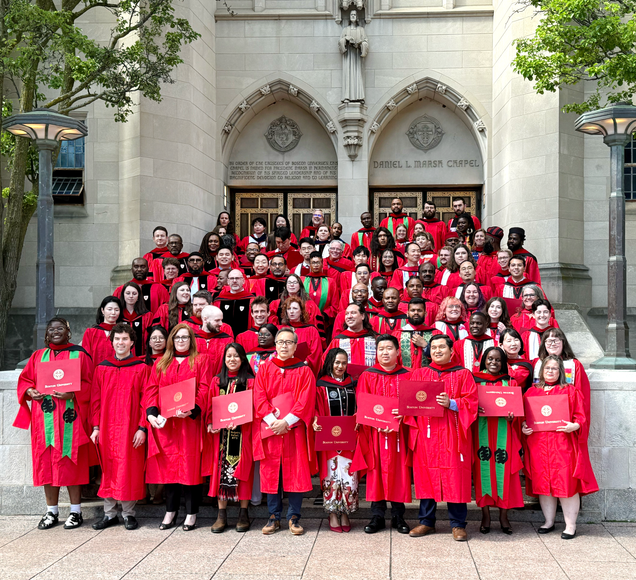
On Saturday, May 17, 2025, the Boston University School of Theology held its annual convocation ceremony and celebrated one of its most diverse classes ever. Friends and families of the graduates gathered in person at Marsh Chapel for the hooding and diploma ceremony, and many more were able to watch live online (see recording below). 77 students were named as candidates for May graduation in the program bulletin across six degree programs, and several Summer 2025 graduates also participated in the ceremony. This year, the School graduated its largest-ever Doctor of Ministry (DMin) class with 18 graduates, and its first-ever Master of Arts in Religion and Public Leadership (MARPL) graduate, with several more MARPL students set to graduate later this year.
“I bring you greetings on behalf of Boston University and the School of Theology. I welcome each of you upon this joyous occasion as we gather to recognize and applaud the achievements of our 2025 graduates,” Dean G. Sujin Pak welcomed the gathered congregation. “We extend a special welcome to family and friends, partners and mentors, pastors and allies who have come near and far. This is your celebration as well.”
Class of 2025 Convocation Service
Saturday, May 17, 2025, 2pm ET
Songs. Prayers. S’mores.
This article was written by Marc Chalufour and originally published in the 2025 issue of focus magazine, the annual publication of the BU School of Theology. This article can be found on page 8.
The singing starts at the camp's farmhouse with a group of staffers: "Allelu, allelu, allelu, alleluia!" They sing toward campsite 1, in the forest across the road. A few seconds pass. Then a response comes back through the trees: “Praise ye the Lord.”
Campers at site 1 then turn toward campsite 2, deeper in the woods, and start again: “Allelu, allelu, allelu, alleluia.”
The melody reverberates through the forest as the call-and-response song ping-pongs from one campsite to the next, up a hillside and back down again before coming to rest where it started.
“Allelus” are a Friday tradition at Wanakee, a United Methodist summer camp in Meredith, N.H. They begin at sunset on the last night of the week, while campers roast marshmallows and assemble sticky s’mores. Participants call it the most magical moment in a week packed with adventure, ritual, and community. Neighbors are rumored to sit out on their porches to listen.
While congregations of every denomination struggle to attract young people, Methodist summer camps are thriving. But what does camp have to do with the church?
Outdoor and camp ministry go back to the beginning of Methodism. John Wesley practiced “field preaching” in the 1700s to reach people not attending traditional church services. In the 1800s, pastors set up camp meetings on the American frontier, where churches had yet to be established.
In the 21st century, that legacy lives on at retreat centers and camps, which provide spaces for deeper experiences than a Sunday service may allow. The United Methodist Church (UMC) owns more than 175 such facilities nationwide, including three New England summer camps: Wanakee, Aldersgate in North Scituate, R.I., and Camp Mechuwana in Winthrop, Maine.

“We don’t see a lot of youth in our churches,” says Alicia Veléz Stewart (’18), pastor at Weston UMC in Weston, Mass., and camp chaplain at Aldersgate. But, she adds, the three camps serve more children in a summer—nearly 2,000—than New England’s 500-plus UMC churches see in a year. Those kids have the classic summer camp experience—swimming, canoeing, hiking, campfires, and bunkhouses—mixed with Methodist ministry.
For families across New England— including many from the STH community—UMC summer camps are an annual tradition. Kim Macdonald, STH’s director of communications, attended Wanakee as a camper and returned as a counselor and lifeguard. Now, with her own kids becoming campers, she volunteers on the board of directors.
“Children need camp,” says Macdonald (CFA’04, COM’23). “They need to be disconnected from the grid. They need to be disconnected from their screens. They should live in a world where they are all equal and they all can serve each other in ways that foster growth and maturity. It was the best week of my year while growing up, and I want that experience for my kids.”

Faith in Practice
Jen Savoy, the pastor at Contoocook UMC in Contoocook, N.H., also has a long history with Wanakee. She has sent four children to the camp and has spent time at the camp every year, volunteering on committees and directing programs.
Savoy (’21) has witnessed the power of the camaraderie and community that develop as campers and staff share experiences and try new things. “Church is an hour, once a week, and you’re sitting in a pew, listening to someone talk,” she says. “At camp, they can see faith in action.”
Last summer, Savoy decided to conquer her fear of heights. She strapped on a climbing harness and made her way up into the trees on the camp’s ropes course. When she reached a platform high in the trees, she “was shaking like a leaf in a hurricane.” But she could hear campers shouting encouragement from the forest floor and kept going. “When we get to practice being Christians and be the hands and feet of Jesus and encourage others—show God’s love to the world—that’s when our faith becomes real,” she says.
“Camp is one of the few places left that offers that kind of freedom and experimentation,” says Veléz Stewart. “You don’t have to be anything but yourself, and we can’t say that all the time for our sanctuaries. Aldersgate is a place of true radical welcome, true radical hospitality, true radical love.”
Veléz Stewart was a Master of Divinity student at STH in 2017, looking for a field education opportunity. While most of her peers found placements in churches, the former Girl Scout wanted a different experience. “Camping was in my blood,” she says. So she reached out to Aldersgate.
Eight years later, Veléz Stewart is looking forward to another summer as chaplain. “It’s a way of making faith in community accessible and not scary,” she says. “My goal is to make faith— not religion, not denomination, but faith—accessible and authentic for our campers. For many of these kids, Aldersgate is their church.”
We are empowering our youth to be persons of character and persons of faith. - Alicia Veléz Stewart ('18)

Creative Ministry
Eungil Cho is a pastor in the northeast corner of New Hampshire, where he oversees seven United Methodist churches. His congregations are shrinking and getting older. Cumulatively, says Cho (’19), they draw fewer than 100 people on a given Sunday, and not many of them are children. “It’s always been a concern of mine—how do I provide spiritual formation for my own son?” He found his answer at Wanakee, which his son has attended for three years.
Cho, who wanted to experience the camp for himself, began volunteering as chaplain in 2023. He leads a Thursday night service, but his role is otherwise informal. He’s learned that sharing adventures with the campers, like a long swim to an island, allows him to make connections that aren’t possible during an hour in church on Sunday. He’s come away from Wanakee inspired by another element of camp life: mealtime.
At each dinner, kids from a different campsite lead grace and a series of songs. Cho was surprised by how engaged the kids were and was inspired by their creativity. “The religious components in our traditional church can be boring and uninteresting to children,” Cho says. “Wanakee does a good job of making that very interesting by making it silly.” He’s brought some of that humor and creativity back to his churches, introducing classics like “Superman Grace” to his programs.
At Aldersgate, Veléz Stewart also fosters creativity. Every summer, she and the camp director design a week of faith formation that includes the biblical narrative as well as art, music, worship, and prayer. In 2024, Aldersgate focused on the Lord’s Prayer, which she helped the campers learn. On Thursday evenings, the kids lead a collaborative worship. Each cabin presents their interpretations of the summer’s prayer. These reimagined prayers can take any form, like works of art or camp songs.
“We are empowering our youth to be persons of character and persons of faith,” Veléz Stewart says. “They’re taking this kernel of faith that we have planted and nurtured so that they can live it out in a way that works for them and makes the world better.”

A Spiritual Space
There’s an irony in the continued relevance of camp ministry: What began in the 1700s as a respite in undeveloped areas now exists as an escape from development. For one week, kids can trade their screens and headphones for campfires and group songs. They run in the dirt, swim in the lake, and climb in the trees.
“We keep it rustic on purpose, because we want to keep the focus on being in fellowship with one another as a community,” Macdonald says. “I see being able to connect with your fellow person on a deeper level as a spiritual experience.”
To Veléz Stewart, camp is no less spiritual a space than her own church. Deep on Aldersgate’s property, just before the main retreat center, where the forest meets the lake, is a rustic, outdoor chapel surrounded by trees. She likes to hold morning worship there. “It’s one of these places where the veil between this world and the Kin-dom is most thin,” she says. “Everything feels very apart from the world and, in this wonderful way, it gives the kids a chance to take a deep breath.”
Savoy has seen Wanakee shape her kids as campers and staffers over almost two decades. Last summer, she volunteered as a site director for a week and enlisted her youngest daughter to help. Savoy was amazed to see how her normally introverted child emerged from her shell to help run things. When Savoy asked why she didn’t do that at home, her daughter responded with four words.
“Camp is magic, Mom.”
BUSTH Publishes Annual FOCUS Magazine for 2025
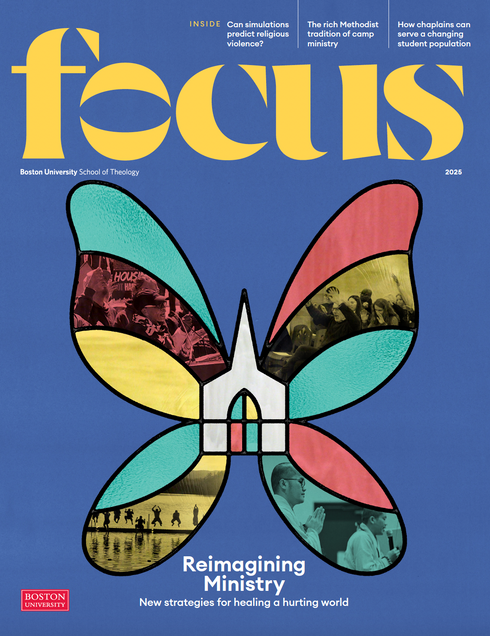
The Boston University School of Theology is pleased to announce the 2025 publication of its annual magazine focus. This issue's theme is "reimagining ministry," which asks the reader to consider new strategies for healing a hurting world. Our faculty, staff, and alumni are pushing these boundaries of ministry as evidenced throughout the issue. The 2025 issue features close-ups on faculty promotions, a spotlight on the community-focused work by our online and hybrid students, Methodist camping ministry, and thought-provoking articles written by alumni and faculty. The featured sermon was preached by Martin Luther King, Jr. Professor of Religion and Black Studies emilie m. townes at the matriculation service of worship in September 2024.
This issue also features the first publication re-design in over a decade, which showcases exciting digital content from our community from the past year with a vibrant new palette. Any questions about the magazine can be directed to sthcomm@bu.edu.
Read the full issue here.
Prof. Emilie Townes interviewed by UChicago Divinity School
The following is an excerpt from the article “A Little Education Goes a Long Way” featuring Martin Luther King, Jr. Professor of Religion and Black Studies emilie m. townes published on May 6, 2025 by University of Chicago Divinity School.
The bluster of early May in Hyde Park didn’t dim the joy Rev. Dr. Emilie Townes, AB’77, AM’79, DMN’82, felt upon returning to Chicago to receive a 2025 University of Chicago Alumni Award for Professional Achievement.
“Here, I learned the value of being as clear and precise and honest as possible when talking, writing, thinking, feeling, doing,” Townes said in her remarks at the May 1 ceremony. “And it is because of this skill, which began here in Cobb Hall, that I want to thank the Alumni Association for this award—and the University for the education I received here that has made it so.”
...
Boston University awarded grant from Lilly Endowment Inc. to continue “Trauma-Responsive Congregations” Initiative
Boston University is proud to announce that it has been awarded a $611,500 grant from Lilly Endowment Inc. to continue and expand the "Trauma-Responsive Congregations" project.
This project, which is a continuation of a four-year program previously funded through Lilly Endowment’s Thriving Congregations Initiative, will help the university scale the work of supporting urban congregations in addressing collective trauma through an innovative, interdisciplinary approach. The new grant will enable the project to continue through 2028.
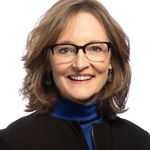
A collaboration between the Boston University School of Theology (BUSTH) and the Chobanian & Avedisian School of Medicine (CAMED), the Trauma-Responsive Congregations project combines resources from trauma studies, trauma-informed theology, pastoral care, and mental health. The unique partnership supports congregations as they respond to the complex and multi-dimensional needs of their communities, promoting healing and resilience.

The project is led by principal investigators Dr. Shelly Rambo (BUSTH), Dr. Eunil David Cho (BUSTH), and Dr. Eric Brown (CAMED). Their leadership ensures that the project remains deeply rooted in both theological and practical understanding of trauma within faith communities.
Building on the success of the first phase of the project (2020-2024), which worked with 10 urban congregations across San Diego, Boston, and one congregation that meets entirely online, the next phase of the project will expand to include 30 new congregations from multiple denominations.

These congregations will be part of five new learning cohorts that will focus on shared contexts, such as multicultural churches, Black churches, immigrant churches, congregations ministering to LGBTQ+ members who have been affected by religious trauma, and congregations in communities facing significant numbers of individuals and families experience homelessness. Each cohort of clergy and lay leaders will take part in in a three-month program that includes an educational series, an in-person retreat, and group mentoring. Participating congregations will also develop concrete action plans tailored to their missions and aimed at addressing the trauma affecting their communities.
“During this critical time in our nation’s history, where stress and trauma are at the forefront of many of our minds, we are excited to continue our work with congregations to help them draw upon their innate strengths as religious communities to serve as agents of healing,” says principal investigator Dr. Eric Brown. “As a team we are comprised of both church leaders and scholars with expertise in trauma theology, mental health, and pastoral care.”
The next phase of this important work promises to bring greater opportunities for growth, collaboration, and transformation for congregations across the country.
###
Lilly Endowment Inc. is an Indianapolis-based private foundation created in 1937 by J.K. Lilly, Sr. and his sons Eli and J.K. Jr. through gifts of stock in their pharmaceutical business, Eli Lilly and Company. While the gifts of stock remain a financial bedrock of the Endowment, it is a separate entity from the company, with a distinct governing board, staff and location. In keeping with the founders’ wishes, the Endowment supports the causes of community development, education and religion. Although the Endowment maintains a special commitment to its founders’ hometown, Indianapolis, and home state, Indiana, it also funds programs throughout the United States, especially in the field of religion. While the primary aim of its religion grantmaking focuses on strengthening the leadership and vitality of Christian congregations in the United States, the Endowment also seeks to foster public understanding about religion and lift up in fair, accurate and balanced ways the contributions that people of all faiths and diverse religious communities make to our greater civic well-being.
Ambassador David J. Young (STH ’87, Pardee ’88) Reflects on Multifaceted Leadership Experiences
The following is an excerpt from the Show Me Mizzou article by Randall Roberts, “A diplomat’s guide to uncertainty: Ambassador David Young recalls life lessons from a career on the road,” published on April 24, 2025. Click here to read the full article.
"My path was a bit unconventional.  After Missouri, I went on a Rotary Scholarship to Trinity College in Ireland, where I studied comparative religion and peace studies. I was interested in ministry, so I continued at Boston University’s School of Theology, where I studied social ethics. After that, I earned a master’s in international relations, and one of my professors suggested that I take the Foreign Service exam. I thought I’d stay for three to five years — and then 35 years later, I retired from the Foreign Service.
... In the last decade of my career, I worked in leadership roles in sub-Saharan Africa: Zambia, South Africa, Nigeria, Malawi and Sudan. As ambassador, I was like the CEO of an embassy, leading strategy and outreach. As deputy chief of mission, I focused on internal management. I loved both roles. My ministerial background influenced my leadership style. I saw embassies as teams where everyone’s contributions mattered. The high point of my career was leading these embassies."
Dr. Paul H. Carr publishes “Containing Climate Change: To Save Us”
Dr. Paul H. Carr recently authored the text, "Containing Climate Change: To Save Us."
The book description reads:
"We have made some progress in slowing climate change, but billion-dollar weather extremes are increasing. In fire- and flood-prone areas, many homeowners cannot afford insurance if it’s available.
Some may remember waiting in line for hours to fill their gasoline tanks during the 1974 oil shortage. Gas prices increased from $.30 per gallon to over $1.00. Did anyone realize we had to toil against oil? In 1988, climate scientist Dr. James Hansen testified to Congress that burning fossil fuels are warming our planet. We must toil so we won't boil.
Starting in 2011, I debated climate critics. Then Emily Austin, Karl Peters, and I organized The Wicked Problem of Climate Change conference. We discussed the book Drawdown’s100 Ways of Reversing Global Warming. A plant-rich diet is number three. Twelve conference papers were published in Zygon: Journal of Religion and Science (July 2018).
A 50-Year Perspective: 
enabling economics,
new technology, &
caring theology
can save ecology.
The Inflation Reduction and Climate Act of 2022 has economic incentives for new green technology to save the ecology that feeds us.
May my presentations and papers increase your understanding and inspire you to act now to save life on our beautiful blue planet. In 2022, climate scientist Katharine Hayhoe published Saving Us. Our Earth will survive, will we?
Ask not what our Earth can do for you,
Ask what you can do for our Earth."
Dr. Carr endowed a scholarship in his father’s name, the Rev. Auburn J. Carr STH’33, GRS’32, back in 2003.