STH Hosts Dialogues on Korean-American Theology & Identity
During a week-long series of events with the theme “A Journey to North Korea,” Andrew Sung Park joined the School of Theology for a series of dialogues on Korean-American theology and the immigrant experience.
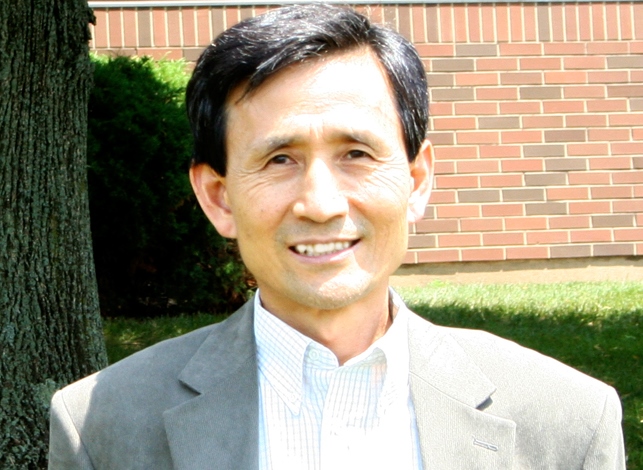 Dr. Park, Professor of Theology and Ethics at United Theological Seminary, responded to Choi, Hee An’s book, A Postcolonial Self: Korean Immigrant Theology and Church. Dr. Choi’s book explores the postcolonial identity of Korean immigrants and the church, interpreting the way in which Koreans have developed a collective identity in the social context of sexism, racism and classism.
This postcolonial identity—described as “I and We with Others”—can be extended into “radical hospitality” and a new mutuality. Dr. Park praised the book as “a great contribution to Korean-American theology” and said that Dr. Choi has made an impressive and original exploration of the concept of “we” as part of the Korean-American identity.
 Dr. Choi described her own creative process and the personal encouragement that she received from Dean Mary Elizabeth Moore and Dr. Park. “This book was a product of many people’s care and mentoring and also support,” she said. She wanted her book to give voice to the struggles and pain experienced by Korean immigrants, along with the change and the transformation they experience.
Bishop Susan Hassinger described the book as a wonderful resource for church leaders who are working with immigrant populations and said that she wished she had the book when she was working with a Korean immigrant church in the 1980s.
On November 4, Dr. Park gave his own lecture, “Is There Any Hope for Better Racial Relations? An Immigrant Interracial Theology.” Dr. Park discussed three views of immigrant integration—assimilation, amalgamation, and cultural pluralism—before arguing for a third that he called “transmutation.” He described transmutation as internal change and a process that encompasses both unity and diversity. Diverse groups pursue their community goals together, address their own internal sin and prejudice, and affirm their own identities through their heritages.
Unity comes through three visions, he argued: first, a common vision, focused on overcoming external and structural racism; second, a superordinate vision, focused on the cooperation of different groups and enacting restorative justice; and third, an inmost vision that counts every person as invaluable and recognizes that each person is indispensable to establishing God’s community. “Using these three visions, we can become conduits of the Holy Spirit,” he said.
During the same week, STH hosted a screening of People Are the Sky, the work of Korean-American filmmaker Dai Sil Kim-Gibson and a conversation with Kim-Gibson and Bishop Hee-Soo Jung. The screening was free and open to the public thanks to the generous support of the Lowell Institute.