Alumni News
CDC Offers Guidance for Faith Communities During Pandemic
The Centers for Disease Control and Prevention has published guidelines for communities of faith to practice their beliefs during the ongoing COVID-19 pandemic. The guidelines include "Safety Actions" such as promoting healthy hygiene practices, wearing cloth masks, cleaning and disinfecting, and social distancing. The article also offers guidance on how to plan for a staff member or a congregant coming down with the illness.
Please find the full article published on the CDC website here.
BUSTH Announces Faculty Publications for May 2020

The School of Theology is pleased to announce the following faculty publications for the month of May 2020.
- Filipe Maia: “The Pan-Amazon Synod,” in Concilium (n. 385: 2020/2). Info about the issue can be found at https://concilium.hymnsam.co.uk/issues/20202-masculinities-theological-and-religious-challenges/
- Mary Elizabeth Moore: “Sacred, Revolutionary Teaching: Encountering Sacred Difference and Honest Hope,” Religious Education (April 2020), 1-13. [Doi: 10.1080/00344087.2020.1738044]
- Shelly Rambo: Foreword in Karen O’Donnell and Katie Cross, Feminist Trauma Theologies: Body, Scripture & Church in Critical Perspective Paperback. SCM Press, 2020. Several of the essays engage Prof. Rambo’s work. Available as an eBook through the BUSTH Library here.
- Steven Sandage: “The growing dangers of clergy narcissism, and some humble solutions,” The Association of Religious Data Archives (April 27, 2020). http://globalplus.thearda.com/globalplus-humility-and-religious-leadership/
- James Walters:
- Dedication -- “This volume is dedicated to James C. Walters in honor of his scholarly acumen, his dedication to teaching and learning, and his collegial spirit. James helped initiate the collaboration that led to this volume and it is in part the fruit of his labors.”Daniel Schowalter, Sabine Ladstätter, Steven J. Friesen and Christine Thomas (Eds). Religion in Ephesos Reconsidered: Archaeology of Spaces, Structures, and Objects. Novum Testamentum Series, Supplements, Volume: 177.Religion in Ephesos Reconsidered provides a detailed overview of the current state of research on the most important Ephesian projects offering evidence for religious activity during the Roman period. Ranging from huge temple complexes to hand-held figurines, this book surveys a broad scope of materials. Careful reading of texts and inscriptions is combined with cutting-edge archaeological and architectural analysis to illustrate how the ancient people of Ephesos worshipped both the traditional deities and the new gods that came into their purview. Overall, the volume questions traditional understandings of material culture in Ephesos, and demonstrates that the views of the city and its inhabitants on religion were more complex and diverse than has been previously assumed. Available as an eBook through the BUSTH Library here.
Rev. David Jadlocki (STH ’01): New Pastor of the Congregational Church of Henniker, NH
The Concord Monitor reports, "The Congregational Church of Henniker [NH] is excited to announce the arrival of Rev. David L. Jadlocki as its new pastor on Sunday.
Under normal circumstances, a welcome service and reception would be held, however an event date will be announced when large groups may gather again.
Rev. David Jadlocki comes to CCoH following 8 years of vibrant ministry at the First Congregational Church and Society in Rindge. Prior to pastoring in Rindge, he served as the transitional pastor in the Mont Vernon Congregational church, supporting them to claim a new organizational model that enhanced their ministries and encouraged future growth. He has continued his professional growth through the United Church of Christ’s Next Generational Leadership Education program and served as a church re-vitalization consultant.
Jadlocki worked serving individuals with developmental disabilities, and currently serves as a psychological educator for a counseling center in Manchester.
Jadlocki received his bachelor’s degree from Drew University with a concentration in psychology and religion and a earned a master of divinity degree with a specialization in pastoral care from Boston University School of Theology ('01). Jadlocki resides in Peterborough with his wife, Christie, and their two children."
“How to Help Domestic Violence Clients during Shelter-in-Place Situations” by Rev. Dr. Federico G. Carmona (STH ’02 and ’08)
This article was originally published here by Counseling Today.
Rev. Dr. Federico G. Carmona (STH'02 and '08), is a trauma therapist for victims of domestic and sexual violence at Peace Over Violence in Los Angeles. He is also an ordained elder in the United Methodist Church. He wrote “How to Help Domestic Violence Clients during Shelter-in-Place Situations,” which was published by the American Counseling Association in its online publication Counseling Today.
"It’s heartbreaking to read the variety of articles circulating about vulnerable people trapped at home with their abusers because of shelter-in-place mandates during the COVID-19 pandemic.Unfortunately, experience reminds us of a concerning reality that is typical of these uncertain times: Adverse labor market conditions are positively related to domestic violence. Research conducted after the Great Depression of the 1930s, the farm crisis of the 1980s, and the Great Recession of 2008 found that economic crises have significant negative effects on the quality of intimate relationships and parenting in working families. Marital conflict, abuse (particularly violent controlling behavior), and a decline in parenting quality are among the harmful effects in families of a macroeconomic downturn.
In my role as a trauma therapist, I have seen dozens of domestic violence clients during clinical intakes and in counseling. I have also read a multitude of articles on the subject about studies and reports from different parts of the world. Shelter-in-place mandates aren’t a good thing for women and children who are the targets of abuse. The anticipatory anxiety and uncertainty of these times can cause negative emotions to churn, leading to behaviors that increase the already-concerning number of domestic violence and child abuse cases. There is no “how-to” manual to deal with the current situation, of course, but the safety of this vulnerable population demands us to do our best.
How can the counseling community help domestic violence clients who are trapped at home with their abusers? I offer a few suggestions:
Reach out between appointments/sessions. One of the critical signs of abuse is the isolation of victims of domestic violence from their networks of love and support. An occasional check-in from us can empower these clients to tell us more about their situations and perhaps even dissuade their abusers from further violence as we keep checking in.
Listen, just listen. People experiencing domestic violence need an empathic ear — someone who will allow them to vent their repressed emotions and feelings without judgment. We are not to offer advice, only listen and empathize. It’s just time to build trust.
Validate clients’ feelings, emotions and beliefs even when they don’t make sense. The best way to build trust with clients experiencing domestic violence is by being present with them. We’re present with them through our vicarious empathy, active listening and compassionate validation. Our empathy is vicarious because it takes an emotional toll to connect with someone’s anguish and suffering. Active listening requires us to be disciplined enough to fully concentrate on what the client is saying rather than on the answer that we might have in mind to their situation. Clients experiencing domestic violence require validation — compassionate validation — because many times, their decisions (or lack of them), circumstances and beliefs don’t make sense to us.
Introduce them to mindfulness exercises. Clients experiencing domestic violence live in a world of fear and anxiety because of the cycle of abuse. At first, they’re worried because of their confusion and inability to make sense of and control the incipient abuse. In time, as the abuse increases, worry turns into anxiety and fear.
Mindfulness can help these clients become aware of their emotions, thoughts and bodies to take control of them and find much-needed relaxation. Meditation exercises shouldn’t necessarily be long. There are plenty of sites online with short, simple exercises, from breathing to stretching, that can help clients gain the bodily and emotional awareness they need to function.
Remind clients of their strengths and qualities. One of the benefits of practicing active listening is the ability to notice in clients’ stories what they have forgotten about themselves: their own power, qualities and strengths. By doing this, we help clients not only to survive their circumstances but also to move toward a better future as survivors of domestic violence who deserve lives of meaning and purpose.
Help clients to start a project. Because of shelter-in-place mandates, more perpetrators of abuse are at home all of the time. This increases the emotional state of “walking on eggshells” for domestic violence clients. We can help distract these clients from that state by brainstorming with them or suggesting a project to them. It could be an individual project based on their abilities, strengths and qualities that we noticed in their stories, or it could be a project that involves their children.
Assist clients in making a safety plan. Making a safety plan is incredibly useful. It doesn’t need to be complicated or lengthy. The simplest way of doing this is by helping these clients become aware of their circumstances (call the problem what it is — domestic violence). The rest of the plan might involve:
- Trying to avoid conflicts and arguments during the mandated confinement
- Involving their children in most of their home activities
- Reaching out to relatives and trusted friends (when possible)
- Being prepared to leave at any moment (i.e., having money, documents, car keys, children’s backpacks filled with some clothes and snacks ready to go)
- Calling 911 when they feel that they or their children are in danger (even in a shelter-in-place situation, law enforcement will issue an emergency protective order to separate victims from their abusers)
Involve others. We can help our clients experiencing domestic violence to think about the resources they possess to deal with their situation. One of these resources could be men who are part of the couple’s life in some way (e.g., clergy, friends, relatives, co-workers, classmates, teachers, bosses).
When families and friends get involved, perpetrators of abuse can sometimes be dissuaded from causing harm to their partners and children. The presence of fathers, brothers, neighbors and friends prompts accountability. Some of these individuals might be willing to offer their support and speak up against the ongoing abuse. Victims of domestic violence can only break their silence and become survivors if they feel supported. We need to be cautious, however, and see each client in their particular context, giving consideration to whether this type of intervention could put them in more danger than they already are.
Help clients build a network of support. Isolation is one of the most critical signs of abuse. It creates a hated dependency on the abuser. Imposed isolation robs victims of domestic violence of their personhood. It suppresses their voice and identity piece by piece as family members and friends are pushed away. Connections are the simplest way to beat domestic violence. It is critical that victims of domestic violence get reconnected with relationships they trust. It is also crucial to get these clients connected with other survivors of domestic violence (via online groups) so they can claim their victory and begin the journey of healing from the trauma caused by the abuse.
Inspire clients to pursue self-sufficiency. Studies show that when women’s wages are relative to those of men in dual-income couples, there is a significant reduction in domestic violence. To be self-sufficient is to have bargaining power. It’s to have the ability to exert influence in the relationship. There are public resources designated to help survivors of domestic violence pursue further training and education with the purpose of becoming self-sufficient. Check with social services agencies about these resources.
These recommendations aren’t intended to override the urgency of calling 911 when someone is facing a clear and present danger at home. Let law enforcement personnel figure out how they will bring individuals and families to safety during shelter-in-place situations. Emergency protective orders are being issued even with the courts closed."
Reverend John G. McLachlan (STH ’62)
"On Sunday evening, May 3, 2020, John G. McLachlan, 83, left this earthly life in the arms of his loving wife of more than 60 years.
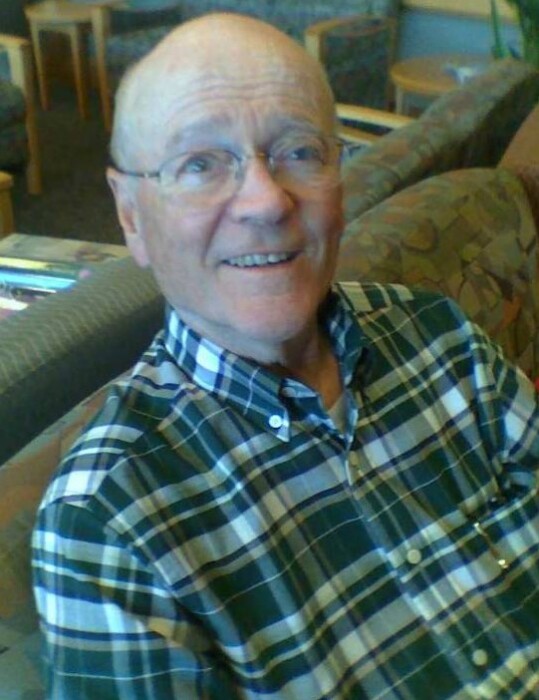 John was born August 3, 1936 in White Twp., Indiana Co., Pennsylvania. He married his Mount Union College sweetheart, Sandra Starr, on June 14, 1959 and together they raised two children, Daniel and Karen. He received his Master of Divinity degree from Boston University School of Theology in 1962 and served numerous churches in the East Ohio Conference of the United Methodist Church both before and after his retirement in 1996. John and Sandy were always a team, serving not only in the local parish but also leading Marriage Encounter weekends on the state and national level.
Being a pastor was John's dream and the first step meant acquiring his local preacher's license at age 16. He had a passion for youth, culminating in 1982-86 when he served as Associate Director for Youth Ministries of the E. O. Conference Council on Ministries of the United Methodist Church. John was community involvement, from helping the basketball team with their foul shots, serving on the local fire department and waiting tables at the mystery theater, to driving the band bus and selling popcorn for the Band Boosters, captaining a mule-drawn canal boat, and helping with the Riceland Junior Golf League. Music was a part of him as he played the guitar around the campfire with youth, shared his tenor voice in college and church choirs, and danced the night away with his sweetheart. A "saver," he still had the heavy, canvas paper-bags and card punch from his own paper route days to give to Dan and Karen as they pursued theirs. He enjoyed frequenting auctions and sales, always on the lookout for special treasures no matter where they might be found. John loved working with his hands, cutting trees in his woods and undertaking the electrical and plumbing installation as well as splitting all the fieldstone for the fireplace as he and Sandy built Josandaka, their retirement dream home, a special place they shared with many others for retreats and meetings.
John is survived by his wife, Sandra; his children, Daniel (Kandi) and Karen; granddaughters, Rachael and Becca, and his sister-in-law Jean. He was preceded in death by his parents, Robert and Helen, and his brother, Glen. A private burial is planned for now with Cassady-Turkle-Christian in Alliance, OH. A public celebration of life will be held when it is again safe to gather after COVID-19. Condolences may be left at their website, www.ctcfuneral.com. In lieu of flowers, contributions may be sent to Hospice of the Valley, 5190 Market Street, Youngstown, OH 44512."
The article was originally published here by The Daily Record.
Video Messages from the Deans at the end of Spring 2020
May 18, 2020 – Deans Moore, Stone, and Hickman-Maynard offer their words of thanks and well-wishes to the School of Theology community at the closure of the spring 2020 semester. The transcripts are posted below for those needing to follow along.


Dean Moore Transcript:
In the Spirit of the living God, I greet you today. In the Spirit of the loving God, I shout my love for you – my care for your losses and my hopes for your lives as pandemic continues. These months have been an unexpected Sabbath time in which we were forced to be still and reflect on ourselves as a globally connected community. In Sabbath-time, we remember the future that is promised but not yet here. Sabbath is an opportunity to pause and discern what is most important.
We jumped quickly into the urgent needs of a pandemic, making adjustments that were so urgent we could hardly think about them; we could only do them. We now know that the pandemic will continue for a long time, even as we ponder how and when to re-open and live carefully as we await surer treatments and a vaccine. What has this Sabbath time taught us?
- We have learned all over again that horrific injustices are built into our society, threatening whole communities, especially communities of color, immigrants, prisoners, and seniors. How are we going to change public policies and actions to respond to these injustices?
- We have learned that isolation is hard, and it affects people differently. We have also learned to connect in ways that transcend isolation, whether by zooming or phoning. How might we continue to isolate for the wellbeing of others while making ways to be together?
- We have learned that many people have had to live sacrificially, either by choice or by the necessity of preserving their jobs. How can we thank these people while providing the supports they need to thrive?
- We have learned that people can be inventive in hard times. Families have created new bonds with their children; faculty and students have developed new ways of teaching and learning; people have reached out to their neighbors to share grocery shopping and bits of joy. Can we continue these practices as we move into new moments of pandemic and post-pandemic?
- We have learned that some losses – illnesses, deaths, lost jobs, lost opportunities and celebrations – are deep and lasting. No words or actions can erase them. Can we continue to hold people (including ourselves) in prayer and acts of kindness?
- We have learned that we can live simply, and simple living can be restorative, not just to us but to the earth, which is enjoying some respite from our extreme carbon emissions and pollution of the air and waters. How can we continue to live simply for the wellbeing of our souls and the planet?
As you enter a summer of caution and virtual gatherings, I hope Sabbath will touch you with its Holy stillness and hope for the future. I love you!
Dean Stone Transcript:
Hello there everybody. It’s hard to believe this spring semester has finally come to an end. And I couldn’t be prouder of the students, staff, and faculty who rose to the challenges thrown at them with just a few days’ notice. I’m especially proud of our graduating students, and I’m thankful for their family and friends who have supported and guided them along the way, often when there were more questions than answers. And when there was way too much distance.
Finishing graduate school or a doctoral program is always a major accomplishment, but this spring, in addition to other challenges and obstacles you might have been facing, you did it in the midst of a global pandemic with most of our population in lockdown, with little access to libraries, no chance to have a live, physical conversation with a fellow student in the Community Center, no opportunity to work on a paper or finish your reading in a coffee shop, and no possibility of stopping by Pub Night to gain sustenance for the journey . . . with me! How did you pull it off!? Congratulations, and I can already see (I don’t have to imagine) the tenacity, patience, flexibility, courage, and creativity that characterize your theological vision and religious leadership.
For those of you returning in the fall, let’s enjoy the summer. I hope to do some fishing, writing, and movie watching. But there will also be a lot going on at the School this summer. Next year is our accreditation self-study year and we will be preparing for that. We’re hoping to start up 3 faculty searches over the summer. And, of course, we are still in the middle of a search for a new Dean of the School of Theology.
While I plan to enjoy the summer, seeing you in person in the fall is something I am already looking forward to. And make no mistake . . . seeing you in person is still very much the plan. Of course we will offer remote participation options for those who cannot make it to Boston, feel uncomfortable coming to Boston, need to self-quarantine, or are immunocompromised. But if the last few months have taught us anything, it is that the value of a residential education has increased not decreased. So we will be working hard over the summer to make adjustments to our teaching technologies and our classroom spaces on campus so that we can be physically present and in living color together.
Enjoy the summer! And thanks again for your incredible resiliency this past semester.
Rev. Jeremy Smith (STH ’06) was featured for his leadership in Seattle Times
Seattle pastor: If you're feeling sick, practice your faith at home
"Some Seattle-area church leaders are encouraging their congregants to stay home if they're feeling ill. Rev. Jeremy Smith, pastor of Seattle First United Methodist Church, encouraged his Twitter followers Saturday night that missing church Sunday morning is not a sin — especially if they're not feeling well.
'It’s better to take care of yourself, especially if you’re feeling sick,' Smith said. 'Stay home, and your faith can be practiced at home.'
The bishop of the Greater Northwest Area of The United Methodist Church, Elaine Stanovsky, published a blog post marking the beginning of the religious season of Lent with a reminder to take 'reasonable precautions' from the World Health Organization, which included putting boxes of tissue in sanctuary pews and making hand sanitizer readily available.
'Encourage everyone to observe a 4 ft distance from others,' Stanovsky wrote in the post. 'Maybe suggest a new gesture of greeting, like folding your hands over your heart and then opening them palms out and down toward another person — in a sign of connection, rather than palms out and up, which might indicate separation.'
At Smith's congregation in Seattle, one of those precautions includes trading out the communion cup for individual glasses of grape juice.
'We normally do communion where a person is given a piece of bread, and they then dip that bread in cup, and then they ingest it as part of holy communion,' Smith said in an interview. 'How we’re changing it is instead of them dipping it into a cup, they are going to be given an individual serving of grape juice.'"
To see the original article in the Seattle Times, click here.
“Owen Lovejoy and the Coalition for Equality” by Rev. William F. Moore (STH ’61)
 "Owen Lovejoy and the Coalition for Equality: Clergy, African Americans, and Women United for Abolition, published in December, 2019, by the University of Illinois Press, is the third book on Lovejoy by Jane Ann Stoneburner-Moore and Rev. William F. Moore, STH 1961. The book follows Lovejoy before and during the Civil War, from his pulpit in Princeton, Illinois to his central position in Congress. Historian James Oakes writes, 'Owen Lovejoy was the rarest of beings--a dedicated abolitionist and a savvy politician. Having already published an indispensable collection of Lovejoy's most important writings (His Brother's Blood), the Moores have now given us the most thorough biography of Lovejoy to date. . . . The Moores demonstrate Lovejoy's crucial role in the creation of the "coaltion for equality" that eventually brought slavery down.'"
To purchase Owen Lovejoy and the Coalition for Equality click here.
To the Class of 2020
Over the past few weeks, we have asked our community to extend congratulatory messages, photos, and well-wishes to the graduating Class of 2020. We are proud of the work you will do in the world, and we will miss you greatly!
To add your message to this collection, please email sthcomm@bu.edu.
Dear Amazing Graduates,
The faculty voted today [May 14, 2020] to approve your graduation and to celebrate your accomplishments as students and scholars. You are a stellar class, and your academic work and communal leadership reflect your passionate quest for learning and for developing your talented selves in ever-new directions. Thank you for being YOU. As I reflect on the individual and communal accomplishments you have made in these years, I smile. When I see each of your faces and ponder the lives you have touched, I soar with delight. You have been in STH during years when a great deal of disruption has taken place in the U.S. and the world – ecological, social, economic, political, and personal. Through that time, you have continually asked big questions and sought to be your best selves. You have awakened STH with your insights and concerns, and have reshaped who we are as a community. Oh my! I hate to see you leave.
With abundant gratitude,
Mary Elizabeth Moore
Philippians 1:2-5
2 Grace to you and peace from
God our Father and the Lord Jesus Christ.
3 I thank my God every time I remember you,
4 constantly praying with joy in every one of my prayers for all of you,
5 because of your sharing in the gospel from the first day until now.
Dana Robert

Congratulations to an awesome Graduate Assistant, Hanna Larracas!
Much aloha,
Charlene Zuill, Spiritual Life Coordinator, Lecturer in Spiritual Formation
Class of 2020! Heartfelt congratulations on this milestone! Learning beside so many of you has been an honor. Being inspired by those of you who offered leadership at STH has been a privilege. So many of you went the extra mile to offer me welcome when I was a mid-year transfer student. Many thanks for your graciousness and hospitality. Although I haven't met all of you, I am proud of each one of you! Blessings on all the future can hold!
Love, Caro Barschow
To the Class of 2020: Congratulations on completing this part of your life journeys. It has been a delight to learn and laugh and love alongside you all. Many blessings to y'all, and wishes of overflowing peace, joy, and love as you go to whatever is next!
Kyle Walden (Class of 2021)
Dear STH Class of 2020,
Congratulations! You've made it to this point, and yes, there is much grieving alongside the joy of graduation.
I remember that day in Marsh Chapel as one of my proudest, but also one of the saddest. I was grieving the goodbye to community, the goodbye to the rhythm of student life. The grief really took hold when I took my first professional job that August.
And yet, I can easily say, I loved my time at STH because of those relationships, because of the spiritual growth, because of the active work of the Spirit. I have STH friends scattered throughout the country, and they have been my lifesavers during this time. I found in STH, people who--to use a term from Celtic spirituality--became my anam caras, my "soul friends."
I pray that you found and continue to find--in your classmates, in your professors, in your spiritual communities and social networks--your anam caras. They will sustain you, they will surprise you, they will remind you of the wonderful work of God and the Spirit weaving throughout the world.
Congratulations!
Warmly,
Benjamin Mead, STH '14

Congratulations to Hanna Larracas and Tory Dillard, Spiritual Life Office Spring Retreat planning Team!
Charlene
A word of appreciation and thanks to the faculty and students of the BU School of Theology:
I entered STH in 2016, already retired from a life in high tech, hoping to learn more about a life-long interest: theology. I hoped I would be tolerated as a much older student, and I found much more than toleration --- I found encouragement, engagement, and a whole lot of things I didn't know I would be learning, not just about theology, but about the Christian church, other religions, justice, peacemaking, science from a faith perspective, and film (movies) from a faith perspective. I'm grateful, first, for Boston University and the School of Theology for making this an affordable adventure, even though I wasn't targeting ordination or any specific theological vocation. I'm grateful to the United Methodist Church for its support of BU and STH, even though I'm not currently a Methodist (though I once was). I'm grateful to the faculty for treating me as equal to any other student and expecting no less of me on account of my age or previous background. I'm grateful to all three Deans, with each of whom I was privileged to take a course during my final two semesters. And I'm joyful to realize that I have been surrounded by greatness, found in both individual faculty and many individual students. I still don't know exactly what God is calling me to do, but I do feel prepared to go out into the world knowing so much more than I imagined I would know, and prepared to have the transformational conversations that I know are waiting to happen - whenever, wherever, with whomever. Thanks be to God.
Paul Sawyer, STH MTS 2020

Dear Class of 2020,
I've learned from you since your first days at STH, and I look forward to learning from you as you transition to your respective ministries. I wish you well, and I wish you the energy to continue to do amazing things!
Love,
Kimi Macdonald, Communications Director
Congratulations grads on your well-earned degrees! BU and STH are proud of you, and we wish you well as you step into the next stage of your lives. You have been given many words of wisdom so I leave you with just a short quotation from T. S. Eliot: Not fare well, But fare forward, voyagers!
Andrew Shenton, Professor of Music, James R. Houghton Scholar of Sacred Music
“There are two ways to live your life.” One is as though nothing is a miracle. The other is as though everything is a miracle.” Albert Einstein
You each represent hard work, tenacity, dedication, and a life of miracles, particularly graduating this semester! Congratulations!
I wish you the best as you envision and live into future miracles; unfolding peace and justice in the communities you will join and serve.
Judith Oleson, Director, The Tom Porter Program on Religion and Conflict Transformation
Congratulations class of 2020! May you be richly blessed in all your future work of ministry. You will all be missed!
Chris Evans, Professor of the History of Christianity and Methodist Studies
CONGRATULATION GRADUATES!
As you leave STH, I trust that you will carry wonderful memories with you. I also hope that, in spite of the challenges of this last semester, you will be able to look to the future. From the prophet Isaiah, after he had listed many challenges to the people, he offered this hopeful word:
"Look! I'm doing a new thing: now it sprouts up; don't you recognize it? I'm making a way in the desert, paths in the wilderness."
Keep looking for -- and discovering that new thing!
Susan Hassinger, Bishop-in-Residence
I hope you leave this place with your hearts widened and your minds sharpened. And I hope you tend to your body; give it time to rest and restore. I am grateful to have walked with you for a few steps on your life path. Holding you close, while celebrating from a distance.
Shelly Rambo, Associate Professor of Theology
Congratulations, Courageous Graduates! You’ve persevered and made us proud. May you serve your community well, feel blessed in the work, continue to grow in strength, and stay in touch with STH.
Courtney Goto, Associate Professor of Religious Education
Congratulations Class of 2020
You’ve done it! The readings, papers, examinations; the community building, spiritual wandering, intellectual exchanging; the crying, the laughing; the falling apart, and the reconstructing — you’ve done it all, yet the journey is not complete.
Having traversed the halls of BUSTH, Howard Thurman’s reminder to us is that “A crown is placed over our heads that for the rest of our lives we are trying to grow tall enough to wear.” My prayer is that you continue growing in wisdom and stature so that every person you encounter is inspired, edified, and appreciated. In other words, keep hope alive!
All the best,
Andrew Kimble (STH ’19), Assistant Director of Alumni and Donor Relations
Dear STH Class of 2020,
We are so fortunate and blessed to now call you alums of STH. Congratulation on your many accomplishments to get you to this point especially given the unprecedented challenges since March. Please take advantage of your new network both your now fellow 3,600 STH alumni and beyond to all of BU’s 336,000 former students. And remember the STH Development and Alumni Office will always be here for you. Onward and upward!
Ray Joyce, Assistant Dean for Development
Student Leadership Society Induction Celebration 2020
Monday, May 11 – Congratulations to our 14 students who were inducted into the Student Leadership Society, an honor bestowed on graduates who have contributed leadership in character and service during their years in Boston University School of Theology. The honorees this year are Steve Bingaman, Gretchen Brown, Gretchen Clinkenbeard, Sadiqa Delaney, Tory Dillard, Jeremy Hegi, Minwoo Her, Kathryn House, Hanna Larracas, Elizabeth Marshall, Linda Michaels, Fernando Ona, Sangwook Shim, and Margaret (Maggie) Ward.