A Q&A with Dr. Robbie Goldstein.

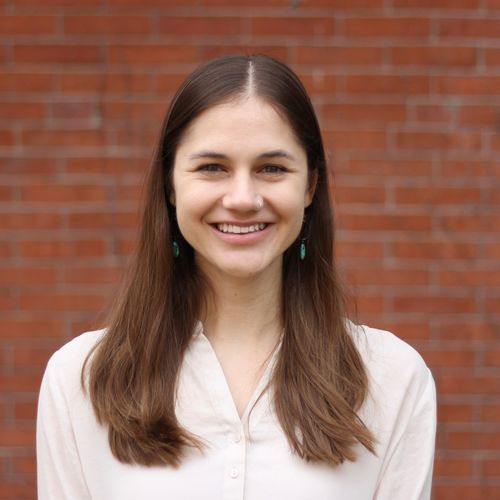
Commissioner Robbie Goldstein. Photo courtesy of Mass.gov
‘Hard Things Are Hard,’ but Dr. Robbie Goldstein Aims to Do Them Anyway
Massachusetts Department of Public Health Commissioner Dr. Robbie Goldstein, the 2026 Convocation speaker, shares his goals of public health leadership and the lessons he has learned along the way.
Dr. Robbie Goldstein has a small sign sitting on his desk at Massachusetts Department of Public Health that says, “Hard Things Are Hard.”
Goldstein, the state’s top public health official, appreciates the simple gravity of the reminder.
“It is a lesson that I carry with me every day. This work, whether it be clinical care, program building, or policy work, is really hard work,” says Goldstein. “And you just have to acknowledge it and keep taking steps forward one at a time, day after day. It’s the only way to really move the needle on some of the important issues that individuals are facing, communities are facing, and, in my perspective, the state of Massachusetts is facing.”
He received the sign as a gift from his friend and mentor Dr. Rochelle Walensky, then director at the Centers for Disease Control and Prevention. Goldstein served as a senior policy advisor to Walensky prior to joining DPH, and says, “It was that experience that brought me fully into public health and really opened up my eyes to the power of governmental public health—the power of policymaking [to] set agendas and really move us forward in our goals for people’s health and people’s access to healthcare. I see that as a big transition moment, and I see Rochelle, in particular, as the mentor who gave me the confidence I needed to step into this space.”
Both infectious disease physicians by training, the pair previously worked together at Massachusetts General Hospital, where Goldstein founded and directed the MGH Transgender Health Program and Walensky was chief of the Division of Infectious Diseases. Goldstein recognizes now that he was committed to the practice of public health long before he knew enough about the field to call it that.
“The work of the Transgender Health Program, when I look back at it now, was the work of public health,” he says. “We spent much more time outside the four walls of the clinic than we spent inside the clinic, but I didn’t call it public health at the time—I called it good clinical care and providing a medical home for people who needed it.”
Providing people with a medical home is in Goldstein’s blood. Growing up, his parents ran a small dental practice in upstate New York. Goldstein’s mother worked out front as the clinic’s business manager, while his father, a dentist, filled cavities, extracted teeth, and performed a variety of other procedures to protect his patients’ oral health.
“My dad took care of grandparents, parents, children, sometimes great-grandchildren, and folks knew each other and cared for each other—I was watching what happens when you have a small practice embedded into a community,” recalls Goldstein. He decided then that he wanted to become a physician and deliver community-based care to his own patients.
During much of his early clinical training, Goldstein focused on caring for people living with HIV or at risk of contracting HIV. This work connected him with the broader LGBTQ+ community and later led to his advocacy for gender-affirming care.
He is proud to carry on a commitment to protecting the health and wellbeing of transgender and nonbinary patients, among every other person who calls Massachusetts home, as commissioner. Since the 1980s, the needs of the LGBTQ+ community have been woven into all aspects of the department, he says, and in the three years since he assumed leadership, he has been intentional about incorporating trans and nonbinary voices, not only to inform responses to HIV and sexually transmitted infections, but also in the management of substance use disorder and the improvement of prenatal care.
Goldstein is also eager to highlight the department’s long history of work on climate and health. To recognize ongoing work at this intersection, one of his first acts as commissioner was to rename the Bureau of Environmental Health to the Bureau of Climate and Environmental Health, and to initiate collaboration between the Bureau and the Office of Preparedness and Emergency Management to ensure the state is ready when climate disaster strikes.
SPH interviewed Goldstein about his top priorities as commissioner, the legacy that guides his work, and his advice for students who aspire to make a difference through their own careers in public health.
Q&A
With Dr. Robbie Goldstein, commissioner of the Massachusetts Department of Public Health
SPH: You are leading MA DPH at a time when public health is under intense scrutiny. What are your top priorities and how do you measure success?
Goldstein: We have a lot of strategic priorities and goals that we set out for the department, but what has become so important, especially over the past year, has been our mission to increase trust in public health, and increase trust, in particular, in the work of the Department of Public Health. That said, it’s nearly impossible to measure. It is really hard to understand on a day-to-day basis: do people really trust us in government public health?
I think there are signs pointing to yes. Here in Massachusetts, we’re seeing childhood immunization rates go up, not down. We’re seeing people come to the Department of Public Health with questions, asking us for our datasets, for our analyses, for our help in addressing the concerns that they have in their communities, and I think those are signs that people trust us.
But over the next year, over the next two, three years, every day we are going to be fighting this battle, because every day there is this conflict of what are you hearing from public health here in Massachusetts, and how does that compare with what you’re hearing from public health at the federal government and in other parts of the country.
SPH: How do you maintain credibility, especially in such a politically charged environment where there is a lot of misinformation circulating online?
Goldstein: Everyone in public health knows this—mis- and disinformation spread way quicker than the truth. It is so much more prevalent, [and] folks can receive that mis- and disinformation in so many ways: social media, turning on the TV, reading the newspaper, talking to friends. Our tactic here at the Department of Public Health has to be persistent and consistent and everywhere.
There’s never a moment when I don’t talk about the benefits of vaccines. Everywhere I go, every community I’m in, every speech I give, I talk about the safety of vaccines, the power of vaccines, and the access that people here in Massachusetts have to vaccines. I am constantly pushing back on the myths and disinformation that is coming at folks. You can amplify that or spread that [method] across all the topics of public health. We have to just go out and keep speaking the truth. We do that while trying to build trust with communities, and the hope is that when we have trust, and then when we say the truth, people believe us, and it will start to bring down the mis- and disinformation or at least mitigate its impacts.
SPH: A lot of federal public health webpages and data have been wiped off the internet and are no longer accessible to the public. How is DPH using data to identify and address structural drivers of poor health, and how do you ensure that data is used ethically and transparently?
Goldstein: It’s a great question. We have a lot of ways we are trying to monitor what’s happening to the health of people across Massachusetts, and to do so in a way that advances our health equity goals. Some of that looks like, I’ll call it the boring work of changing our data standards and changing the way our databases interact so that we do know race, ethnicity, sexual orientation, disability status, language spoken—we have the data points so we can do the analyses that help us uncover disparities and then bring resources and programming to address them. We are undergoing a massive data modernization effort at the department that will help bring everyone up to those standards and bring all our systems into an interconnected space, so we can do the analyses while still maintaining confidentiality and privacy.
We then have the obligation to be transparent with the data. We are just the stewards of the data, and it is our responsibility to get it back to the people. We have a data library with all of our public-facing databases, and we’ve increased the use of dashboards so people can manipulate the data at home and understand what’s happening with substance use disorder in their community, or what the impact of heat is in their particular zip code, or how they might be exposed to an environmental toxin and what the downstream complications are. We’re giving people access and the tools they need to take control of their own health and the health of their community.
SPH: As the state grapples with a number of ongoing public health challenges, including the overdose crisis, rising mental health issues, and inequities in maternal and child health, how is DPH balancing immediate crisis response with long-term health equity strategies?
Goldstein: We have strategic priorities for the department, and the foundational strategic priority is our commitment to health equity and centering racial equity in our work. It’s something that permeates the entire Department of Public Health.
I’m a huge student of history, so indulge me for just a minute: [MA DPH] was the first state department of health that ever existed in America, and it was founded by Henry Ingersoll Bowditch, a renowned abolitionist who believed so strongly in racial equity and in the work against slavery that he staked his entire career in medicine and in public health on standing up for [those] principles. That is how this department started—with somebody who stood up for racial and health equity. When we look [back] over the decades, that has continued; the fight looks different across eras, but the values and the commitment to equity have persisted.
Yes, day to day, we’re putting out fires. We’re tracking measles outbreaks that are happening across the state. We’re dealing with an ongoing opioid epidemic that is taking too many lives every year. And we can’t do any of that without thinking about the implications on health equity as we start to roll out programming, make policy decisions, and think about our funding opportunities.
SPH: What is something that you wish more young people understood about the impact of public health careers, and how has that perspective guided your own priorities as commissioner?
Goldstein: What I would hope students would recognize is that the work we do is really important. The impact that is felt from that work is not immediate. I remember being a medical student, being in residency, being a junior faculty member, and wanting to see the impact right away. And that just doesn’t happen in public health, and it doesn’t happen in policy.
I’ll give an example from here in Massachusetts. We just celebrated the 20th anniversary of universal healthcare in Massachusetts, so-called RomneyCare, Chapter 58. That bill was 20, 30 years in the making. It took that long just to get the bill passed, and even in the past 20 years, you can say we haven’t fully implemented everything in the bill, and we haven’t fully felt the impact of everything that can be done. There’s always more work to do, always new revisions and changes that are necessary so that we can achieve the impact that we hope to have.
I know that’s in some ways discouraging for students who want to graduate and go off and change the world. I am confident that students are going to do all of that. I just want them to recognize that it doesn’t happen overnight.
SPH: What advice would you give students at SPH who want to work in state public health or influence policy?
Goldstein: For folks who want to work in government and in the policy space, I say welcome—please join us! We need as many people as possible. We need many hands to get the work done. I’d say to folks, especially as you’re leaving educational spaces, always keep the mindset that you have as a student with you as you go through the rest of your career. I learn every day in my government job—I have to keep learning. I learn from other policymakers, I learn from students who come in and are talking to me, I learn from advocates and community organizations who know best the problems that they’re facing.
SPH: Collaboration can be so important for learning, and Massachusetts has a strong public health and academic ecosystem. There are a lot of hospitals here, many universities, schools of public health. How do you see partnerships between universities and academic researchers contributing to DPH’s goals?
Goldstein: I’ve had a mission since I joined the department three years ago to better integrate the Department of Public Health with our academic ecosystem, because I see so much strength in that collaboration. There are datasets that the Department of Public Health has access to, but we don’t have the analytical power to analyze to fully understand what’s happening. That’s where academia could shine.
On the flip side, there are academics who have brilliant ideas that are based in the literature and an understanding of the theory, and we in the Department of Public Health can help with the implementation and can connect communities. It is collaboration that makes both of us stronger, and I’ve been trying to build those bridges, make them even stronger than they were before I joined, so that we can both benefit.