Student Spotlight: Using Social Work for Justice
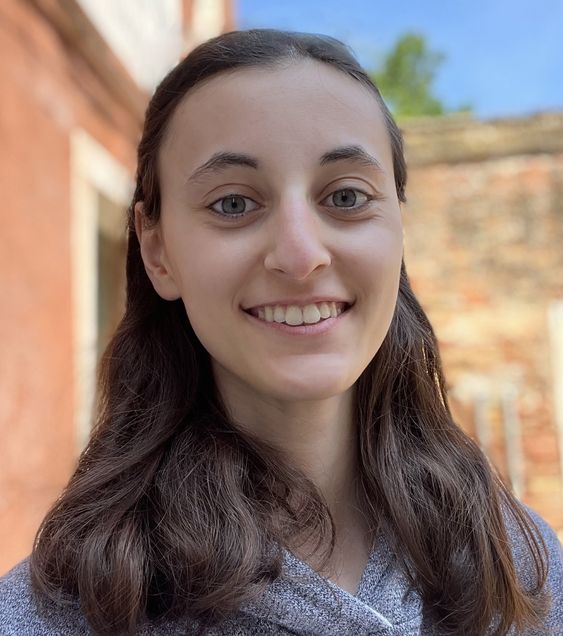
Get to know MSW student Charlotte G. (SSW ’25)
Charlotte G. delves into her passion for tackling juvenile justice issues through research and policy. In this article, Charlotte outlines her many research projects that bridge the disciplines of social work and law together, with the intention of better understanding the gaps in care for juveniles within the law and how to fill them. Charlotte explains how the skills she is learning through BUSSW’s MSW program will be indispensable to her ultimate goal: becoming an attorney representing juveniles in court.
Could you describe your background to me? What are your interests outside of work and school?
I am originally from Paris, France. My immediate family and I moved to the US when I was seven years old. I then went to undergrad at McGill University in Canada where I majored in philosophy and double minored in psychology and sociology. I’ve always moved around a lot and most of my life has been learning how to adapt to new cultures and places. I’m also part of the LGBTQ+ community and have struggled with mental health (ADHD and anxiety), which has shaped my worldview. I learned that it’s important to surround yourself with people who accept you for who you are, not who they–or society–might want you to be.
Outside of work and school, I really like photography and drawing. I also love horseback riding and baking.
Why social work? What drew you to the field, and how did you become interested in becoming a social worker?
I want to go into law school and represent juvenile defendants in court. I joined the MSW program because I fundamentally want to understand what kids go through, [and what] leads them to recidivism, or [what] can lead them to undergo struggles in life that makes them more likely to face incarceration, detention, or other DYS and DCF services.
I joined the MSW [program] as a clinical student [in order] to get firsthand experience working with kids so that I can understand their outlook, what problems they face, and how I can create policies to address these problems. Kids are a vulnerable population, and they often are silenced. Their voices aren’t given as much care because adults think they might know best, or they might try to say, “Okay, well, this is how developmentally XYZ other children were. I know it has worked for them, and I’m going to try to apply that for you [too].”
I really believe in a case-by-case basis for kids and working with them. I’m sure you know, you’ve been a teenager once. You tell a kid or a teen, don’t do that, and [it] makes them want to do it 20 times more. You have to work with them and find what the ‘thing’ is that makes it worth it for them. What keeps them motivated and on the “right path”? That’s really what I wanted to learn through my MSW. My first placement was at a kindergarten through 12th school, but I worked primarily with seventh through 12th-grade students. I was able to see firsthand the impact that high turnover rates for teachers have on students and the impact of gentrification, racism, and lack of opportunity and financial disadvantages that they faced.
What’s your favorite memory or experience in your academic career at BUSSW?
I think the first semester is very broad; it’s foundational coursework and hard to gauge. I really liked my policy class, and I was able to do projects that I found fulfilling and interesting. I gained a lot from just attending lectures and understanding what classes interest me and what classes I’m maybe not as passionate about. I think that’s kind of what your first year is for, discovering what your passion is.
This semester, I really like my research and policy class because I’m able to work on a semester-long project. It is of personal interest to me, juvenile law and delinquency and juvenile rights. I’m able to learn the course material in a way that is directly applicable to what I want to do in the future.
What makes social work worthwhile to you?
I think social work never ends. I think these are skills that everyone needs to learn, no matter who they are. How do you engage with others? How do you show professionalism? How do you remain ethical? How do you show compassion without burning out? I think these are skills that we’re taught as social workers. But everyone, no matter what the job, can benefit from it. I think part of our work is to learn so we can teach, pass it on, whether it’s to one client or to a community. I think as humans, that’s kind of what we do. We like to share with our friends.
I think we do that with clients, too. Like, “I see you’re really trying this. How about we give this other thing a chance?” I think social work is worth it because it teaches you how to adapt and overcome a situation, how to see injustice and fight against it, or how to see someone in need or someone struggling and be there for them.
I think social work for me is not really about the program as much as it is about the skills that are being taught and the care that is being shown. I think that’s the mindset that I’m going into classes with. These classes are important for who I will be as a professional, but social work isn’t defined by rigid boundaries. It’s inherently broad, just in the name alone. Because what is being social? That depends on culture, that depends on person to person. That’s really how I view it.
What work are you proudest of during your academic career?
My dedication to research is something I’m very proud of. I cold emailed a lot of law professors at BU and pitched them a project. One answered when I asked for funding, and he gave me that funding. So, I’m working with him on that, and it’s [been] very fulfilling.
The main gist of the project is that we’re looking into direct monetary [assistance programs]. [For example], cash assistance programs for incarcerated people undergoing the reentry process. It depends, state by state, but basically, some states give money for a bus ticket, bus fare, or they make attending court very easy with transportation. Then, with other states, they leave you to fend for yourself. So, there’s a lot of recidivism, because if you can’t pay to go to court and show up for your court date, then you’re breaking your parole. If you’re breaking parole, then you go back to jail. Especially if you can’t pay fines and things like that.
With the BU law professor, I’m looking into what kind of resources there are. There are some public defenders’ offices that have a fund for incarcerated individuals going through reentry. Their public defenders can apply for money for things like Uber, professional clothes, or basic hygiene products. We’re kind of looking into what it is that people need the most, and then how much it would cost for the state to provide that. We have found from a low scale that it costs more to keep people incarcerated than it would to just give them hygiene supplies.
I think it’s kind of what social work is about, to kind of tie into the previous question. This is very much from a legal lens; I’m working with a law professor and doing legal research. But I’m still applying my care, engagement, and determination to [perform] research into just policies. This has been an ongoing thing [in my academic career]. During my undergrad, I did the same thing. I reached out to a law professor who sat as Dean of the Faculty of Law at McGill in Canada, who also was a philosophy professor. I told him, “I want to work on a project with you.” I did an independent research course with him and I wrote a thesis for him on parental moral responsibility in the case of juvenile offenders. I looked into whether parents should be held morally accountable for the crimes their children commit, which has direct links with current laws, or even school shootings where parents are in the spotlight often.
In that aspect, I did a second project which received funding through McGill in my last year. It was my summer research project, [regarding whether or not] we should mandate diversity quotas on jury panels, and what that would look like. Would that be legally enforceable, to increase representation of minorities on jury panels that are currently mostly white men? It becomes problematic when you force people to fit into boxes or make them disclose how they identify to meet diversity quotas. But at the same time, it is important to make sure that the panels are diverse. These research projects, I’m very proud of because I give them my all. I think it’s never too late, and never too early to fight for the causes you believe in.
What were your favorite courses, professors and events at BUSSW?
Obviously, the law professor I’m doing research with, kudos to him for [sponsoring me]. He’s new to BU this year. He said to me, “I will use my funding for you,” even though he could be using it for a law student, so I really appreciate him. His name is Angelo Petrigh. I think he deserves a shout out for taking a leap of faith and trusting in me. He wrote me a very nice letter of recommendation, and I landed my advanced year placement.
I pitched different projects that were interesting to me within the subjects of law and criminal rights and focused on juvenile [issues] to him. He deserves a shout out for that. I emailed maybe nine or ten [professors], and of those nine or ten, I had two or three people answer. Of those two or three, he was the one who was like, “Let’s do it. Let’s work this out.” I’m now working with him and we’re looking to get funding for the summer.
It’s hard because there’s not a lot of interdisciplinary funding, and a lot of the law funding is for law students that are research assistants, or for undergrads, of which I am not. It’s really hard, and it does exclude me from a lot of opportunities, but he’s very motivated and I know the dean or the director of the law school research program is very interested in seeing this [interdisciplinary research] happening.
I think Nina Aronoff also deserves a shout out. She has never failed to believe in me. I had her last semester, and I have her [again] this semester. We have had many conversations about my personal struggles and things that I need support for, and she has been a consistent source of support.
What are you looking forward to after you graduate? What fields are you interested in working in?
I think I’m going to try to go straight to law school. Obviously, I think I’ll take a short break [from education] and work for one year as I study for the LSAT. But I think law is really my passion and my calling.
Throughout my undergrad, I volunteered. I was on six committees, I did five volunteering positions, and with a full load of classes and research, I was very determined. I don’t think that’s going to change anytime soon. I think that we need more people in law who have that understanding, and who have that emotional cognition. That’s not to say lawyers are mean or that they’re cold. My life has been very much impacted by amazing lawyers who have been there for me time and time again by allowing me to do research, and giving me funding to do research that I’m passionate about. But I do think that the field is hard to make policies when you haven’t worked firsthand with the impacted populations.
For me, what I wanted to spend this master’s on is understanding kids and their environment and using that to then work in law. I think I want to go into law sooner rather than later so that I can make sure that my kids can benefit as much as they can. I don’t want to have to wait generations for a change to be made. You can’t count on other people to make that change. You must be dedicated and do it right.
What is your dream job in social work?
I want to represent juvenile defendants in court, as a lawyer. But when you work with kids, you never just work on the problems, right? You always work with it. My foundational understanding of therapeutic services will be a lifelong aid. It will forever change how I help kids and how I’m able to advocate for them. So even if I’m not a social worker in the proper sense of the word, I will have that.
What is your advice for other MSW students?
Stick with it. Social work is not easy, and it might not be your calling in the way that it isn’t mine, but what you are learning will serve you for your whole life. Whether that’s just figuring out how to have healthy boundaries and communication for your personal relationships, or whether it’s when someone comes up to you and says, “I
need help.” We’re all human, and humans are inherently social beings, [so] you have to learn how to fit in, how to be a good person, how to grow, how to support yourself, and develop and support others.
I think social work gives you that skill. It gives you that foundation. I think sitting down and also realizing when [social work is] too much for you is very important. If you’re not happy and you dread and regret it, you won’t be able to make an impact, at least not one that you would be proud of in the long term.