Environmental Health and Justice.
As part of Boston University’s on-campus Master of Public Health (MPH) degree, you will choose at least one Functional Certificate as your area of concentration, building upon your interests, strengths and career goals.
This certificate is STEM approved. Please visit the ISSO website for details.
Curriculum Focus*
The Environmental Health and Justice Certificate provides students with the skills needed to address the environmental challenges of the 21st century, emphasizing action-oriented approaches and social justice. The certificate welcomes all MPH students regardless of undergraduate major or prior training in science. Students will develop critical career-oriented skills in data analysis, environmental health assessment and policy, environmental health science, and community engagement. The program offers flexibility in course selection, small classes, faculty engagement, and hands-on opportunities to work in the field and in the community.
*Students who matriculated into the MPH program before Fall 2025 and selected the Environmental Health certificate will continue in the EH certificate and will follow the EH Certificate Bulletin/Roadmap associated with their matriculation year. More information can be found in the FAQ section, below.
Comprehensive Course Offerings
The curriculum includes courses that cover essential skills and methodologies in environmental health sciences. All Environmental Health and Justice certificate students will take the foundational course in the program, EH731: Environmental Health and Justice: Essential Skills for Effective Action. In this course, students explore how environmental factors, such as air and water quality, chemical exposures, climate change, housing, and urban development, affect the health of communities and populations. Students will learn interdisciplinary approaches to address complex environmental health challenges and will develop a professional, career-oriented portfolio, including GIS maps, policy and advocacy memos, media communications, and public presentations.
To complete the certificate, students will choose 4 units (1-2 courses) from each of the following skills-based clusters:
- applied data analysis;
- environmental health assessment; and
- equity-informed environmental health policy and practice.
Each cluster includes course options designed to build practical, job-oriented skills for a range of professional applications.
Skills-Based Learning
Students will engage in a variety of skills-based courses within each of the three clusters, with course options including data analysis and statistics, GIS, risk assessment, field exposure assessment methods, strategies for public health advocacy, and much more. This will ensure a comprehensive educational experience targeting the professional needs of each student.
Practicum Experience
A vital part of the certificate, the practicum consists of 240 hours of fieldwork with a public health-related organization, providing students with first-hand exposure to real-world challenges in the field of environmental health. In recent years, students have completed practica at organizations including Health Effects Institute, Project Bread, Boston Medical Center, Massachusetts Reform Law Institute, and the Mayor’s Executive Office of Energy and Environmental Affairs.
Integrative Learning Experience (ILE)
The certificate culminates in a capstone project that involves preparation and participation in a mock public hearing or community meeting, with engagement from faculty, staff, and students across the department. This ILE allows students to synthesize their learning and apply theoretical concepts to practical situations, emphasizing both written and oral communication skills.
Career Preparation
Graduates of the Environmental Health and Justice certificate will be well-prepared for a range of careers and jobs. Students will gain skills in professional data analysis and presentation, environmental health assessment and epidemiologic methods, community engagement, policy, and written and oral communication. Graduates successfully find positions in government agencies, NGOs, consulting firms, academia, and elsewhere.
Certificate Director
“The environment is the most enduring, recognized predictor of health. Air pollution, chemicals in consumer products, climate change, lead poisoning, poor housing, sanitation, infectious agents, and contaminated water supplies are just a few of the predictors of the health of communities around the globe. Students in the Environmental Health and Justice Certificate learn the tools and methods needed to investigate and solve problems associated with the environmental health challenges of today and tomorrow. In addition, they work to develop effective communication skills and strategies to clearly articulate the problems and solutions to our environmental health challenges. Our students are closely mentored, engaging with faculty, practitioners, and community/advocacy organizations inside and outside of the classroom.”
Frequently Asked Questions
Who should I contact for advising or with questions about the EH&J Certificate?
MPH Environmental Health and Justice Functional Certificate Roadmap 2025-2026
All students that have officially declared the Environmental Health Justice Certificate have been assigned an academic advisor for the certificate. Academic advisors are faculty members with expertise in the certificate content. Faculty advisors serve primarily in a mentoring role, providing guidance regarding career path, professional development, and options to complete degree requirements.
You should have received an email soon after declaring this certificate (within two weeks) notifying you of your academic advisor, and your advisor’s name should appear in the Academics section of the MyBU Student Portal. With questions, please email Christine Copacino (copacino@bu.edu).
Academic Program Administrator
The Academic Program Administrator for the EH&J Certificate is Christine Copacino, MEd. She is available to help you plan your courses in accordance with degree requirements, understand the School’s educational policies and procedures, and connect to resources within BUSPH. Please reach out to her with any questions about courses, credit requirements, faculty, and programming within this certificate (copacino@bu.edu).
Christine also hosts weekly virtual office hours, on Thursdays from 1-2pm. Please reach out to Christine for the Zoom link, or to schedule an appointment if you are unable to make this time.
Certificate Director
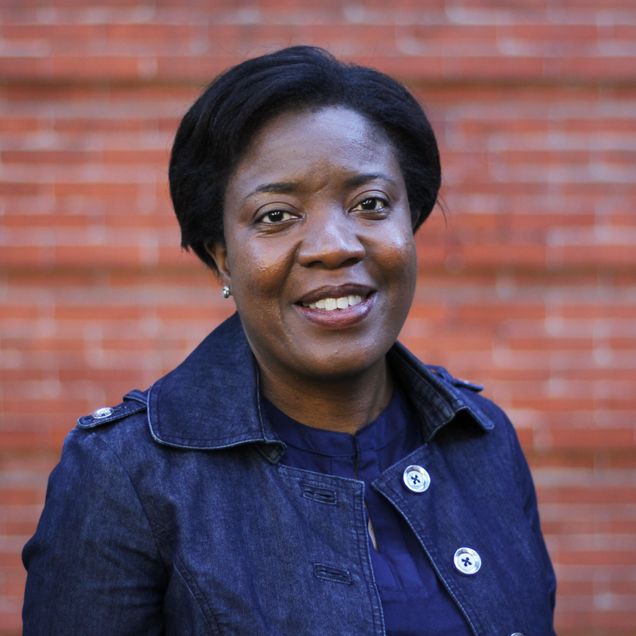
You can also reach out to the Certificate Director, Junenette L. Peters, ScD, with questions about the certificate or the program (petersj@bu.edu).
Registrar
Graduate Student Life
What are the required and elective courses within the EH&J certificate (EH&J Certificate Roadmap)?
MPH Environmental Health and Justice Functional Certificate Roadmap 2025-2026
The EH&J Certificate Roadmap describes the requirements of the Environmental Health and Justice Certificate, as well as places these requirements in the context of the overall MPH program requirements. Each Roadmap is linked to a specific matriculation year, so please reference the Roadmap for the semester/year you matriculated.
The second page of the Roadmap includes information about when courses in the certificate are typically offered. Please note that we cannot guarantee that a specific course will run during a specific semester. Also, this Roadmap will not be updated if courses are cancelled, so be sure to check the MyBU Student Portal for course availability information.
Students that matriculated previous to Fall 2025: please see the “For students who matriculated prior to Fall 2025 and declared the Environmental Health certificate” section below to view the Environmental Health Certificate Roadmap applicable to your matriculation year.
When are courses in the certificate typically offered?
See the MPH Environmental Health and Justice Functional Certificate Roadmap for your matriculation year to find information about when courses are typically offered.
MPH Environmental Health and Justice Functional Certificate Roadmap 2025-2026
Students that matriculated previous to Fall 2025: please see the “For students who matriculated prior to Fall 2025 and declared the Environmental Health certificate” section below to view the Environmental Health Certificate Roadmap applicable to your matriculation year.
How and when do I register for the ILE? Visit Graduation Requirements FAQs and scroll to the question.
How and when do I register for the ILE?
Visit
Graduation Requirements FAQs and scroll to the question “I’m An MPH Student, How And When Do I Register For The ILE?” to view details about ILE registration.
Can I complete the EH&J certificate with other certificates?
Yes! Each on-campus MPH student pursues at least one functional certificate. You also may add a second functional certificate or choose a context-related certificate or additional electives. Even if there is little course overlap, many functional and context certificates pair well with EH&J and you should discuss this with your academic advisor. Students can apply a maximum of 4 credits of overlap between certificates (the same course counting for credit towards both certificates), and the EH&J certificate has been designed to allow for overlap with other complementary certificates.
What types of jobs do students can students get after completing the EH&J Certificate?
Graduates of the EH&J certificate can find roles in many different sectors, including government (local, state, federal), environmental consulting, NGOs, hospitals, and continuing graduate training, among others. Such roles include program management, policy analysis, advocacy, administration, and research. The EH&J certificate provides the foundational knowledge and skills to support these and other careers, with the ability to choose courses that fit numerous career paths.
For current students, the Exploring Public Health Careers resource, managed by the Career & Practicum Office, presents material on a range of public health fields, with a special focus on BUSPH certificates and career pathways. There is often overlap between fields and skills utilized, so we encourage you to explore multiple sections to gain a deeper understanding.
The page of the resource specific to Environmental Health careers can be accessed here.
What enrichment activities are available in the certificate?
There are many such opportunities, including attending the
Gijs van Seventer Environmental Health Seminar, held weekly on Wednesdays during the semester, from 1-1:50pm.
Attending these seminars can provide an opportunity to hear from experts in the field and serves as an opportunity to connect with faculty, staff, and students in the department or SPH more generally. View the seminar schedule and location. Students are also invited and welcome at many Department of Environmental Health community and academic events throughout the year.
How do I stay in the know about EH&J Certificate activities and announcements?
The Department of Environmental Health issues a weekly newsletter, the EH Blast, including information pertaining to announcements, upcoming events, certificate information, job and practicum opportunities, and much more. Declared students will receive this email.
For students who matriculated prior to Fall 2025 and declared the Environmental Health certificate
Who should I contact for advising or with questions about the EH Certificate?
All students that have officially declared the Environmental Health Certificate have been assigned an academic advisor for the certificate. Academic advisors are faculty members with expertise in the certificate content. Faculty advisors serve primarily in a mentoring role, providing guidance regarding career path, professional development, and options to complete degree requirements.
You should have received an email soon after declaring this certificate (within two weeks) notifying you of your academic advisor, and your advisor’s name should appear in the Academics section of the MyBU Student Portal. With questions, please email Christine Copacino (copacino@bu.edu).
Academic Program Administrator
The Academic Program Administrator for the EH Certificate is Christine Copacino, MEd. She is available to help you plan your courses in accordance with degree requirements, understand the School’s educational policies and procedures, and connect to resources within BUSPH. Please reach out to her with any questions about courses, credit requirements, faculty, and programming within this certificate (copacino@bu.edu).
Christine also hosts weekly virtual office hours, on Thursdays from 1-2pm. Please reach out to Christine for the Zoom link, or to schedule an appointment if you are unable to make this time.
Certificate Director
You can also reach out to the Certificate Director, Junenette L. Peters, ScD, with questions about the certificate or the program (petersj@bu.edu).
Registrar
Graduate Student Life
Which course bulletin should I use if I matriculated several years prior?
Your course Bulletin is linked to the year that you matriculated into the MPH program. Find any previous academic year’s bulletin in the BU
archive.
What are the required and elective courses within the EH Certificate (EH Certificate Roadmap)?
MPH Environmental Health Functional Certificate Roadmap, Matriculation Year: Fall 2024 and Spring 2025
MPH Environmental Health Functional Certificate Roadmap, Matriculation Year: Fall 2023 and Spring 2024
The EH Certificate Roadmap describes the requirements of the Environmental Health Certificate, as well as places these requirements in the context of the overall MPH program requirements. Each Roadmap is linked to a specific matriculation year, so please reference the Roadmap for the semester/year you matriculated.
The second page of the Roadmap includes information about when courses in the certificate are typically offered. Please note that we cannot guarantee that a specific course will run during a specific semester. Also, this Roadmap will not be updated if courses are cancelled, so be sure to check the MyBU Student Portal for course availability information.
Students that matriculated previous to Fall 2023 should access the Bulletin Archives for the year they matriculated to view their certificate requirements.
When are courses in the certificate typically offered?
For more information about MPH degree requirements and admissions, request information to learn more.