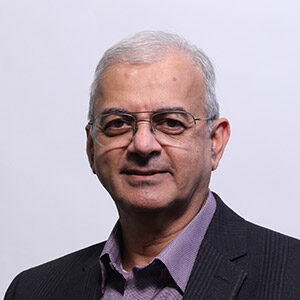
Michael O’Laughlin, Director of CPE’s program for Interpreters, quoted in Cape Cod Times
The article in the Cape Cod Times talks about the demands of...
The Master of Science (MS) in Telecommunication degree program integrates knowledge of the computer science, engineering, managerial, and legal aspects of networking and telecommunications. The telecommunication degree program is designed to provide knowledge and critical skills essential for success in this rapidly expanding field. Program participants gain the following advantages:
Students may choose to pursue a concentration in Security.
Appreciating the converging nature of management skills and technology, the Computer Science Department has a special relationship with Metropolitan College’s Administrative Sciences and Actuarial Science departments. Degree candidates in either program may apply 8 credits from one degree toward a second degree in one of these disciplines, thereby reducing their work by two courses. Students must be accepted by both departments, but they may request that application materials such as references and transcripts be forwarded from the first program to the second.
Prerequisite courses or evidence of proficiency in these areas must accompany the application to the program. If college-level credit courses are not in evidence, the department will determine what prerequisite courses must be completed in addition to the graduate degree requirements. Students claiming equivalent proficiency in prerequisite courses from non-academic sources must take an examination to demonstrate such proficiency.
Official transcripts of previous academic work, three letters of recommendation, personal statement and résumé are required as part of the application.
A maximum of two graduate-level courses (8 credits) taken at Metropolitan College before acceptance into the program may be applied toward the degree.
Minimum passing grade for a course in the graduate program is C (2.0), but an average grade of B (3.0) must be maintained to be in good academic standing and satisfy the degree requirements.
Apply here.
No grade lower than C may be used toward degree requirements. Students must maintain an overall grade point average of 3.0 in order to be in good academic standing and to graduate. Students with a grade point average of less than 3.0 are on academic probation and must be in a position to achieve a 3.0 within the 48 required credit hours for graduation.
Applicants to the program are required to have a baccalaureate degree and proficiency in the following areas:
A total of 40 credits is required.
(Seven courses/28 credits)
Overview of data communication and computer networks, including network hardware and software, as well as reference models, example networks, data communication services and network standardization. The OSI and the Internet (TCP/IP) network models are discussed. The course covers each network layer in details, starting from the Physical layer to towards the Application layer, and includes an overview of network security topics. Other topics covered include encoding digital and analog signals, transmission media, protocols. circuit, packet, message, switching techniques, internetworking devices, topologies. LANs/WANs, Ethernet, IP, TCP, UDP, and Web applications. Labs on network analysis. [ 4 cr. ]
| Section | Type | Instructor | Location | Days | Times |
|---|---|---|---|---|---|
| B1 | IND | Day | MCS B25 | T | 6:00 pm – 9:00 pm |
| L1 | IND | Taylor | M | 5:00 pm – 8:00 pm |
The goal of this course is to provide Computer Information Systems students with the mathematical fundamentals required for successful quantitative analysis of problems in the field of business computing. The first part of the course introduces the mathematical prerequisites for understanding probability and statistics. Topics include combinatorial mathematics, functions, and the fundamentals of differentiation and integration. The second part of the course concentrates on the study of elementary probability theory, discrete and continuous distributions. 4 cr [ 4 cr. ]
| Section | Type | Instructor | Location | Days | Times |
|---|---|---|---|---|---|
| A1 | IND | Kohn | FLR ARR | M | 6:00 pm – 9:00 pm |
| EL | IND | Kohn | FLR ARR | M | 6:00 pm – 9:00 pm |
Overview of operating system characteristics, design objectives, and structures. Topics include concurrent processes, coordination of asynchronous events, file systems, resource sharing, memory management, security, scheduling and deadlock problems. [ 4 cr. ]
| Section | Type | Instructor | Location | Days | Times |
|---|---|---|---|---|---|
| D1 | IND | Zhang | PSY B53 | R | 6:00 pm – 9:00 pm |
Computer Networks continue to grow and diversify at unprecedented rate. Much of that diversification is in how the media are utilized. One can not truly understand networking, analyze alternatives or design good networks without a solid founding in how the media are utilized. This course will explore current and expected media technologies with the intent of understanding what they offer and the trade-offs they present. The course will cover both wireline (Ethernet, DOCSIS, MPLS, ATM) and wireless (802.11, Wi-Max, Zigbee, Bluetooth, etc). The course will analyze the technologies to consider their error characteristics, support for quality of service, congestion control, and security, and their manageability. [ 4 cr. ]
This course covers computer networks management including configuration, fault, performance, as well as security management. Particular focus and emphasis is given to security management. Problem solving techniques and network management tools are discussed and practiced during extensive laboratory sessions. Topics include LAN and WAN network management, fault detection, configuration, security, performance, accounting management. Strong focus on problem-solving techniques and network management tools based on SNMP, detailed discussion of multi-user computer systems security techniques, basics of cryptography, authentication techniques, and Kerberos, Secure operating systems. Software protection. Electronic mail. Web Security, IPsec, e-commerce: payment protocols, electronic cash. Risk assessment. [ 4 cr. ]
This course will cover advanced network security issues and solutions. The main focus on the first part of the course will be on Security basics, i.e. security services, access controls, vulnerabilities, threats and risk, network architectures and attacks. In the second part of the course, particular focus and emphasis will be given to network security capabilities and mechanisms (Access Control on wire-line and wireless networks), IPsec, Firewalls, Deep Packet Inspection and Transport security. The final portion of the course will address Network Application security (Email, Ad-hoc, XML/SAML and Services Oriented Architecture security. As part of our course review we will explore a number of Network Use Cases. [ 4 cr. ]
| Section | Type | Instructor | Location | Days | Times |
|---|---|---|---|---|---|
| B1 | IND | D'Alotto | SHA 202 | T | 6:00 pm – 9:00 pm |
In-depth coverage of the architecture, interfaces, protocols, and technologies of high-speed broadband networks. Topics include broadband wide-area network (WAN) technologies such as gigabit routers with IP switching, MPLS, ATM and Frame Relay; broadband LAN technologies: Fast Ethernet and Ethernet Switching, Gigabit Ethernet, and FDDI; broadband access technologies: DSL and Cable modems, as well as discussion of network performance, congestion control and traffic management, provision of different levels of quality of service (QoS),resource reservation, unicast and multicast routing, and multimedia compression and security in broadband networks. Students are required to complete a research project in one of the advanced Internet technologies. Labs on network performance analysis. [ 4 cr. ]
| Section | Type | Instructor | Location | Days | Times |
|---|---|---|---|---|---|
| C1 | IND | Day | MCS B25 | W | 6:00 pm – 9:00 pm |
Students who have completed courses in core curriculum subjects as part of their undergraduate degree program must replace the corresponding core courses with electives. It is recommended that each replacement course be in the same technical area. Students who have work-related experience in any of the core curriculum courses may apply for a waiver by submitting appropriate documentation. When a course waiver is granted the student must substitute a graduate-level computer science course for the core course.
(Three courses/12 credits)
Students who are not pursuing a concentration in Security must select three general electives. Electives other than those listed below must be approved by the student’s advisor. Students should make sure that they have all prerequisites required by the selected course. At least two courses must be at the 600-level or above:
Automatic and reliable identification of individuals for issuing official documents (e.g., passport and visa) and providing access to secure facilities (e.g., military base) and proprietary information (e.g., corporate websites) has become an essential part of our modern networked society. Biometric recognition systems utilize the physiological or behavioral characteristics of an individual for identification. By using biometrics, it is possible to establish an identity based on "who you are", rather than by "what you possess" (e.g., an ID card) or "what you remember" (e.g., a password). In this course we will study the fundamental and design applications of various biometric systems based on fingerprints, voice, face, hand geometry, palmprint, iris, retina, and other modalities. Multimodal biometric systems that use two or more of the above characteristics will be discussed. Biometric system performance and issues related to the security and privacy aspects of these systems will also be addressed. [ 4 cr. ]
| Section | Type | Instructor | Location | Days | Times |
|---|---|---|---|---|---|
| C1 | IND | Djordjevic | GCB 204 | W | 6:00 pm – 9:00 pm |
This course focuses on building core competencies in web design and development. It begins with a complete immersion into HTML essentially XHTML and Dynamic HTML (DHTML). Students are exposed to Cascading Style Sheets (CSS), as well as Dynamic CSS. The fundamentals of JavaScript language including object-oriented JavaScript is covered comprehensively. AJAX with XML and JSON are covered, as they are the primary means to transfer data from client and server. Open source libraries such as Prototype, jQuery and Mootools might optionally be covered, as they assist in building cross-browser web applications rapidly and efficiently. The PHP language will be presented and covered; however, students can use other server-side languages; such as ASP.NET, Java (JEE) or Ruby on Rails (RoR) for their projects. The course will focus on MySQL as a relational database system with the final project. Students may use other databases with instructor approval. Students will work with either IIS 6 (or better) or Apache 2, using any conventional operating system when working on their term projects and class laboratories. [ 4 cr. ]
| Section | Type | Instructor | Location | Days | Times |
|---|---|---|---|---|---|
| D1 | IND | Sheehan | FLR 267 | R | 6:00 pm – 9:00 pm |
| EL | IND | Sheehan | FLR 267 | R | 6:00 pm – 9:00 pm |
| OL | IND | Kanabar | ARR | – |
This course provides students with a comprehensive overview of the principles, processes, and practices of software project management. Students learn techniques for planning, organizing, scheduling, and controlling software projects. There is substantial focus on software cost estimation and software risk management. Students will obtain practical project management skills and competencies related to the definition of a software project, establishment of project communications, managing project changes, and managing distributed software teams and projects. [ 4 cr. ]
| Section | Type | Instructor | Location | Days | Times |
|---|---|---|---|---|---|
| D1 | IND | Heda | PHO 205 | R | 6:00 pm – 9:00 pm |
| EL | IND | Heda | M | 6:00 pm – 9:00 pm | |
| OL | IND | Shirley | ARR | – |
Contemporary communication costs allow software applications to be produced via geographically distributed development (GDD). In addition to the traditional challenges of specifying and developing IT. systems, GDD projects must accommodate differing cultures, time zones, and development methodologies. This course prepares students to justify,lead, participate in, and maintain such projects. Students work in geographically dispersed teams and produce documented applications. Lab course. [ 4 cr. ]
Study of the ideas and techniques that enable computers to behave intelligently. Search, constraint propagations, and reasoning. Knowledge representation, natural language, learning, question answering, inference, visual perception, and/or problem solving. Laboratory course. [ 4 cr. ]
This course enables IT professional leaders to identify emerging security risks and implement highly secure networks to support organizational goals. Discussion of methodologies for identifying, quantifying, mitigating and controlling risks. Students implement a comprehensive IT risk management plans (RMP) that identify alternate sites for processing mission-critical applications, and techniques to recover infrastructure, systems, networks, data and user access. The course also discusses related topics such as: disaster recovery, handling information security; protection of property, personnel and facilities; protection of sensitive and classified information, privacy issues, and criminal terrorist and hostile activities. [ 4 cr. ]
| Section | Type | Instructor | Location | Days | Times |
|---|---|---|---|---|---|
| OL | IND | Burgoyne | ARR | – |
Provides a comprehensive understanding of digital forensics and investigation tools and techniques. Learn what computer forensics and investigation is as a profession and gain an understanding of the overall investigative process. Operating system architectures and disk structures are discussed. Studies how to set up an investigator?s office and laboratory, as well as what computer forensic hardware and software tools are available. Other topics covered include importance of digital evidence controls and how to process crime and incident scenes, details of data acquisition, computer forensic analysis, e-mail investigations, image file recovery, investigative report writing, and expert witness requirements. Provides a range of laboratory and hands-on assignments either in solo or in teams. With rapid growth of computer systems and digital data this area has grown in importance. [ 4 cr. ]
| Section | Type | Instructor | Location | Days | Times |
|---|---|---|---|---|---|
| OL | IND | Burrell | ARR | – |
The course provides an in-depth presentation of security issues in computer systems, networks, and applications. Formal security models are presented and illustrated on operating system security aspects, more specifically memory protection, access control and authentication, file system security, backup and recovery management, intrusion and virus protection mechanisms. Application level security focuses on language level security and various security policies; conventional and public keys encryption, authentication, message digest and digital signatures. Internet and intranet topics include security in IP, routers, proxy servers, and firewalls, application-level gateways, Web servers, file and mail servers. Discussion of remote access issues, such as dial-up servers, modems, VPN gateways and clients. [ 4 cr. ]
| Section | Type | Instructor | Location | Days | Times |
|---|---|---|---|---|---|
| A1 | IND | Jacobs | FLR 133 | M | 6:00 pm – 9:00 pm |
| EL | IND | Jacobs | FLR 133 | M | 6:00 pm – 9:00 pm |
Data mining and investigation is a key goal behind any data warehouse effort. The course provides an introduction to concepts behind data mining, text mining, and web mining. The course surveys various data mining applications, methodologies, techniques, and models. Topics include classification, decision trees, association rules, and clustering. The course wraps up with data mining case studies using large data sets taken from real-world projects. Algorithms will be tested on data sets using the Weka Data mining software and Microsoft SQL Server 2005 (Business Intelligence Development Studio). [ 4 cr. ]
| Section | Type | Instructor | Location | Days | Times |
|---|---|---|---|---|---|
| A1 | IND | Kalathur | FLR 265 | M | 6:00 pm – 9:00 pm |
| EL | IND | Kalathur | FLR 265 | M | 6:00 pm – 9:00 pm |
| OL | IND | Lee | ARR | – |
The Advanced Web Application Development course builds upon its predecessor MET CS 601 Web Application Development and concentrates primarily on building rich client web applications in the browser. The course covers the following modules in depth: ActionScript 3.0 Flex 3/4, WPF, and Silverlight. Along with the fundamentals underlying these technologies, several applications will be showcased as case studies. Students obtain hands-on exposure with these technologies starting with simple applications and then examining real world complex applications. At the end of this course, students would have mastered the latest and widely used Web application development methodologies. [ 4 cr. ]
| Section | Type | Instructor | Location | Days | Times |
|---|---|---|---|---|---|
| D1 | IND | Kalathur | FLR 265 | R | 6:00 pm – 9:00 pm |
This course provides a comprehensive understanding of network forensic analysis principles. Within the context of forensics security, network infrastructures, topologies, and protocols are introduced. Students understand the relationship between network forensic analysis and network security technologies. Students will learn to identify network security incidents and potential sources of digital evidence and demonstrate the ability to perform basic network data acquisition and analysis using computer based applications and utilities. Students will also identify potential applications for the integration of network forensic technologies and demonstrate the ability to accurately document network forensic processes and analysis. [ 4 cr. ]
This course provides an introduction to the advanced digital forensic topic relating to malicious software (malware), which represents an increasing information security threat to computer systems and networks. Students will review software engineering design fundamentals and reverse engineering techniques utilized to conduct static and dynamic forensic analysis on computer systems and networks. Students will learn about the importance of forensic principles, legal considerations, digital evidence controls, and documentation of forensic procedures. This course will incorporate demonstrations and laboratory exercises to reinforce practical applications of course instruction and will require an independent research paper related to the course topic. [ 4 cr. ]
| Section | Type | Instructor | Location | Days | Times |
|---|---|---|---|---|---|
| C1 | IND | Berry | FLR ARR | W | 6:00 pm – 9:00 pm |
| EL | IND | Berry | FLR ARR | W | 6:00 pm – 9:00 pm |
Architecture of Web Services; review of XML Shemas; SOAP (Simple Object Access Protocol); WSDL (Web Services Description Language); UDDI (Universal Description, Discovery, and Integration); Web Services in .NET; Sun and Apache tools; Company-specific Web Service API?s; Java API?s for XML Messaging; Java Application Servers; review of Security, transactions, and business process languages (e.g. BPEL) among Web Services. [ 4 cr. ]
| Section | Type | Instructor | Location | Days | Times |
|---|---|---|---|---|---|
| W2 | IND | Konstantopou | T | 6:00 pm – 9:00 pm |
This course prepares students to perform day-to-day administration of a database system. While most of the examples in this course are based on Oracle database administration, the course also covers the differences in administering Microsoft SQL Server and MySQL and examples. The course covers administration on Windows, Linux, and Unix platforms. The course is conducted in the MET computer laboratories, where students will use virtualizations of Oracle and MSSQL on virtualized platforms to perform exercises and gain experience administering databases. Students will also have the opportunity to install these virtualizations on their own PCs. Students interested in obtaining Oracle's Oracle Certified Professional (OCP) Database certification will find this course very relevant. A database management course comparable to MET CS579 or CS669, or consent of the instructor, is the prerequisite for this course. [ 4 cr. ]
| Section | Type | Instructor | Location | Days | Times |
|---|---|---|---|---|---|
| C1 | IND | Lee | FLR 264 | W | 6:00 pm – 9:00 pm |
A review of Enterprise architecture, traditional and internet-based open distributed systems with emphasis on Enterprise Integration. System Modeling with IBM's Rhapsody. XML Schema. SOA and Web Services. Messaging Systems and JMS. Enterprise Service Bus. Identity and Access Management. Single Sign-On and LDAP. Caching and In-Memory Databases. J2EE frameworks (Spring). Object Relational Mapping (Hibernate). Business Process Management. Workflow Management and BPEL. Integration with Mainframes (zOS). [ 4 cr. ]
The course covers the main concepts and principles of cryptography with the main emphasis put on public key cryptography. It begins with the review of integers and a thorough coverage of the fundamentals of finite group theory followed by the RSA and ElGamal ciphers. Primitive roots in cyclic groups and the discrete log problem are discussed. Baby-step Giant-step and the Index Calculus probabilistic algorithms to compute discrete logs in cyclic groups are presented. Naor-Reingold and Blum-Blum-Shub Random Number Generators as well as Fermat, Euler and Miller-Rabin primality tests are thoroughly covered. Pollard's Rho, Pollard's and Quadratic Sieve factorization algorithms are presented. The course ends with the coverage of some oblivious transfer protocols and zero-knowledge proofs. There are numerous programming assignments in the course. This course serves a prerequisite to CS 799 Advanced Cryptography. [ 4 cr. ]
Prereq: Consent of advisor. Requires prior approval of student-initiated proposal. Independent study on special projects under faculty guidance. [ Var cr. ]
Prereq: consent of the instructor. Requires prior approval of student-initiated proposal. Independent study on special projects under faculty guidance. variable cr [ Var cr. ]
This course builds on the material covered in CS 789 Cryptography. It begins with the coverage of commutative rings, finite fields, rings of polynomials, and finding of the greatest common divisor in the ring of polynomials. Irreducible polynomials are discussed. Field extensions and fields Fᴩ [x]/P are thoroughly covered. The main emphasis is put on elliptic curves over Fᴩ and F₂ and the ElGamal cipher on elliptic curves is presented. Block ciphers DES and double and triple DES are introduced. AES and WHIRLPOOL block ciphers and modes of operation are covered. The course continues with the introduction of message integrity and message authentication. In the last part of the course cryptographic hash functions SHA-512 and WHIRLPOOL as well as various digital signatures are introduced. Finally, entity authentication and key management issues are discussed. [ 4 cr. ]
| Section | Type | Instructor | Location | Days | Times |
|---|---|---|---|---|---|
| C1 | IND | Temkin | FLR 109 | W | 6:00 pm – 9:00 pm |
Builds on previous design and programming courses and introduces students to the technological, social, and pragmatic aspects of developing open source software through direct involvement in an open source project. Students learn to use the tools, techniques, and strategies of open source developers. They become familiar with the open source movement, its philosophy, history and licensing issues. This is a project-based laboratory course. Students are directly involved with and integrated into an open source project. They are expected to be active participants in the project and contribute to the project in various ways. [ 4 cr. ]
Contemporary software engineering takes several distinct and rapidly changing forms. First, Agile methods are based on the need for flexibility while applications are being built. Agile methods constitute a radical departure from pre-existing methods: They rely on newly developed technologies such as test-driven development, XUnit, and refactoring. A second form is the emergence of open-source development. This course teaches the architectural and operational implications of open source development and explores its relationship with agile methods. The course will also discuss aspect-oriented programming, the decomposition of applications into onshore and offshore components, design for security, and formal methods. Laboratory course. [ 4 cr. ]
(8 credits)
Students majoring in Telecommunication may elect a thesis option, to be completed within twelve months. This option is available to Master of Science in Telecommunication candidates who have completed at least seven courses toward their degree and have a GPA of 3.7 or higher. Students are responsible for finding a thesis advisor and a principal reader within the department. The advisor must be a full-time faculty member; the principal reader may be part-time faculty with a PhD (unless waived by the department).
This thesis must be completed within 12 months. Students majoring in Computer Science may elect a thesis option. This option is available to Master of Science in Computer Science candidates who have completed at least seven courses toward their degree and have a GPA of 3.7 or higher. Students are responsible for finding a thesis advisor and a principal reader within the department. The advisor must be a full-time faculty member; the principal reader may be part-time faculty member with a doctorate. Permission must be obtained by the department. 4cr. [ 4 cr. ]
View all Computer Science & IT graduate courses.