Standard Tests Alone Not Sufficient to Predict Tuberculosis in Immunocompromised Individuals.
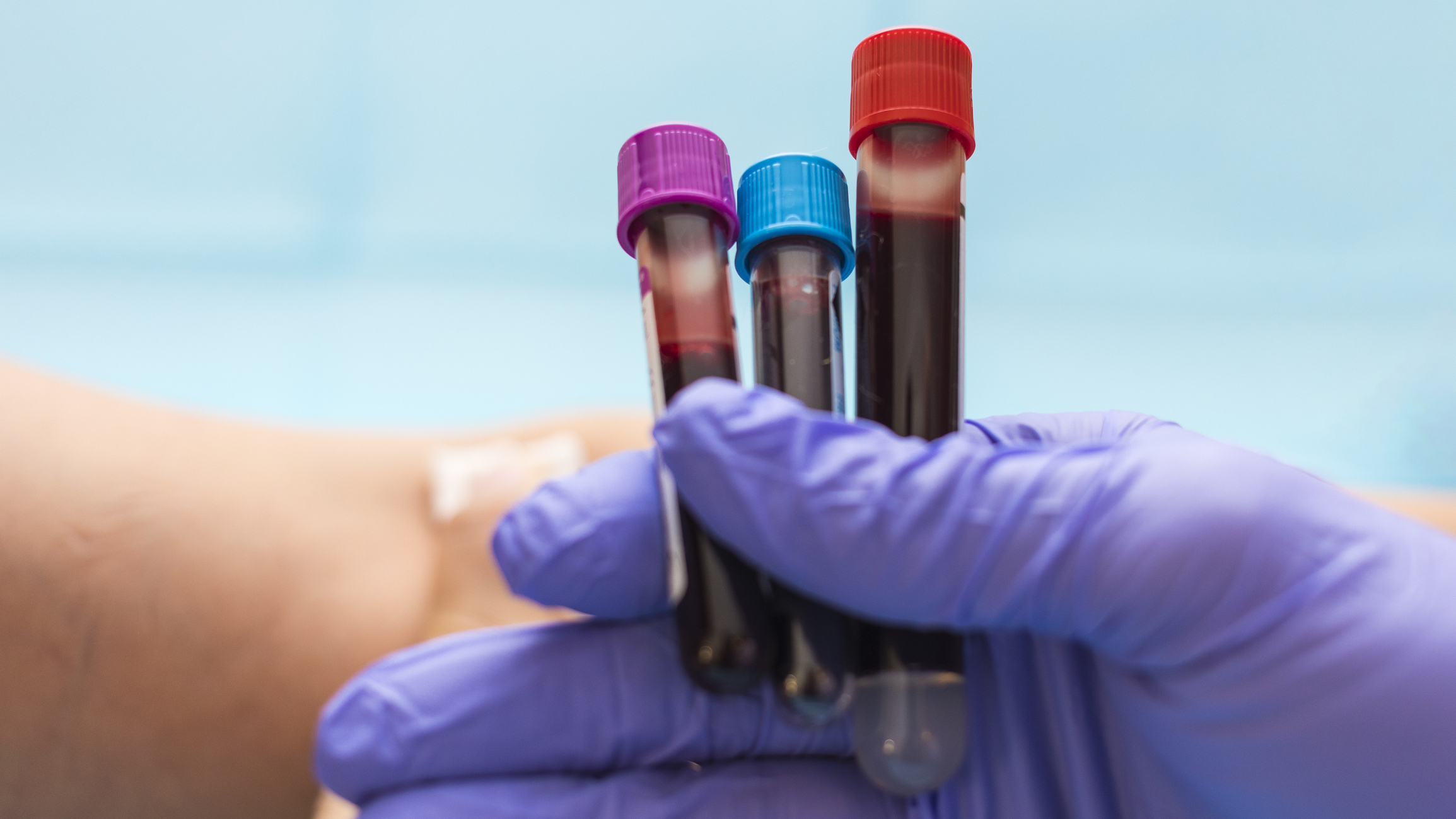
Standard Tests Alone Not Sufficient to Predict TB in Immunocompromised Individuals
A new study found that the QuantiFERON-TB Gold Plus test, currently the standard method of choice for doctors who want to determine whether someone has TB infection or disease, is unreliable in detecting the disease in people with weakened immune systems.
While tuberculosis (TB) is no longer a major problem in the Western world, an estimated 25 percent of people worldwide carry the pathogen. Furthermore, the bacterial infection can still be very dangerous for people with weakened immune systems, such as organ transplant recipients and people living with HIV.
A new study conducted in 11 European countries found that the QuantiFERON-TB Gold Plus test (QFT+)—which is widely considered the gold standard for detecting latent TB—is unreliable in detecting TB among immunocompromised patients. The findings were published in The Lancet Regional Health—Europe.
For the study, an international research team examined more than 2,600 patients between 2015 and 2019 to determine how reliable the QFT+ test is for detecting infection with mycobacteria and TB, and the researchers found that the QFT+ test did not strongly predict patients’ progression to active TB. The test was able to correctly identify TB disease among 70 percent of immunocompromised people, compared to 81.4 percent of non-immunocompromised people. The patients were treated at 21 medical centers in 11 European countries, making the study the largest multicenter study of its kind.
The team also conducted follow-up observations to determine how well the test is suited to assessing the risk of developing TB, focusing on 1,788 people who had weakened immune systems as a result of organ transplantation, stem cell transplantation, rheumatoid arthritis, chronic renal failure, or HIV. The two-year risk for active TB was highest among people living with HIV with detectable HIV-replication and low CD4-counts, especially those who live in countries with moderate or high rates of TB.
“The QFT+ test is insufficient to reliably predict the individual risk of tuberculosis in low-incidence countries” says study co-senior author Leonardo Martinez, assistant professor of epidemiology. “Additional risk factors—such as HIV status, immune status and origin—should be given greater weight in the decision to prescribe preventive treatment.”
TB remains the leading cause of death by infectious disease worldwide, killing more than 1.25 million people in 2023, including 161,000 people living with HIV. This disease is preventable and curable, making accessible and accurate screening and diagnoses all the more essential to reduce cases. The current QFT+ test is “insufficiently reliable to be used on its own to diagnose active disease,” says Martina Sester, professor of immunology at Saarland University and co-lead author of the study along with Christoph Lange, medical director at the Research Center Borstel, Leibniz Lung Center.
“This test is an indirect test, which means that it measures whether or not there has already been an immune response to the pathogen in the body,” Sester says. In other words—it does not detect the pathogen itself, but rather the immune system’s response to it. If the immune system is weakened, either deliberately to prevent rejection of a donor organ or by a pathogen weakening the immune system (such as HIV), the immune response to the bacterium that causes TB is also weaker. Therefore, “the QFT+ test can more often produce false negative results,” she says.
The study was conducted as part of the TBnet tuberculosis research network, a Europe-wide network of doctors and scientists dedicated to clinical research, training and networking in the field of tuberculosis.