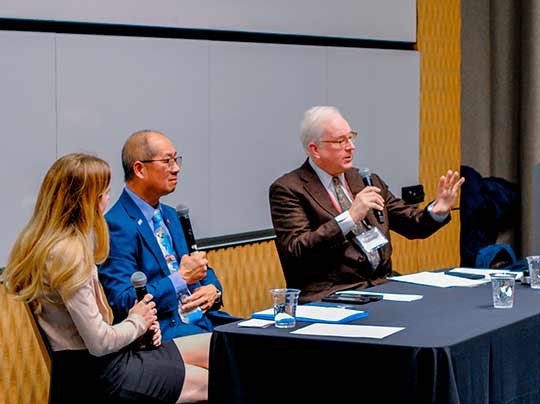
Integrating the necessary skills, knowledge, values, and ethics to train future evidence-informed city planners, the Master of Science in City Planning (MSCP) at Boston University’s Metropolitan College (MET) prepares you for a wide variety of professional roles in urban planning, emphasizing the development and implementation of strategies to create sustainable and equitable urban environments.
The professional planner frequently functions as a member of a multidisciplinary team and is involved in various stages of the city planning process, including research, analysis, designing planning alternatives, engaging with communities, and implementing projects aimed at improving urban and regional environments. Additionally, planners are often tasked with forecasting future trends, monitoring ongoing developments, and formulating public investment strategies to ensure sustainable growth and equitable resource allocation.
BU MET’s MS in City Planning develops the skills needed to navigate technical, socio-political, and economic considerations that go into making an equitable, resilient, and sustainable city while facing the implications of climate change and public health crises.
BU MET’s City Planning curriculum embraces sustainability, creativity, pragmatism, and diversity of thought, while building the technical and practical foundations in areas such as land use, transportation, housing, climate change mitigation and adaption strategies, and urban informatics for city planning purposes. MSCP program graduates are critical, open-minded thinkers and inventive problem solvers who can apply their knowledge to the most pressing social, economic, and political issues facing the world. With access to a network of area and regional employers, policymakers, and analysts, graduates of the MSCP are uniquely positioned to make a positive impact in the field, and have worked as town and city planners, city managers, community development directors, transportation specialists, research analysts, and policy experts in federal, state, and local governments; nonprofit and nongovernmental organizations; corporations; and research institutions.
Sample Job Titles
Planner
Urban and Environmental Planning Policy
Transportation Planner
Community Development Planner
Regional Planner
City/Town Planner
Land Use Planner
Transit Planner
Economic Development
Outreach, Diversity, and Inclusion
Diversity Programs and Outreach Director
Stakeholder Management
Manager of Diversity, Equity, and Inclusion
Community Engagement Specialist
Sustainability/Climate Resiliency Planner
Environmental Specialist
Sustainability Specialist
Parks and Open Space Planner
Sustainability Outreach Manager
Food and Urban Agriculture Coordinator
Analyst
Spatial/GIS Analyst
Policy/Public Affairs Analyst
Transportation Analyst/Specialist
Analyst/Specialist Traffic Analyst
Land Use Analyst
Real Estate Development Analyst
Capital Program Planning Analyst
Public Finance and Budget Analyst
Speak with our Admissions Team
Schedule a 1:1 call to speak with an advisor directly or attend an admissions event alongside other future students.
Active Learning Environment: BU’s City Planning courses focus on practical, hands-on education and include a public capstone project, ensuring that you are immersed in all aspects of city planning—education you can apply on the job.
Capstone Sequence: Gain valuable hands-on experience through substantial, client-based planning projects with a two-course, two-semester capstone—crucial for skill development and understanding the practical application of urban planning theories.
Engaged Faculty: In BU’s City Planning master’s program, you benefit from working closely with highly qualified faculty who draw from active research and extensive field experience in areas including sustainable development, climate change, transportation, land reclamation, city finance, data analytics, infrastructure planning, regional economics, and urban design.
Extensive Network: Study complex issues alongside peers with solid urban planning and policymaking experience, learn from faculty who have valuable contacts in the field, and benefit from an alumni community with strong professional connections.
Student Support: Enjoy an exceptional student-to-instructor ratio, ensuring close interaction with faculty mentors and access to support.
Flexible Options: Study at the pace that works for you, with multiple on-campus class times that include evenings, and courses that begin fall, spring, and summer. Certain courses within the program can be taken in an online format.
Track Record: Learn from the best—BU MET has been offering a master’s program in Urban Affairs since 1969. The master’s program in City Planning was introduced in 1976.
Merit Scholarships: All graduate students are automatically considered for merit scholarships during the application process and nominated based on eligibility. Learn more.
Membership
ACSP MembershipBoston University is a full member of the Association of Collegiate Schools of Planning.
Learn to Solve Challenges in Planning, Urban Management, and Public Policy
BU’s City Planning & Urban Affairs programs prepare future leaders, practitioners, and innovators for the myriad challenges that arise in urban planning and policymaking. Students consider the political, social, and technical implications of each facet of planning and policymaking, and thus grapple with the fact that there are few, if any, simple solutions or approaches to urban issues.
The Master of Science in City Planning and Master of Science in Urban Affairs programs each provide a rigorous foundation for both new and experienced student-scholars and professionals.
Graduates can pursue a wide range of professional careers in town, city, and regional planning; sustainable management; community and economic development; transportation planning; public-sector/nonprofit management; and policy research, among others.
Graduate with Expertise
Boston University’s City Planning master’s degree will equip you to:
Describe and critique historical approaches in planning practice, including their successes and failures, and apply key provisions of ethical professional planning codes to various scenarios, analyzing their strengths and limitations.
Critically evaluate relevant planning issues considering the community, city, regional, and national scale, emphasizing social justice and the global climate crisis.
Apply quantitative, qualitative, and spatial analysis techniques proficiently for informed decision-making in urban and regional planning and policy contexts.
Demonstrate the ability to integrate planning, land-use law, urban economics principles, and public finance mechanisms into viable, sustainable urban and regional development strategies.
Develop and critically assess urban and regional development plans that incorporate sustainability principles and climate adaptation strategies, effectively addressing challenges to ensure an equitable and resilient future for urban areas.
Demonstrate strong communication and teamwork skills to effectively navigate the multistakeholder environment typical of urban and regional planning projects.
Certificate-to-Degree Pathway
BU MET graduate certificate programs can serve as building blocks to a master’s degree. The Graduate Certificate in Applied Sustainability, Graduate Certificate in Applied Urban Informatics, and Graduate Certificate in Urban Policy & Planning each share specific courses with the Master of Science in City Planning program, giving you the option to take one or two certificates on your path to a master’s degree. Students currently enrolled in a graduate certificate who are interested in transitioning into a master’s degree should contact their academic advisor to declare their interest in this pathway. A new master’s degree application is not required. Connect with a graduate admissions advisor at apssadmissions@bu.edu to learn more about this option.
Master of Science in City Planning Curriculum
In addition to the below courses, students are also required to maintain an e-portfolio of the work they produce throughout the program. For more information, please visit this page.
The Master of Science in City Planning (MSCP) requires the completion of 46 units.
Core Courses
(Seven courses/28 units)
MET UA 515 History, Theory and Planning Practice
Fall ‘26
In this course, you’ll dive into the history, theory, and practice of planning, asking big questions about why planning matters, whose interests it serves, and how planners navigate ethical and political challenges. Along the way, you’ll examine how cities in the U.S. have evolved, considering issues like community power, representation, participation, and conflict. Through readings, discussions, and case studies, you’ll build a practical and critical understanding of the planning process, learning how historical context, theory, and policy come together to shape urban spaces. By the end of the course, you’ll have the tools to think like a planner—analyzing cities, evaluating strategies, and understanding the values and trade-offs that guide urban decision-making. [ 4 cr. ]
Section
Type
Instructor
Location
Days
Times
A1
IND
Greeley
CDS 364
M
6:00 pm – 8:45 pm
MET UA 549 Planning Sustainable and Climate Adapted Urban Futures
What makes a city sustainable and resilient? In this course, you’ll explore how urban planners and communities address real-world challenges from land use and urban form at the site level and regional scale, to healthy communities, water, energy, economic development, green infrastructure, and transportation.
Through readings, discussions, site visits, guest speakers, and hands-on projects, you’ll learn the key concepts behind sustainable and resilient urban design, including land use, green infrastructure, water and energy systems, and economic development. You’ll see how planners work with multiple stakeholders to ask the right questions, evaluate solutions, and make decisions that balance environmental, social, and economic goals. While the focus is on U.S. cities, with Boston as a primary example, you’ll also examine international perspectives and comparative examples. By the end of the course, you’ll be able to critically assess sustainability and climate adaptation strategies, propose high-level solutions to urban challenges, and understand the role planners—and other professionals—play in shaping cities that are adaptable, just, and prepared for the future. [ 4 cr. ]
MET UA 579 Urban Economics and Public Finance
Why do some cities grow while others struggle—and what drives where people and businesses choose to locate? In this course, you’ll explore how economic principles help explain the growth, decline, and functioning of cities and regions. You’ll learn how microeconomic theories and models can be used to analyze urban challenges, evaluate policies, and make informed planning decisions. The course also examines how cities fund public infrastructure, from traditional budgets to innovative financing strategies, and the challenges that come with investing in streets, transit, and other essential urban systems. Through case studies and real-world examples, you’ll gain practical insights into the economic forces shaping cities. By the end of the course, you’ll be equipped to use economic tools to understand urban problems and contribute to policies that foster stronger, more resilient, and well-planned communities. [ 4 cr. ]
MET UA 589 Research and Evaluation
Fall ‘26
How do planners gather reliable evidence to understand urban problems and evaluate whether policies and programs actually work? In this course, you learn how research methods support evidence-informed planning and urban policy. A major focus of the class is how to collect and work with data. You’ll gain hands-on understanding of both quantitative and qualitative research methods used in planning, including surveys, interviews, focus groups, observation, and content analysis. You’ll learn how to design studies, gather reliable information, and choose the right method to answer different kinds of planning questions. The course also introduces the basics of program evaluation and impact analysis, helping you assess whether planning initiatives and public programs achieve their intended goals. Along the way, you’ll practice interpreting research, critically reviewing studies, and communicating findings clearly. By the end of the course, you’ll be able to design and evaluate research that supports thoughtful, evidence-informed planning and policy decisions. [ 4 cr. ]
Section
Type
Instructor
Location
Days
Times
A1
IND
Sungu-Eryilmaz
PHO 202
T
6:00 pm – 8:45 pm
MET UA 591 Applied Analytical Methods
Fall ‘26
How do planners turn data into better decisions about cities? In this course, you learn how to use quantitative analysis to understand urban issues and communicate evidence clearly. You’ll explore what data are, where they come from, and how planners and urban professionals analyze them to make sense of the urban world. Using SPSS, you’ll gain hands-on experience applying analytical techniques to real urban data, learning how to interpret statistical results and evaluate the strength of evidence behind policy arguments. The course also helps you become a more critical reader of data used in news, research, and public debates. You’ll practice communicating findings clearly, without relying on technical jargon, and work with classmates to analyze data related to a real urban issue. By the end of the course, you’ll have practical skills to use data thoughtfully in planning, policy, and urban decision-making. [ 4 cr. ]
Section
Type
Instructor
Location
Days
Times
A1
IND
Sungu-Eryilmaz
CDS 263
R
6:00 pm – 8:45 pm
O2
IND
Holt
ARR
12:00 am – 12:00 am
MET UA 592 Land Use and Planning Law
How do planners turn data into better decisions about cities? In this course, you learn how to use quantitative analysis to understand urban issues and communicate evidence clearly. You’ll explore what data are, where they come from, and how planners and urban professionals analyze them to make sense of the urban world. Using SPSS, you’ll gain hands-on experience applying analytical techniques to real urban data, learning how to interpret statistical results and evaluate the strength of evidence behind policy arguments. The course also helps you become a more critical reader of data used in news, research, and public debates. You’ll practice communicating findings clearly, without relying on technical jargon, and work with classmates to analyze data related to a real urban issue. By the end of the course, you’ll have practical skills to use data thoughtfully in planning, policy, and urban decision-making. [ 4 cr. ]
MET UA 598 Foundations of GIS and Spatial Analysis
Fall ‘26
How can maps and spatial data reveal patterns in cities and communities that aren’t visible at street level? In this project-based course, you learn how Geographic Information Systems (GIS) help planners and urban professionals analyze places, understand patterns, and make better decisions. You’ll build practical skills in spatial thinking and spatial analysis while working with real geographic data. Through hands-on projects, you’ll learn how to collect, organize, and analyze spatial information, create maps that communicate clear insights, and evaluate the strengths and limits of different data sources. Along the way, you’ll explore how GIS is used to address real urban challenges—from understanding neighborhood change to informing planning and policy decisions. By the end of the course, you’ll be able to use GIS tools to analyze places, visualize patterns, and communicate spatial insights that support sustainable and more equitable communities. [ 4 cr. ]
Section
Type
Instructor
Location
Days
Times
O2
IND
Sungu-Eryilmaz
ARR
12:00 am – 12:00 am
Planning Capstone
(Two courses/6 units)
Prior to enrolling, students must complete at least four required courses (16 units), including MET UA 515 and MET UA 589, within the program curriculum. This prerequisite ensures that students have acquired the necessary foundational knowledge and skills. Students with a GPA of 3.7 or higher may instead opt for Thesis I and Thesis II with the consent of an advisor.
MET UA 756 Capstone 1
Fall ‘26
How do you take everything you've learned in planning and turn it into real-world impact? This capstone studio course, the first of the two-course series, gives you the chance to do just that. It's designed for Master of Science in City Planning students to synthesize research, theory, and practical skills while working on projects that address a client's real goals. Integral components of this first semester of the Capstone experience include conducting site visits, assessing existing conditions of the study area, designing a stakeholder outreach strategy and conducting a SWOT analysis. You'll learn to balance the technical, normative, and value-driven aspects of planning—developing the "peripheral vision" that makes planners effective in complex urban environments. Over the year, you'll apply your knowledge to produce actionable recommendations that promote equitable development and respond to today's social and economic challenges. By the end of the course, you'll have hands-on experience creating meaningful planning solutions and a strong foundation for launching a career in a profession that shapes vibrant, just, and resilient cities. [ 3 cr. ]
Section
Type
Instructor
Location
Days
Times
A1
IND
Haynes
CDS 263
W
6:00 pm – 8:45 pm
MET UA 757 Capstone 2
How do you bring everything you’ve learned in planning into real-world practice? This capstone studio course, the second part of the Master of Science in City Planning sequence, gives you that opportunity. It’s designed to help you integrate research, theory, and practical skills while working on projects that directly address a client’s goals. You’ll develop both the technical expertise and the “peripheral vision” that makes planners effective—balancing data, design, and policy with the ethical, social, and value-driven dimensions of the profession. Over the year, you’ll create actionable recommendations that aim for equitable, impactful outcomes, while engaging with contemporary challenges and innovations shaping today’s cities. By the end of the course, you’ll leave with hands-on experience solving real urban problems, a portfolio of applied work, and a strong foundation to launch a meaningful career in planning that shapes vibrant, resilient, and just communities. [ 3 cr. ]
General Electives
(Three courses/12 units)
Choose three of the following:
MET UA 503 Housing and Community Development
Fall ‘26
Have you ever wondered why some neighborhoods thrive while others struggle to access safe, affordable housing? In this course, you’ll explore how housing and community development shape opportunity, stability, and mobility across the United States. You’ll examine the forces that influence where and how people live—such as poverty, segregation, and social inequality—and discover how housing policies and community development efforts can strengthen neighborhoods and expand opportunity. Through discussions, readings, and real-world examples, you’ll trace the history of housing policy and analyze how federal, state, and local decisions affect communities today. Along the way, you’ll reflect on your own experiences and perspectives while building the tools to think critically about housing challenges and solutions. Whether you’re interested in public policy, urban planning, or community leadership, this course helps you understand how housing decisions shape communities—and how you can help build more equitable ones. [ 4 cr. ]
Section
Type
Instructor
Location
Days
Times
A1
IND
Kwon
CAS 218
R
6:00 pm – 8:45 pm
MET UA 508 Real Estate Development
Various factors affecting location, construction, financing, and marketing of real estate in metropolitan areas. Studies the relationship of public policy to the activities of the private sector, market analysis techniques, evaluation of development projects, and problems of real estate investment. [ 4 cr. ]
MET UA 510 Selected Topics in Urban Affairs
Graduate Prerequisites: (METUA301 & METUA701) or consent of instructor. - UA510 is the designation for "Special Topics in Planning". The subject matter for UA510 courses changes from semester to semester, and more than one UA510 can be offered in a given semester. [ 4 cr. ]
MET UA 521 Environmental Law, Policy, and Justice
This course is designed to present a comprehensive approach to environmental law, policy, and justice at all levels of government, including federal, state, and local governments. Principles and status of environmental law for pollution control and environmental improvement. Impact statements, resource conservation and protection, growth management. Emphasis on air, water, land, and hazardous waste issues, environmental, economic, and other policy relationships. Case materials and court decisions will be used. [ 4 cr. ]
MET UA 526 Multi-modal Transportation Planning and Design
How do cities create streets and transportation networks that work for everyone? In this course, you’ll explore the planning and design of roadways and multimodal transportation systems, gaining hands-on skills to make urban mobility safer, more efficient, and more equitable. Using a blend of seminar discussion and design studio work, you’ll learn the history, principles, and standards of multimodal transportation planning. You’ll practice developing conceptual designs for streets, bike lanes, transit routes, and pedestrian pathways, while learning how different modes of travel can be integrated into urban environments. Readings and case studies—from academic research to government reports—will show how real transportation projects come together. Guest speakers will connect classroom lessons to professional practice at the local, state, and national levels. By the end of the course, you’ll be ready to analyze, design, and communicate transportation solutions that make cities more connected and accessible for everyone. [ 4 cr. ]
MET UA 527 Feeding the City: Urban Food
How does food make its way into cities? Why do some neighborhoods have plenty of options while others face shortages? This course explores the systems that feed urban communities, the challenges of access, and the policies that shape what people can eat. You’ll trace the journey of food from farms and producers into metropolitan areas, examining issues like food deserts, school nutrition, gentrification, and the influence of immigrant and ethnic cuisines. The course also looks at innovations in urban food production, including community gardens, vertical farming, and small-scale craft food enterprises. Through case studies and global examples—like sushi and coffee as traded commodities—you’ll see how local food access connects to wider economic and social systems. We’ll also examine how the pandemic and ongoing efforts to address structural inequities affect urban food security. By the end of the course, you’ll understand how cities can build more just, sustainable, and resilient food systems—and how thoughtful policy and planning make it possible. [ 4 cr. ]
MET UA 551 Policy Responses to Urban Issues
Why do cities face persistent challenges like inequality, housing shortages, or strained public services? And what can be done to solve them? In this course, you’ll explore the major urban issues shaping communities in the U.S., while also considering global perspectives and connections. You’ll examine the causes, consequences, and complexity of these problems, learning how they intersect and influence one another. The course emphasizes U.S. policy, giving you tools to analyze how governments, nonprofits, and private organizations respond to urban challenges. Through case studies and research, you’ll develop the skills to critically evaluate urban problems and propose practical, effective policy solutions. By the end of the course, you’ll have a deeper understanding of what drives urban issues and how thoughtful policies can create stronger, more equitable cities. [ 4 cr. ]
MET UA 613 Urban Design and Development
How does the physical design of streets, buildings, and public spaces shape how people experience a city? In this course, you explore the principles and practice of urban design and learn how the built environment influences social, economic, and organizational life. Through site observation, analysis, and design exercises, you’ll learn how to read urban form and evaluate the opportunities and constraints of development sites. You’ll examine the physical elements that contribute to successful urban places—such as street networks, building form, public space, and land use—and understand how planning policy, development finance, partnerships, and project phasing shape what ultimately gets built. The course also challenges you to think critically about how design decisions affect behavior, organizations, and communities. Working in digital environments, you’ll produce clear diagrams, graphics, and written analysis to communicate design ideas effectively. By the end of the course, you’ll have the tools to analyze urban places and contribute thoughtfully to the design of more functional, engaging, and resilient cities. [ 4 cr. ]
MET UA 617 Actionable Sustainability
How are cities responding to the defining challenge of our time—climate change? This course explores how urban areas can both reduce their impact on the planet and adapt to the changes already underway. You’ll learn how climate change affects people, infrastructure, and systems at the local level, and how planners and communities can assess risks, evaluate strategies, and implement solutions. Using examples from the Boston region and beyond, the course covers building energy and emissions, sustainable transportation, zero-waste management, vulnerability assessments, and resilience planning. Through case studies, discussions, and applied exercises, you’ll gain the skills to analyze climate impacts, engage stakeholders, and develop actionable strategies. By the end of the course, you’ll understand how cities can become more sustainable, resilient, and prepared for the future. [ 4 cr. ]
MET UA 619 Urban Transportation Policy and Planning
Fall ‘26
How do cities move people and goods efficiently—and what challenges do urban transportation systems face? This course introduces you to the key concepts, policies, and planning tools used to address transportation issues at the city and metropolitan level. You’ll explore methods planners use to analyze problems, develop solutions, and evaluate the impacts of transportation initiatives. Using examples from the Greater Boston area, including operations and capital projects, you’ll see how real agencies tackle challenges in public transit, roads, and multimodal networks. Guest speakers from local, regional, and state transportation agencies will provide insights into professional practice and decision-making. By the end of the course, you’ll have a practical understanding of transportation planning and the skills to analyze problems, propose solutions, and understand the policies shaping the movement of people and goods in cities. [ 4 cr. ]
Section
Type
Instructor
Location
Days
Times
A1
IND
Regan
SAR 103
T
6:00 pm – 8:45 pm
MET UA 642 Geospatial Intelligence for Urban Analysis
How can spatial data reveal patterns in transportation, crime, environmental conditions, and economic activity across a city? In this course, you learn how advanced GIS and spatial analysis techniques help planners and urban professionals understand complex urban issues. The course is organized in three parts. First, analyzing the city, where you apply advanced spatial analysis methods—such as point pattern analysis, spatial autocorrelation, geographically weighted regression (GWR), and network analysis—to uncover patterns and relationships in urban data. Second, sensing the city, where you learn how spatial data is created through digitizing, field-based data collection with tools like ArcGIS Survey123, and emerging technologies such as LiDAR. Third, visualizing the city, where you transform analysis into clear insights using StoryMaps or interactive dashboards. Through hands-on projects, you will investigate real urban challenges and learn how to communicate spatial insights to support planning, policy analysis, and public understanding. By the end of the course, you’ll be able to collect, analyze, and visualize spatial data to inform evidence-based urban decision-making. [ 4 cr. ]
MET UA 664 Planning and the Development Process
How do policy, planning, and real estate development come together to shape the modern city? In this course, you explore the evolution of urban development through the lens of Boston and other U.S. cities, examining how public decisions and private investment work together to transform urban environments. You’ll learn how planners, developers, policymakers, community groups, and investors influence what gets built and where. Through case discussions and participatory dialogue, you’ll examine the strategies, policies, and financial tools that shape development outcomes and the roles different actors play in the process. The course emphasizes practical understanding of how ideas move from analysis and planning to real-world implementation. You’ll develop the skills to analyze development cases, understand competing perspectives, and recognize how local, state, and federal policies shape urban change. Along the way, you’ll also consider how recent disruptions—such as the COVID-19 pandemic—are reshaping planning and development and what the future may hold for cities. [ 4 cr. ]
MET UA 801 Graduate Directed Study in Urban Affairs and Planning
Fall ‘26
Limited to a maximum of 8 credits toward the degree requirements. Approval by program director required prior to registration. Study of urban and public affairs and planning individually arranged between student and instructor to provide training opportunities not available elsewhere. [ Var cr. ]
Section
Type
Instructor
Location
Days
Times
A1
DRS
Sungu-Eryilmaz
ARR
12:00 am – 12:00 am
MET UA 804 Supervised Fieldwork
Limited to a maximum of four credits toward the degree requirements. Approval by program director required prior to registration. Students spend a minimum of 5 hours per week working with public agencies, community groups, or private organizations, during the semester. [ 4 cr. ]
Up to one elective graduate-level course may be taken outside the program offerings and from other Metropolitan College departments or other Boston University schools and colleges, with an advisor’s approval. Under special circumstances, additional outside electives may be approved upon consultation with a faculty advisor.
Master’s Thesis Option
A master’s thesis option is available for qualified students who have a GPA of 3.7 or higher. The 6-unit thesis option comprises MET UA 761 Thesis 1 and MET UA 762 Thesis 2, taken over two semesters. This option can be arranged through the City Planning & Urban Affairs program. Supervision by a full-time Boston University faculty member with a terminal degree is required.
Course Waivers for Related Programs
Master of Science in City Planning students who earned a Commercial Real Estate or Real Estate Finance certificate* through Boston University’s Center for Professional Education (CPE) will be granted a waiver of two graduate-level elective courses (8 units) toward their degree.
Jonathan Greeley MA, Tufts University; BA, History, St. Anselm College
Douglas Johnson MCP, Boston University; BA, University of Massachusetts Amherst
Haegi Kwon PhD, Massachusetts Institute of Technology; MS, Columbia University; BA, Bryn Mawr College
Kwabena Kyei-Aboagye JD, Suffolk University; MCP, BS, Boston University
Jim O’Connell PhD, MA, University of Chicago; BA, Bates College
Terrance Regan MPA, Harvard University; BA, Rhodes College
How Much Does This Program Cost?
BU MET Programs offer the flexibility of part-time or full-time study. Tuition, fees, and total program cost are determined by enrollment status. If you enroll in 1–2 courses (4–8 units) in a semester, you are charged the part-time per-unit rate. If you enroll in 3–4 courses (12–16 units) in a semester, you are charged the full-time semester rate.
Master of Science in City Planning (On Campus)
Enrollment Status
Part Time
Full Time
Courses per Semester
2 courses (8 units)
3-4 courses (12-16 units)
Time to Degree
6 semesters (24 months)
4 semesters (20–24 months)***
Tuition*
$585-$1,030 per unit**
$36,512 per semester
Fees per Semester*
$75
$524
Total Degree Cost*
$30,030– $35,370
$114,273– $119,423
*Based on 2026–2027 Boston University tuition and fee rates. **Cost per unit is determined by course number (100–599 = $585/unit, 600–999 = $1,030/unit). ***Summer semester enrollment is not required for international students to maintain F-1 visa status. Enrollment in summer semester coursework will expedite completion of program and reduce total program cost.
International students seeking an F-1 visa for on-campus study must enroll full time and demonstrate availability of funds to cover the Estimated Cost of Graduate Study; those who wish to study online may enroll part-time but are not eligible for a visa. Learn more about International Student Tuition & Fees.
Questions? Please contact us to hear from an Admissions Advisor who can help you determine the best enrollment pathway. For information regarding financial aid, visit BU MET’s Financial Aid page.