Student Researches Rare Cancer in Thailand.

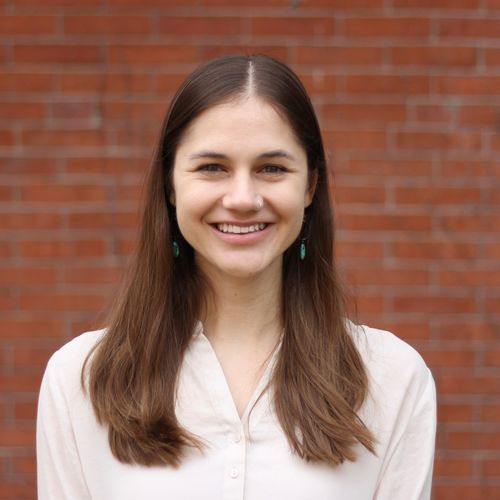
CEESP students Sarah Lawler (right) and Nichcha Subdee (from Columbia University) outside of the Department of Community, Family, and Occupational Medicine at the Faculty of Medicine, Khon Kaen University, Khon Kaen, Thailand. Photo courtesy of Sarah Lawler.
Student Researches Rare Cancer in Thailand
MPH student Sarah Lawler spent two months in Thailand studying the association between proton pump inhibitor use and the high incidence of bile duct cancer in the region through her practicum with the Cancer Epidemiology Education in Special Populations (CEESP) Program.
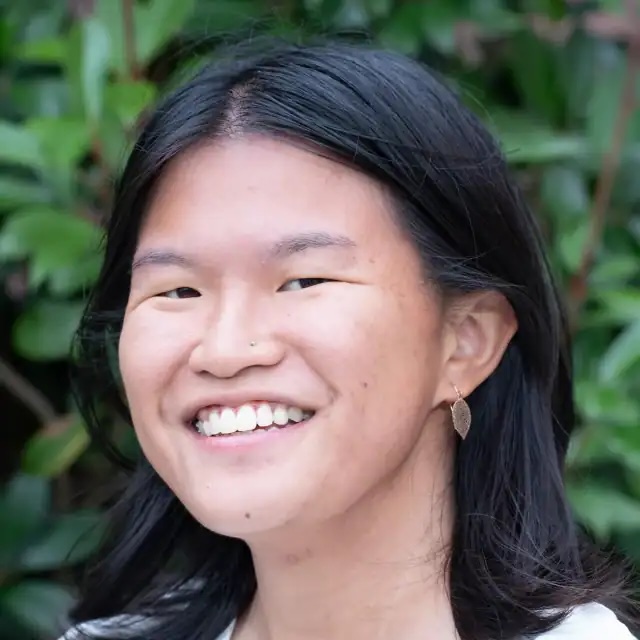
The spring semester of 2020, during her junior year as a biochemistry major and Chinese minor at Connecticut College, Sarah Lawler had planned to study abroad in China. But with the COVID-19 pandemic brewing and borders closing, Lawler instead enrolled in an intensive Mandarin language program in Taiwan. Her two divergent experiences of life during the pandemic—first in Taiwan and then back home in the US—were a major factor in her decision to enroll in graduate school to study public health, she says.
Lawler observed that the two countries had very different attitudes towards governance and public policy. “[In Taiwan,] people wore masks even before the pandemic. If someone had a cold, they would wear a mask, so once the pandemic happened, everyone was wearing them,” she says. “It was February 2020 and [my university] had already implemented screening at all the academic buildings and handed out masks on the first day of class, so it felt really safe. I realized then how important policy and a collective attitude towards public health and well-being are. Coming back home and experiencing all the chaos that was the US trying to handle the pandemic and all the miscommunication and policy problems—that was one of my biggest drivers towards public health.”
Trained primarily in the bench sciences in undergrad, Lawler got a job in a clinical research lab at Dana-Farber Cancer Institute after graduation. There, she further developed her skills as a research technician, leading her to land her next position at the Ragon Institute of Mass General Brigham, MIT, and Harvard, where she continues to work today on projects related to infectious disease and cancer immunology while earning her MPH part-time at the School of Public Health.
In enrolling at SPH, Lawler was eager to not only learn more about epidemiology and biostatistics, her chosen certificate program, but she also hoped to get a second chance at living abroad through an international practicum. Enter the Cancer Epidemiology Education in Special Populations (CEESP) Program, a research training program providing funding to graduate public health students from schools and programs of public health across the country to travel and conduct mentored cancer research in global and US minority settings. As a CEESP research fellow, Lawler spent 12 weeks in Northeast Thailand at Khon Kaen University, studying the association between the use of proton pump inhibitors—a class of drugs that block production of gastric acid— and cholangiocarcinoma, a rare type of cancer that forms in the bile ducts that connect the liver to the small intestine. She credits the experience with expanding her repertoire of statistical techniques, and her comfort zone.

“I was mainly using SAS, which I had learned at BU, but I learned Stata while I was there, and I also used a bit of R and Python in some of my research as well,” says Lawler. She also strived to learn to speak some Thai. “It was challenging, but I’m glad I was [in Khon Kaen] for my practicum because I feel like it gave me a taste of authentic Thai life. Bangkok is more of an international city. The region I was in really allowed me to immerse myself in the language and culture.”
In a Q&A with SPH, Lawler pulls back the curtain on how her dream of an international practicum came to be.
Q&A
With Sarah Lawler, on-campus MPH student
SPH: How did you choose the CEESP program for your practicum?
Lawler: I knew I wanted to leave Boston, and I knew I wanted to try something different, something new. Infectious disease is my main interest, but I also have a secondary interest in cancer research, so when I saw the program, I was really interested in it. Then, I met with the director, [Amr Soliman], in the fall of 2024. I told Dr. Soliman I was interested in both infectious disease and cancer epi, and he suggested different areas I could go with that. I was between proposing a project in Zambia looking at HIV and cervical cancer and this other opportunity in Thailand—which was a new opportunity because I would be part of the program’s first ever cohort there, since he had just forged a new partnership with my mentors. They already had a research interest in cholangiocarcinoma (bile duct cancer), and that is linked to infectious disease because there’s a parasitic infection, a liver fluke, that’s common in that area. Liver fluke infection is one of the major risk factors for this cancer. Ultimately, I decided on the Thailand project because I wasn’t sure how I wanted to build off the previous students’ work in Zambia, and I was more interested in exploring this new area.
SPH: What did the process of becoming a CEESP research fellow look like after you spoke with Dr. Soliman?
Lawler: After speaking with Dr. Soliman and your site mentors, you propose your project and have an interview with the advisory committee. Once, you find out you are accepted into the CEESP program, you start doing applications for IRB approval, both at BU and with the local IRB in your host country. That was a long process. We had a lot of issues with the [Thai] IRB approval. We were waiting on a data access grant, and we didn’t have data for the first month. Despite these setbacks, I feel like we still made really good use of our time because we were working on writing part of the manuscript, the introduction and the discussion. Even though we didn’t have the data, we could still speculate what the discussion might say, and we wrote different versions based on whether the data supported our hypothesis or the data didn’t support our hypothesis. In the beginning, my mentors arranged a lot of different meetings and activities. For example, we got to visit a lot of the local hospitals in the region, which gave us more insight into the clinical picture of Thailand before we got the data.
SPH: What were your research findings, and were they as you expected?
Lawler: My study was looking at proton pump inhibitor (PPI) use and whether there is an association with PPI use and cholangiocarcinoma in the region. I found that there was an association between high-dose PPI use and higher risk of cholangiocarcinoma. We were hypothesizing this because there had been previous research showing associations in other regions as well as previous research showing adverse effects of long-term PPI use. It was an interesting issue because it’s so widely prescribed [in Thailand], even in the hospital setting, and there’s the risk of over-prescription or misuse of the drug. I was not aware until I did my practicum that this cancer is a big problem in Thailand. Cholangiocarcinoma has the highest incidence in the world in the region that I was living in, mainly due to the consumption of raw fish leading to infection with the parasite.
SPH: Now that you are back on campus and beginning your final semester of classes, what would you point to as your favorite course that you have taken at SPH?
Lawler: Definitely my One Health class [Analysis of Emerging Infections Using the One Health Approach] that I took last semester. It was co-taught by [David Hamer] and [Kayoko Shioda]; Dr. Hamer is a physician and Dr. Shioda is a veterinarian who does statistical modeling work in infectious disease. Both have extensive global research experience and it was a great experience to learn from both of them. One Health is an interdisciplinary approach to looking at infectious disease outbreaks and recognizing the interconnection between the human, animal, and environmental factors that contribute to their spread. I really loved that class, and I hope to do more One Health work in the future.”