News of the extended network of faculty, alumni, students, visiting researchers, and mission partners is regularly updated, and some of the big ideas or major events in Global Christianity are covered in the CGCM News.
Christian Renewal Movements in the Global South
CFP: Christian Renewal Movements in the Global South in the 20th and 21st Centuries: Religious, Social and Political Transformation
Sponsored by:
The Harry S. Truman Institute for Advanced Peace, Hebrew University Jerusalem
The Martin Buber Society of Fellows- Stiftungsfonds Martin-Buber-Gesellschaft, The
Hebrew University of Jerusalem
Federal Ministry of Education and Research
Glocal Community Development Studies, The Hebrew University, Jerusalem
Call for applications, international interdisciplinary conference:
Christian Renewal Movements in the Global South in the 20th and 21st Centuries: Religious, Social and Political Transformation
The Truman Institute for the Advancement of Peace, The Hebrew University of Jerusalem, 28-29 May 2017
The explosion of new and diverse forms of Christianity across the Global South – mass conversions, emergence of new denominations, and revitalization within established churches – have been among the most staggering religious phenomena of recent times. The diffused Pentecostal and Evangelical movements, which gained prominence throughout the 20th century, have already reached a dramatic following of over half a billion. The Roman Catholic Church and the historical mainline churches have joined the fray with their own charismatic renewal movements. The emergence of these new churches has had profound social, cultural and political impact within international, national and local arenas. Historically, we have seen how new Christian movements, often through the provision of education and health, have challenged traditional political and social structures. More recently, we have witnessed the ways in which new Christian communities transform political participation, affect marginalized groups and reconstruct social values. No wonder, therefore, that some have been referring to the explosion of new Christian forms as a "second reformation," a term indicative of its magnitude and far-reaching implications.
We invite contributors to an interdisciplinary conference dedicated to dialogue between scholars of religion in the broad sense of the term, with the aim of developing comparative perspectives on these disperse yet interrelated religio-social developments. Through multi-sited comparative studies, exploration of moments of cross-regional interaction, and the mapping of channels of inter-regional influences, as well as in-depth and contextualized studies of specific case studies, we hope to gain insights into how local and global trends play out both geographically and over time. Though by no means exclusive, contributions related to the following themes will be particularly welcome:
- Historical transformation versus continuity (e.g. relations between contemporary Evangelicalism and Pentecostalism in the Global South and the historical templates of Protestant Western missionary).
- Socio-political engagement (e.g. new Christian movements’ influence on traditional socio-political structures, and their response to development challenges such as poverty and marginalization).
- South-South connections (e.g. networks of collaboration and inspiration generated around the success of new Christian churches, the dissemination of their message through the aid of modern communication technologies, and their global, national and local implications).
- Theological conceptions (e.g. particular theological ideas and currents informing Christian renewal movements in the Global South, and their departure from mainstream Catholic and Protestant conceptions).
The conference will be held in English. Applicants are welcome from all disciplines, including, among others: history, sociology, anthropology, geography, religious studies, development studies, and regional studies (esp. Latin American, African, and East Asian studies). Special care will be taken to incorporate speakers at various stages of their academic careers. Thus, alongside senior academics, younger scholars – including post-doctoral researchers and doctoral candidates – are encouraged to apply. Proposals including comparative and multi-sited case studies are particularly welcome.
Deadline for abstract submission is 15 December 2016. Proposed abstracts should include up to 2,500 characters, and should mention the author's institutional affiliation. They are to be submitted to: globalsouthchristianity@
Limited funds are available for covering/supporting participants’ travel and accommodations. Applicants should indicate their request for support upon applications.
Megachurches Remaking Global Mission
Megachurch are a playing a prominent role in missions. Dr. Nelson Jennings, who is serving as an associate pastor and consultant to one of the largest megachurches in Korea, explained how Korean megachurches emerged as a cultural and religious phenomenon in the 20th century, and began to explore the impact they are having on religious life in both Korea and throughout the world.
World Christianities Essay Prize
 The Journal of Ecclesiastical History has confirmed the launch of the new JEH World Christianities Prize. Full details are available, but a prize, worth £500 and publication in the Journal, will be awarded to the best essay submitted on any aspect of the history of Christianity outside Europe and North America from the year 700 to the present. The deadline for submission for the first award is 31 March 2017.
Mission Education in Burundi
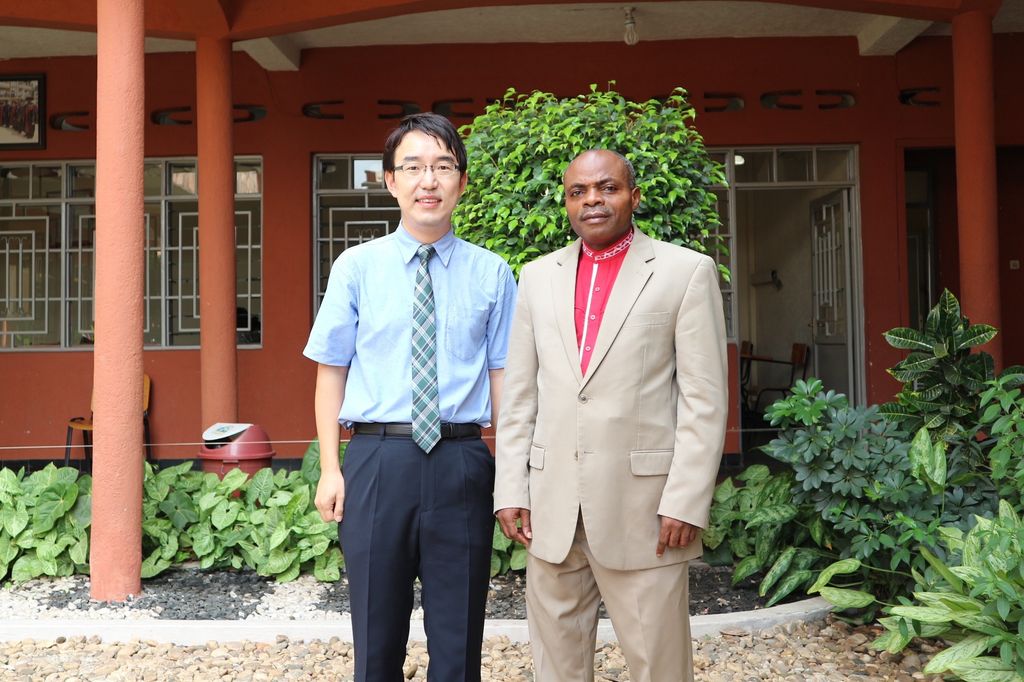 The International Leadership University (ILU) in Burundi has established a graduate program in mission studies. Dr. Fohle Lygunda, the Academic Dean and Daewon Moon, a CGCM student associate, have collaborated for the past several years to open research and education in this field. Mission Studies is quite new to the central African region. The first group of master’s students have completed their program and produced solid theses on various themes of mission studies. ILU-Burundi, the only university in the country that offers English-based degree programs, has drawn theological students from Burundi, Rwanda, Uganda, Kenya, Nigeria, and DR Congo. Dr. Lygunda recently organized the first International Consultation on Missiology for Central Africa in Kinshasa, DR Congo, in order to promote missiological research on the region.
The Indefatigable Work of Don Carlos Janes

At the turn of the 20th century, Churches of Christ had less than a nominal level of missionary activity. With few missionaries abroad and fewer churches willing to support them along with no denominationally baptized mechanism for conducting a missionary enterprise, the prospect of a viable missions program that covered the denomination seemed bleak for Churches of Christ. Don Carlos Janes (1877-1944) would find himself in this difficult situation in 1911 as he began his work as a missionary promoter. Jeremy Hegi recently published an article titled “One-Man Missionary Society: The Indefatigable Work of Don Carlos Janes” in Restoration Quarterly Vol. 58 No. 4. The essay demonstrates how Janes established and maintained a missionary consciousness among the congregations of Churches of Christ, in addition to recruiting and supporting a majority of missionaries of the denomination between 1911 and 1944.
Ecumenism, United Methodism, Challenges and Shifts
Dr. Glen M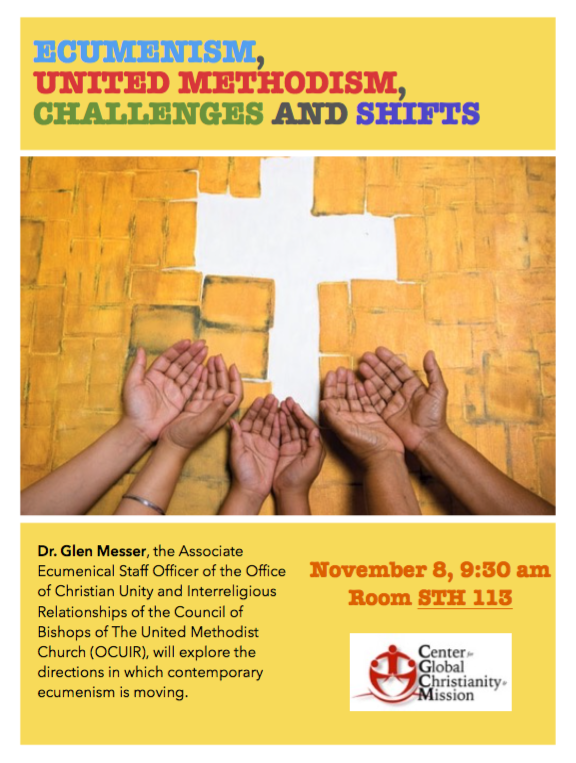 esser, the former Associate Ecumenical Staff Officer of the Office of Christian Unity and Interreligious Relationships of the Council of Bishops of the United Methodist Church (OCUIR), will explore the directions in which contemporary ecumenism is moving.
New Approaches to Jesuit Missions
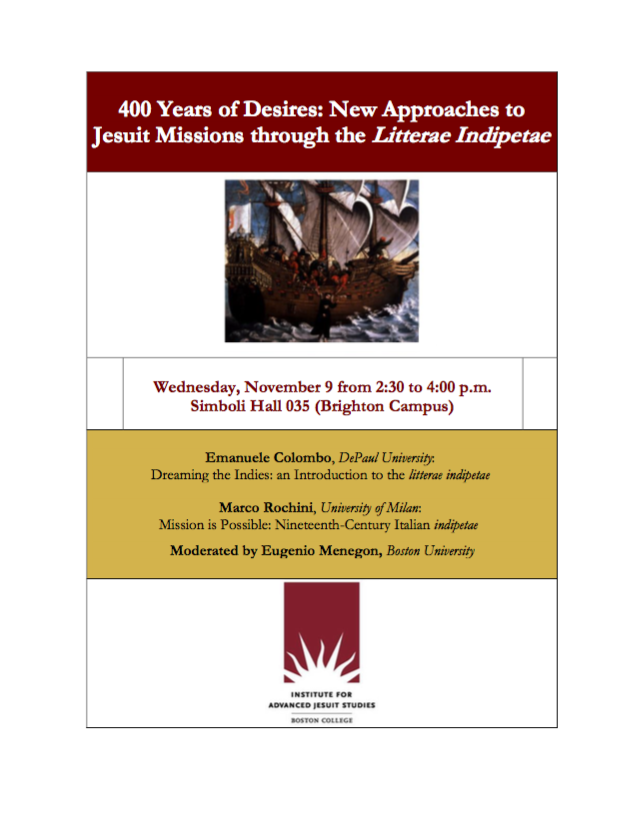 "400 Years of Desires: New Approaches to Jesuit Missions through the Litterae Indipetae"
To contact the Institute for Advanced Jesuit Studies, please call 617-552-2568 or e-mail iajs@bc.edu
Aesthetics of African Traditional Religion
 Dr. Nimi Wariboko, Walter G. Muelder Professor of Social Ethics and CGCM faculty associate, will be giving a lecture on aesthetics of African traditional religion and Pentecostalism in Nigeria. The lecture will take place at 232 Bay State Road, Room 505 at 5:00 pm. The public is welcome.
Legacy of John Sung
 In the 1930s, no evangelist traveled further, spoke more often, or led more Chinese people to faith than Song Shangjie (John Sung). In the October 2016 issue of the International Bulletin of Mission Research, Daryl Ireland explores the legacy of one of China's most dynamic and memorable Christians.
This is the first scholarly article to make use of Sung's own personal diaries (not those edited and published by his daughter). They reveal new facets of his life and ministry, most memorably regarding his time spent in an insane asylum. Sung famously spoke of his hospitalization in 1927 as a gross misunderstanding of his conversion. His diaries, however, suggest another story. What happened in the asylum is summarized in the Legacy article, but will be unpacked further in Ireland's forthcoming article on conversion in the journal Mission Studies.
Eastern Fellowship of Professors of Mission Report
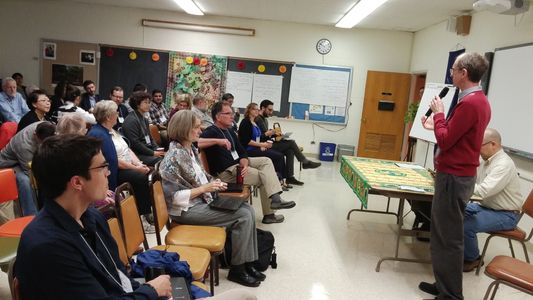 On the weekend of October 21st and 22nd, professors and graduate students representing 18 different religious and educational institutions from the North East and Mid Atlantic United States met at the 99th annual Eastern Fellowship of Professors of Mission. Seeking to survey and understand the current state of missions education in the region, the theme of the conference was “Education for Mission: Current Status and Future Visions.” There were three panels that represented seminaries, undergraduate institutions, and churches, respectively. Panelist in each session addressed the same set of questions from their particular contexts: (1) what are you teaching? (2) what are your teaching objectives? (3) what should we be teaching and why? and (4) how do you see mission education linked with the task of mission service?
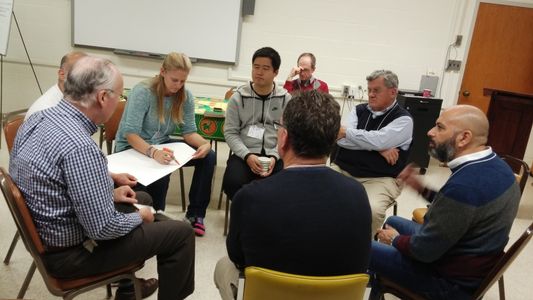 The conversation that ensued was productive and informative. Panelists and attendants alike discussed that as the cultural and religious context of the United States was changing, the demography of the students who sought mission education shifted as well. Moreover, such a shift demanded new starting points and pedagogies for teaching mission theory and practice that fit into the rich pluralistic context that students would inhabit on local, regional, national, and even global levels. One striking feature of the conference was the theological diversity of those who attended. It was encouraging to see attendees from both theologically conservative and liberal backgrounds come together to discuss the important and pressing issue of training mission practitioners. As Dana Robert, Boston University’s Truman Collins Professor of World Christianity and History of Mission, said in her opening remarks, the Eastern Fellowship of Professors of Mission had truly moved beyond the modernist and fundamentalist controversies of the 20th century in order to discern how mission professors and practitioners could faithfully participate in the Mission of God.
Report by Jeremy Hegi