News of the extended network of faculty, alumni, students, visiting researchers, and mission partners is regularly updated, and some of the big ideas or major events in Global Christianity are covered in the CGCM News.
International Conference, Berlin, 19–21 September 2024
Christian Internationalism in war and post-war times, c. 1890–1930
International Conference, Berlin, 19–21 September 2024
Conveners: Prof. Dr. Judith Becker, Berlin, and PD Dr. Felicity Jensz, Münster
The late nineteenth century was a time of heightened nationalism. Somewhat paradoxically, it was also the period in which Christian internationalism and interdenominationalism – the young ecumenical movement (Becker/Robert 2024) – emerged. The ecumenical movement at the end of the 19th and beginning of the 20th centuries was ‘young’ in two respects: one, it was the beginning, the formation phase of the movement, and two, agents were mostly young people, or at least people who worked in young people's associations, such as the YMCA, the SCMs, SVMs etc. Through their work, they tried to overcome both national and denominational boundaries. Some groups advocated for peace, most prominently the World Alliance for International Friendship Through the Churches. Yet, peace was not their predominant goal. Their main goal was to build a worldwide Christian community that was based on fellowship and friendship. They felt called by God to work for this universal community. Of course, this approach had many downsides, not least that this global Christian community was, in reality and often unconsciously, a Protestant Christian community, and, furthermore, an Anglophone or Anglophone dominated Protestant Christian community. Moreover, the organisations and associations stemming from the young ecumenical movement were predominantly white and male dominated organisations based in Europe or the USA. Many young ecumenicals strove for community and justice and became increasingly influential in both Church leadership positions and, even more interestingly, in their respective national politics.
Given the historical tensions between Christian internationalism and national politics we are interested in exploring how these ‘young’ ecumenicals reacted to the wars that were fought by their countries? How did this influence their conceptions and their practices, both religious and political/social?
These research questions are timely given that the current global political situation is threatened by many different wars and that we can gain insights to current conflicts through historical examples. In recent academic debates, the role of religion in war and post-war times has regained central importance, particularly in Western countries. After decades of research on religion and peace – and especially Christianity and peace – public and academic attention has (re)turned to war and violence. While it is evident that war and physical violence cannot be separated from other forms of violence, at this conference we are primarily concentrating on wars and physical violence. For some scholars, such as Assmann, religion (and monotheist religion in particular) furthers, enables, or even causes war. This is in opposition to how many religious groups would perceive themselves.
The argument that links monotheist religion to violence often points to the exclusivist claim of all monotheist religions. With regard to early modern and modern times, this is often connected with nationalism, especially with reference to Western countries that, for centuries, privileged one (Christian) denomination, often to the detriment of other denominations and religions that were not privileged or at times even prohibited. One faith – the ‘right’ faith – and one religious practice were sometimes even inextricably tied to one nation, as in the cases of State Churches as in England or Sweden. Thus, says the argument, nationalism and certain forms of Christianity reinforced each other.
We aim to bring together scholars from different disciplines and academic backgrounds at a conference that will take place in Berlin in September 2024, which will examine the relationship between wars and Christian internationalism in the late 19th/early 20th centuries. It will explicitly not only focus on World War One but also invites papers on other wars, wars between non-Western countries such as the Russo-Japanese War or colonial wars. In this way, we intend to open the topic for non-Western perspectives and enlarge our understanding of this topic. The conference will work with an open definition of ‘war’ with a focus on physical violence and combat.
The leading questions are:
How did agents of the ecumenical movement at the turn of the century react to the wars that were fought by their countries? How did this influence their conceptions and their practices, both religious and political/social?
Further questions are (please address at least two of these):
- In your case study, how did the war or post-war experience change attitudes towards, definitions or practices of internationalism?
- How did the actors try to use the war/post-war experience for their internationalist (or nationalist) agenda?
- How did they react to the war/post-war (in theology, religiosity, ideology, and practice) and how did their Christian internationalist beliefs shape this?
- What is the definition of ‘war’ in your case? (Mainly applicable when not talking about WWI)
- What was the link between nationalism and internationalism in relation to the respective wars?
- How did the actors use their ecumenical networks to oppose wars?
- Did the ‘international’ aspect of the ecumenical movement hold up in the face of war and its aftermath?
- How did religious actors (re)interpret their networks and their religiosity in light of war?
- What was the role of women and of non-Europeans in the shaping of ecumenical responses to war?
Organisational information:
Date: 19–21 September 2024
Venue: Humboldt Universität zu Berlin, Faculty of Theology
Travel and accommodation costs are covered by the Humboldt University.
We invite proposals from all historical disciplines and all backgrounds. Please send us a title and a short abstract (300 words) by 15 February 2024. Please send also a one-page CV.
Please send your proposals to Franziska Schulze <franziska.schulze.1@hu-berlin.de>.
Further proceedings:
About a month before the conference, we will ask you to submit an abstract of 2-3 pages to be distributed to the other participants before the conference.
The publication of a conference volume is envisaged.
CGCM Notes: September 2023
As the fall begins in New England, students, faculty, and researchers gather in Boston. The new academic year always brings hope and excitement as people come from around the world, ready and eager to explore new ideas among a supportive community of fellow seekers and learners.
The new academic year provides a welcome restart, as the past few months have been difficult for many of us. Individuals connected with the CGCM have experienced the effects of anti-Christian violence, and the tragic consequences of climate change in Maui and Vermont. Several have suffered from covid, with significant after-effects. Some are living in places where research into Christianity is opposed by hostile governments. At the same time, much good is being done. In the past six months, folks connected with the Center have taught in Africa, led mission trips overseas, published books and articles, secured important new positions, and lectured in a range of venues from the Midwest to Korea. In June, a substantial group of alums gathered at the American Society of Missiology annual meeting in South Bend, Indiana. It is an amazing validation of our program that the incoming President and Vice-President–as well as the designated authors of the updated history of the ASM–all studied at Boston University.
As we resume CGCM Notes and CGCM News, we will be sharing some of the highlights of the amazing work going on in Boston and beyond. One new addition to our website will be a CGCM Publications page. Individual researchers do their own research and writing. But we also have a growing list of publications that reflect substantial support by the CGCM as well as authorship by multiple people associated with the Center. The Publications page will include links for acquiring our publications, ranging from the free downloads of the quarterly Journal of African Christian Biography, to scanned earlier works, to recent books available for purchase. Two new books are worth mentioning. First is the prize-winning publication Visions of Salvation: Chinese Christian Posters in an Age of Revolution (Baylor University Press, 2023) edited by Prof. Daryl R. Ireland. This book showcases the China Posters Project of the CGCM, as well as includes articles by scholars associated the project. The second publication, Creative Collaborations: Case Studies of North American Missional Practices, was a product of the North American mission study coordinated by the Center for the Commission on World Mission and Evangelism of the World Council of Churches. Not only did three faculty and students edit the volume, but half a dozen mission scholars connected with the School of Theology contributed articles. As we reconvene this fall, we look forward to sharing other news and insights into both our individual and our collaborative work.
Dana L. Robert
New Book: “Christianity in North America”
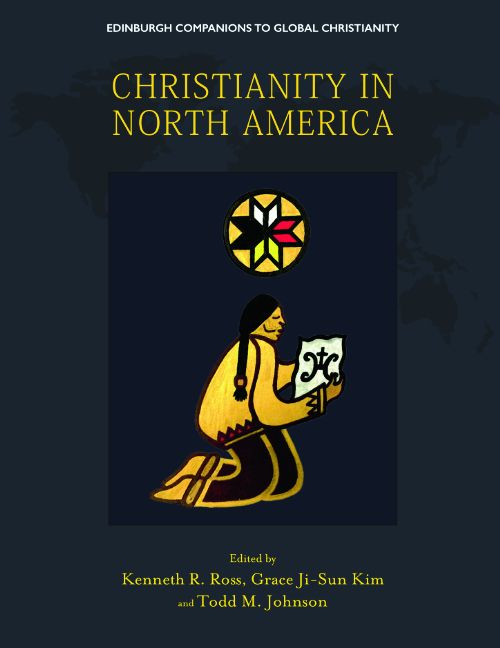
Edited by Kenneth R. Ross, Grace Ji-Sun Kim, and Todd M. Johnson, "Christianity in North America" combines empirical data and original analysis to offer a uniquely detailed account of Christianity in North America.
This reference volume takes a deep dive into Christianity in every country in North America, presenting reliable demographic information alongside original interpretative essays by locally based scholars and practitioners. It maps patterns of growth and decline, assesses major traditions and movements, analyses key themes, and examines current trends. By giving an exhaustive account of Christianity in every part of North America, this volume will become a standard work of reference in its field.
Tyler Lenocker ('20) has contributed a chapter titled "Northeastern United States" to the book.
More info here.
World Christianity Conference in Ghana: Call for Papers

CALL FOR PAPERS 2024
REVISITING WOMEN AND GENDER IN WORLD CHRISTIANITY
Fifth International, Interdisciplinary Conference co-organized by the World Christianity and History of Religions Program (Dept. of History and Ecumenics), Overseas Ministries Study Center, Princeton Theological Seminary; and the Department for the Study of Religions, School of Arts, College of Humanities, University of Ghana
Venue: University of Ghana, Legon March 11 (Monday) – March 15 (Friday) 2024
More info here.
Generosity & Trauma
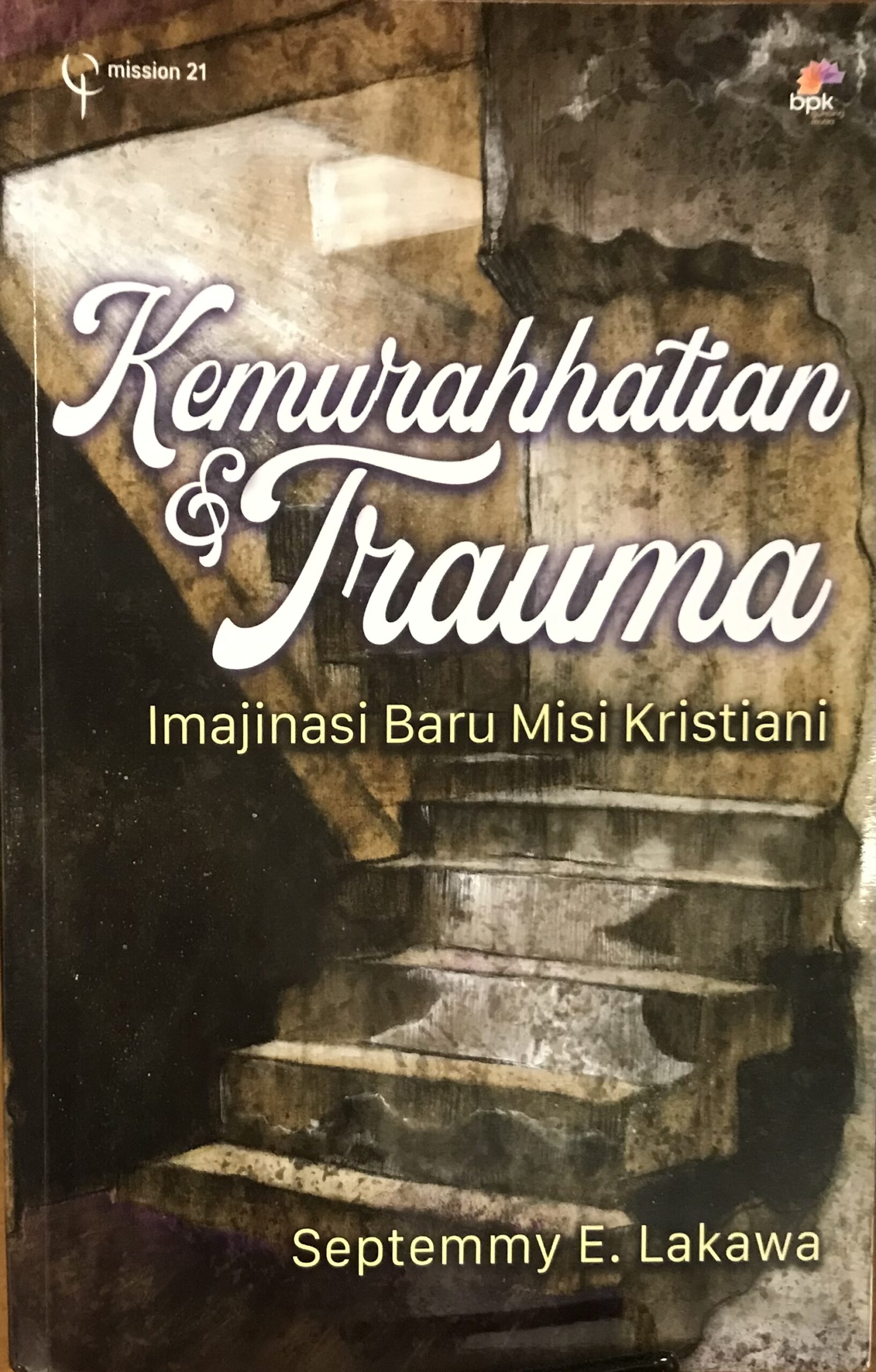 In her new book, Kemurahhatian & Trauma, Septemmy Lakawa ('11) argues that in the aftermath of religious communal violence in Indonesia, Christian mission practice should take the form of hospitality. Lakawa, the Associate Professor of Mission Studies at Jakarta Theological Seminary, received a grant to fulfill her wish: to have her dissertation first published in Indonesian.
The book particularizes hospitality by identifying the missiological dimension of local Indonesian hospitality as a vital Christian interreligious practice in the aftermath of religious communal violence in Duma on June 19, 2000. Specifically, the study brings a local Indonesian Protestant community's responses to violence into conversation with the Protestant theological discourse on the cross, martyrdom, religious difference, and the Holy Spirit.
What surfaces is the importance of local traditions of hospitality as a relevant mission practice. Risky hospitality repositions mission at the boundary of the Christian self and the religious Other. Practicing hospitality at this frontier is a delicate undertaking, for it is shaped by the religious communities' shared history of violence and its traumatic effects as well as by the communities' commitments to peace and reconciliation. Her book underscores the importance of linking trauma, healing, and the Holy Spirit in further studies on mission and religious pluralism in the aftermath of religious communal violence.
New Book: “The Quest for Biblical Servant Leadership: Insights from the Global Church”
 Rev. Dr. Grace May's new book "The Quest for Biblical Servant Leadership: Insights from the Global Church," is out now and available on Amazon. The book is edited by The book's abstract reads:
"Improve your service. While many claim to offer models of leadership suitable for contemporary society, this book goes a notch higher by doing so through the prism of Jesus's servant leadership. As the servant-leader par excellence, Jesus not only taught but demonstrated service by stooping down and washing his disciples' feet. This book distills the experience and wisdom of men and women who have practically benefited from Jesus's leadership. Reflective of the global church, all the authors speak of a servant leadership inspired by love, honoring of God, humble in approach, and seeking the welfare of others without neglecting a healthy self-regard. Whether you work on-site or remotely, you will find the grist for robust leadership. This book is a must-read for theologians, businesspeople, educators, students, and Christian practitioners seeking to make a difference in our times."
BU at ASM
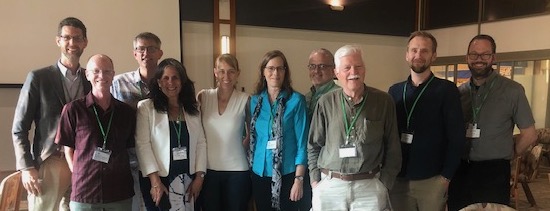
The American Society of Missiology met June 16-18, 2023 in South Bend, Indiana. Former students connected to the CGCM gathered for a meal together. In addition, three of the executive committee of the ASM are now Center alumni: Ben Hartley (President), Bill Gregory (Vice-President), and David Scott (Treasurer).
Alumni in Korea
While giving the Underwood Lectures at Yonsei University, Dana Robert was able to meet with a number of alumni connected to the Center for Global Christianity and Mission.

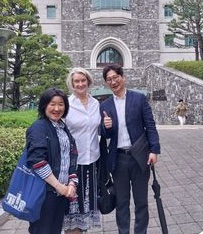
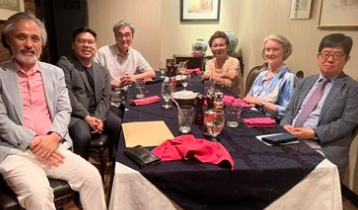
Global Mission in the Age of World Christianity
 In May 2023, Yonsei University and the Saemoonan Church combined to host Dana Robert as she gave the special Underwood Lectures on Global Mission in the Age of World Christianity.
The lectures included, "Frontiers, or 'to the Ends of the Earth'", "Friendship in the Kingdom," and "Fellowship: Living 'As If.'"
Reporting on the lecture on "Fellowship: Living 'As If,' the United Graduate School of Theology and the Global Institute of Theology reported that "the central focus of the lecture was the importance of Christian Fellowship in our contemporary era. Dr. Robert drew upon the visionary perspective of Underwood, highlighting his notion of the unity of the Church. Underwood believed in fostering a sense of togetherness and collaboration among Christians, transcending geographic boundaries and denominational differences."
Continuing, the report added, "In the context of our rapidly globalizing world and the emergence of World Christianity, Dr. Robert explored the implications of Underwood's vision for the present-day Church. She emphasized the significance of nurturing fellowship as a means of strengthening and unifying the body of Christ, regardless of diverse cultural, social, and theological backgrounds."
The lectures inspired a renewed sense of purpose and an awareness of the vital role attendees play in fostering fellowship within the Church, and highlighted the need to actively engage with believers worldwide, appreciating the rich diversity present in the global body of Christ.
In the age of World Christianity, where believers are connected like never before, the call to embrace Christian Fellowship becomes more relevant than ever. This lecture served as a catalyst for reflection and action, inspiring individuals to strive for unity, understanding, and collaboration as they participate in God's mission in the world.
--Excerpted from the Global Institute of Theology