Heine Examines Risks of the New “Trump Corollary” to the Monroe Doctrine
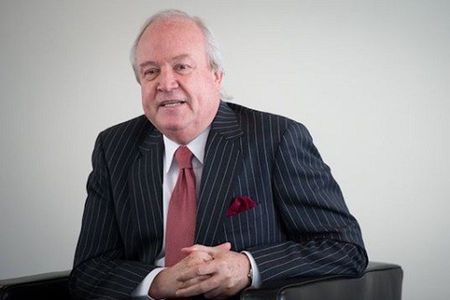
Ambassador Jorge Heine’s most recent analysis titled, Trump’s ‘Monroe Doctrine 2.0’ completely misreads Latin America, was published by Responsible Statecraft on December 9, 2025. Throughout the piece, Heine highlights the significant implications of the Trump administration’s new “Trump Corollary” to the Monroe Doctrine. This initiative has been featured prominently in the 2025 National Security Strategy and framed as a renewed assertion of U.S. control over the Western Hemisphere. While the strategy marks a clear shift away from the long-standing “pivot to Asia” strategy, scholars warn that its assumptions and prescriptions may do more harm than good for Latin America’s development and for U.S.–regional relations.
Heine elaborates that although a stronger U.S. focus on the Americas could benefit a region still struggling to recover from its historic 2020 economic contraction, the Corollary resurrects troubling echoes of early 20th-century U.S. interventionism. Deployed alongside major military maneuvers near Venezuela, the policy’s framing has already triggered unease across Latin America. He argues,
Attempts to restrict Latin America’s global economic engagement—framed as necessary to protect U.S. strategic interests—risk further hindering development and exacerbating the underlying conditions that drive migration.
Economic concerns, however, are just as pronounced. The new strategy calls for efforts to block foreign—particularly Chinese—companies from building infrastructure or acquiring strategic assets in the region. Analysts argue that this approach misunderstands Latin America’s economic reality: the region’s severe infrastructure deficit, high logistics costs, and deepening ties with Asia make diversified investment not only inevitable but essential.
Attempts to exclude non-U.S. partners ignore both market dynamics and the absence of U.S. firms willing or able to take on many large-scale regional projects. China’s growing role in building ports, railways, and transit systems has filled that gap, as exemplified by Peru’s Chancay port, completed in 2024.
The analysis concludes that efforts to restrict Latin America’s global economic engagement—framed as necessary to protect U.S. strategic interests—risk further hindering development and exacerbating migration pressures. In an interconnected global economy, the piece argues, attempts to revive 19th-century geopolitical doctrines are increasingly impractical and counterproductive.
The full article is available to read here.
A former research professor at the Frederick S. Pardee School of Global Studies, Jorge Heine is a diplomat, international relations scholar, and lawyer. He has served as an ambassador of Chile to China, India, and South Africa. Heine has written over fifteen books, including The Non-Aligned World: Striking Out in an Era of Great Power Competition (2025), which provides insights on how the Global South can navigate the changing diplomatic landscape amid the U.S.-China rivalry.