Hare on Trump’s Role in Reshaping the U.S. Peace Corps
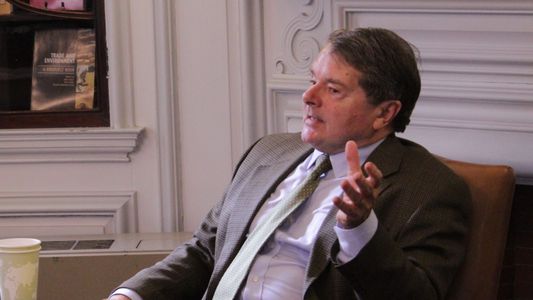
Master Lecturer Paul Webster Hare penned a new blog for the USC Center for Public Diplomacy titled “The Peacemaker President and U.S. Public Diplomacy,” commenting on how Donald Trump and his potential peacemaking message can reshape the U.S. Peace Corps.
According to the professor, the United States’ G20 presidency this year offers a window of opportunity to streamline the Trump administration’s peace efforts, revive American public diplomacy, and overhaul both the Peace Corps and the G20.
“The Corps is a successful model with an impressive legacy. It has operated in over 140 countries, and some 250,000 people have served. And the US Peace Corps already has worked with other countries on cooperative volunteering projects. Volunteers from Japan, South Korea, Germany and the United Kingdom have cooperated.” – Master Lecturer Paul Webster Hare
Hare suggests three strategies to solidify the Peace Corps, which focus on prioritizing new cooperation exercises alongside fresh elements of the country’s private sector.
“The U.S. could invite others from the G20 to welcome participants in future U.S. Peace Corps projects,” said Hare. “Each country could propose, say, five candidates who would be interviewed by the Peace Corps for participation in defined or new projects. … Second, during the U.S. presidency of the G20, the Peace Corps could hold brainstorming sessions online where G20-nominated participants could offer ideas and solutions to problems encountered in countries where the Peace Corps volunteers. … Third, the Peace Corps could harness the resources of companies that inspire international youth who are interested in promoting an era of digital peace. These companies could be invited to either fund a short term internship program for candidates nominated by G20 countries or fund new technology projects in the field for the Peace Corps”
The professor also mentioned that budgets for these ideas would be negligible, and that Congress is likely to approve a level funding for the Peace Corps in 2026.
“These ideas would recharge the U.S. Peace Corps, promoting cooperation in ways that our era offers,” said Hare. “The G20 would also take on a new dimension. Without some new aspiration, it perhaps risks degenerating into what Churchill feared for the new United Nations – ‘a cockpit in a Tower of Babel.’ This new pilot scheme for the Peace Corps would perhaps trigger efforts by other countries to reaffirm their shared interests in public diplomacy for the cause of peace.”
To read the full blog, click here.
Paul Webster Hare is a master lecturer at the Frederick S. Pardee School of Global Studies. He served as British Ambassador to Cuba from 2001 to 2004 and also represented the U.K. to the European Union in Brussels, New York, Portugal, and Venezuela as deputy head of mission. Hare has extensively written about Cuba for renowned news outlets including The Financial Times, The Atlantic, Newsweek, and The Huffington Post. He is also the co-editor of the Palgrave Handbook of Diplomatic Reform and Innovation, which analyzes current practices of diplomacy and proposes practical solutions to improve diplomatic outcomes.