AI for Characterizing and Designing Biomolecular Interactions
Focused Research Program
Our Focus
This FRP will establish BU as a leader in the application and interpretation of biological foundation models for biomedical research. The program pursues two cross-cutting scientific goals—developing principled fine-tuning strategies for adapting foundation models to new biochemical problems and building interpretability tools that reveal what these models encode about biomolecular interactions—executed across three complementary interaction regimes that together enable cross-domain comparison no single-domain project could achieve. The interdisciplinary collaboration is essential: the convergence of computational and experimental expertise across olfaction, antibody design, and biosensing is what makes the cross-domain comparison rigorous, and the shared infrastructure developed here will lower barriers to foundation model adoption across the broader BU biomedical research community.
Focused Research Program led by:
Brian DePasquale, Assistant Professor, Department of Biomedical Engineering, College of Engineering
Diane Joseph-McCarthy, Executive Director, Bioengineering Technology & Entrepreneurship Center (BTEC); Professor of the Practice, Department of Biomedical Engineering, College of Engineering
James Galagan, Associate Professor, Department of Biomedical Engineering, College of Engineering
Research Thrusts
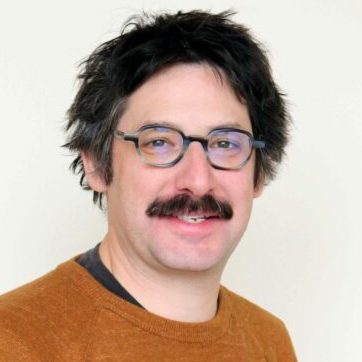
1. Interpretable AI Models for Understanding Odor
The goal of this thrust is to develop and apply protein and chemical foundation models to predict olfactory receptor–odorant interactions across invertebrate and mammalian species, use these models to guide experimental screens in the disease-vector mosquito Aedes aegypti, and build complementary interpretability approaches—including evolutionary program synthesis and physics-based binding site detection—to discover the human-readable biochemical rules that govern chemical sensing across species.
Thrust Champions
Core & Affiliated Faculty


2. Foundation Models for Antibody Design
The goal of this thrust is to develop and apply antibody-specific foundation models to predict and design antibody-antigen interactions. Building on the team’s AbCDR language model, we will extend these representations to predict antibody developability properties, classify antibodies by epitope recognition patterns, and design improved scFv antibodies for CAR T-cell therapy delivery.
Thrust Champions

Core & Affiliated Faculty

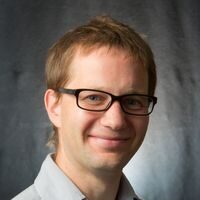


3. Foundation Models to Design Molecular Interactions for Biosensing
The goal of this thrust is to leverage protein foundation models to accelerate the discovery and engineering of steroid-sensing redox enzymes for hormone biosensor development, while developing and applying interpretability tools to determine what quantitative biophysical properties of enzyme-substrate interactions are encoded in foundation model representations and how fine-tuning reshapes those representations for biosensor-relevant prediction.
Thrust Champions

Core & Affiliated Faculty


Sponsor
This Focused Research Program is funded by the Hariri Institute for Computing and Computational Science & Engineering.
How to get involved?
For program specific inquiries and questions, please contact FRP leaders: Brian DePasquale (bddepasq@bu.edu) Diane Joseph-McCarthy (djosephm@bu.edu), or James Galagan (jgalag@bu.edu).
Faculty interested in submitting a Focused Research Programs proposal are strongly encouraged to discuss their ideas with Hariri Institute Director Yannis Paschalidis (yannisp@bu.edu).
To learn more details about the Hariri Institute’s Focused Research Programs, visit here.