Director’s Message
Welcome to the Hariri Institute – Boston University’s Largest Research Institute
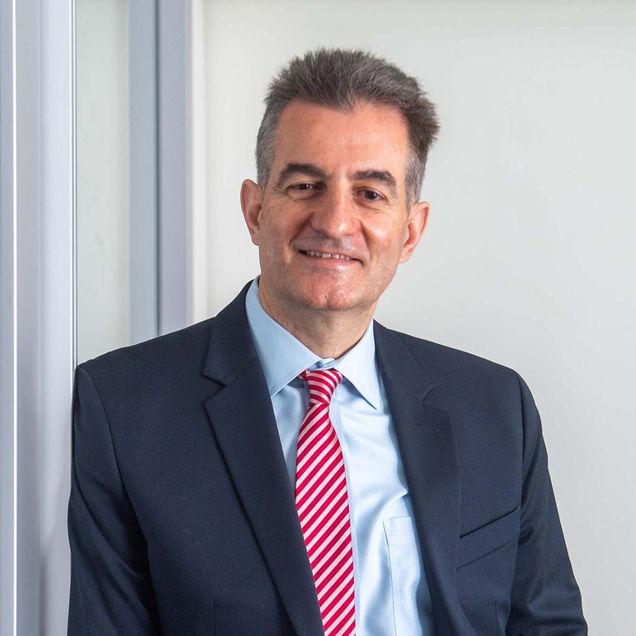 Today, computing and AI sit at the heart of both scientific discovery and everyday life, unlocking new possibilities at the intersection of disciplines where the most complex problems can be solved. Challenges like sustainability, healthcare, climate change and cybersecurity are deeply interconnected, requiring “systems” thinking and expertise from AI, computer and data science, engineering, mathematics, materials science, and beyond. No single discipline can solve these problems alone.
As Boston University’s largest research institute—and a multidisciplinary hub with a distinct focus on computing and AI—the Hariri Institute brings together a diverse research community united by a shared mission: tackling the world’s most complex scientific and societal challenges. By catalyzing convergent research at the boundaries of disciplines and leveraging the power of computing and AI, the Institute drives innovations for a more sustainable and impactful future.
The Institute serves as both an accelerator and enabler of interdisciplinary work through its federation of 10 Centers and Initiatives spanning AI research, AI in education, computational science, digital health, computer systems and the cloud, information systems, engineering, and cybersecurity and privacy. Our seed funding programs encourage exploratory work on emerging problems, helping teams form across disciplines and enabling sustainable funding for new research directions.
We bring AI and advanced computing methods to a wide range of fields, including non-STEM disciplines, enabling researchers to leverage these transformative tools. In partnership with the BU Center for Emerging Infectious Diseases and clinical collaborators, we developed currently the only biosurveillance system powered by AI and large language models that delivers real-time global disease outbreak reports. In collaboration with colleagues in Engineering, we develop AI technology that puts an entire biotechnology lab on the cloud (a node in NSF’s AI-programmable cloud laboratory network). We apply AI and computational methods to assess the climate impact of AI workloads, study the health effects of climate change, and advance computational medicine and biology—tackling Alzheimer’s, heart disease, and electronic health record challenges—while addressing critical issues like privacy.
Through industry partnerships, including open-source software leader Red Hat, we accelerate innovation, provide access to talent, and help train the next-generation workforce. Our Software & Application Innovation Lab (SAIL) supports translational initiatives that bring academic ideas closer to production-ready systems. Recognizing the public-good potential of new technologies, we also support public-private collaborations such as the Boston Women’s Workforce Council.
At the Hariri Institute, we step beyond scientific boundaries, connect across disciplines and tackle challenges together—learning, creating, and discovering in ways we never could alone.
Our community thrives on collaboration. I encourage you to browse through our website and annual report to explore the many ways you can become part of our vibrant community, and follow up with me or any of the Institute’s Center and Initiative Directors.
Ioannis (Yannis) Paschalidis, PhD
Director, Rafik B. Hariri Institute for Computing and Computational Science & Engineering
Distinguished Professor of Engineering (Electrical and Computer Engineering, Systems Engineering, and Biomedical Engineering)
Founding Professor, Faculty of Computing & Data Sciences
Professor of Biostatistics, School of Public Health