10/29 Focused Research Program Symposium — Now Virtual!
Date: Wednesday, October 29
Time: 12:15 pm – 4:00 pm
Location: Zoom (Please register to receive the Zoom link.)
Register Now
Enhancing Models for Breast Cancer Risk Prediction Through Clinician-AI Collaboration
Breast cancer is the second leading cause of death among women in the U.S., with Black women experiencing higher mortality than any other racial group. While advances in artificial intelligence (AI) and deep learning (DL) have shown promise in improving individual risk assessment and early detection, concerns about “AI bias” raise questions about patient outcomes, healthcare costs, and equitable care.
This research symposium will convene invited speakers from artificial intelligence, medical imaging, clinical medicine, and public health to present their latest findings on overcoming these challenges. Participants will learn how collaborations between clinicians and AI researchers are helping to identify and mitigate bias, improve predictive accuracy, and ensure tools work effectively across diverse patient populations. The symposium will also explore the use of large language models and other innovative approaches to generate hypotheses about sources of underperformance and hidden bias in AI models.
Attendees will gain insights into current strategies, ongoing research, and practical applications for making AI-driven breast cancer detection more reliable and equitable. This symposium is relevant for researchers, healthcare professionals, and anyone interested in the intersection of AI, oncology, and health equity.
Agenda
12:15 pm – 1:15 pm: Kayhan Batmanghelich, PhD, Boston University, and Clare Poynton, MD, PhD, Chobanian & Avedisian SOM. Talk Title: “Breast Cancer Risk Prediction and Bias Mitigation through Clinician AI Collaboration.”
1:15 pm – 1:45 pm: Kimberly Bertrand, ScD., Slone Epidemiology Center, Boston University Chobanian & Avedisian SOM. Talk Title: “Advancing breast cancer risk prediction in national cohorts: the role of mammogram-based deep learning.”
1:45 pm – 2:15 pm: Alaina Geary, MD, MHPE, Boston Medical Center. Talk Title: “Breast Cancer Screening – Who? When? Why?”
2:15 pm – 2:45 pm: Aimilia Gastounioti, PhD, Washington University SOM. Talk Title: “Enhancing Breast Cancer Screening with AI: Embracing 2D and 3D Mammography.”
2:45 pm – 3:00 pm: Break for 15 minutes. Please stay logged into Zoom.
3:00 pm – 3:30 pm: Imon Banerjee, PhD, Mayo Clinic, Arizona, and the ASU, School of Computing and Augmented Intelligence (SCAI).
3:30 pm – 4:00 pm: Adam Yala, PhD, UC Berkeley and UCSF. Talk Title: “AI for Personalized Cancer Care.”
Speakers
Imon Banerjee, PhD, Faculty member at Mayo Clinic, Arizona, and the School of Computing and Augmented Intelligence (SCAI) at the Arizona State University
 Imon Banerjee
, Ph.D. is a f
aculty member at Mayo Clinic, Arizona, and the School of Computing and Augmented Intelligence (SCAI) at the Arizona State University, supporting AI-driven healthcare initiatives. Prior to joining ASU, Banerjee was an Assistant Professor in Emory University with joint affiliation in Georgia Tech, and an active member of Winship Cancer Institute. Banerjee’s intellectual goal is to close the gap between human understanding of unstructured medical data and computerized interpretability for creating the next-generation generalizable predictive modeling for clinical events. Banerjee’s current research is focused on unstructured medical data analysis (mainly clinical notes and images) and integration of multisource medical data from varying hospital systems for building predictive model to benefit cancer diagnosis and treatment.
Talk Title: “Bias in Multimodal Foundation Models: Causes, Evaluation and Mitigation”
Kayhan Batmanghelich, PhD, Assistant Professor of Electrical and Computer Engineering at Boston University’s College of Engineering
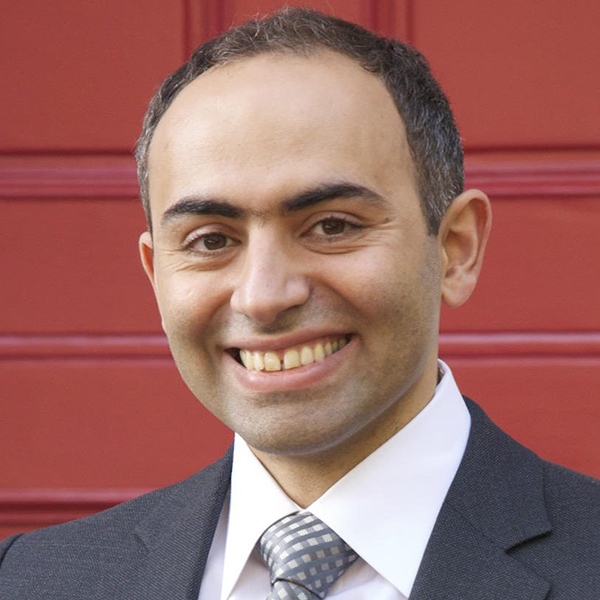
Kayhan Batmanghelich is an Assistant Professor of Electrical and Computer Engineering at Boston University’s College of Engineering. He is also a Hariri Institute Junior Faculty Fellow and AIR Affiliate. Previously he was assistant professor at the department of biomedical informatics with a secondary appointment at the school of computing and information at the University of Pittsburgh.
Batmanghelich’s research is at the intersection of medical vision (medical image analysis), machine learning, and bioinformatics. Batmanghelich develops algorithms to analyze and understand medical images, genetic data, and other electrical health records, such as clinical reports. The main themes of research in Batmanghelich’s lab are about the main challenges of AI in healthcare: (1) Explainability, (2) Data Efficiency, (3) Multimodal Data Fusion, and Causality. Batmanghelich’s lab works on Alzheimer’s, Chronic Obstructive Pulmonary Disease (COPD), and Non-Alcoholic Fatty Liver Disease (NAFLD) projects.
Kimberly Bertrand, ScD., Associate Professor in Preventive Medicine & Epidemiology at Boston University’s Chobanian & Avedisian School of Medicine

Kimberly Bertrand is an Associate Professor in Preventive Medicine & Epidemiology at Boston University’s Chobanian & Avedisian School of Medicine. Bertrand’s research focuses primarily on the epidemiology of breast cancer, with an emphasis on understanding racial disparities in incidence and outcomes. She is currently Multiple Principal Investigator of the Black Women’s Health Study (BWHS), a prospective cohort study of over 59,000 African American women begun in 1995. Dr. Bertrand is also Principal Investigator of a BWHS study to evaluate risk factors for high mammographic density, a strong independent predictor of breast cancer, and the role mammographic density and other risk factors may play in tumor aggressiveness. Other areas of research interest include risk factors for non-Hodgkin lymphoma and multiple myeloma.
Talk Title:”Advancing breast cancer risk prediction in national cohorts: the role of mammogram-based deep learning”
Abstract: Description: Emerging data suggest that deep learning (DL) models based on mammographic images outperform traditional breast cancer risk prediction models based on clinical and risk factors and breast density alone. Yet there remain major gaps to resolve before widespread roll out of DL methods in order to enhance outcomes and reduce health disparities in breast cancer. These models have been developed in clinical or screening cohorts and require further validation in “real world” settings. Equally unknown is how performance of mammographic DL risk models may differ between Black and non-Hispanic white women, as few previous studies included sufficient numbers of Black women for meaningful interpretation. We leverage data from the Black Women’s Health Study and the Sister Study to validate the performance of an open-source DL model.
Aimilia Gastounioti, PhD, Assistant Professor of Radiology, Mallinckrodt Institute of Radiology, Washington University School of Medicine
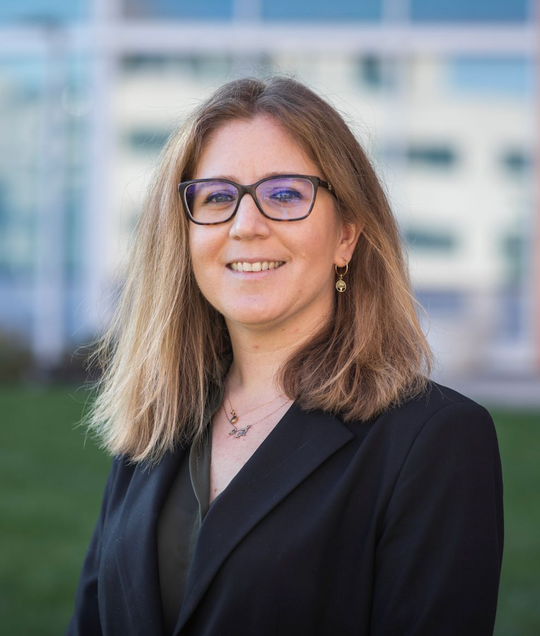 Aimilia Gastounioti is Assistant Professor of Radiology, Mallinckrodt Institute of Radiology, Washington University School of Medicine. Gastounioti’s research interests lie in translational breast imaging research towards prediction, early diagnosis, prognosis, and response to treatment for breast cancer. Her work combines elements of computational breast image analysis, artificial intelligence, and informatics, to build technologies with a potential for clinical impact in advancing breast cancer screening and prevention strategies.
Talk Title:
Aimilia Gastounioti is Assistant Professor of Radiology, Mallinckrodt Institute of Radiology, Washington University School of Medicine. Gastounioti’s research interests lie in translational breast imaging research towards prediction, early diagnosis, prognosis, and response to treatment for breast cancer. Her work combines elements of computational breast image analysis, artificial intelligence, and informatics, to build technologies with a potential for clinical impact in advancing breast cancer screening and prevention strategies.
Talk Title: “Enhancing Breast Cancer Screening with AI: Embracing 2D and 3D Mammography”
Abstract: This presentation will discuss the role of AI in breast cancer screening as we transition from 2D to 3D mammography. Key studies will be reviewed, with a particular emphasis on the integration of clinical insights, highlighting how AI can enhance breast density assessment and breast cancer risk prediction, as well as consistency and efficiency in clinical practice.
Alaina Geary, MD, MHPE, Breast surgical oncologist and an attending surgeon in the section of Surgical Oncology at Boston Medical Center
 Alaina Geary, MD MHPE, is a breast surgical oncologist and an attending surgeon in the section of Surgical Oncology at Boston Medical Center. Dr. Geary received her medical degree from Tufts University School of Medicine and completed her general surgery training at Boston Medical Center. During residency, she completed a master’s degree in health professions education and sought out focused training in breast surgery and breast health.
Her research interests include surgical education and the intersection of surgical outcomes and social determinants of health. Her clinical practice is focused on breast cancer and benign breast diseases.
Talk Title:”Breast Cancer Screening – Who? When? Why?”
Abstract:In this session I hope to provide some clinical background to develop attendees understanding of breast cancer, explore the barriers to breast cancer screening, and appreciate the benefits and limitations of our current screening guidelines.
Clare Poynton, MD, PhD, Assistant Professor of Radiology at Boston University’s Chobanian & Avedisian School of Medicine
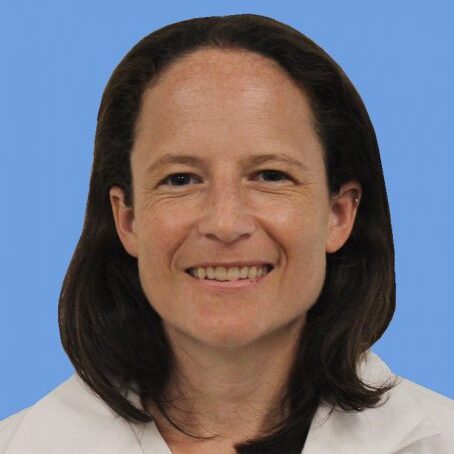
Clare Poynton is an Assistant Professor of Radiology at Boston University’s Chobanian & Avedisian School of Medicine. Poynton’s research is in medical image reconstruction and analysis problems such as quantitative susceptibility mapping and phase-based analysis, segmentation, registration, and modeling and correction of artifacts in structural, functional, and diffusion MRI. Her thesis research focused on quantifying magnetic susceptibility and iron concentration in the brain from MR phase data. Non-invasive iron quantification is critical for advancing the study of neurodegenerative diseases such as Alzheimer’s and Parkinson’s where iron deposits are implicated in disease progression. Previously, she worked on atlas-based retrospective unwarping and registration of functional and diffusion MRI data for neurosurgical planning.
Adam Yala, PhD, Assistant Professor, Computational Precision Health, Statistics, Electrical Engineering, Computer Science at UC Berkeley and at UCSF
 Adam Yala
, PhD, is an
Assistant Professor of Computational Precision Health, Statistics, and Computer Science at University of California, Berkeley, and at the University of California, San Francisco. His lab develops machine learning methods for personalized cancer care and to translate them to clinical practice; his overarching goal is to offer each patient the right intervention (e.g. screening exam or particular treatment choice) at the right time according to their individual risks and preferences. To this end, the Yala lab focuses on three major themes: 1) modeling full patient records (e.g. multi-modal imaging, pathology, etc) to better predict patient outcomes, 2) deriving better decisions from AI-driven predictors (e.g. screening and treatment policies, choosing therapeutic targets, providing decision quality guarantees, etc.) and 3) clinical translation. His tools are implemented at multiple hospital systems around the world, and underlie prospective clinical trials.
Talk Title: “AI for Personalized Cancer Care.”
Abstract: Early detection significantly improves outcomes across many cancers, motivating major investments in population-wide screening programs, such as low-dose CT for lung cancer. To make screening more effective, we must simultaneously improve early detection for patients who will develop cancer while minimizing the harms of over screening. Advancing this Pareto frontier requires progress across three fronts: (1) accurately predicting patient outcomes from all available data, (2) designing intervention strategies tailored to risk, and (3) evaluating and translating these strategies into clinical practice.
Symposium Organizers
This Focused Research Program is led by Boston University Professors Clare Poynton and Kayhan Batmanghelich and is co-sponsored by the Hariri Institute Digital Health Initiative, the School of Public Health Center for Health Data Science, the BU Clinical and Translational Science Institute, and the Evans Center for Interdisciplinary Biomedical Research at the BU Chobanian & Avedisian School of Medicine.
