News of the extended network of faculty, alumni, students, visiting researchers, and mission partners is regularly updated, and some of the big ideas or major events in Global Christianity are covered in the CGCM News.
In Memoriam: Father Alexander Veronis (1932-2023)
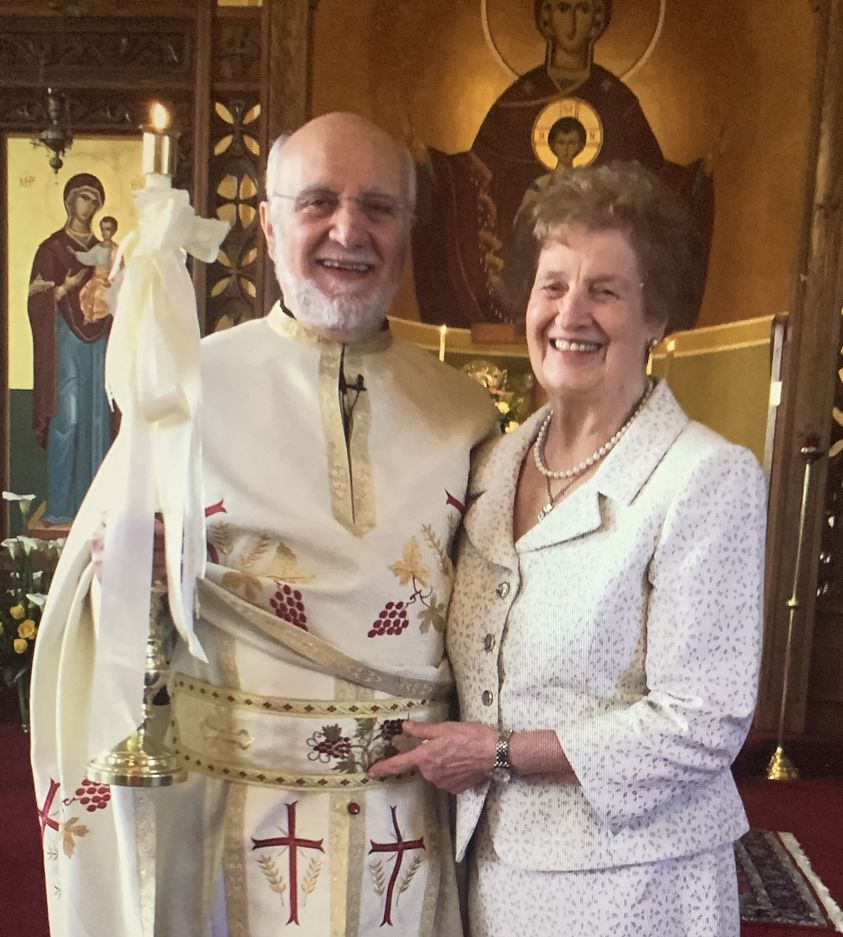 The Reverend Father Alexander Veronis, longtime pastor of the Annunciation Greek Orthodox Church of Lancaster, entered eternal life on June 26, exactly the way he had hoped – with his beloved wife of 64 years by his side.
Fr. Veronis’s legacy is primarily one of love, faith and service. He tried to see Jesus in every person, was a champion of the underdog, and a strong advocate for the oppressed and the forsaken. He lived by the belief that a rich man is not one who has much, but one who needs little and shares his blessings generously with others. He taught and encouraged his parishioners to use their talents, time and money to promote the faith and to help those in need. He was a father and mentor to all of the people he served and loved.
Fr. Veronis considered it a privilege to be able to share in the joys and sorrows of his beloved parishioners. He relished visiting their homes, sharing in their lives, baptizing and marrying their children, and burying their loved ones. He had a strong affinity for the youth and he and his wife, Pearl, helped to establish the vibrant Metropolis of Pittsburgh Camp Nazareth summer camp program that has impacted generations of Orthodox Christians.
He was noted for his leadership in Orthodox Christian missions and in ecumenical relations. For 43 years, he chaired the Lancaster CROP WALK FOR THE HUNGRY of Church World Service (CWS), helping to raise more than $5 million dollars to alleviate hunger and poverty in Lancaster and in 80 countries worldwide. His dream was that no person would go to sleep hungry anywhere.
Another lifelong passion of Fr. Veronis was missions and sharing the Good News of Jesus Christ throughout the world. He helped establish the Orthodox Christian Missions Center (OCMC), the premier Orthodox Christian mission agency in the USA, and was named as the president emeritus following his retirement.
He also helped to establish the Endowment Fund for Orthodox Missions (EFOM) which endowed the Missions Institute of Orthodox Christianity at the Holy Cross Greek Orthodox School of Theology. A highlight of his life was making a mission trip with his wife to Kenya to build a medical clinic in 1988, joining his son, Luke, who was serving there. He never stopped marveling about the joy he experienced worshiping alongside his African brothers and sisters.
Father Veronis was born in Paterson, N.J., the son of Nicholas and Angeliki Veronis, beloved Greek immigrant parents from Crete, Greece. He was the fifth of six children. He served Annunciation Church, his first and only parish, for 62 years as Pastor and Pastor Emeritus (1961-2023).
He graduated from Lafayette College (B.A.), Holy Cross Greek Orthodox School of Theology (B.D.) , Boston University School of Theology (S.T.M), and Athens University School of Theology. He received an honorary doctorate (D.D.) from Lebanon Valley College in 1992. In 2015 Boston University School of Theology recognized him as a “Distinguished Alumnus.”
Ordained to the priesthood in 1961, Father Veronis began his parish ministry at the Annunciation Greek Orthodox Church of Lancaster. Back in the 1960s, he was among the first in the Orthodox Church to establish regular Bible Studies. He was among the editorial committee to establish the first Orthodox Study Bible in 1993.
In 2008, the Greek Orthodox Archdiocese of America and his fellow priests honored his philanthropic and progressive ministry by bestowing on Fr. Veronis “The Distinguished Ministry Award” - the highest tribute given to any Greek Orthodox priest in the country.
Surviving, in addition to his beloved wife, Presbytera Pearl of 64 years, are their five children: Catherine, wife of David Garman (deceased); Nicholas, husband of Susan (Zervanos); George, husband of Christine (Reid); Rebecca (Veronis), wife of Matthew Michalopoulos; and Father Luke, husband of Presbytera Faith (Stathis). He had fourteen grandchildren and five great grandchildren.
To his final breath, Fr. Veronis gave gratitude for his wife, Pearl, his faithful companion and loyal partner in Christ. His love for her knew no bounds, and he often said that he could never have been the leader and the priest he was without her support. She was, in every sense of the word, his co-minister. Their love for each other showed their children and parishioners how joyful and fulfilling a Christ-centered marriage could be.
The family will receive visitors at the viewing on Thursday, June 29 from 3:00-9:00 pm, with the Trisagion Service at 6 pm, at the Annunciation Greek Orthodox Church, 64 Hershey Ave, Lancaster. A Divine Liturgy will be held Friday, June 30, at 9:30 am, followed by the funeral service at 11 am. Following the service will be the internment at Conestoga Memorial Park, 95 Second Lock Road, Lancaster.
In lieu of flowers, donations made be made in Father Alexander Veronis’s memory to Annunciation Greek Orthodox Church’s renovation of the Church Social Hall, 64 Hershey Avenue, Lancaster, PA 17603 or to The Missions Institute of Orthodox Christianity at Hellenic College/Holy Cross School of Theology, 50 Goddard Avenue, Brookline, MA 02445.
Pentecostalism and Gender
We invite contributions to our parallel panels, with a particular interest in papers that address the conference theme. Papers may present case studies or comparative analyses of gendered ideals and practices as well as adaptation and subversion strategies within Pentecostal communities.
The submission deadline for abstracts is September 30, 2023. Abstracts should not be longer than 1300 characters.
For details, please consult the attached CfP and the link to the GloPent website indicated. Information of registration will be following soon.
Please feel free to share this Call for Papers with your networks as well.
We are looking forward to your contributions!
Best regards,
Judith Bachmann, Michael Bergunder and Anna Kirchner (the organizing team)
Department of Religious Studies and Intercultural Theology, University of Heidelberg
IAMS 2026
 In June, the new executive committee of the International Association for Mission Studies met in Seoul, Korea to plan for the next quadrennium. In addition to setting the location for the 2026 meeting in Pretoria, South Africa, Michele Sigg, the North American representative, and the other delegates selected the theme "Walking Together in Mission: Facing Global Challenges for a Sustainable Future." More details and reflections on the meeting were put into a short video by IAMS.
Upcoming Events: Christianity in Korea
 This summer, the Ricci Institute for Chinese-Western Cultural History at Boston College will host two workshops on Catholicism in Korea. These lectures are free and open to the public.
Russian Methodism
During the early twentieth century until the Japanese invasion of 1931, Harbin, Manchuria, was a crossroads for migrants, including Koreans, mixed-race North Asian populations, and Russians fleeing the Russian Revolution. In that challenging context, the Methodist Episcopal Church, South, opened missions to the different refugee populations in Harbin. In 1927 the mission to Russian refugees closed. Russians fled the area, desperately migrating to whatever country would take them in.
In a video recorded lecture, Dana Robert reconstructs the memories of the Russian Methodist pastors of 1920s Harbin, in dialogue with her own search since the 1970s to uncover their history. This case study raises questions and provides insights into the nature of Methodism as a transnational migrant movement, the struggle to maintain identities in diaspora, and the role of historical reconstruction in the forming of Russian Methodism.
Jean Luc Enyegue (’18): New Publication
 Jean Luc Enyegue published a new book, The Jesuit Ethos: A Social and Spiritual History. The book analyzes how the Jesuits exploited their diversity of cultures and politics to build a global ethos, and how this global organization was sustained for the last five hundred years. Enyegue draws relevant lessons from the past to address the ongoing challenges of the Jesuit global community. While speaking to a broader, global-oriented audience, such a history might be the first of such by an African (thus its originality), in a context of shifting demographics in the Church and the Society of Jesus, and questions about the identity of its institution and mission.
Enyegue is the Director of the Jesuit Historical Institute in Africa, and lectures at Hekima University College in Kenya.
CGCM Publication: Creative Collaborations
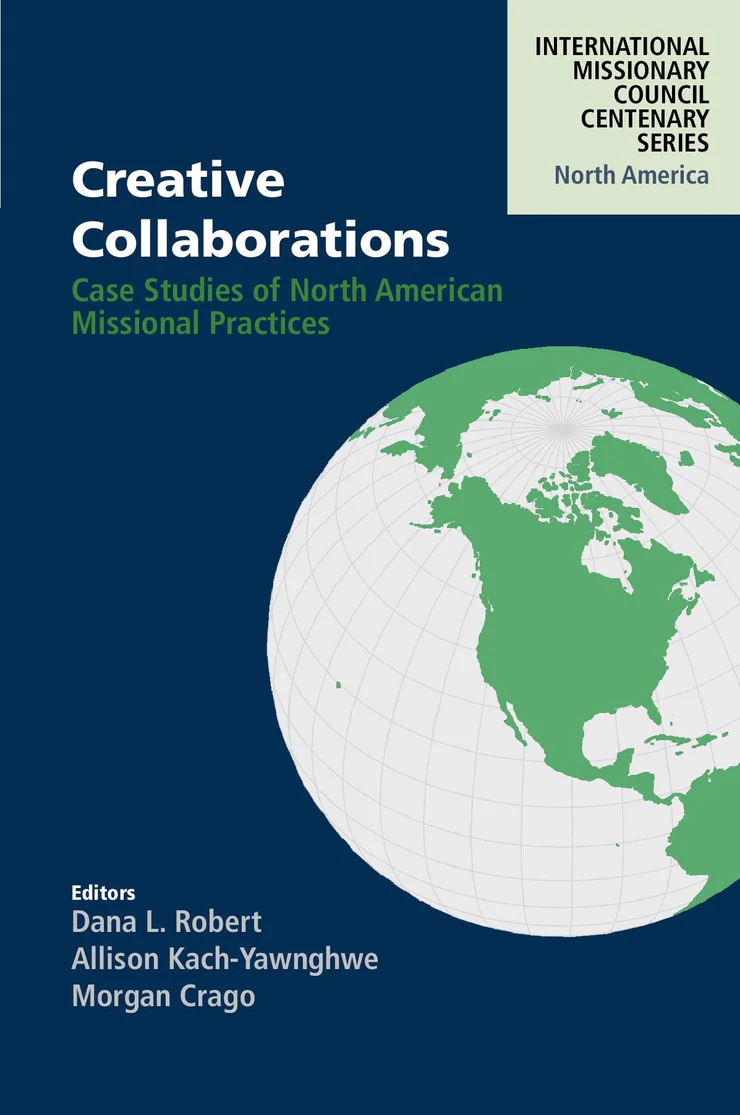 The Center for Global Christianity and Mission spearheaded a major initiative to research missional collaborations in North America. In addition to a report presented to the World Council of Churches, some of the findings were put into a new volume, Creative Collaborations: Case Studies of North American Missional Practices.
The case studies in this book, edited by Dana Robert, Allison Kach-Yawnghwe, and Morgan Crago, show that rather than collapsing under the strain of massive challenges, many North American Christians are reaching across divisions and differences to connect with people and contexts unlike themselves. The research in this book highlights multiple ways in which North American Christians are collaborating with others to witness to their faith. Such collaborations are like the mustard seeds of the Kingdom (Mt. 13:31–32), often small and yet creative actions of believers who push beyond Christian divisions and paralyzing social problems.
The series of books arises from a study process that marked the centenary of the International Missionary Council (IMC), founded in 1921 at Lake Mohonk, USA. It has its origin in the Commission on World Mission and Evangelism of the World Council of Churches, which wanted to celebrate the work of its historical predecessor IMC (1921-1961).
Soojin Chung (’18) Becomes New Director of OMSC
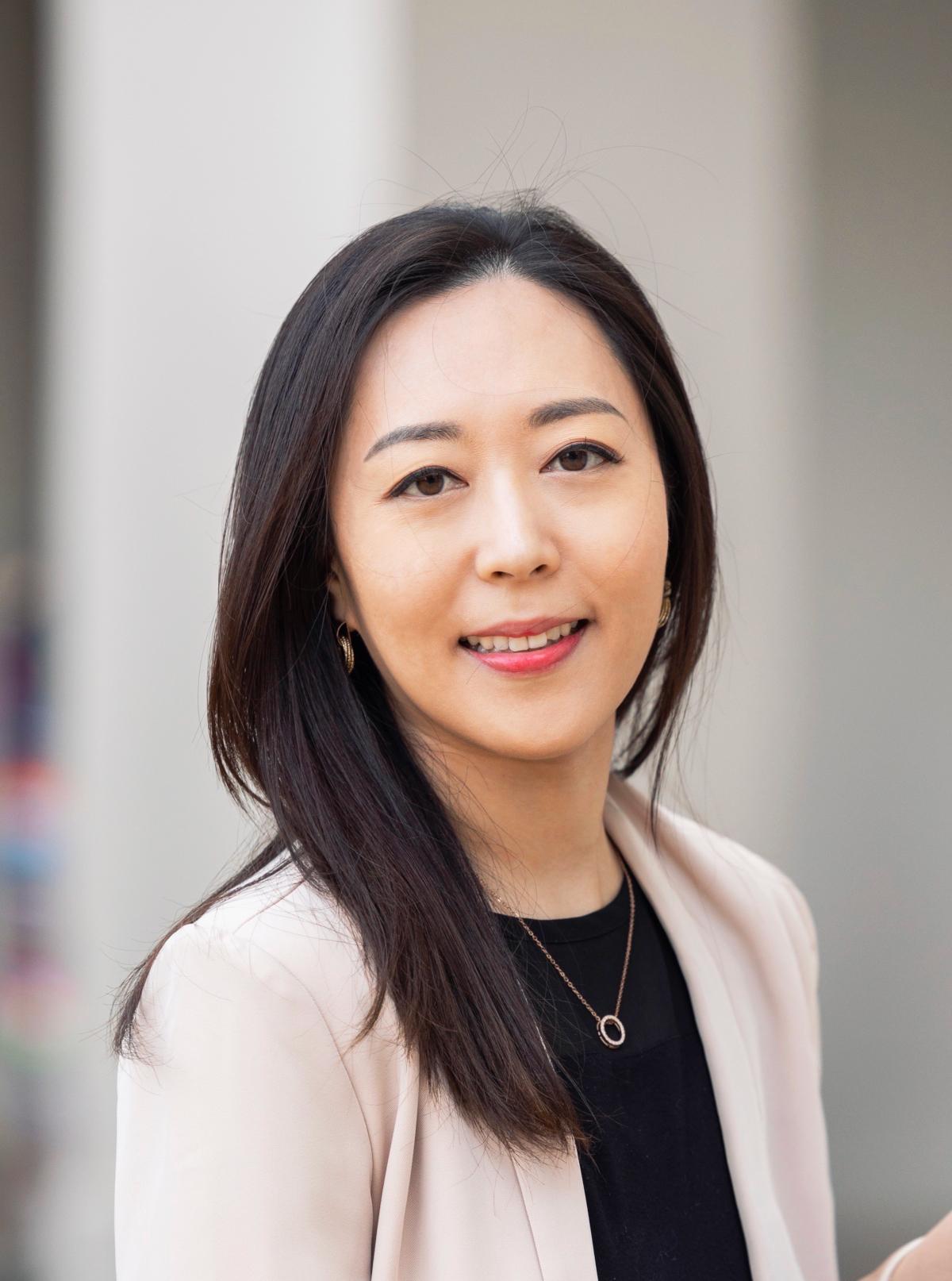 History is being made as the Overseas Ministries Study Center at Princeton Theological Seminary welcomes Dr. Soojin Chung as its eleventh director. Incorporated in 1922 in Ventnor, New Jersey, by American Baptists Marguerite and Ida Doane, OMSC relocated to New Haven, Connecticut in 1978 and continued its work there until 2019. In 2020, OMSC returned to New Jersey, this time to the campus of Princeton Theological Seminary, where it is now fully embedded in the center of that historic campus. For the first time since 1972, OMSC will again welcome a woman as director.
A gifted professor, author, and scholar of World Christianity, Chung begins her tenure August 1, 2023. The Assistant Professor in the School of Theology and Director of General Education at Azusa Pacific University brings a commitment to equity and justice, and a record of service in India, Thailand, Japan, and China, where she worked with missions organizations and conducted community-based research on the relationship between ethnicity and religious experience. As a faculty member and curriculum developer at the evangelical university in Southern California (2021–23), Chung designed and taught World Christianity, Asian and Asian American religions, Christian missions, and comparative religion courses. She also led diversity seminars for first-year students, oversaw faculty development and program assessment, organized conferences. 310 International Bulletin of Mission Research 47(3) and seminars, managed the operational budget and grants, represented the General Education program at campus and external events, and conducted a Department of Ethnic Studies research project on “Faith Integration and Race.”
Prior to joining the Azusa Pacific faculty, she organized World Christianity seminars and conferences as Director of Intercultural Studies and Assistant Professor of Intercultural Studies at California Baptist University (2018–21.) Since 2019 she also has been developing reading and writing curriculum for international students and teaching academic writing at the University of California, Irvine. Previously, Chung was a missionary with Youth With A Mission, Children’s Pastor at Boston Onnuri Church in Woburn, MA, an international student ministry leader at the historic Park Street Church in Boston, the English Ministry Pastor of Changshin Holiness Church in Seoul, and a Student Pastor at Boston Hope Church in Waltham, MA.
As Associate Editor of Missiology: An International Review, the American Society of Missiology journal, she acquired articles and book reviews, conducted preliminary screening of submissions, served as the liaison between publishers and authors, facilitated the peer-review process, and assisted in setting editorial guidelines—all of which will be a part of her portfolio when she assumes the editorship of the International Bulletin of Mission Research in 2024. Hastings, who retired in June, will continue as
the IBMR editor for another year.
While completing a PhD in World Christianity from Boston University School of Theology (2018), with Dr. Dana L. Robert as her mentor, Chung managed the daily operations of the Center for Global Christianity and Mission, supervised graduate assistants as Director of the Korean Diaspora Project, and assisted with the Chinese Christian Posters Project. A native English and Korean speaker and writer, who has a basic reading ability in Chinese, she earned a Master of Divinity from Gordon-Conwell Theological Seminary (2012) and a Bachelor of Arts in Religious Studies from the University of Virginia (2008).
Chung’s Boston University School of Theology dissertation, published in December 2021 as Adopting for God: The Mission to Change America through Transnational Adoption (New York University Press, https://nyupress.org/9781479808885/adopting-for-god/), explores the role played by missionaries between 1953 and 2018 when some 170,000 Korean children were adopted by families in dozens of countries, with Americans providing homes to more than two-thirds of them. The book “shows that, somewhat surprisingly, both evangelical and ecumenical Christians challenged Americans to redefine traditional familial values and rethink race matters,” Chung wrote. “By questioning the perspective that equates missionary humanitarianism with unmitigated cultural imperialism, this book offers a more nuanced picture of the rise of an important twentieth-century movement: the evangelization of adoption and the awakening of a new type of Christian mission,” she added.
The new OMSC@PTS leader is also the author of numerous articles including “The Seed of Korean Christianity Grew in the Soil of Shamanism,” (Christianity Today, November 2022); “The Missiology of Pearl Sydenstricker Buck,” (IBMR, April 2017); “Transnational Adoption: A Noble Cause? Female Missionaries as Pioneers of Transnational Adoption, 1945–1965,” (Evangelical Missions Quarterly, October 2016); and book chapters including “All God’s Children: How Missionaries Fostered World Friendship through Transnational Adoption,” in Unlikely Friends: How God Uses Boundary-Crossing Friendships to Transform the World, (Wipf and Stock Publishers, July 2021); and “Baptists, Global Christianity, and the Christian Tradition,” in Baptists and the Christian Tradition: Toward an Evangelical
Baptist Catholicity, (B&H Academic, June 2020).
“I am deeply humbled to join the Overseas Ministries Study Center team as the next director. I am excited to continue the legacy of the Doane sisters, who founded the Center as Houses of Fellowship that welcomed missionaries on furlough. The Center carries on this tradition through residential programs where global partners, students, faculty, and staff experience fellowship together and enrich the scholarship of their respective fields,” Chung said. “The importance placed on theological praxis—where scholarship and practice are necessarily entwined—makes OMSC a unique host for a community that lives and learns together. I look forward to carrying on the innovative programs of OMSC and envision new programs focused on women in mission and World Christianity,” she added.
“I am so glad to welcome Dr. Soojin Chung as the new director of OMSC@PTS. She brings us excellent scholarship, strong administrative and team-building skills, and a great love for the church and its mission. We are confident that she will continue the wise and winsome leadership that OMSC has enjoyed over its century of service,”said Dr. Joel A. Carpenter, provost emeritus at Calvin University and an OMSC@PTS Advisory Committee member.
“We are delighted by the search committee’s appointment of Dr. Chung. She brings significant gifts of mission experience, scholarship, and administration to OMSC@PTS, and as she continues the legacy of this unique ministry and helps to shape its future, she will be assisted by the extraordinary academic and administrative gifts of Dr. Easten Law and Ms. Caitlin Barton,” noted Dr. Hastings.
“A highly competent and impressive scholar of mission and global Christianity, Dr. Soojin Chung brings creativity and fresh visions to the OMSC at PTS. I am delighted to learn of her appointment, and I look forward to the future of our beloved institution,” commented Dr. Dana L. Robert, Distinguished Professor and Director of the Center for Global Christianity and Mission at Boston University School of Theology.
--Excerpted from Dan Nicholas, "Soojin Chung Appointed OMSC@PTS Director as Thomas J. Hastings Retires," International Bulletin of Mission Research 47, no. 3 (2023): 309-311.
Ricci Institute: Summer Workshops
 This summer, CGCM Research Associates Antoni Ucerler and Xiaoxin Wu will be running a series of workshops through the Ricci Institute at Boston College. The events are connected to the Institute's summer fellowships, but remain open to the public. A full calendar of events is included below.
April 2023
On March 24, half a dozen students and faculty from the CGCM attended two online webinars on the future of mission cooperation. Sponsored by the Commission on World Mission and Evangelism of the World Council of Churches, the webinars were part of the research program to commemorate the centennial of the International Missionary Council in 2021. Our Center has been part of this important global research network for two years. As one of fifteen participating centers from around the world, the CGCM has been responsible for investigating the shape of mission cooperation in the North American region. The webinars on Friday continued the discussion by examining “phase two” reports from research centers in China, India, Kenya, Eastern Europe, the Middle East and other locations.
Mission thinkers from all the continents attended the webinars. Although much of the time was spent in formal presentations about book projects (including our own forthcoming volume Creative Collaborations—the subject of a future CGCM News post!), several insights became the subject of lively discussion. One is the transnational, networking nature of mission today. Even though the study process was undertaken by fifteen regional centers, it has been impossible to confine studies of mission to a single region without considering their transnational intersections. To study mission today requires focusing on networks rather than a static definition of mission organizations or the nation-state.
A second topic that elicited lively discussion was the nature and meaning of decolonization as a shared value for mission today and in the future. What, exactly, is the meaning of decolonization? Similar to the problem of studying the relationship between mission and colonialism, the study of mission and decolonization needs to be context specific or else it risks re-imposing hegemonic frameworks on those whose historic struggles with colonizing powers are immediate and personal. Who is talking about decolonization, and what does it mean in different contexts? Decolonization in South Africa means something different than decolonization among gay Roman Catholics in San Francisco, and yet the language is used to describe realities in both places. As decolonization becomes a frequently-employed framework for the study of mission, discussion about its meaning needs to continue. As Ph.D. candidate Allison Kach-Yawnghwe noted, the Canadian partners with whom she works say that insisting on an overarching definition of decolonization takes away local control over their own conversations and realities.
A third interesting topic that was surfaced in the webinars was the use of the concept “mission from the margins.” An idea popularized by the 2013 CWME document Together Towards Life, the concept of mission from the margins has been used to underscore that creativity and energy in Christian mission come from those who have historically been marginalized—especially those in the Global South. In our research into mission partnerships involving North Americans, however, we have seen pushback against the idea by those in the Global South who say they are in the center of mission, not the margins. With Christianity as a largely nonwestern religion today, what is the continued usefulness of the concept “mission from the margins”? Who and what are the margins, in a networked approach to mission?[1]
One takeaway from the webinars is that the way we talk about mission needs to be refined and redefined to fit changing contexts. It is exciting that the CGCM participates in these discussions. Let the conversations continue!
Dana L. Robert
CGCM Director
[1] For useful discussion of marginality as a missiological concept, including a distinction between active and passive marginality, or between chosen and imposed marginality, see chapter 6 in Anthony J. Gittins, CSSp, Courage and Conviction: Unpretentious Christianity (Liturgical Press, 2018), pp. 79-94.