News of the extended network of faculty, alumni, students, visiting researchers, and mission partners is regularly updated, and some of the big ideas or major events in Global Christianity are covered in the CGCM News.
GRACE Anglican Church in Joondalup
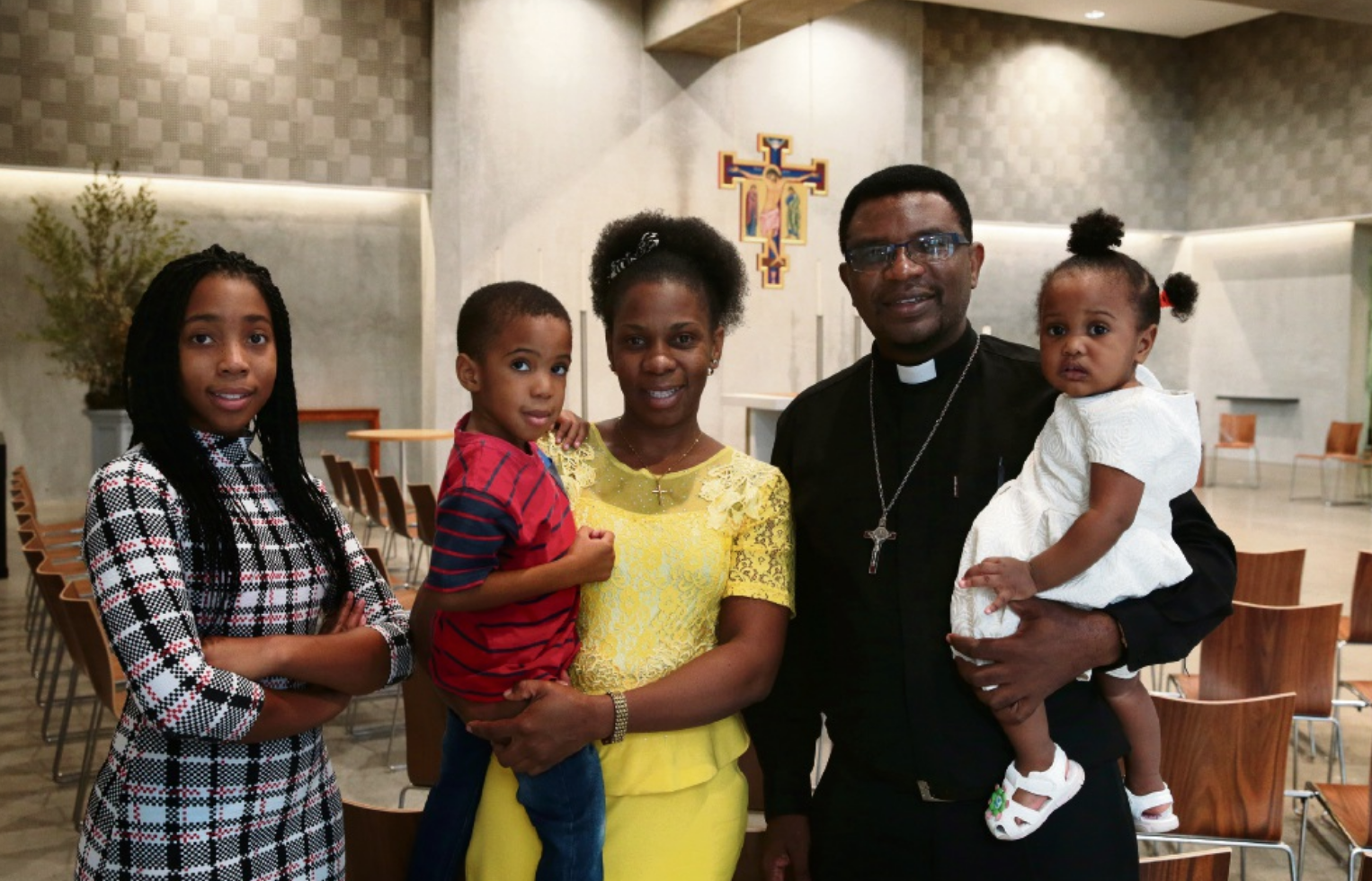 Dr. Gift Makwasha, Boston University School of Theology alumnus, was commissioned as the first full-time priest for GRACE Anglican Church in Joondalup. Dr. Makwasha moved to Perth from Zimbabwe with his family in late February to take up the position. The parish held a commissioning service on March 16 to welcome Dr. Makwasha, performed by Assistant Bishop of Perth Jeremy James. Full article can be found here.
Religious Influences on Political Engagement
"Religious Influences on Political Engagement: Insights from Sub-Saharan Africa"
Wednesday, March 22, 12pm in the African Studies seminar room (232 Bay State Rd., room 505)
Gwyneth McClendon of Harvard will present "Religious Influences on Political Engagement: Insights from Sub-Saharan Africa" in the Research in Comparative Politics workshop. The presentation is based on a book manuscript co-authored with Rachel Riedl of Northwestern. Lunch served.
For questions, contact:
Gwyneth McClendon
Harvard University
gmcclendon@gov.harvard.edu
Rachel Beatty Riedl
Northwestern University
r-riedl@northwestern.edu
The Saints of Santa Ana: Ethnic Membership and Religious Identities in the Barrio
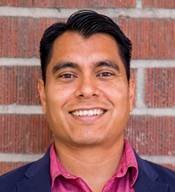 Dr. Jonathan Calvillo, CGCM faculty associate, has been awarded Louisville Institute's First Book Grant for Minority Scholars. The title of his project is "The Saints of Santa Ana: Ethnic Membership and Religious Identities in the Barrio." This project examines the influence of religious identities on the ethnic community membership of Mexican immigrants in the U.S. The intersection of Latino ethnicity and religion presents a timely topic given that significant segments of the Latino population have shifted from Catholic to Evangelical adherence. These shifts in religious affiliation are particularly pronounced in Santa Ana, CA, the research site for this project. Santa Ana is a densely populated city of 330,000 residents with a majority population of Latino origin. The city's religious landscape has become increasingly diverse. I argue that the social boundaries tied to differing religiosities result in diverging and reconfigured ethnic identity projects. Catholics and Evangelicals both make claims to authentic ethnic identities, but they live out their ethnicity in notably different ways. Three key spheres of contestation emerge between Catholic and Evangelical conceptualizations of ethnic membership: The modes of actualizing membership in the ethnic enclave, the discursive strategies of ethnic self-identification, and the dynamics of ethnic authenticity policing. This project speaks to the role of faith communities in providing modes of societal membership for immigrants. Beyond the religious sphere, this project carries broad implications for understanding Latino experiences of assimilation, civic engagement, and racialization.
Religion’s Imperial Pasts, Global Futures
“Religion’s Imperial Pasts, Global Futures.”
David Chidester, professor of religious studies and director of the Institute for Comparative Religion in Southern Africa at the University of Cape Town, will give a a public lecture on March 29, 2017.
When: Wednesday, March 29, 4:30-6:30
Where: Alumnae Lounge (40 Talbot Avenue, Medford, MA)
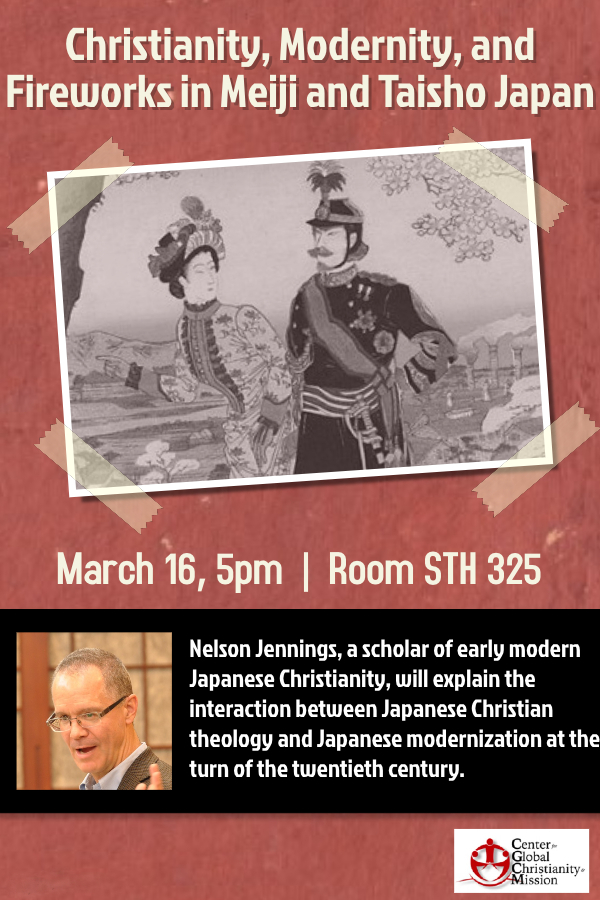
Christianity, Modernity, and Fireworks in Meiji and Taisho Japan
Race, Immigration, Ethnicity, and Religion in America
 Dr. Jonathan Calvillo, CGCM faculty associate, and Dr. Russell Jeung recently published an article entitled "Race, Immigration, Ethnicity, and Religion in America." This is an encyclopedia entry within the Oxford Research Encyclopedia series featured in their volume on Sociology, Anthropology, and Psychology of Religion. Their article first provide an overview of the ethnic, racial, and religious demographic changes in the past decade, followed by a review of three ways in which immigration has altered America’s religious landscape. Second, Calvillo and Jeung examine how transnational ties enable immigrants to sustain their traditions and make religious innovations. Third, they consider the intersection of ethnicity and religion, and how groups have related these two key, socially constructed groupings. Finally, the authors consider how race in the United States continues to structure religious formations.
Christianity, Development and Modernity in Africa

Migration, Exile, and Pilgrimage in the History of Missions and World Christianity
Paper proposals should be submitted to me (martha.smalley@yale.edu) via email attachment by March 5, 2017 and should include your name, institutional affiliation and status, the title of your proposed paper, and a one paragraph summary. Papers should relate in some way to the conference theme: Migration, Exile, and Pilgrimage in the History of Missions and World Christianity. Notification of successful proposals will be made by March 15, 2017.
See more information about the meeting and a link to the pre-registration and accommodations request form at http://divinity-adhoc.library.
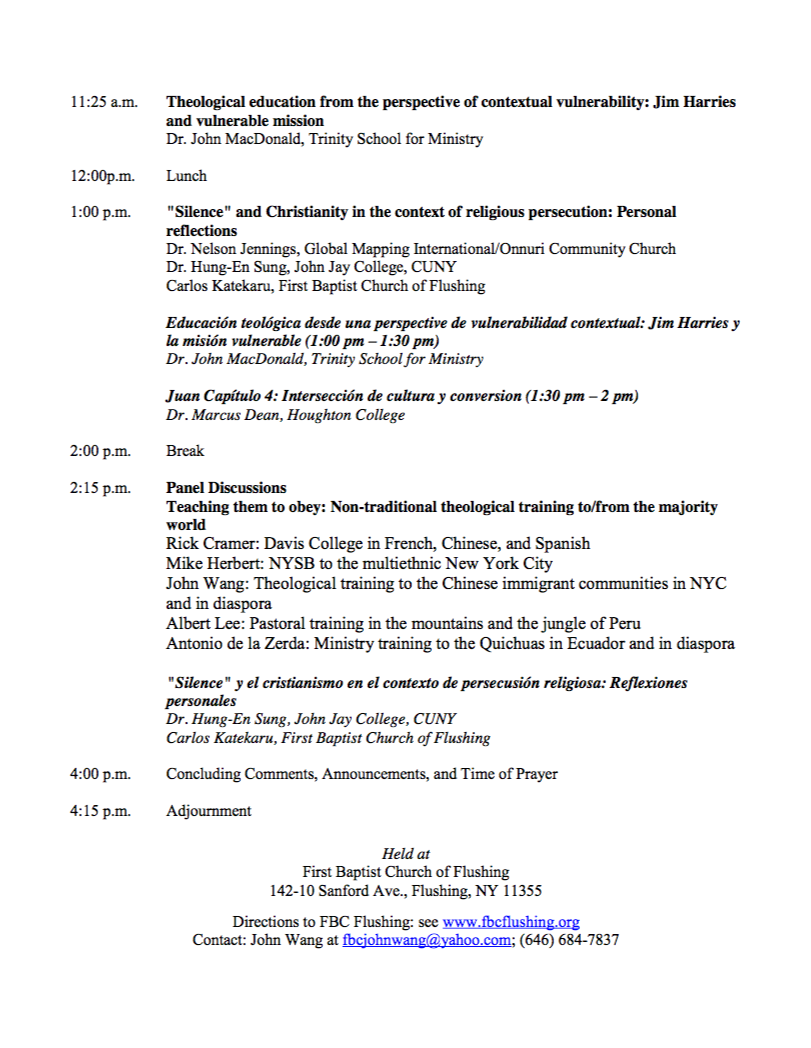
Engaging Theology, Theologians, and Theological Education in/from Majority World Contexts
The Evangelical Missiological Society, Northeast Regional Conference will be held Saturday, March 18th. The schedule is below. In order to register, please visit the EMS Homepage.

Missionary Backstories The Civil Rights Movement in the United States
Missionary Backstories: The Civil Rights Movement in the United StatesLecture by Professor Owen MillerThursday, March 2nd at 12:00 pm William Goodell (the abolitionist) was a distant relative of William Goodell (the missionary to the Ottoman Empire) and Lucy Goodale. Like his relatives, William Goodell (the abolitionist) was deeply involved with the Congregational Church, which played a central role in the abolition of slavery in the United States. In 1833 Goodell founded the New York Anti-Slavery Society and the American Anti-Slavery Society. Over the next three decades, he devoted his life to the cause of destroying the sin of slavery (and incidentally, the sin of racism). His descendants continued this trend. Grandson, William Goodell Frost was the third president of the remarkable Berea College (motto: God has made of one blood all peoples of the earth). It was the first school in the south to be coeducational and racially integrated. Frost was at the forefront of struggles against the Jim Crow system in the South. It was Frost who confronted the Kentucky state legislature when it passed a bill in 1904 to segregate Berea College. Frost and the Berea College administration fought this bill all the way to the Supreme Court. Over the past decade, the study of missionaries from the United States has grown in leaps and bounds. Much of this work presumes that missionaries were always outsiders to the societies they evangelized however their children often grew up speaking local languages without a trace of an accent, and seeing the world through local lenses. This process of acculturation signals that the work of conversion was often a two-way street, and that the experience of living abroad for several generations profoundly shaped communities of missionaries. In the Middle East, the American missionaries become involved in activities later associated with the Peace Corps, from building schools to carrying out famine relief. In Hawai'i, the American missionaries were involved in the overthrow of Queen Liliuokalani and the annexation of the islands to the United States. Finally, in the south of the United States, in the aftermath of the Civil War, missionaries built most of the historically black colleges and struggled against the racism of Jim Crow. |
| Missionary Backstories: The Civil Rights Movement in the United States
Thursday, March 2nd at 12:00 pm |