News of the extended network of faculty, alumni, students, visiting researchers, and mission partners is regularly updated, and some of the big ideas or major events in Global Christianity are covered in the CGCM News.
Architecture and Faith in China
In his most recent article on "The Action of Christian Buildings on their Chinese Environment," Michel Chambon describes how Christian church structures in Fujian shape the faith of those who gather inside, as well as what they communicate to those who only peer at the buildings from outside. He argues that buildings are actors which make the presence of God tangible.
Call for Papers: Currents, Perspectives, and Methodologies in World Christianity
Princeton Theological Seminary is organizing an international, interdisciplinary conference on the direction of World Christianity from January 18-20, 2018.
The last few decades mark a significant watershed in the study of World Christianity as an emerging field, its development into an interdisciplinary and transdisciplinary endeavor in particular. Most scholarship now characterizes World Christianity as a ‘polycentric’ faith whose adherents have become more demographically robust in the majority world than in Europe and North America. Additionally, while the primary focus in World Christianity continues to be Christianity’s burgeoning presence in the global South (Africa, Asia, the Caribbean, Latin America, and the Pacific), scholars are increasingly aware of the diffusion of global South Christianities in a variety of South-South and South-North diasporas. Reflection on the complex history and reality of Christianity not only as a world religion but also as a pluricultural, global phenomenon is an on-going need. While research on Christianity’s cross-cultural, transnational, and diasporic manifestations has burgeoned, interrogation of theory and methodology, grounded in case study research, should be an on-going process as well. The conference seeks to inquire into the state of the field by providing a common interdisciplinary space for intellectual encounter and exchange.
Paper or Panel proposals should be submitted via email to: worldchristianityconference@
Yale-Edinburgh Meeting
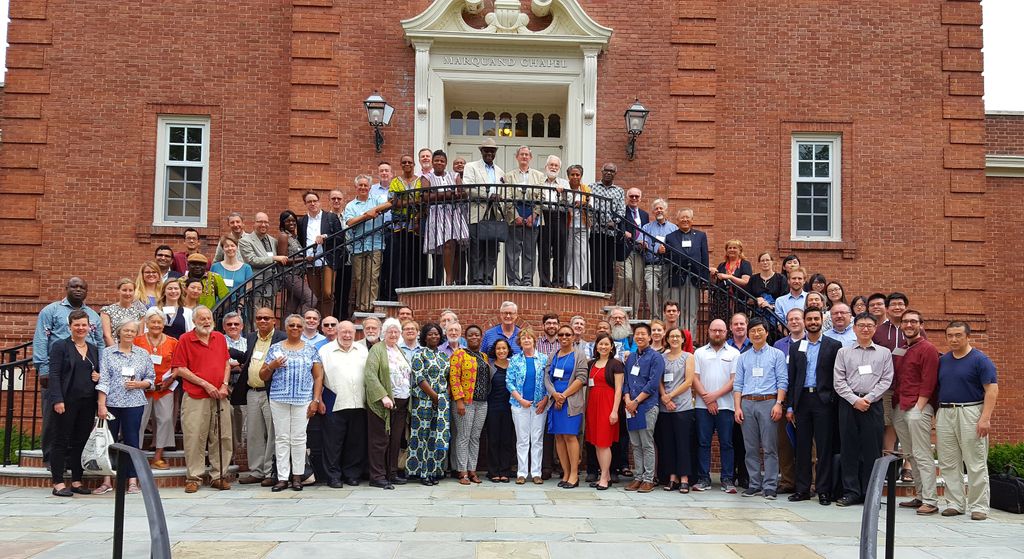
June 29 - July 1, the Yale-Edinburgh Group on the History of Christian Mission and World Christianity met in New Haven, Connecticut. The topic addressed at this annual meeting was "Migration, Exile, and Pilgrimage in the History of Missions and World Christianity." It was the largest gathering in the group's history, which included a significant contingent from Boston University. Michele Sigg presented on "Women Missionaries, Intercultural Marriage, and Exile: Desert or Promised Land for the Early Work of the Lesotho Mission?" Daryl Ireland delivered a paper on "Migration and Conversion: An Exploration in the Journals of John Sung." Tyler Lenocker spoke about "The Impact of Post-World War II Immigration on American Evangelical Christianity in Boston." The Center for Global Christianity & Mission was also able to announce that the Old & New in Shona Religion website is complete, and that the Dictionary of African Christian Biography is being upgraded.
Education for Mission
At the 99th meeting of the Eastern Fellowship of Professors of Mission, Laura Chevalier and Tyler Lenocker addressed the future of mission education. Ms. Chevalier spoke about teaching in Christian Liberal Arts colleges. Mr. Lenocker encouraged an interdisciplinary approach to mission. Both their presentations were printed in the International Bulletin of Mission Research.
Lifetime Achievement Award
 On June 17th, Dana L. Robert, Truman Collins Professor of World Christianity and History of Mission, received the Lifetime Achievement Award from the American Society of Missiology. She was recognized for her many contributions to mission studies, including her pioneering studies on women and mission, her work on the global expansion of Christianity, and for uncovering neglected dimensions of mission such as friendship. For her part, Dr. Robert has maintained that her greatest contribution to the field has been her students. Twenty-one of her doctoral students were able to attend the presentation.

Call for Papers: Ecology and Mission
Anabaptist Witness
In an age when environmental disasters and political discussions of climate change are a daily presence in the news cycle, the voice and actions of the church related to environmental issues has become even more urgent. Many mission efforts, both local and international, address environmental issues including climate change, environmental justice, and sustainable agriculture. Theologians, historians and biblical scholars are also increasingly concerned with understanding the relationship between people, the land, and God in Christian tradition. Anabaptists and Mennonites have a long history of sustaining both the land and their communities through agriculture, and scholars are increasingly relating Anabaptist peace traditions to caring for and restoring the environment.
There are many forms of mission both local and global that connect to the restoration and protection of the natural world. Communities and dedicated activists are working to address environmental racism and prevent further destruction of their neighborhoods and landscapes. Ecological factors play a role in mission to communities throughout the world, as mission workers recognize that the wellbeing of God’s people is bound up with the wellbeing of the created world.
Anabaptist Witness invites submissions on ecology and mission for the April 2018 issue. Possible questions to address include the following. How do particular congregations, communities, and mission agencies engage in mission that addresses climate change or environmental justice? What does the Bible say about the relationship between people and the land and how does this relate to mission work in the current era? How does peacemaking relate to addressing environmental destruction? How might Anabaptist and Mennonite theologies of creation support environmental initiatives today? How might Anabaptist and Mennonite theologies of creation support environmental initiatives today? Ecumenical and interreligious perspectives on these and related topics are welcome, insofar as they connect to Anabaptist and Mennonite mission.
Because this journal is an exchange among peoples from around the world, from laity and pastors to academics and administrators, submissions are welcome from a variety of genres including sermons, photo-essays, reflections, interviews, biographies, poems, and academic papers.
Guidelines and deadline:
Submissions on this topic are welcome through October 1, 2017. Through a peer review process, we will choose 3–4 shorter articles of approximately 1,500 words in length, and 5–6 academic papers of no more than 7,500 words (including footnotes). Image-based submissions are also subject to peer review. Please familiarize yourself with our editorial process and technical requirements at http://www.anabaptistwitness.org/guidelines/. If you have an idea you would like feedback on, you are welcome to submit a one-page abstract by September 1, 2017. Address all correspondence to Sarah Werner, Issue Editor, guesteditor@anabaptistwitness.org
Anabaptist Witness is a publication of Anabaptist Mennonite Biblical Seminary, Mennonite Church Canada, and Mennonite Mission Network.
Application: Global Ecumenical Theological Institute
Students may apply to attend the Global Ecumenical Theological Institute (GETI), which will meet in Tanzania March 8-13, 2018. The theme of the conference will be "Translating the Word. Transforming the World."
GETI is an ecumenical, global, short-term study and exposure programme, this time meeting in accompaniment with the World Mission Conference. GETI seeks to convey vibrancy and encourage young people to become ecumenically committed and conversant ambassadors in their local and regional contexts, as well as on the global level.
GETI 2018 is designed for approximately 120 advanced students in theology and related academic fields with an interest in gaining insights into the ecumenical movement’s current debates on understanding and practicing mission in various regions of the world.
Students will explore together how the gospel is translated into their different cultures and contexts, and also reflect on ways in which they feel called and moved by the Spirit to transform the world. A blended study process will begin with an e-learning phase a couple of months prior to the event.
Applications are due July 31, 2017.
0 GETI2018_ApplicantInformationAndApplicationGuidelines_final
The Beginning of the East African Revival
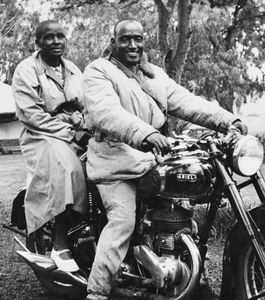
The spirituality of the East African Revival took a distinctive shape in its early years. In a recently published article in the International Bulletin of Mission Research on "The Conversion of Yosiya Kinuka and the Beginning of the East African Revival," Daewon Moon argues that the revivalist spirituality was prompted by the conversion of Yosiya Kinuka, an African member of the Ruanda Mission medical staff. Highlighting the African initiative in the revival, this article critically assesses previous historical analyses of religious conversion in the colonial context and argues that the conversion of Kinuka served as an archetype that shaped the character of the revival as primarily a conversionist movement.
Call for Papers: Hearing God’s Voice in Methodist Mission
On April 8-10, 2019, Global Ministries of The United Methodist Church, in collaboration with Candler School of Theology of Emory University in Atlanta, GA, USA, will host a world conference of scholars and leaders to celebrate Methodism’s mission heritage and look to the future of mission among the people called Methodists. The conference will be called “Answering the Call: Hearing God’s Voice in Methodist Mission, Past, Present, and Future,” and will be held in Atlanta, GA, USA, at the Emory University Conference Center Hotel.
The dates for the conference will coincide with the 200th anniversary of the founding of the Missionary Society of the Methodist Episcopal Church (one of the forerunner denominations to The United Methodist Church). On April 5, 1819, the Missionary Society was formed in New York City to support the mission work of John Stewart, a freeborn African-American, among the Wyandotte Native American people of Ohio. This group, whose creation was affirmed by the 1820 General Conference of the Methodist Episcopal Church, was the first denomination-wide mission society for Methodists in the United States.
Since that beginning nearly two hundred years ago, The United Methodist Church; its predecessor denominations (including the Methodist Episcopal Church, Methodist Episcopal Church, South, Methodist Protestant Church, Evangelical Association, United Brethren in Christ, Methodist Church, and Evangelical United Brethren); autonomous Methodist, United, and Uniting churches historically related to these bodies; and other sibling denominations have had a long and rich history of mission. This history includes active participation in mission by Methodists from Africa, Asia, Latin America and the Caribbean, Europe, and North America.
As part of this history, Methodists from all continents, from many nationalities, races, and ethnicities, both women and men, lay and ordained, have organized, supported, and engaged in mission to bring new Christians to faith; start new churches, schools, hospitals, clinics, and printing presses; empower women; train leaders in society; conduct medical missions; work for justice; alleviate suffering; build peace; and witness to the kingdom of God.
Instructions for conference proposals:
Scholars from any field with reference to mission, including church history, biblical studies, evangelism, and theology, are invited to submit proposals. Scholars affiliated with The United Methodist Church and its sibling denominations worldwide are particularly encouraged to apply.
Scholars may submit proposals for individual papers, paper sessions, workshops, or panel discussions. Paper sessions, workshops, and panel discussions should fit within an hour and a half format. For each proposed paper session, workshop, panel discussion, or individual paper, please submit a 250-word abstract and a short bio for each person involved. Proposals for paper sessions should include a 250-word abstract for each individual paper as well.
Papers, paper sessions, workshops, and panel discussions may address any aspect of mission in the Methodist tradition: past, present, or future. Papers are, however, especially encouraged on the following topics:
- In what ways has Methodist mission been expressed? In other words, in what ways have Methodist people and organizations “done” mission? What ways will mission be done or expressed in the future?
- What factors have influenced or shaped how Methodists have thought about and done mission? How have, for instance, the Bible, theology, culture, and race shaped the way in which mission has been expressed?
- Who or what have been the means or vehicles for mission? What roles have various categories of Methodists played in mission? What structures and organizations, in the local church and beyond, have facilitated the advancement of Methodist mission? Who or what will be the means for mission in the century ahead?
- What have been the outcomes of Methodist mission work? How has this mission shaped the world and various churches worldwide? In what ways is United Methodist mission currently seeking to transform the church and world?
- How has mission served as a source of unity or disunity for the church? What are the ways mission has provided a context to bring together (or divide) separate parts of the Wesleyan family and/or the universal church? What has been the relationship between mission and ecumenism?
Please submit all materials by September 1, 2018, to Dr. David W. Scott at dscott@umcmission.org. Submitted papers will be reviewed by a committee of scholars. Selected presenters will receive free conference registration, and some travel grants will be available for international scholars.
Hindu-Christian Dialogue
 |
National Council of Churches Announces New DialogueThe National Council of Churches USA and The Guibord Center – Religion Inside Out are pleased to announce their intention to explore the formation of a new Hindu-Christian Dialogue. The Christian convener of this dialogue, national in scope, will be Dr. Jesudas Athyal of the Mar Thoma Church, and Visiting Researcher at the Center for Global Christianity & Mission. The direction of the new dialogue will be set by the participants, though it is envisioned that they will include theological matters as well as issues pertaining to conflict and peace. Introductory meetings with Buddhist and Hindu leaders in the western United States will take place in the coming months with the intention of beginning the dialogues in late 2017 or early 2018. |