Heine on Latin America at the Crossroads of US–China Competition
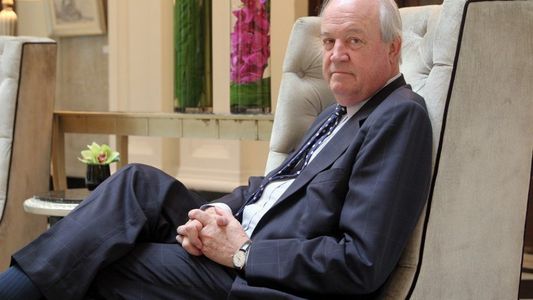
In a discussion for The China-Global South Podcast, Ambassador Jorge Heine, former Research Professor at the Pardee School of Global Studies and Chilean ambassador to China, framed the current moment as an unexpectedly intense phase of US engagement in Latin America, driven by the Trump administration’s strategic shift.
He noted that while Trump historically showed little interest in the region, the 2025 National Security Strategy devoted more pages to Latin America than any other region and articulates what many call the “Trump corollary” or “Don Juan doctrine.” This doctrine asserts US primacy in the Western Hemisphere and seeks to exclude extra-hemispheric powers, especially China, from infrastructure projects. Heine linked this strategy directly to events like the attack on Caracas and the kidnapping of President Maduro, arguing that the doctrine is being applied in real time and that Latin America, once marginal in global geopolitics, is now at the center of US–China competition.
Heine referred to Chile’s proposed Valparaíso–Hong Kong fiber optic cable to illustrate how this competition plays out. He explained that South America lacks a direct internet cable to Asia despite China being the region’s top trading partner, because US companies effectively hold a monopoly over that connectivity. The Chinese firm China Mobile proposed to build a massive cable, and Chilean authorities were legally bound to consider the investment. Instead, the US moved preemptively, revoking visas for Chile’s transport and telecom leadership before any final decision was made. Heine found it “quite extraordinary” that authorities were sanctioned “for behaving according to the law and giving consideration to a project,” highlighting this as a new level of US interference.
Heine criticized the broader US sanctions approach, not just on policy grounds but on its political and psychological impact in Latin America. He stressed that such measures alienate even pro-US elites. He cited the Chilean Transport Minister, Juan Carlos Muñoz, a US-trained engineer and widely respected cabinet member, whose US visas, and those of his children studying in the US, were revoked. Heine argued this fundamentally reshapes attitudes toward the United States: “It seems to me, these are this is not the way of making friends abroad… This seems to me the art of making enemies abroad.”
Finally, Heine situated Latin America’s choices within the structural complementarity between South American and Chinese economies. China’s demographic and resource constraints mean it will always need to import food; South America is underpopulated, resource-rich, and already deeply tied to Chinese markets. He called the US effort to exclude China from infrastructure and high-tech projects a “zero-sum game” that effectively tells Latin American countries to “stay underdeveloped,” especially since US firms are not stepping in to build that infrastructure. Linking this to his work on active non-alignment, he praised examples like Brazil under Lula standing up to US pressure, suggesting that Latin American states should avoid choosing sides and instead leverage both relationships to advance their own development and autonomy.
The full interview can be watched here.
A former research professor at the Frederick S. Pardee School of Global Studies, Jorge Heine is a diplomat, international relations scholar, and lawyer. He is currently a non-resident fellow at the Quincy Institute. He has served as an ambassador of Chile to China, India, and South Africa. Heine has written over fifteen books, including The Non-Aligned World: Striking Out in an Era of Great Power Competition (2025), which provides insights on how the Global South can navigate the changing diplomatic landscape amid the U.S.-China rivalry.