

Program notes
- No GRE required
- Merit scholarships available, with no additional application needed
- Current BU students & alumni: learn about the Double Terrier scholarship
- International students: This program is eligible for the OPT STEM extension
What is media science?
Media Science is the social scientific study of effective communication. Why does one health campaign change behavior while another gets ignored? Why does one message build trust while another creates backlash? And how can communicators know what to change when something isn’t working?
Media Science gives you the tools to answer those questions. By combining communication theory, audience insights, behavioral research, data analytics, and media design, you’ll learn to understand how messages work and use what you discover to create and improve communication.
Whether you’re a recent college graduate, advancing in your current field, or pivoting into a new one, you’ll build the research, analytical, and strategic skills to ask better questions, understand audiences, and make communication decisions based on evidence rather than assumptions.
Because the most effective communicators don’t guess what works—they understand why it works.
Why study Media Science at BU?
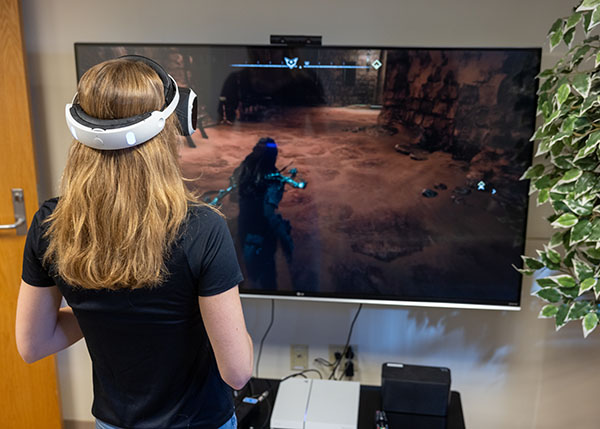
Don’t guess what works. Find out. Learn to understand audiences, develop and test messages, measure results, and use what you discover to make communication more effective.

Explore the communication questions you care about. Choose a concentration in Health Communication, Political Communication, or Marketing Communication, and apply communication science to challenges that matter to you—from improving patient communication and understanding public opinion to learning what influences consumer decisions.

Study communication on a global stage. Spend a summer in BU’s London Graduate Mass Communication Summer Program, earning academic credit while interning with international agencies, technology companies, nonprofits, and advocacy organizations. Bring a global perspective to your research, your strategy, and your career.
Where graduates go: media science career outcomes
Organizations have more ways than ever to reach audiences, and more data about how those audiences respond. They need people who know what to do with both.
Media Science graduates bring research, audience insight, and analytical thinking to communication decisions across healthcare, technology, marketing, public relations, politics, and media. Whether you’re improving patient communication, evaluating political messaging, shaping brand strategy, or uncovering consumer insights, you’ll know how to move from assumptions to evidence, and from evidence to action.
What can you do with an MS in Media Science?
Communication Strategist • Consumer Insights Manager • UX Researcher • Market Research Analyst • Media Strategist • Health Communication Specialist • Public Relations Director • Digital Campaign Manager • Political Communication Director • Data Analyst
Example employers
- Technology + digital media: TikTok, Meta, Microsoft, PBS, Lenovo, Weibo, Time Inc.
- Agencies + consulting: Edelman, Burson, Gupta Media, M Booth, DeVries Global, Education First
- Brands + organizations: Liberty Mutual, IDEO, HubSpot
- PhD study: Some Media Science alumni continue into leading PhD programs in communication, media, public health, political science, and related fields.
Serving as a graduate teaching assistant while taking industry-related courses provided the perfect mix of academia and real-world application. BU’s outstanding reputation in communication studies and its impressive course catalog offered both deep theory and real practical application.
Danielle Derman, Alumna, Associate Director of Learning Experience at Applied Medical
Learn how communication works—and how to make it better
You’ll learn to move from questions to evidence to action. Across 12 courses, you’ll study how people interpret messages, how to design communication for different audiences, how to conduct research that produces meaningful answers, and how to use those answers to evaluate and improve communication.
Core requirements (8 courses)
Your core coursework gives you the research, analytical, and strategic foundation to understand audiences, evaluate messages, and create more effective communication.
- Professional Writing (up to 2 courses): Learn how strategic writing, message design, and media literacy shape audience understanding across platforms.
- Core Methods + Theory (5 courses): Build expertise in the quantitative and qualitative research methods used to understand audiences, test messages, measure outcomes, and improve communication effectiveness.
- Your Concentration Track (1 course): Choose a concentration that aligns with your interests and the kind of communication challenges you want to solve.
- Health Communication — Explore how research can improve patient communication, public health campaigns, and behavior-change initiatives.
- Political Communication — Examine how messages influence public opinion, civic engagement, political behavior, and policy conversations.
- Marketing Communication — Investigate how audience research and data can improve messaging, communication strategy, and consumer engagement.
Advanced professional electives (4 courses)
Customize your degree with electives that deepen your expertise in areas such as UX Research, Corporate Data Analytics, Social Media Strategy, and more.
- Flexible footprint: Expand your perspective beyond Media Science by taking graduate courses across Boston University—or gain professional experience through an approved internship in Boston or London.
Put communication science into practice
The questions you’ll investigate aren’t limited to the classroom. Apply what you learn through faculty-led research, industry partnerships, client projects, internships, and student organizations that tackle real communication challenges.
- Communication Research Center (CRC): Work alongside faculty on research exploring audience behavior using eye tracking, biometric measures, virtual reality, AI, and other emerging research methods.
- Zimmerman Family Social Activation Center: Use the same social listening, sentiment analysis, and audience analytics tools trusted by organizations to understand public conversations and evaluate communication strategies.
- London internship: Through BU’s London Graduate Mass Communication Summer Program, you can intern with agencies, startups, nonprofits, and organizations working in digital marketing, strategic communication, health communication, sustainability, and more.
- COMLab: Collaborate on interdisciplinary communication projects for real clients, conducting audience research, evaluating communication strategies, and developing evidence-based recommendations.
- COMmunicator: Join the department’s student-run multimedia publication to develop leadership, writing, editing, and content strategy skills while publishing work for real audiences.
I’ve wanted to be a teacher for most of my life, but it wasn’t until recently that I realized being a communication professor was my calling. The special pairing of researching our media-saturated world with cultivating the growth of students inspired me to begin the long road towards earning a PhD.
Jack Anderson, Media Science alum
Learn from researchers + practitioners shaping the future of communication
Your professors are not only teaching communication research–they’re conducting it, and putting that knowledge into practice. Their work explores advertising, audience psychology, political communication, health communication, digital media, media law, and more, bringing current research questions, real-world data, and new discoveries into your classes.
You’ll learn from people asking the same kinds of questions you’ll learn to answer: Why do audiences respond to messages the way they do? What changes minds? What builds trust? And how can evidence help us communicate better?

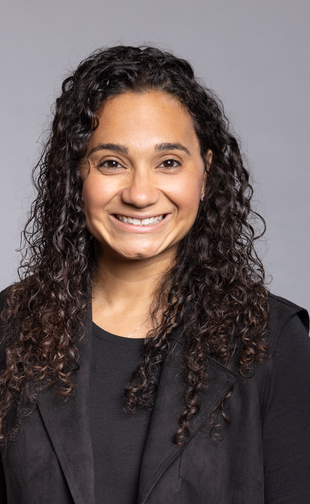





COM researcher on what we lose when we stop regulating information as closely
Learn More About COM researcher on what we lose when we stop regulating information as closelyStudy in Boston: put communication science to work
How do healthcare systems encourage healthier behavior? How do technology companies understand their users? How do nonprofits mobilize communities? How do organizations learn what resonates with their audiences? In Boston, the questions you’ll study in media science are playing out all around you.
Home to leading healthcare systems, technology companies, research institutions, nonprofits, and global agencies, Boston gives you opportunities to put communication science into practice through internships, research collaborations, and client projects. At COM, those experiences aren’t an afterthought—they’re an extension of what you’re learning in the classroom.
Program details at a glance
- Degree: MS
- Credits: 48
- Courses: 12
- Length: 3 semesters
- Format: On campus
- GRE: Not required
- STEM OPT: Eligible for 36-month extension
- Scholarships: Merit scholarships available — no separate application required
- Double Terrier: Scholarship available for current BU students and alumni
Frequently asked questions about the MS in Media Science
What is media science and how is it different from a traditional communication degree?
Traditional communication programs usually focus on how to create messages (copywriting, video editing, design). Media Science focuses on understanding why messages affect people—and how research can improve communication. We blend data analytics, consumer psychology, and research methods to help you understand audience behavior, measure campaign ROI, and make smarter, evidence-based strategy choices.
Is Media Science more research-focused or strategy-focused?
It’s both. You’ll learn research methods that help you understand audiences, evaluate campaigns, and measure messages’ effectiveness. Just as importantly, you’ll learn how to apply those insights to real-world challenges in marketing, public relations, healthcare, political communication, and beyond. The program is designed for students who want to connect research with strategic decision-making.
What can I do with a Media Science degree?
Graduates work in marketing research, consumer insights, UX research, health communication, political communication, media strategy, public relations, consulting, and data analytics. The common thread isn’t a specific industry—it’s the ability to understand audiences, evaluate communication, and use evidence to make informed strategic decisions.
Do I need a background in statistics or data to apply?
No. Our incoming cohorts include students from diverse undergraduate majors—including communications, psychology, business, international relations, and English. We teach you audience research methodologies step-by-step from the ground up.
What’s the difference between the MS in Media Science and the Marketing Communication Research concentration?
The Marketing Communication Research concentration is a highly specific, data-heavy track within the broader Media Science framework. It focuses intensely on consumer database analytics, corporate brand strategy, and advanced market research, and it has its own dedicated program page. The general MS in Media Science offers more curricular flexibility across health, politics, and media design.
Is this program a good foundation for a PhD?
Yes. The program provides a strong foundation in communication theory, research methods, and original scholarship, making it excellent preparation for doctoral study. At the same time, many graduates choose careers in industry, applying the same analytical skills to strategic communication challenges.
Can I do an internship as part of the program?
Yes. Internship options are built into the elective structure, including an optional internship in London through BU’s London Graduate Mass Communication Summer Program.
What is the advantage of the program’s STEM designation?
Because the curriculum focuses heavily on quantitative data, analytics, and research technologies, it holds an official federal STEM designation. For international students, this provides an invaluable 36-month STEM OPT extension, allowing you to work in the United States for up to three years post-graduation.
See all MS in Media Science frequently asked questions →
Also worth exploring
Learn more about our other graduate programs in communication and media, including:
- MS in Media Science (Marketing Communication Research Concentration): A focused concentration for students headed toward consumer insights, marketing analytics, brand strategy, and evidence-based business decision making.
- MA in Emerging Media Studies: For students who want to research how emerging technologies — AI, social platforms, VR — shape human behavior and society.
- MS in Public Relations: For students focused on media relations, crisis communication, and digital strategy.
- MS in Human Centered Design: For students headed into UX/UI careers, with end-to-end expertise in product strategy, research, and design.
- MS in Strategic Integrated Communication (online): A fully online master’s for working professionals who want to lead at the intersection of branding, integrated marketing, crisis communication, and digital strategy. Designed for students who need flexibility without sacrificing rigor.
- Graduate Certificate in Civic Science Communication (Online): A four-course online certificate for professionals who need to communicate scientific topics clearly to public audiences.


