
Program at a glance
- No GRE required.
- Merit scholarships available, with no additional application required.
- Length: 3 semesters | 48 credits
- Format: On campus: Boston (semesters 1 + 2); optional LA semester (semester 3)
- Current BU students & alumni: learn about the Double Terrier scholarship.
Want to work in television? Start building your way in.
Breaking into television takes more than a great idea or a plane ticket to Los Angeles.
You need experience. Work you can show. People who know what you can do. And, yes, connections help.
Boston University’s MS in Television: Creative Producing and Management gives you three semesters to build those things while learning the creative and business sides of television and streaming.
You’ll develop and pitch shows, build budgets and production schedules, work with creative teams, and learn from faculty who’ve made careers in the industry. And because the program brings together creative development, production, and management, you’ll have opportunities to explore different roles, understand how they work together, and discover where your interests and strengths fit.
It’s a chance to develop skills and make work you can show employers while figuring out what kind of television career you want to pursue.
What makes BU’s MS in Television different?

Two cities. More opportunities. Start in Boston, a major media market where you’ll build production skills and professional relationships. Then, if you choose the Los Angeles semester, pursue industry internships and network on the West Coast.

Learn from faculty who’ve made television. Your professors have worked on primetime dramas, sitcoms, documentaries, and reality shows. They bring firsthand experience, creative judgment, and a practical understanding of how productions come together.

An alumni network that knows the business. BU alumni have built careers at Disney, HBO, Netflix, National Geographic, Warner Bros. Discovery, CNN, PBS, and Paramount. You’ll join a COMmunity with connections throughout television, streaming, and entertainment.
What does a television producer do?
A television producer helps turn an idea into something people can watch, bringing together the creative, production, and business sides of television and streaming.
Depending on the project and the job, a producer might:
- Develop the idea. Discover stories, evaluate concepts, develop intellectual property, and bring together writers, directors, and talent.
- Make the production happen. Build budgets and schedules, manage teams, coordinate resources, and solve problems along the way.
- Understand the business. Know how networks, studios, and streaming platforms operate, what influences programming decisions, and how projects get financed and distributed.
- Bring people together. Work across creative, production, and business teams to move a project from development to delivery.
Some producers focus on creative development. Others specialize in the logistics and financial side of production. Many work across both.
If you’re interested in great storytelling but also want to understand how shows get made, producing might be where you belong.
Get hands-on television producing experience before you graduate.
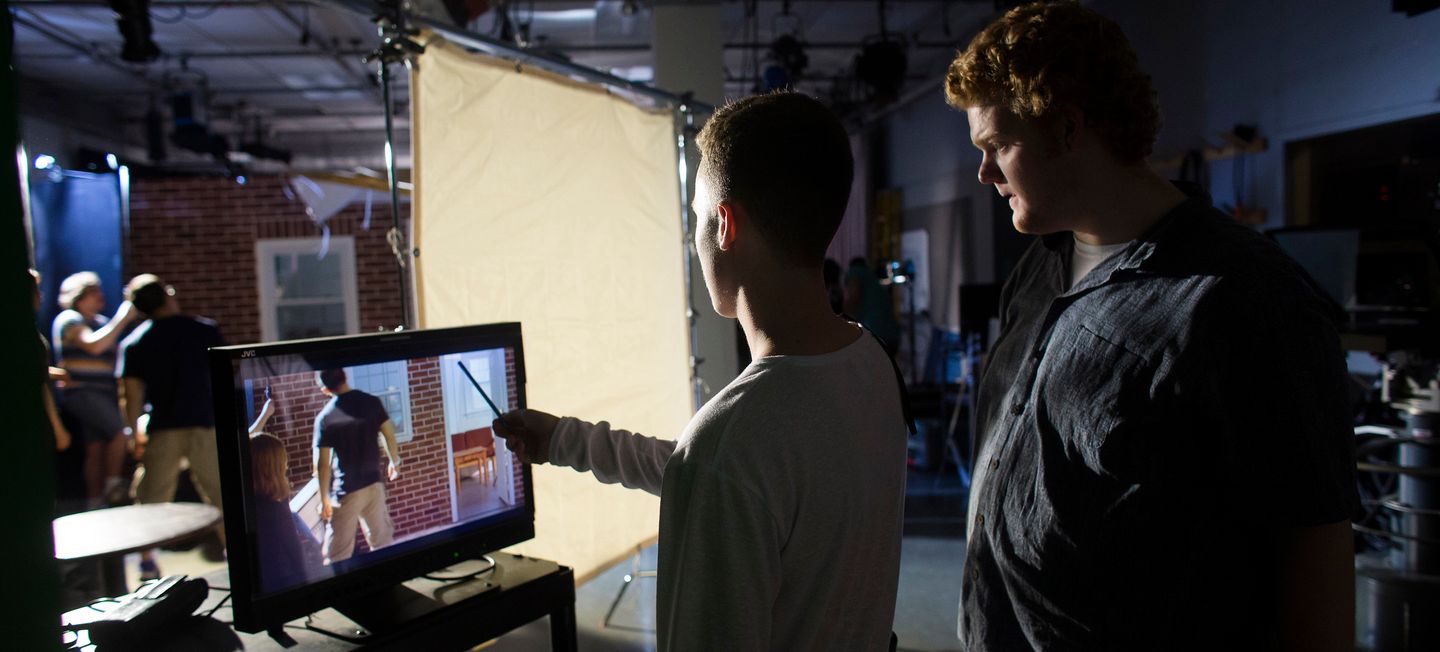
Producing means making decisions, managing people, and solving problems when plans change. At COM, you’ll have opportunities to practice those skills on real productions.
Real World Productions is a student-run production company that operates as a course, creating media for nonprofit and other clients.
Students work on real assignments, from planning and production to client communication and delivery. It’s an opportunity to develop the skills producers rely on every day: organizing people, managing deadlines, responding to feedback, and finding solutions when plans change.
BU’s award-winning student-operated television station and digital streaming platform gives students opportunities to produce, direct, and manage content for a public audience.
You’ll work alongside other students on productions and see what it takes to keep a television production moving.
These experiences give you something valuable when an interviewer asks: “So, what have you produced?”
Student spotlight: From the classroom to the control room
Yuliana Caraballo Cabrera (COM’27) is gaining experience across television formats, from news production to live sports broadcasts.
I’m getting news at the Telemundo internship. I’m getting sports with BU Athletics. And I’m getting reality, documentary, and talk shows with the MS in TV program.
Yuliana Caraballo Cabrera (COM’27), MS in Television
What will you learn in BU’s MS in Television?
Producing brings together creativity, business, leadership, and problem-solving. The curriculum takes you through the decisions producers make, from developing television concepts to managing the budgets, schedules, and people involved in bringing them to life.
Find the idea and learn how to pitch it.
Develop television concepts and turn them into professional pitch packages, series bibles, and lookbooks. Explore what makes a concept compelling, how different formats work, and what producers need to consider when presenting a project to potential buyers.
Figure out how to make it.
A good producer knows how to turn creative plans into workable ones.
Learn to break down scripts, develop production budgets, create shooting schedules, organize production teams, and manage the logistics involved in getting a show made.
Understand the business behind the screen.
What makes a studio invest in one project and pass on another? How do streaming platforms make programming decisions? What happens to a show after production wraps?
You’ll study television management, financing, distribution, audience behavior, and the business models shaping the entertainment industry.
The MS in Television provided a deep understanding of how the industry works and how everything connects.… COM helped me understand the big picture.
Kaylee Benson, NBC Studios
Read Kaylee’s story.
Explore different types of television.
Producing a scripted drama isn’t the same as producing a documentary, reality series, sitcom, or live television program.
Through coursework and projects, you’ll explore how different formats affect creative development, production planning, and management.
Develop a project of your own.
If you choose the thesis option, you’ll work with a faculty advisor to create a professional-quality production book for a drama pilot, comedy pilot, standalone documentary, or reality television series.
It’s an opportunity to bring together what you’ve learned and develop a substantial project you can discuss with future employers.
Make room for your interests.
The 48-credit curriculum includes 28 credits of required coursework and 20 credits of approved electives.
Depending on course availability and approval, you can explore areas such as studio production, editing, writing, media business, and other television-related subjects.
Boston first. LA next. Two cities, different opportunities.
Why study television in Boston when so much of the entertainment business is based in Los Angeles? Because there’s value in experiencing both.
BU’s MS in Television gives you the opportunity to spend your first two semesters in Boston, developing your skills and exploring different sides of television, before heading to LA for an optional final semester.
Boston: Build your foundation.
Boston is a major media market in its own right, home to organizations including GBH, WBZ, and WCVB, along with production companies and a broader creative community.
Boston is also a city built around learning, with students and universities everywhere, a lively arts scene, and plenty of opportunities to meet people with different interests and ideas.
During your first two semesters, you’ll take on producing projects, explore different television formats, and get to know faculty and classmates who share your interests. You’ll have time to figure out what kind of work excites you, where your strengths lie, and what you want to pursue next.
Los Angeles: Put it to work.
For most students, the third semester means going to LA.
Through BU’s optional Los Angeles program, you’ll have opportunities to pursue entertainment internships, take courses with people working in television, and connect with BU alumni across the entertainment business.
BU students have interned with organizations including The Walt Disney Company, NBCUniversal, CBS Studios, AMC Networks, The Hollywood Reporter, and Hello Sunshine.
It’s an opportunity to explore another major media market, make new connections, and see how the creative and business sides of television come together.
If you’re really looking at getting into the entertainment business, I think to combine the Boston experience with an LA experience, there’s nothing that compares.
Jay Roewe, alumnus and senior vice president of production at HBO
Learn from people who’ve done the work.
Your professors know what it takes to get a show made, from pitching an idea and managing a production to making difficult creative and financial decisions.
They’ll share lessons from their own careers, challenge your ideas, and help you develop the judgment you’ll need when you’re responsible for a production.
Meet the program director

Sheila Sitomer, Director of the MS in TV: Creative Producing and Management
“Early in my career, I was a field producer/director at Good Morning America. One of my segments was on a California elementary school that regularly paired non-disabled students with those with disabilities. As a result, these children formed deep friendships as well as an appreciation for other children with whom they might not otherwise interact. Sarah Vaughan, a well-known jazz singer and pianist, saw the segment and decided to make a generous contribution to the school. I knew at that moment that my work had the power to make a positive contribution.”








Industry Veteran Craig Shepherd Is New Film and Television Chair
As a television and film producer and director, Craig H. Shepherd has worked on projects that have won the Sundance…
What can you do with a master’s in television?
A master’s in television can help prepare you for careers in producing, development, production management, programming, content strategy, distribution, representation, and other areas of the entertainment industry.
But there isn’t one way into television. And there isn’t one job called “producer.”
You might begin in a production office, a development department, a studio, an agency, or a streaming company. You might discover a part of the business you didn’t even know existed before graduate school.
Your first role is a starting point. The skills and relationships you build along the way can help you explore what comes next.
Where could you begin?
Depending on your experience and interests, early-career opportunities may include:
- Production assistant or production coordinator
- Development assistant or development coordinator
- Script coordinator
- Associate producer
- Programming or content coordinator
- Roles supporting talent representation, studio operations, or entertainment marketing
Where could your career take you?
Television careers can take many directions. BU graduates have pursued roles across creative development, production, programming, management, and representation, including
- Creative + line producing: Showrunner, Executive Producer, Film Producer, Line Producer/Field Producer, Associate Story Producer, Director
- Development + content strategy: Creative Executive, Programming Executive, Content Manager/Head of Content, International Distribution Director, Operations Supervisor
- Production management: Production Supervisor, Script Coordinator, Planning & Production Manager
- Marketing, representation, + academia: Business Development + Marketing Manager, Advertising + Promotions Manager, Marketing Manager, Talent Agent, University Faculty
Where are BU alumni working?
BU television alumni have built careers at organizations across entertainment, including:
- Streaming + networks: Apple TV+, HBO, Netflix Originals, Disney (including ABC network), NBCUniversal, FX, Paramount Global, Paramount Studios, Warner Bros. Discovery, TelevisaUnivision, MTV Entertainment Group, Hallmark Media, National Geographic.
- Production studios + agencies: DreamWorks Animation, Skydance Media, MGM Studios, Sony Entertainment, Fremantle, Cyber Group Studios, White Horse Pictures, Circle M+P, Confluent, WME Talent Agency, Paradigm Talent Agency.
- Broadcast, news, + public media: CNN, PBS, GBH, WBZ CBS Boston, WCVB Television
- Sports, digital media, + technology: National Basketball Association (NBA), Comcast SportsNet, Google LLC, YouTube, Universities + colleges worldwide
Stay connected to the creative community.
Some of the most useful conversations you’ll have at COM may not happen during a lecture.
Cinemathèque: Meet the people making the work.
COM’s Cinemathèque series brings filmmakers, showrunners, producers, and other creators to campus for screenings and conversations about their projects, careers, and experiences in the industry.
Krasker Film and Video Resource Center: Watch widely.
Explore films and media through BU’s Krasker Film and Video Resource Center at Mugar Memorial Library, including its collection of 16mm prints and other resources.
Boston’s film community: See what others are creating.
Take advantage of screenings and programming at institutions such as the Harvard Film Archive, Museum of Fine Arts, and Brattle Theatre.
There’s a lot to learn from watching good work, discussing it, and meeting people who care about making it.
Frequently asked questions about the MS in Television at BU
Do I need a master’s degree to work in television?
Plenty of people build successful television careers without a master’s degree.
But if you’re looking for a structured way to develop producing and business skills, work on projects, learn from experienced faculty, and establish relationships, graduate school is worth considering.
BU’s three-semester program brings those elements together while giving you room to explore where you might fit in television and streaming.
Why choose BU instead of a television graduate program in Los Angeles?
If you’re considering television graduate programs in Los Angeles, location is an important factor. BU offers a different experience: two semesters in Boston, where you’ll develop producing skills and work on projects, followed by the option to spend your final semester studying and pursuing internships in LA.
That structure may appeal to students who want to explore two media markets, develop relationships on both coasts, and arrive in Los Angeles with a clearer sense of their interests and goals. If spending your entire graduate program in LA is your priority, a Los Angeles-based school may be a better fit.
Is a master’s in television worth the investment?
That depends on your career goals, financial circumstances, and what you already bring to the table.
If you have a clear path into television and opportunities to develop the skills you need, graduate school may not be necessary. But if you’re trying to enter the field, explore different career paths, or move beyond the work you’ve already done, a master’s can offer something valuable: dedicated time to develop projects, learn the business, receive feedback, and make connections.
At BU, you’re investing in three semesters of coursework, hands-on learning, faculty mentorship, opportunities to develop professional work, and access to a network of alumni and others in the industry. Those experiences may be particularly valuable if you’re trying to enter entertainment without an established network or substantial experience.
Merit scholarships are available to eligible students, with no separate scholarship application required.
We can’t promise a particular job, salary, or hiring timeline. We can help you develop the skills, work, and relationships to pursue opportunities in a competitive industry.
The television industry is changing. Is this still a good time to enter it?
Television and streaming are changing, and the uncertainty is real. Audience habits, production technology, financing, and distribution continue to evolve, affecting what gets made and the jobs available.
BU’s curriculum addresses how projects are developed, financed, produced, and distributed. You’ll build skills in creative development, production management, and problem-solving that can be useful across different roles and formats as the business changes.
Is this a TV writing program or a producing/management program?
BU’s MS in Television focuses on creative producing and management, including development, pitching, production planning, television management, and the business of entertainment. If your primary interest is writing scripts, pilots, and screenplays, explore BU’s MFA in Screenwriting.
Do I need a background in television or production to apply?
You don’t need professional production experience or an undergraduate degree in film or television.
We do look for some experience or background related to media. That might include coursework in communication, film and television, marketing, public relations, or advertising, as well as internships, campus media, social media work, or other relevant experience.
We’re interested in what draws you to television, what you’ve done so far, and what you’d like to explore.
What jobs can I get with an MS in Television?
Graduates can pursue opportunities in television producing, development, programming, content strategy, and entertainment management. Early-career roles may include production assistant, development coordinator, associate producer, or programming coordinator, depending on your experience and interests.
With experience, those roles can lead to careers in producing, production management, creative development, and entertainment leadership.
Is the Los Angeles semester required?
No. The Los Angeles semester is optional, although most students choose it. Students who participate can complete their final semester through BU’s Los Angeles program, with opportunities for coursework, internships, and connections in the entertainment industry.
Students who prefer to remain in Boston can discuss their final-semester academic options with the program director.
What kinds of internships do students complete in LA?
BU students have interned at companies including Disney, NBCUniversal, CBS Studios, AMC Networks, The Hollywood Reporter, and Hello Sunshine.
How is the MS in Television different from the MS in Media Ventures?
The MS in Television focuses on developing, producing, and managing television and streaming projects.
BU’s MS in Media Ventures is designed for students interested in developing and launching new media businesses, products, platforms, or services.
If you’re most interested in the creative and business decisions involved in getting a television show made, the MS in Television may be the better fit.
See all MS in Television frequently asked questions.
Also worth exploring
Learn more about our other graduate programs in communication and media, including:
- MFA in Screenwriting: For writers committed to getting their original scripts developed and made. Four semesters, seven completed scripts, and a guaranteed semester in Los Angeles.
- MFA in Film and Television Studies: For students who want to analyze, critique, and write about media at a scholarly level—offering an exceptional foundation for doctoral work or media curation.
- MS in Media Ventures (Media Innovation): For students with entrepreneurial ambitions in tech, entertainment, and media startup creation. An accelerated 11-month program split between Boston and Los Angeles.


