Growing Liver Tissue on Demand Directly in the Body
BME’s Chris Chen leads a team at the Wyss Institute to combine tissue engineering with synthetic biology, laying the foundation…

BU faculty are applying the complementary approaches of systems and synthetic biology to investigate, understand, and exploit the design principles of complex biological systems.
In systems biology, we are developing pioneering genomic technologies to map molecular networks in cells with high-resolution, and building computational models to predict their physiological and disease-related behaviors.
BU faculty are developing methods to rationally design and evolve biological circuits, creating fundamentally new systems not found in nature, and using them to reprogram cellular behavior. Our efforts are paving the way for a new foundation of cell-based devices, diagnostics, and therapies that will provide transformative ways to combat complex diseases.

Assistant Professor (BME)

Professor (BME, MSE)
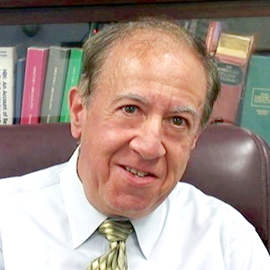
Dean Emeritus, College of Engineering

Vice Chair, Professor (BME)
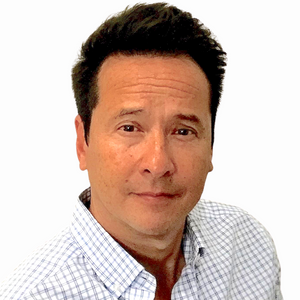
Professor, (BME, Microbiology, ECE)

Associate Professor (BME)

Professor, (BME)

Assistant Professor (BME)

Assistant Professor (BME, MSE)
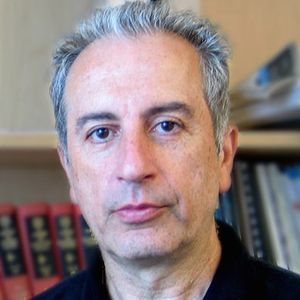
Professor (BME, Bioinformatics, Computer Science)

Research Professor (BME)

Associate Professor (BME)

Professor (BME)

Professor (BME, MSE);
Director, Center on Forced Displacement

Research Assistant Professor (BME)
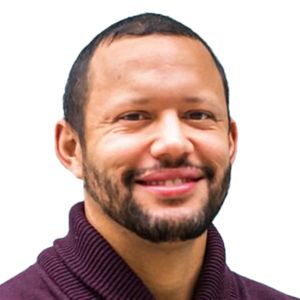
Professor (ECE, BME, MSE)

Assistant Professor (BME/Biology)

Research Professor (BME)

Professor (Physics, BME)

Professor (BME, Bioinformatics, Biology, MSE)

Associate Professor (Department of Biology, BME)

Professor Emeritus, (BME)

Professor Emeritus (BME, MSE)

BME’s Chris Chen leads a team at the Wyss Institute to combine tissue engineering with synthetic biology, laying the foundation…

ECE faculty characterize new class of devices, invite participation.

As a Hartwell Investigator, Samagya Banskota and her collaborators will leverage a cutting-edge genome editing technique.

"This approach allows us to build tissue successfully in many different shapes, using soft materials."