How Can We Build Global Solidarity for Public Health?

How Can We Build Global Solidarity for Public Health?
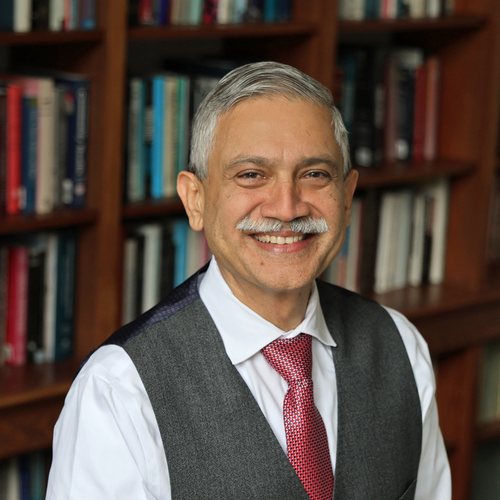
Dean Adnan Hyder discusses the 2025 World Health Summit and a call to action for academia to engage globally.
Dear Colleagues,
At the recent World Health Summit in Berlin, Germany, 4,000 cross-sectorial leaders gathered for hundreds of sessions, inspiring keynotes, and smaller convenings amongst peers. What I found most striking was the common thread that to build a healthier future, we need global solidarity. It is simply not possible to improve health in any one country by turning inwards.
A convergence of ideas on how to foster global solidarity led the World Health Summit’s Academic Alliance to co-author a Nature Medicine commentary outlining a potential framework. We reminisced how, during COVID-19, countries, institutions, governments, and organizations joined efforts in a rapid fashion to meet the moment. The initial months of the COVID-19 pandemic showed that we can indeed break down silos and barriers if we so wanted to. Sadly, much of that multilateral progress has been upended, and in some cases reversed, due to social, cultural, political hesitations and ideologies around the world.
Our framework coalesced around three core principles:
Define, respect, and safeguard academic freedom and maintain the independence of institutions funding and organizing research. The contexts in which today’s academic research institutions are operating necessitates that we must be innovative when creating opportunities for solidarity. We must learn from other institutions who have shown us that it is possible to have pathways of collaboration. This includes convening bodies and entities such as the World Health Summit, so that there is a place where organizations, separate from national governments, can participate, engage, and collaborate.
Strengthen international collaboration and multilateral institutions in the global health sector and establish transparent exchange of health information. Institutions are stepping up and an example is the number of institutions in Europe working together on the issue of migrant health. Led by Sapienza University, along with other members of the WHS Academic Alliance, this is a cross-sectoral issue impacting countries across the world, particularly with the intersection of climate change.
Combat misinformation and rebuild trust in science and suppress the spread of disinformation. Another critical challenge of the moment is grappling with misinformation. At Boston University School of Public Health, we are incorporating real world evidence and research translation to lay audiences via Public Health Post, as well as hosting Public Health Conversations with eminent researchers working on this topic.
Collaboration across sectors and countries is the hallmark of science, and we must do all we can to nurture these endeavors. As academic research institutions, multilateral engagement is how we generate new knowledge. Sharing what we have learned is the only way we will ever scale solutions like oral rehydration therapy (ORT)—estimated to have saved millions of lives since its introduction in the 1970s, ORT was first developed by researchers working in Bangladesh, but proven as a large scale solution in refugee camps and conflicts. Now it is used all over the world.
At Boston University, we are home to many enriching global programming and partnerships. I am excited to explore opportunities to build even more strategic and mutually-cooperative collaborations with institutions and organizations across the globe; if we are to fulfill our mission to build a healthier world for all, global solidarity is at the center.
Warm regards,
Adnan Hyder, MD, MPH, PhD
Dean and Robert A. Knox Professor
Boston University School of Public Health