‘The More Fully You See How Wonderful Life Is, the More Relaxed You Can Be About Giving It Up’.
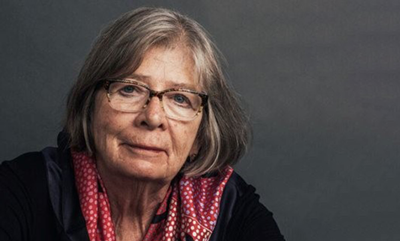
At 77 years old, author and activist Barbara Ehrenreich has decided that she is old enough to die—or at least to forgo the medical tests, procedures, and fad wellness regimens that promise to prolong life. (She does still go to the gym.)
Best known for her 2001 memoir about trying to live on minimum wage for three months, Nickel and Dimed: On (Not) Getting By in America, Ehrenreich has made a career as a skeptic and a teller of hard truths, a self-described “muckraker.” She writes about her decision about her own health, and American culture’s fixation on longevity, in her most recent book, Natural Causes: An Epidemic of Wellness, the Certainty of Dying, and Killing Ourselves to Live Longer.
Ehrenreich will discuss the topic at the School of Public Health as part of the Dean’s Symposium “Death and Dying: A Population Health Perspective” taking place on February 12. Ahead of the symposium, she talked with George Annas, William Fairfield Warren Distinguished Professor of Health Law, Ethics & Human Rights, about invasive medicine, class-based wellness, and getting over our collective fear of death.
I loved your concept that at some point you decide you’re old enough to die.
Yup. It’s not a tragedy anymore.
You begin your book with this notion that it’s almost like an American project to take control of your body and then arguably your life as well. Could you say more about that?
I began to notice this a couple of decades ago. People I knew, friends, relatives even, increasingly wanting to talk about how they were feeling, or what they ate in detail—every dietary fad that came along—and what they were trying, their exercise regimen, and how they were doing on all their preventive screenings they got from the doctor.
You’ve decided you’re old enough not to undergo any medical screening anymore, like mammograms or screening for colon cancer. Are there any screens that you do still undergo, or are you done with all of them?
Well, let me just correct one thing in that question. It wasn’t because I realized I was old enough to die that I started giving up on the preventive tests. It’s because I’d research each one of them that was proposed to me as it came along and find out in so many cases, it was very controversial within the medical profession.
Are we actually—not “we,” I’m not a doctor—making a difference by subjecting every man to prostate screening? Is it a good difference, or does it result in more harm in the end from people who test in some way positive and then are subjected to quite invasive procedures?
Are there any that met your test that this is still worthwhile to do?
Well, there are many things, but I don’t think they’re the things that apply to older people. I think we should be better on prenatal care and postnatal care for mothers. There are so many things for the young that are neglected, while we have this insane focus on, like I mentioned, doing mammograms on 100-year-old women. I actually know such a woman. She’s a mother of a friend who had a mammogram when she was over 100, and they did find a lump and she did have a mastectomy. And I thought, That’s criminal.
If I found out right now that there was cancer somewhere, let’s say breast cancer, I think I would say, “Okay, let’s just see how it does.” But I’m not going to spend what may be the last months or couple of years of my life doing chemotherapy.
Doctors can be the worst enablers of that kind of wishful thinking—that there is a way out of this. We just try some new procedure, or new medicine, and maybe we can give you a few more days or weeks.
Right. Of suffering.
We need to replace the fear of death with a more positive view of life and our relationship to life. Even though you’re not on the planet anymore, life will go on.
Yeah. Once you fully realize that, you begin to see—I begin to see, I should say—how incidental my own life is. And that’s encouraging.
Although Americans have a hard time accepting that, I think. In fact, I don’t know if it’s just Americans—I don’t think there’s a civilization in the world that thinks death is a wonderful thing.
I’m not saying it’s a wonderful thing. But I’m saying the more fully you see how wonderful life is, the more relaxed you can be about giving it up.
Most people, when you press them, would say that what they really would like to do is live a healthy, active life into their 80s, and then die a quick and relatively painless death.
Which is sort of connected, in my mind anyway, to the embrace of really risky sports by the very rich. The very rich do some remarkably unhealthy things, like climbing Everest. Or they get little airplanes and fly into mountains. All sorts of crazy things. End-of-life things.
As I read your book, it seems that you just eat what you like. You don’t look at food necessarily for its nutritional value?
Within limits. I know I need some protein to last for the hours until the next meal. I like food that lasts a little bit. That’s where I eliminate sugars and a lot of carbs, because I know they won’t last that long. In fact, they may leave me feeling weak in a few hours, so they don’t qualify as food for my metabolism. And I eat good protein, fiber, thing of cheese, and the occasional French fry sneaked in.
I know a lot of people didn’t like your book because you’re very hard on wellness, and that that seems to be not worthwhile, most of that movement. But I understand you still go to the gym, is that true?
I don’t think of that as wellness. Wellness is a large concept, and it’s very, very class-based. Rich people go for wellness; poor people usually would be very happy to get health. You can do almost anything in the name of wellness, if it feels good. All these sorts of things that represent a form of self-indulgence, that becomes wellness. There are luxury wellness spas now all around the world, in beautiful places, where you go for a few weeks and just meditate, do gentle exercises, eat carefully curated foods, et cetera, and that’s the new form of vacation.
At the beginning of your career you wrote about women’s health and the way physicians treated women and child birth. Do you see any analogy between natural child birth and natural death and trying to remove the doctor as much as possible from both of those things? From both birth and death?
Yes, I mean we have to realize that some things go on by themselves and are somewhat out of our control. Once those labor pains begin, there’s no going back. And death is also coming.
Comments & Discussion
Boston University moderates comments to facilitate an informed, substantive, civil conversation. Abusive, profane, self-promotional, misleading, incoherent or off-topic comments will be rejected. Moderators are staffed during regular business hours (EST) and can only accept comments written in English. Statistics or facts must include a citation or a link to the citation.