KIP Student Feature – Jaya Nath
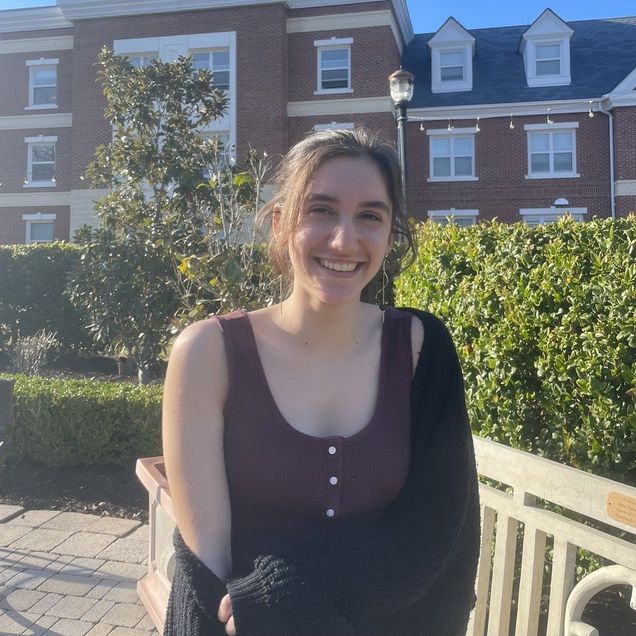 Jaya Nath (CAS’28, Biology) knew which communities she had a passion for helping, and her Summer internship with Second Story has allowed her to do just that. Starting in 1972, Second Story offers safe havens and opportunities to youth and their families experiencing crisis or at risk of crisis.
Q&A With Jaya Nath
Could you give us a brief description of the organization you are interning with and what your primary responsibilities are during this internship?
Second Story provides assistance to underserved groups in Northern Virginia through several services including residential programs, homeless youth relief, and family resource centers. My internship consisted of working in three subprograms, Second Story for Young Mothers, Second Story for Teens in Crisis, and Second Story Community Based Services. Within the Young Mothers and Teens in Crisis programs, I assisted with group counseling, companionship for teens in crisis, life skills teaching, file checks, stats and demographic organization, client intakes, resource lists, hotline calls, donation collection, and follow ups with former residents- in addition to other projects. My work at the Community Based Program consisted of utilizing my Spanish to provide general services to clients depending on their need, this could look anything like activating Summer EBT cards, scheduling appointments, assisting with insurance, or even food support.
What area(s) of justice does this organization work in and how did your internship help promote/fulfill these justice goals?
The areas that Second Story focuses on are social justice, youth justice and housing justice. My internship helped to promote these justice goals by creating safe environments for youth who are either struggling in difficult family situations, in the midst of custody battles, or needing assistance in their foster homes. Similarly, the young mothers program addresses youth and social justice by giving opportunities to young women with children that often lack support, are leaving domestic violence situations, or other dangerous environments. The temporary housing and relief services allow these women to work on their education or jobs, learn important life skills, and have a safe space to stay while they start a new chapter. Within the Community Based Program, my internship strived to fulfill social justice by focusing on populations that often lack support due to language barriers or don’t have access to the same resources that others do.
Has your work this summer changed how you think about justice issues?
My work this summer has taught me an enormous amount about the importance of programs such as resource centers to community members. Working in the Community Based Program, I performed many tasks for clients that may have seemed menial to anyone on the outside. However, for many of the people receiving these services, the obstacles (such as language barriers) prevented them from doing certain things that many take for granted. Seeing the incredible strength of people in all of the programs continued to shock me and make me extremely grateful that I could be there to assist them even if the task may have been seen as simple to others. Taking just one thing off of their plate meant less for them to juggle, allowing them to focus on whatever their goals may have been.
I have also learned a lot about the inner workings of social justice and the roles that grants play on what non-profits are and are not allowed to do. The constant balancing act between trying to help as many as possible and also following the wording of a grant was interesting to witness. I think that there are a lot of crucial lessons to learn from working at a nonprofit and in any form of justice, and a whole book could be written about all that I have taken away from my time doing just that.
How did you find out about this internship, and what advice would you give to students hoping to apply for this funding opportunity in the future?
I found out about this internship through simple research online about issues that I was passionate about and communities that I love to work with. I would highly recommend trying to explore as much as possible in an internship. Though I am not studying social work, I decided to do this internship in it to help me grow as a pre-med student. It is incredibly important to be compassionate going into medicine and though this internship did not exactly focus on medicine, it has taught me a lot that I can apply in my future. Use your internships to learn and to find out what you do and don’t enjoy. In that way, KIP is incredibly helpful as it provides funding for you to be able to pursue growth in this way without worrying about financial aspects.
How has the Kilachand coursework and/or the KIP summer mentoring sessions helped prepare you for the work you are doing during your internship?
The KIP summer mentoring sessions have helped prepare me for the work in my internship by pushing me to ask for advice and constructive criticism. The mentoring sessions have also been invaluable at reflecting on all the faucets of my internship. It has helped me to make the most out of my internship by working on my weaknesses as well as teaching me about networking and the ins and outs of the nonprofit industrial complex.