The H. Steven and Theodora Colburn Distinguished Lecture is named in honor of Steve and Theo Colburn, who have been fixtures of our community for decades. Over the course of his 41 years on the faculty, Steve left an indelible mark on Boston University, especially the Department of Biomedical Engineering. He is a towering figure in binaural hearing. Over his career, he has authored more than 250 papers, including seminal work relating physiological measures to perception through quantitative models. He is a Fellow and Silver Medal winner of the Acoustical Society of America, Fellow of the American Institute of Medical and Biological Engineering, recipient of the Javits Neuroscience Award, and winner of the “lifetime achievement” Award of Merit from the Association for Research in Otolaryngology.
Within Boston University, Steve made many impactful contributions. He migrated across the Charles River to chair BU BME, which flourished under his guidance throughout the 80s. In the mid 90s, he founded the Boston University Hearing Research Center, an iconic center in the rise of BU as a research-intensive university. His exceptional mentorship led the Boston University undergraduate student population to elect him Biomedical Engineering Professor of the Year on four separate occasions. In 2012, he delivered the College of Engineering Distinguished Scholar Lecture.
Theodora “Theo” Colburn has had a long and varied professional career of her own. She worked for many years as a registered nurse, then as a nurse practitioner, and later as a massage therapist and Feldenkrais practitioner. She is a devoted musician and professional-quality cellist.
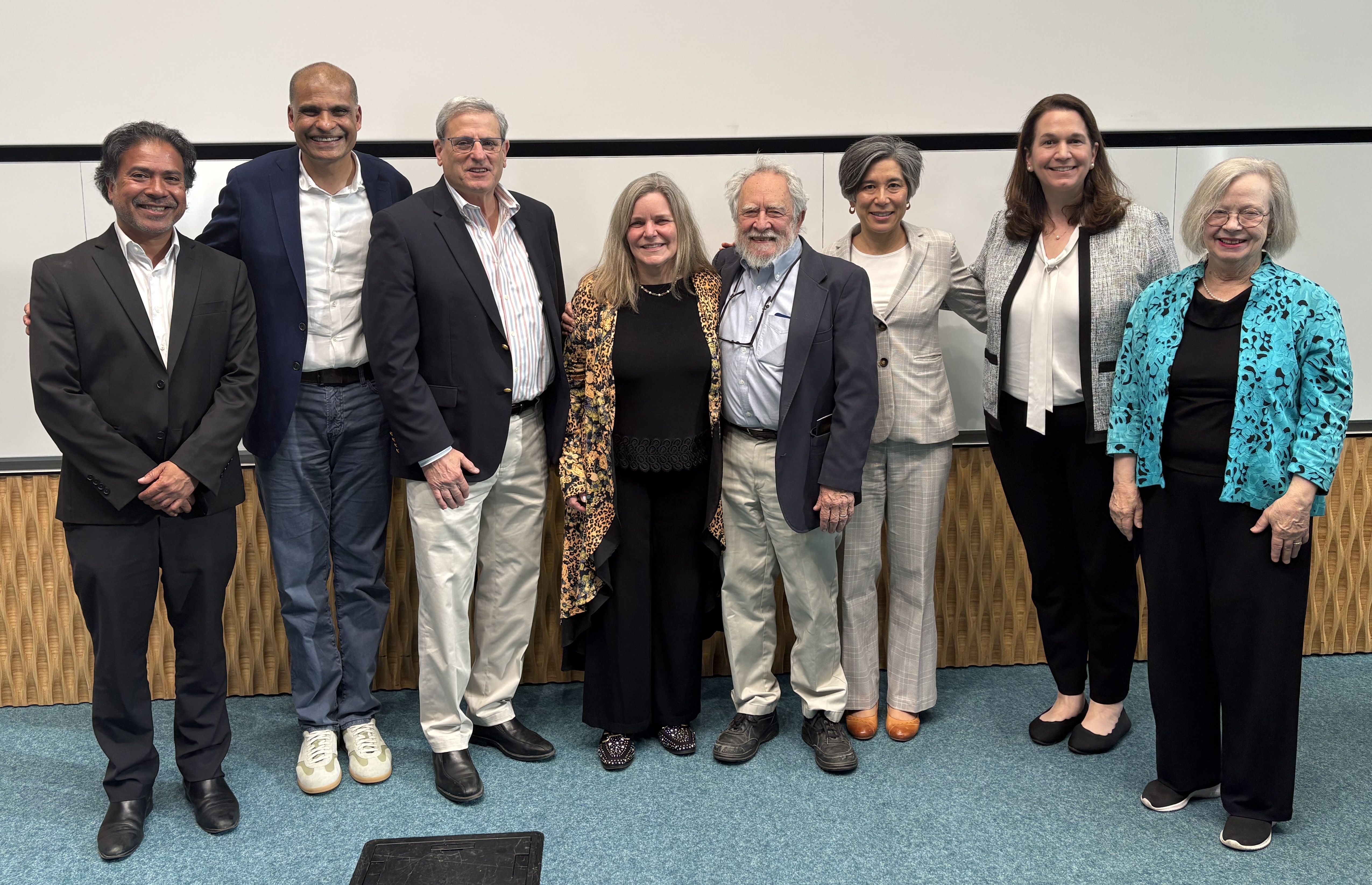
2026 Colburn Lecture with Barbara Shinn-Cunningham, PhD
2026 Lecture - Barbara Shinn-Cunningham

April 23, 2026
Barbara Shinn-Cunningham, PhD
Glen de Vries Dean of the Mellon College of Science
Professor: Psychology, Biomedical Engineering, Electrical and Computer Engineering
Carnegie Mellon University
Hijacking and helping auditory attention:
How interruptions and prediction shape everyday communication
Communicating in social settings relies on the ability to focus on a relevant sound amid competing sources—for example, following a dinner conversation at a crowded restaurant. In healthy listeners, volitional, top-down goals and involuntary, bottom-up interruptions interact to prioritize behaviorally important sounds while maintaining situational awareness. In noisy environments, predictive processes can support this effort by helping listeners parse complex auditory scenes. This talk reviews behavioral and neurophysiological research on the brain networks engaged during auditory attention, with a focus on how bottom-up interruptions disrupt top-down focus and how expectation and learning help stabilize it. Together, these findings highlight how top-down and bottom-up attention, memory, and experience interact to support robust communication in everyday environments.
2025 Lecture - Nicholas A. Peppas

April 10, 2025
Nicholas A. Peppas, Sc.D.
Cockrell Family Regents Chair in Engineering
Cockrell Professor of Biomedical Engineering
Cockrell Professor of Chemical Engineering
Professor, Departments of Pediatrics, Dell Medical School
Professor, Department of Surgery, Dell Medical School
Professor Division of Molecular Pharmaceutics and Drug Delivery, College of Pharmacy
Director, Institute for Biomaterials, Drug Delivery and Regenerative Medicine
The University of Texas at Austin
Treatment of Autoimmune Diseases USING Intelligent Hydrogels
The biomaterials and drug delivery world are changing drastically. New chemistries have created many exciting new materials. Engineering the molecular design of intelligent biomaterials by controlling structure, recognition and specificity is the first step in coordinating and duplicating complex biological and physiological processes. Here we summarize the latest work of our lab. Subjects to be addressed include:
1. Bypassing the BBB barrier for glioblastoma treatment.
2. Combined insulin delivery and glucose sensors for diabetic patients.
3. Nanoparticles for delivery of chemotherapeutic agents.
4. Codelivery for chemotherapy and gene therapy. (4) Use of micelles for RNA delivery.
5. Recent siRNA delivery particulate structures for Crohn’s disease.
6. Microfluidic devices for cancer treatment.
7. Addressing diseases less studied: endometriosis, Alzheimer’s disease.
8. Dementia. Addressing the future.
2024 Lecture - Eve Marder

4/16/2024
Eve Marder, Ph.D.
University Professor
Victor and Gwendolyn Beinfeld Professor of Neuroscienece
Brandeis University
Cryptic (hidden) changes that result from perturbations and climate change shape future dynamics of degenerate neurons and circuits
A fundamental problem in neuroscience is understanding how the properties of individual neurons and synapses contribute to neuronal circuit dynamics and behavior. In recent years we have done both computational and experimental studies that demonstrate that the same physiological output can arise from multiple, degenerate solutions, and that individual animals with similar behavior can nonetheless have quite different sets of underlying circuit parameters. Most recently, we have been studying the resilience of individual animals to perturbations such as temperature and high potassium concentrations. This has revealed that extreme environmental experiences can produce long-term changes in circuit performance that can be hidden, or “cryptic” unless the animals are again challenged or perturbed. Our present work is designed to understand differential resilience in natural, wild-caught animals in response to climate change, and shows long-lasting influences of the animals’ temperature history.
2023 Lecture - Robert Langer

April 26, 2023
Robert Langer, PhD
Institute Professor
Massachusetts Institute of Technology
Controlling the Release of Large Molecules from Biomaterials
Advanced drug delivery systems are having an enormous impact on human health. We start by discussing our early research on developing the first controlled release systems for macromolecules and the isolation of angiogenesis inhibitors and how these led to numerous new therapies. This early research then led to new drug delivery technologies including nanoparticles and nanotechnology that are now being studied for use treating cancer, other illnesses and in vaccine delivery (including the COVID-19 vaccine). Approaches for synthesizing new biomaterials, such as biodegradable polyanhydrides, are then examined, and examples where such materials are used in brain cancer and other diseases are discussed. Finally, by combining mammalian cells, including stem cells, with synthetic polymers, new approaches for engineering tissues are being developed that may someday help in various diseases. Examples in the areas of cartilage, skin, blood vessels and heart tissue are discussed.
2022 Lecture - Emery N. Brown

May 6, 2022
Emery N. Brown, M.D., Ph.D.
Edward Hood Taplin Prof. of Medical Engineering and Computational Neuroscience, Massachusetts Institute of Technology
Warren M. Zapol Professor of Anaesthesia, Harvard Medical School
Anesthesiologist, Massachusetts General Hospital (MGH)
Rethinking General Anesthesia
General anesthesia is a drug-induced, reversible condition comprised of five behavioral states: unconsciousness, amnesia (loss of memory), antinociception (loss of pain sensation), akinesia (immobility), and hemodynamic stability with control of the stress response. Our work shows that a primary mechanism through which anesthetics create these altered states of arousal is by initiating and maintaining highly structured oscillations. These oscillations impair communication among brain regions. We illustrate this effect by presenting findings from our human and non-human primate studies using high-density EEG recordings and intracranial recordings. These studies have allowed us to give a detailed characterization of the neurophysiology of loss and recovery of consciousness due to propofol, and more recently ketamine. We show how these dynamics change systematically with different anesthetic classes and with age. As a consequence, we have developed a principled, neuroscience-based paradigm for using the EEG to monitor the brain states of patients receiving general anesthesia. We demonstrate that the state of general anesthesia can be rapidly reversed by activating specific brain circuits. Finally, we demonstrate that the state of general anesthesia can be controlled using closed-loop feedback control systems. The success of our research has depended critically on tight coupling of experiments, signal processing research and mathematical modeling.
Sponsors
Abhi Kulkarni
 Abhi Kulkarni, Ph.D.
, serves as Vice President of Research and Development for Neuromodulation and Pelvic Health, and Head of the Neuromodulation Technology Development Center at Medtronic, a global leader in medical technology, services, and solutions. In this role, he partners closely with Global Business Presidents and General Managers of various Medtronic business units including Pain Management, Brain Modulation, Pelvic Health and Targeted Drug Delivery to bring innovative products to market. In addition, he has the responsibility for enabling the research and technology pipeline for these businesses.
Before joining Medtronic, Abhi served as the Global Vice President of Research, Development and Technology for Advanced Bionics where he held prior leadership positions of Vice President Research & Technology and Director of R&D Systems Development. Abhi’s career also includes eight years at Bose Corporation in various roles related to acoustics research, advanced development, and product engineering.
Abhi has a Master of Science and a PhD Degree in Biomedical Engineering from Boston University having conducted his graduate research under the guidance of Prof Steve Colburn at the Hearing Research Center at Boston University.
Reshma Kewalramani
 Reshma Kewalramani, M.D., FASN
, is the Chief Executive Officer and President at Vertex Pharmaceuticals, a global biotech company that invests in scientific innovation to create transformative medicines for people with serious diseases. She joined Vertex in 2017 and was previously the Chief Medical Officer and Executive Vice President of Global Medicines Development and Medical Affairs. Prior to joining Vertex, Reshma spent 13 years at Amgen, in various roles of increasing responsibility.
Dr. Kewalramani is a member of the Boston University School of Medicine Dean’s Advisory Board, the Massachusetts General Hospital Board of Trustees, and the Ginkgo Bioworks board of directors.
In 2019, Dr. Kewalramani received the TiE Boston Healthcare Leadership Award and was named one of Boston Business Journal’s Power 50. In 2020, Business Insider named her one of 10 people transforming health care, and she was included on the PharmaVOICE 100 list of the most inspiring and influential leaders in the life sciences and Boston Business Journal’s list of Women Who Mean Business. In 2021, Dr. Kewalramani received the Golden Door Award from the International Institute of New England and was named a New Englander of the Year by the New England Council.
Dr. Kewalramani completed her internship and residency in internal medicine at the Massachusetts General Hospital and her fellowship in nephrology at the Massachusetts General Hospital and Brigham and Women’s Hospital combined program. She received her medical degree, with honors, from the seven-year medicine program at the Boston University School of Medicine and completed the General Management Program at Harvard Business School.