
Paschalidis, Roblyer, and Stott join elite stratum of biomedical engineering society
The American Institute for Medical and Biological Engineering (AIMBE) has announced the induction of three Boston University College of Engineering faculty members to the AIMBE College of Fellows, a group comprising the top two percent of biomedical engineers in academia, industry, clinical practice, and government across the U.S. and nearly 30 other countries.
The faculty earning this lofty distinction are, from the biomedical engineering (BME) department, Professor and Chair Shannon Stott, and Professor and Graduate Chair Darren Roblyer; and from the electrical and computer engineering (ECE) department, Distinguished Professor of Engineering Yannis Paschalidis.
“I’m delighted Yannis, Shannon, and Darren have all received this fitting, prestigious recognition,” says BU ENG Dean Elise Morgan. “They are each outstanding scholars in their field, and they illustrate the breadth of bold advances made in engineering health at Boston University College of Engineering.”

Roblyer was nominated, reviewed, and elected by peers and members of the College of Fellows “for pioneering contributions to short-wave infrared spectroscopic imaging, and for development of translatable clinical technologies for diverse populations.” With his team at the Biomedical Optical Technologies Lab, Roblyer studies how light waves interact with living cells and tissues; and he applies those findings to the invention of wearable medical devices that track human health, for example monitoring blood pressure, oxygen levels, and disease progression.
Last year, Roblyer received three prestigious R01 awards in six months from the National Institutes of Health. Besides his primary appointment in BME, Roblyer is also affiliated with ECE as well as with the BU Photonics Center, BU Neurophotonics Center, and BU-BMC Cancer Center.

Stott was elected “for outstanding contributions to the development of new tools to isolate ultra-rare biomarkers, and for advocacy for diverse perspectives.” She joined BU ENG as BME chair last year, bringing an international reputation as a leading researcher in using microfluidics to detect rare biomarkers, especially for cancer. She has also worked on biomaterials development and high-resolution imaging of tumors and developing tissues. She has more than 70 publications, with 29,000 citations and 25 issued patents.
In addition to her research, Stott holds a wealth of leadership, education, and mentoring experience, having served as the scientific director of an American Cancer Society post-baccalaureate program. She has been active in the bioengineering division of the American Society of Mechanical Engineers and in multiple NSF Engineering Resource Centers.
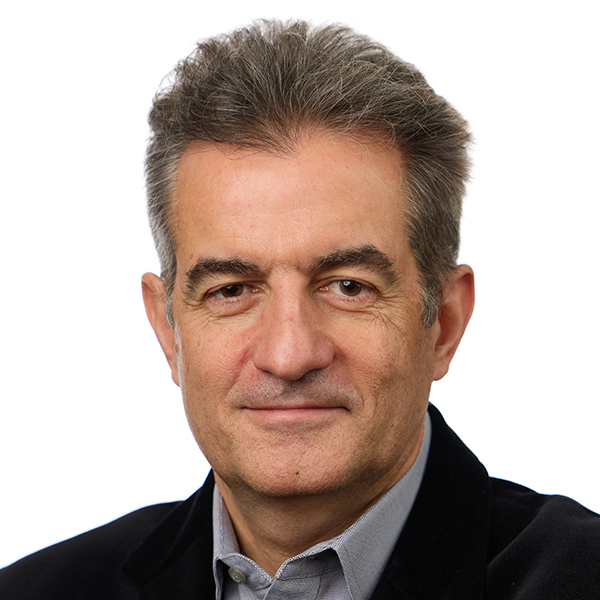
Paschalidis was elected “for outstanding contributions to artificial intelligence and machine learning methods in computational biology and medicine.” He designs intelligent systems that remain reliable and interpretable through uncertainty, with a focus on medical data. With colleagues, Paschalidis has designed systems that use electronic health records to detect early signs of disease and to predict heart-related hospitalizations nearly a year in advance. He has developed AI models that demonstrated success in analyzing speech patterns to predict Alzheimer’s disease years before clinical diagnosis, and another to pick up on signals of potential disease outbreaks worldwide.
Besides his primary appointment in ECE, Paschalidis holds affiliations in BME and systems engineering (SE). He is also director of the Rafik B. Hariri Institute for Computing and Computational Science and Engineering
The three BU ENG faculty were among 175 colleagues in the AIMBE College of Fellows Class of 2026. They were formally inducted in a ceremony during the AIMBE Annual Event at the Renaissance Arlington Capital View Hotel in Arlington, Virginia, on April 13, 2026.
AIMBE Fellows are among the most distinguished medical and biological engineers including four Nobel Prize laureates and 27 Presidential Medal of Science and/or Technology and Innovation awardees. Additionally, 248 Fellows have been inducted to the National Academy of Engineering, 120 inducted to the National Academy of Medicine, and 56 inducted to the National Academy of Sciences.