The Master of Arts (MA) in Musicology & Ethnomusicology at BU School of Music is a graduate degree for students who are working toward entrance to a PhD program, performing students with academic interests, and students preparing for positions in the music industry. To enter, students normally possess an undergraduate degree in music or its equivalent.
Our graduate program provides the disciplinary grounding, critical theoretical tools, methodological breadth and sense of engagement with the world needed to produce music scholars of the highest caliber. We offer a customizable curriculum, including a combined concentration in Musicology and Ethnomusicology.
The Musicology & Ethnomusicology program at BU is led by a vibrant, active, diverse, supportive, and inclusive Department, dedicated to a shared purpose and a field without walls between scholarship and performance. Faculty expertise runs the gamut from the Middle Ages to popular music, from Indonesia to Japan, Africa, and the Americas, and from manuscript studies to oral traditions. Students are encouraged to search new vistas of inquiry and stretch themselves intellectually in a supportive and cooperative environment.
MUSICOLOGY & ETHNOMUSICOLOGY GRADUATE COURSES
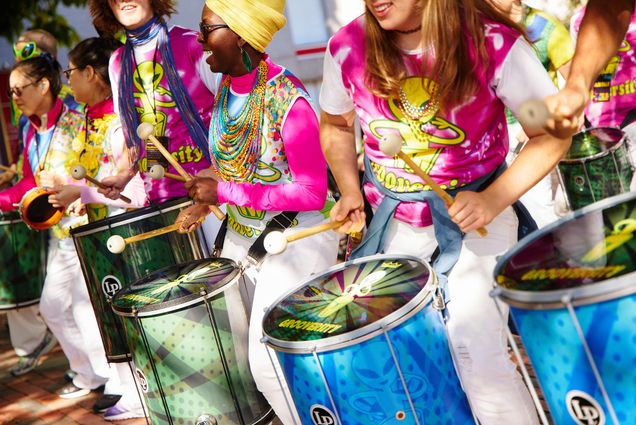
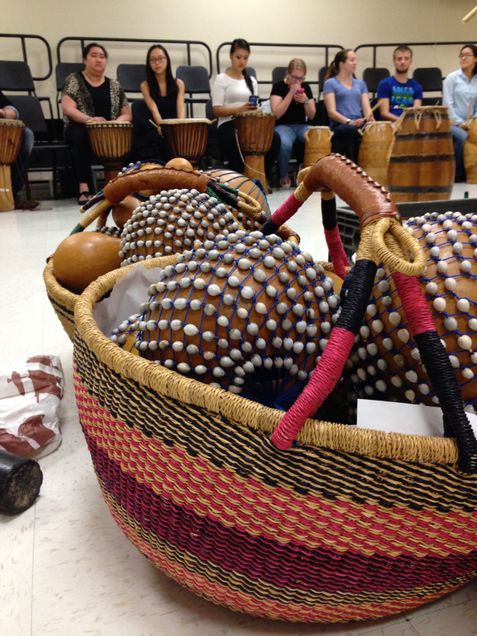
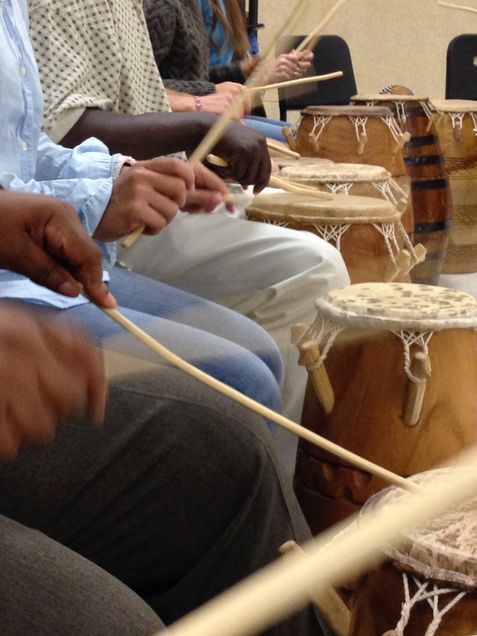
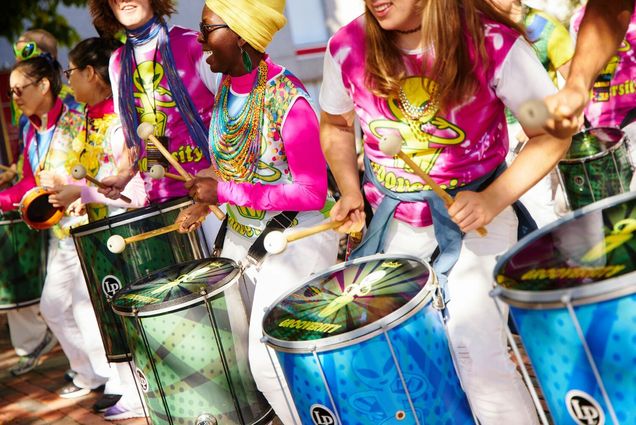
BU Musicology & Ethnomusicology houses a substantial collection of instruments including a multi-temperament Roland C-30 Digital Harpsichord/Organ/Fortepiano for Early Music; quartets of Balinese gender wayang (paired xylophones); percussion and flutes for Colombian currulao and gaita; Cuban batá, rumba, and guiro; Dominican merengue; Ghanaian Ewe drums; Indian classical instruments: bansuri (flutes), harmoniums, deluxe tabla, mridangam, tanpuras; Afro-Peruvian percussion; Persian santur; Puerto Rican plena and salsa percussion; and Senegalese sabar drums.
More about current graduate students
Curriculum requirements for the MA in Musicology & Ethnomusicology program can be found on the Academic Bulletin.
Opportunities
The Musicology & Ethnomusicology program at Boston University is dedicated to ongoing contribution to the academic music studies. The program routinely hosts conferences and events featuring a wide range of topics.
In addition, graduate students frequently design and teach undergraduate courses, present their work in national and international conferences, and publish in peer-reviewed journals, positioning them for success as professional music scholars.
Beyond the classroom, the Department offers an annual Spring Break course in Cuba co-administered with African American Studies and open to undergraduate and graduate students across the University.
As part of BU School of Music the program has ties to the large performance ensembles as well as to a wide range of other academic departments. In addition, BU is a member of the Boston Consortium, a group of universities where students can cross-register for courses.
Center for early music studies
The Center for Early Music Studies at Boston University (CEMS) is dedicated to the cultivation and dissemination of performance, scholarship, and new pedagogical practices involving music of the Medieval, Renaissance, Baroque, and Classical periods.
The Beethoven Center for Research promotes scholarship in a wide spectrum of Beethoven studies, with a focus on analysis and criticism, sketch and autograph studies, biography, and historical and cultural contexts.

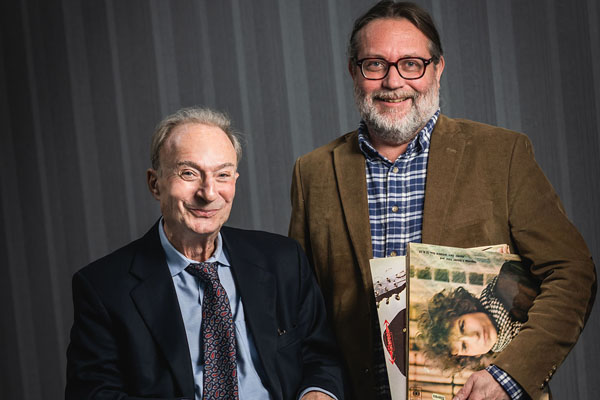
CREATIVES IN PRACTICE: DAN DIPIERO
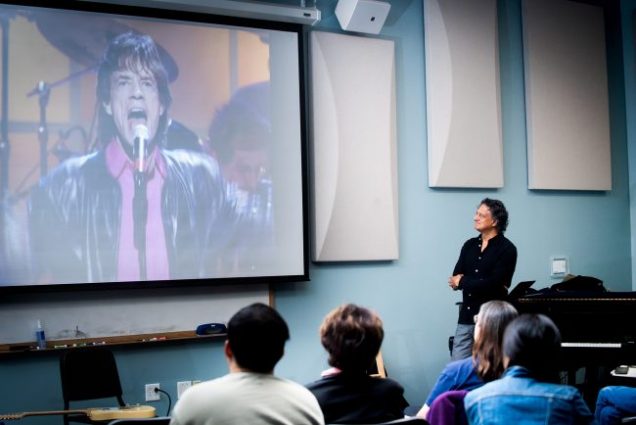
The assistant professor of music in musicology & ethnomusicology at Boston University is researching, presenting (at the Rock and Roll Hall of Fame), publishing, and writing books on the wave of contemporary queer and feminist indie rock bands remaking the genre, and on the role gender plays in the reception of music.
DiPiero brings his real-world experience to his role as a faculty member at BU College of Fine Arts. “Everything I do at BU is informed by my experiences, whether that means teaching jazz history after 20 years of professional playing or talking to my musicology students about the nuts and bolts of peer-reviewed research. As a musician and scholar, I’m constantly trying to bring research and practice together because I think that effort nuances our understanding of both areas at once.”
Musicology & Ethnomusicology Faculty
-
Michael Birenbaum Quintero
Associate Professor of Music, Musicology & Ethnomusicology
-
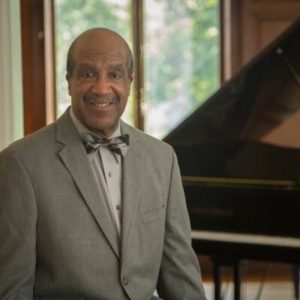
Leland Clarke
Professor of the Practice, Musicology & Ethnomusicology
-
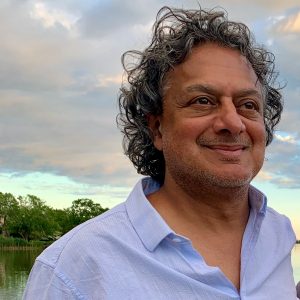
Victor Coelho
Professor of Music; Director, Center for Early Music Studies; Chair, Department of Historical Performance
-

Dan DiPiero
Assistant Professor of Music, Musicology & Ethnomusicology
-

Dan Hartung
Lecturer in Music, Musicology; Director of Afro-Caribbean Ensemble
-

Brita Heimarck
Associate Professor of Music
-

Gregory Melchor-Barz
Professor of Ethnomusicology; Chair, Musicology & Ethnomusicology Department
-

Vicky Mogollón Montagne
Assistant Professor of Music
-

Andrew Shenton
Professor, Musicology and Ethnomusicology; James R. Houghton Scholar of Sacred Music (School of Theology)
-

Jeremy Yudkin
Professor of Music; Co-Director of the Center for Beethoven Studies
You can’t teach music, in my opinion, without having a sense of what culture and community is. I may not be a hip-hop practitioner, I’m certainly not someone who can speak on the Black American experience, but what I can provide is that historical lens, I can be an educator, I can help bring their music and their work into the light of a broader community.

Next Steps for Applicants
The best way to determine if BU is right for you is to explore our admission requirements, financial tools, and resources to determine if the program is the right match.
Reach out to Graduate Admissions at visitSOM@bu.edu with any questions along the way or to request information. We are happy to discuss your educational interests and career goals.
Chat with our student and staff ambassadors!
Discover more about our community by connecting with our current students and expert staff through chat! We are all standing by to help you find the right fit for your unique creative and educational goals.