Current Students

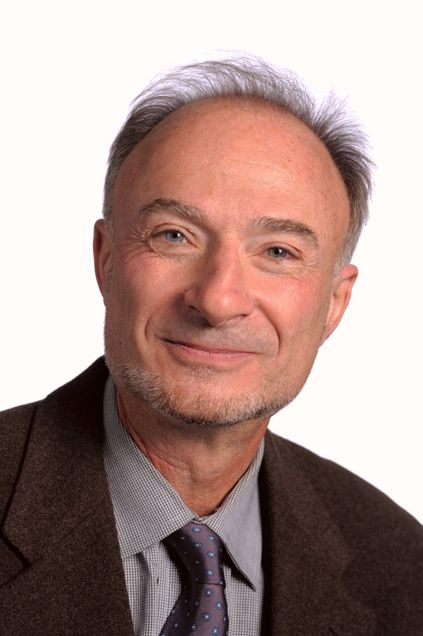
Alexandre Abdoulaev is a PhD candidate in the Historical Musicology program, with a research concentration in French music during the World War I period and partnered jazz dance in Harlem, New York during the interbellum period. Alex works in the performing arts as a music director, researcher, and pianist, specializing in classical performance, musical theatre and cabaret, and jazz studies. Previously, he held faculty postings at such institutions as the Holton-Arms School, Walnut Hill School for the Arts, and Washington National Opera. 

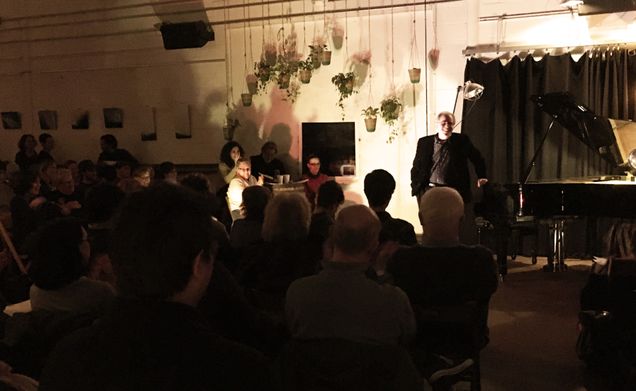
As a performer, Alexandre specializes in post-Third Republic French music, and has performed extensively as a soloist and chamber musician in the Boston and Washington, DC areas. Alexandre was recently heard at the Lily Pad (Cambridge, MA), the Corcoran Museum (Washington, DC), the Taylor House, the Church of St. John the Evangelist, and the Hampshire House (Boston, MA), as well as a number of other high-profile venues. Currently, Alexandre is the artistic director of “Ghosts of Weimar,” a cabaret jazz ensemble specializing in performances of works of William Bolcom, Tom Lehrer, and George and Ira Gershwin.

Gabriel Alfieri is a doctoral student in historical musicology, as well as a singer and teacher. He’s on the faculties of Providence College in Rhode Island, and the Rhode Island Philharmonic Music School. He holds an MM in Musicology and an MM in Vocal Pedagogy from New England Conservatory, and a BM (summa cum laude) in Vocal Performance from Rhode Island College.
sarah-claytonSarah Clayton is a first year MM student in Historical Musicology. She was born in Chicago, IL, but spent most of her childhood in Sioux Falls, SD. She has played the piano for 18 years, and has also studied voice, trumpet, and tuba. Sarah holds a BM in Music Theory from the University of Missouri – Kansas City’s Conservatory of Music and Dance (2011).
Basil Considine is an opera composer from sunny San Diego who has somehow failed to succumb (yet) to the ravages of the Boston winter. He writes plays, directs operas, and plots regular escapes to warmer climates for research. He holds degrees from the University of San Diego and Boston University in music, theatre, and theology, and works regularly in archives in France, Italy, and the UK. Interests include: 16th-century motet manuscripts, 17th-century Roman sacred opera, music theory and philosophy during the Counter Reformation, and the music of Mauritius. Basil is a former instructor for the BU School of Medicine and the Boston Medical Center/BU Medical Campus, and was the educational architect for the BUworks training initiative. He is currently a doctoral candidate in music, and is writing a dissertation on the music of Mauritius from its first colonization to the present day. 

Basil will be conducting dissertation research abroad in Mauritius during the 2011-2012 academic year. You can follow his research online at: http://basilconsidine.org/.

Amanda Daly was the first person to graduate from Wheaton College (MA) with a degree in Ethnomusicology (2003). She received her MA from Brandeis in 2007 in Coexistence and Conflict. Her research interests include music and conflict on both ends of the spectrum, from war to peace. Specifically, she is interested in examining the topic of music torture – how music is used as a weapon and its socio-political, neuroscientific, physiological and psychological meanings and effects. She also studies Cape Breton music and its diaspora, music of Boston/New England, music therapy, medical ethnomusicology, music education, music and sports, particularly music and baseball, and music and neuroscience. She is an active vocal soloist, having performed thrice at Fenway Park for the Boston Red Sox. She has also been a member of the New England Conservatory Youth Chorale, Tanglewood Festival Chorus, Boston Pops Holiday Chorus and Boston Pops Gospel Chorus. She plays violin, both classical and Cape Breton fiddle and piano and speak French, Spanish and German – and will be adding more instruments and languages (particularly Gaelic and Arabic) to her repertoire!
Andrea Douglass is in her third year as a doctoral student in Ethnomusicology at Boston University. She is originally from the Boston area and graduated from Northeastern University in 2001 (BA in Music Literature and Performance, BA in Chemistry) and from the California Institute of the Arts in 2004 (MFA in Flute and Violin Performance). Andrea’s research interests include Appenzeller Streichmusik from Switzerland and Brazilian choro. Andrea currently teaches violin and viola at the Waldorf School in Lexington.
Andres-headshotAndres Espinoza has been playing percussion since he was 8 years old. A native of Chile, he studied Afro-Cuban percussion at the Instituto Superior de Arte in Havana, Cuba, and graduated summa cum laude from Berklee College of Music, receiving a BM in Jazz Composition. He holds an MM from the University of York (England) and is currently a doctoral student in Ethnomusicology. His research interests include the application of ethnomusicology to jazz performance and composition, Afro-Latino diaspora music, and salsa music in Latino identity. He is also the composer, musical director, and percussionist of the Andres Espinoza World Jazz Ensemble, the Andres Espinoza Octet, and the Latin fusion sextet Los Songos Jalapenos. Andres has performed and taught in many countries around the world, including Argentina, Bolivia, Brazil, Canada, Chile, Cuba, England, Italy, Mexico, Peru, and the United States, and is currently an adjunct faculty member at the University of Maine-Augusta.
Dr. Brad Fugate, falsettist and baritone, hails from Dorchester, MA. Raised in the mountains of NC, Brad began his academic musical studies at Furman University in Greenville, SC, (BM in Music Education) and continued his education by obtaining a Masters in Conducting at Cincinnati College-Conservatory of Music. He then made the decision to study voice full-time. After graduate work at Florida State in the Voice Performance department, Brad moved to Greensboro, NC, in 2002, in order to work toward a Doctorate in Vocal Performance at the University of North Carolina at Greensboro. He studied voice with Dr. Carla LeFevre and graduated in 2006. Currently, he teaches voice at Brown University and is working toward a PhD with a double concentration in Historical Musicology and Ethnomusicology. Brad’s research focuses mainly on gender, sexuality, and cultural constructs of the singing voice, most particularly in regards to the falsettist.
Maria Georgakarakou is a PhD candidate in Historical Musicology. A native of Athens, Greece, she received her BA in Greek Literature and Linguistics from the University of Athens in 1991. In 1997, she came to the United States as a Fulbright Scholar, and received an MM in Early Music Vocal Performance from the Longy School of Music in 2001.
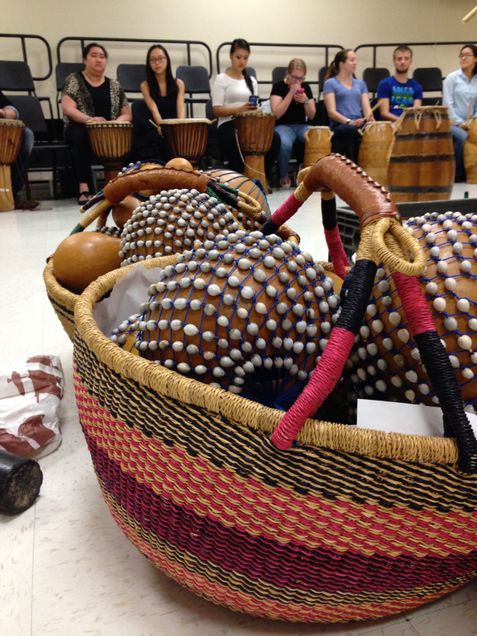
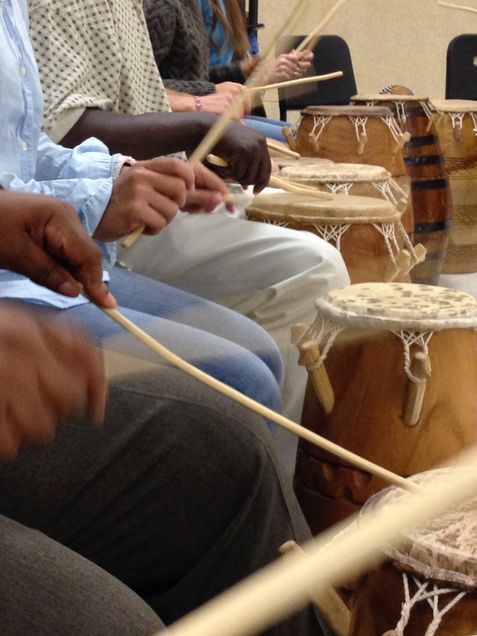
karl-haasKarl Haas is a first year PhD student in Ethnomusicology. A native of Philadelphia, PA, he spent the last three years in Burlington, VT; in Vermont, he taught at Champlain College, Johnson State College, and the Community College of Vermont. His research interests include West African drumming and ideas of hybridity and authenticity. Karl is particularly interested in ways that aesthetic concepts are selectively appropriated across cultural lines and how these concepts translate across artistic mediums. He has conducted research on the warrior drumming tradition of the Dagomba people in Ghana, and the Cambridge-based jazz collective Club d’Elf. 

Karl has presented research at conferences for the New England Chapter of the Society for Ethnomusicology and the International Association for the Study of Popular Music, and has published articles in Percussive Notes and the Pacific Review of Ethnomusicology. As a performing musician, he has performed on three continents, playing styles ranging from jazz to pop to world music, in venues as diverse as concert halls, dive bars, and traditional African funerals.

Genithia HoggesGenithia Hogges is a native of Miami, Florida. She attended public schools in Miami, eventually graduating from the New World School of the Arts High School with a major in vocal music. This experience instilled in her the belief that music education is a necessity for all students, and was an important influence in her becoming a teacher. 

She holds a BA in both Spanish and English Literature (2001/2002) from Harvard University and a Master of Education (in Arts in Education) degree from Harvard’s Graduate School of Education (2002). In college, Genithia mixed opera and choral singing with explorations of the connections between music and literature as means of cultural expression. She has taught Music and English, conducted school and church choirs, and performed as a soloist with community choruses in the area. For the past few years, she has focused on designing educational programs – most recently the Roland Hayes Project. This project brings musical, historical, and cultural education to under-served students and communities, and includes in-school workshops and public recitals.

Genithia is a first year MA student in Historical Musicology.

Jeannette JonesJeannette Jones has lived in many places, including the Midwest and the South, but most recently Philadelphia, PA. She holds a BA in History and in Music (2001) from Covenant College in Lookout Mountan, Georgia, and an MM in Musicology (2007) from Louisiana State University. Her research interests include theology in the chants and writings of Hildegard von Bingen, patronage in late-medieval Francophone courts, and manuscript studies. She also works in disability studies in music, particularly music in Deaf culture. She has two little boys that follow her along many artful and outdoor adventures. 

Jeannette is a first year PhD student in Historical Musicology.

David Kjar, natural trumpet player and scholar, is the artistic co-director of the Boston-based ensemble Cambridge Concentus, which recently toured to Japan with Joshua Rifkin as director. As a natural trumpeter, David has performed and recorded with early-music ensembles throughout Europe and North and South America while working with specialists such as Joshua Rifkin, Sigiswald Kuijken, Rene Jacobs, Reinhard Goebel, and Richard Egarr. David is the natural trumpet professor in Juiz de Fora at Festival Pro-Musica and has taught and presented at the Semana Musica Antiga held at the Universidade Federal de Minas Gerais in Belo Horizonte. He holds a bachelor’s degree from the University of Northern Iowa and a Masters in Historical Performance from the Royal Conservatory of the Hague (The Netherlands). 

David is currently pursuing a PhD in Musicology at Boston University, where he designed and currently teaches a course on musicology and performance. His research focuses on 18th-century performance practice and notions of performance in the 20th Century, with special attention given to Wanda Landowska and her influence on the performance style of the early music movement. His article “The Plague, a Metal Monster, and the Wonder of Wanda: In Pursuit of the Performance Style” will appear in the forthcoming issue of the journal Per Musi.

Panayotis (Paddy) League studied Classics and Modern Greek Studies at Hellenic College and the University of Crete, and is in his second year of the MA in Ethnomusicology here at BU. He primarily researches traditional music in Western Crete and the Greek Aegean, and is also deeply interested in the rabeca (fiddle) music of Northeastern Brazil. He performs and teaches traditional Greek and Irish music on the violin, various lutes, guitar, and percussion, and lectures in the Modern Greek Studies and Music Departments at Hellenic College in Brookline, Massachusetts.
Megan McCartyMegan McCarty, a recently rehabilitated Texan, is currently a second year Master’s student in Historical Musicology. She graduated from Southwestern University in 2009 with a BM in Music Literature (magna cum laude), with Honors in Music. She presented a shortened version of her Undergraduate Honors Thesis Franz Liszt’s Settings of Poems by Victor Hugo: A Previously Unrecognized Song Cycle at the Southwest Chapter Meeting of the American Musicological Society in October 2009; an updated version of her research will be presented in September 2011 at the conference “Franz Liszt: Mirror of a European Society in Evolution” in Strasbourg, France. Other research interests include: 19th- and 20th-century music, musical exoticism of Native Americans in the United States, historiography, canon studies, music and politics, and gender studies. Megan is currently working with John Michael Cooper on the Historical Dictionary of Romantic Music (to be published in 2013), which will be part of a series published by Scarecrow Press.
Nate MeneerNathanael Meneer is a proud American who was born and raised in Canada. He avoided studying music for as long as possible in hopes that he would develop a passion for some lucrative profession in business, law, or medicine. After failing to achieve the latter, he opted to follow his heart and obtained a Bachelor of Music degree from Carleton University in 2008. At Boston University, his research is focused on the classical, folk, popular, and native musics of the United States. His specific interests include the music of Horatio Parker, Native American peyote songs, and psychedelic music from the late 1960s. Nate is currently a PhD student in Historical Musicology.
Colleen Ortiz is completing a Master of Arts in Music degree with a concentration in Ethnomusicology. A native of Calgary (Alberta, Canada), she attended the University of Calgary for two years before moving to Los Angeles, California. While in LA, she completed a Bachelors Degree in Composition at the California State University of Los Angeles. Her areas of interest include the folklore and politics of Argentina and Spain.
Ulrike PrägerUlrike Präger, a native of Munich, Germany, holds a diploma in voice from the Universität Mozarteum Salzburg (Austria) and a Masters in Music and Dance Education form the Mozarteum’s Carl Orff Institute. She was a faculty member of the University of Münster (Germany) and is currently a Teaching Fellow at Boston University, teaching the course “Music and Culture.” She gives frequent workshops on music and movement. Ulrike’s research interests include 17th- and 18th-century vocal pedagogy, and music and displacement in Eastern Europe. Her research on music and expulsion was presented at the International Doctoral Workshop “Ethonmusicological Research Today” in Hanover, Germany, and was awarded the James Koetting prize for the best graduate student paper presented at the Annual Meeting of the Northeast Chapter of the Society for Ethnomusicology. 

Ulrike is currently a PhD candidate in Ethnomusicology at Boston University. In the coming months, she will present papers at the European University Institute’s conference “Music and Imagined Communities” in Florence, Italy, and at the conference “German-Czech Musical Relations between the two World Wars” in Prague, Czech Republic. She is also an active performer and appears as a soprano soloist and chorister with ensembles throughout Europe and the United States, including Cappella Amsterdam, Nederlandse Bachvereniging, and Cambridge Concentus.

Megan RossMegan Ross is a native of East Northport, NY, and is currently pursuing an MM in Historical Musicology. She is a recent graduate of the College of the Holy Cross, where she received a BA in Music in 2011. Her current research interests include Beethoven studies, extramusical features in instrumental music, and Baroque music (especially for the flute). She is also an avid flute performer.
Kate Stringer, the descendant of a long line of military nomads, hails from nowhere in particular but has grown up in various locations in Europe and across the United States. She completed her undergraduate degrees at Oklahoma City University in ’08 and ’09, and is currently pursuing an MM in Historical Musicology at BU. Her primary field of study centers on the relationships between music and socio-political movements in pre-World War II Germany, however her research interests extend to opera and music theatre, Russo-Slavic music of the 19th- and 20th- centuries, and bizarrely enough, music of the Middle Ages. When not hunting Nazis from the comfort of her desk chair or attempting to pick up yet another foreign language, the inveterate stage performer-director can be found singing jazz, music theatre and cabaret tunes for fun and/or profit, speaking speeches trippingly on the tongue, or pronouncing speeches to the actors who will be speaking them.
Edward Sywulka is from Whittier, California. He studied music composition and theology at Biola University in California, thereafter launching into private music teaching, freelance piano accompanying, and church ensemble directing. His pursuit of an MA in Ethnomusicology comes from a recent interest in indigenous Christian hymnody across the globe, but more immediately in Bolivia, inspired by the heritage of his mother. He is also interested in issues of globalization, Andean folkloric music, interfaith relations, and being involved performing and creating music with religious (or otherwise!) communities.
Corwyn WyattCorwyn Wyatt is a first year MM student in Historical Musicology. A native of Fort Thomas, Kentucky, he attended Center College (Danville, KY), receiving a BA in Music and Religion, and also studied at Queen’s University Belfast (UK). His diverse artistic background includes musicology, composition, period winds, and traditional Irish music. He plays the simple system Irish flute, Irish whistles, recorders, and Boehm flute; as a composer, he typically writes for solo flute and small ensembles.