
You’d be forgiven for being confused by academic publishing.
To the wider public, research journals are too often overshadowed by clickbait headlines capitalizing on their contents while oversimplifying studies. For every aspiring academic hearing the phrase “publish or perish” for the first time, there’s another student using an AI agent to avoid reading informative articles entirely. Even researchers familiar with the importance of these peer-reviewed publications can be frustrated, confused, or disheartened by the nuances and striations of the academic publishing landscape.
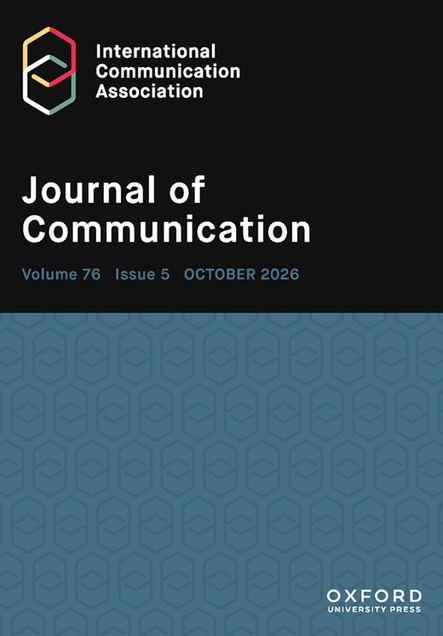
For those interested in navigating it, Boston University researcher Dr. Sung-Un Yang is the ideal guide through that landscape, drawing on his experience in all its points of interest. The latest landmark is an appointment, beginning in September 2026, as the newest coeditor of Journal of Communication, the flagship journal of the International Communication Association and the top publication in the field of communications research.
For the Communications Professor and Harold Burson Endowed Chair in Public Relations, this appointment is the latest credential in a career that includes publishing two books and numerous book chapters and journal articles, and serving as editor-in-chief of Journal of Public Relations Research and on the editorial boards of other leading journals like Communication Research (CR) and Communication Theory. Researchers and other interested individuals alike can look to his example–and the examples other Boston University faculty also serving on editorial boards–to illuminate the world of academic journals with key insights into the process, the importance, and the dedication that make it work.
Tips for Researchers
- “Publish or perish” doesn’t mean you should panic. Submit your work with intention (to one journal at a time).
- Remember quality over quantity.
- Meet the purpose of the journal.
- Send abstracts to editors before submission to gauge interest.
- Good work is rewarded–on its own merits.
- “Rejection” can sometimes mean “revision.”
- Editors want their journals–and you–to succeed. Sometimes, that means being slow.
- Successful research–and the paper sharing it–is original and impactful.
- Be ethical and open about any use of artificial intelligence or large language models in your work. Remember it is a tool, not the end goal.
- Editors care.
The Role of Scholarly Journals–and Their Editors
The goal of all research journals is exactly what the name suggests: to share research and analysis from experts and investigators with other researchers and academics. Whether you call them academic journals, scholarly journals, refereed journals, or even learned periodicals, these publications serve as vital avenues for sharing, reviewing, replicating and challenging new work.
To ensure that only the most accurate and verifiable papers make their way to publication, subject experts–the “peers” of peer-reviewed journals–fill the roles of readers, reviewers, and editors in a hierarchy. That hierarchy creates not only multiple levels of accountability to safeguard the credibility of the publication, but a career path not unlike a tenure-track professor position.
“We have to review multiple manuscripts as a reviewer,” explains Dr. Yang. “Then, if the editor at the time likes our reviews, they invite us to be a member of the editorial board. Among the editorial board, we select associate editors. Then [after] you become an associate editor, you [can] become a senior associate editor, and then you could become the editor-in-chief. So, it’s a multi-year process, and it might take a decade or so to move from a reviewer to editor-in-chief.”
That decade-long process may promise the prestige of the editorship at the end, but there’s another catch to the positions that come before: most are entirely unpaid.
For the Love of Research
When one considers that editorial spots are simultaneously volunteer positions while requiring “more than 20 or 30 hours per week” of work, according to Dr. Yang, a question inevitably rises: why do it? Why devote precious hours to reviewing and editing others’ work when you could focus on your own?
For Dr. Yang, the question is one he’s heard before, and one for which he has a ready answer—not the small stipend some editors-in-chief eventually earn, but impact, informational exchange, and the love of the research itself.
“I’m a member of a community,” he explains. “We’re all doing our own share to develop that community. That’s an essential sense of any kind of volunteer act. Somebody needs to do the job, otherwise the community cannot be run.”
That passion is one shared by Dr. Karen Jacobs, a Clinical Professor of occupational therapy at Sargent College of Health and Rehabilitation Sciences with her own extensive resume of academic journal credits, and the founder of WORK: A Journal of Prevention, Assessment & Rehabilitation.
“I’m very curious. I also could say I’m an early adopter,” says Dr. Jacobs. “What keeps me going is that it’s impactful to the evidence that’s out there, and if you look at the evidence, it’s translating into being impactful to the people we serve. So if you do a research project that comes out with results that says, ‘you should do this in clinical practice,’ or whatever it is as an outcome, you’re doing knowledge translation, and that excites me.”
What keeps me going is that it’s impactful to the evidence that’s out there, and if you look at the evidence, it’s translating into being impactful to the people we serve.
Power and Prestige
Having the final say as editor-in-chief not only grants individuals like Dr. Yang and Dr. Jacobs access to that exciting knowledge, but also inherently confers a great deal of responsibility for its value and dissemination.
“The editor really plays the role of gatekeeper,” says Dr. Yang. Academic journals like Journal of Communication receive thousands of submissions, and it is the ultimate job of editors-in-chief and their boards to winnow those submissions down to the “probably 50 or so manuscripts per year” that can actually be accepted for publication. A lower acceptance rate is one factor in a publication’s status, granting both immense power and pressure to decision makers like Dr. Yang and Dr. Jacobs.
Another element in an academic journal’s status is what’s known as an “impact score,” or impact factor (IF), determined by how often its articles are cited by other publications. The Social Sciences Citation Index (SSCI) is a database, operated by Clarivate, that indexes over 22,500 journals across 113 countries and 244 research categories to assign each journal a yearly score. The Journal of Communication, for example, earned an IF of 5.3 in 2025.
“Impact factor is really a lagging indicator,” says Dr. Jacobs. “It isn’t something that you build directly. You build conditions that produce it.” Those conditions include elements like an international editorial board; a consistent, rigorous peer review process; subject areas with growing demand; special editions that coincide with timely, relevant issues; and authors who trust a journal enough to send them their best work.
“The process is slow, and cumulative,” continues Dr. Jacobs. Building up a journal’s IF often extends beyond the tenure of any one editor. Editorial terms vary from publication to publication–Dr. Yang, for example, will serve one four-year term at Journal of Communication, while his service with Journal of Public Relations Research involves two three-year terms–but the stewardship of each editor has effects on each publication and its community for years to come.
Those communities are yet another source of a publication’s status and prestige. Journals are often produced by academic associations, with the prestige of various publications determined by the organizations at conception.
“For every academic field, when it comes to academic associations, they own flagship journals. They can have multiple flagship journals, and then one of the flagship journals is the deep flagship journal,” explains Dr. Yang. “That’s the case with the International Communication Association. [It has seven] official journals, and Journal of Communication is the deep flagship journal of all the ICA journals.” This distinction makes the journal Dr. Yang now heads the top journal in the communication field, thanks to the approbation of the researchers in the field’s main association, the ICA.
We’re all doing our own share to develop that community. That’s an essential sense of any kind of volunteer act. Somebody needs to do the job, otherwise the community cannot be run.
Dr. Yang is not unaware of the status this appointment grants him, but he maintains a sense of modesty and a dedication to service. His understanding of the role returns, again and again, to that sense of community.
“As a member of my community, I just wanted to do my own share to sustain and develop the community,” he emphasizes. “I’m also part of the Boston University community and I’m a member of Communication College. I’m the member and leader of the Department of Mass Communication, Advertising, and Public Relations as a chair. [. . .By my] being editor of this top journal in our field, we can also send the signal of academic rigor, academic reputation to internal and external audiences.”
What BU Researchers Should Know
For the members of that Boston University research community looking to publish and advance their own careers, the wisdom of researchers and editors like Dr. Yang and Dr. Jacobs. Their insights are ones every investigator submitting to any journal should keep in mind.
“Publish or perish” doesn’t mean you should panic. Submit your work with intention (to one journal at a time).
Even individuals with the most tangential connections to academia have probably heard the phrase “publish or perish.” The aphorism neatly describes the central test of faculty at research institutions at each new stage of their tenure.
The basic currency of our career path is academic publication.
“The basic currency of our career path is academic publication,” Yang says. “In counting academic publications, quantity matters— so usually how many academic publications in a given year, on average, and during the past period of time under review, a given faculty member has been able to produce. That’s a really important indicator.”
A researcher’s instinct, then, might be to focus on the numbers game and the quantity of their published work, submitting to any and every journal that might accept a paper quickly. While building a list of publications is important, Yang cautions that researchers should think about depth as well as breadth—the IF and other elements that make journals a top journal.
“More important than quantity is quality,” he says. “The stature of a publication matters.” he says. A single article in the New York Times might be equivalent to ten articles in smaller local media for a journalist, research that warrants an acceptance to a top-tier publication like the Journal of Communication is “like a gold medal.”
Earning that gold medal begins with submitting to journals that truly fit the paper’s topic.
“Meet the purpose of the journal,” advises Dr. Yang. “Let’s say it’s Journal of Communications; that means communications should be the focus—not marketing or business or ethics [. . .] Meeting the purpose of the journal also serves the very community that the journal serves.”
How can an author be sure their paper fits a journal’s true purpose? Dr. Jacobs recommends making some inquiries before submitting, and truly submitting with intention.
“Look at the list of journals where you have been looking for the evidence for whatever research you’re doing,” she advises. “Start making a list of those journals, because those may be the right ones for you to consider for submitting your papers to.”
Dr. Jacobs recommends then narrowing that list down by reviewing the author submission guidelines for each journal, how and how well the journal is indexed, and its IF.
“Once you’ve narrowed down to that one journal that you think could be good for you,” she continues, “write out your abstract, send it to the editor, and say, ‘I want to know before I write my full paper, would this be within the scope of your journal, and would you be interested in something like that?”
This method allows both authors and journal staff to save precious time, further serving the research community.
Serving that community also means following submission standards ethically. Dr. Yang cautions that researchers should only submit their papers to one journal at a time. “Double submission is completely prohibited,” he says. “Number one, it may [inhibit] the blind review process [. . .] A given reviewer can concurrently review the same manuscripts submitted to different journals; that sometimes happens. Number two, each review process takes time, resources, efforts. It’s purely voluntary [. . . and] it’s a public trust.”
Good work is rewarded–on its own merits.
Key to the foundation of research journals is that trust and the idea of “blind peer review,” what Dr. Yang calls the “golden standard of academic publishing.” It safeguards an unbiased review process, rewarding research entirely based on its content, rather than the perceived prestige of any one individual involved.
Blind peer review is the golden standard of academic publishing.
The process is straight-forward: once a researcher submits their paper to a journal, it’s read by multiple reviewers with expertise in the manuscript’s subject matter. As part of assigning the reviews, the editor ensures that readers have no knowledge of its authorship, and that each reader reviews independently of one another. The editor then gathers and “reviews the reviews,” looking for consensus and making the ultimate decision—which is sometimes more than a simple “yes” or “no.”
“Rejection” can sometimes really mean “revision.”
Rather than an immediate acceptance or rejection, editors often ask authors to rework and revise their submissions.
“If I see that the manuscript team [seems to think that there is something] worthy for further consideration, then we give the recommendation of, hey, you have to revise such and such to be considered in the next round of review. Often, believe it or not,” says Yang, “we have three or four rounds of such revision.”
That methodology is not exclusive to Journal of Communication or other publications led by Dr. Yang. “One of the things I’ve done with WORK,” says Dr. Jacobs, “is avoid the word ‘rejection.’” Drawing on her “experience on both sides” of the editorial process, Jacobs envisioned WORK’s review process as one that was “author-friendly” and a “relationship, not a transaction.”
“We share what made the paper not able to be published, but [also provide] guidance to the authors,” says Dr. Jacobs. “We always provide constructive feedback.” She finds that authors are receptive to that feedback, building a relationship that can help the success of both researchers and the journals themselves.
Editors want their journals–and you–to succeed. Sometimes, that means being slow.
Those three or four rounds of revision Dr. Yang mentioned? Sometimes “each cycle might take about half a year,” he says. “It’s not unusual for any author to make a publication in a top journal like Journal of Communication. It might take like two years, three years. So that is kind of the way how an editor really play the role of gatekeeper, and then they make the final decision, ‘hey with all those being considered we finally accept your manuscript.’”
Both Yang and Jacobs are cognizant of how frustrating the long review periods can be for researchers, and they emphasize that editors do what they can to expedite the process. Several variables affect review time, including the availability and responsive of reviewers, the number of submissions each publication receives, and the number of editions the journal releases each year.
Journal of Communication, for example, receives more than 1,000 submissions each year and publishes six issues, and per their Author Guidelines, aim to give submitters “decisions on initial submissions within 90 days. Because manuscripts receive expert review, and because the Journal of Communication Editorial Board is international in scope, this time may vary.”
Dr. Jacobs states that for WORK, which puts out 12 issues a year, ideally authors would be able to expect a response in “six to eight weeks. Sometimes, if we’re trying to get a special issue out, two to three weeks.” She says that, “I take that responsibility really seriously. I know that [. . .] getting things reviewed quickly is important. Sometimes, it’s just not possible. We do the best we can.”
We have to make sure that we publish scholarly work. We don’t shirk the double-blind peer-review process.
Dr. Jacobs says she’s had researchers who are up for tenure reach out to try to hurry along an article’s review, and she and her team do their best to nudge reviewers or even find new ones who may respond more quickly. Ultimately, however, time is required to do the job correctly. The submission guidelines for WORK inform authors that, “All manuscripts are reviewed as rapidly as possible, while maintaining rigor.”
“That’s important for authors to know,” Dr. Jacobs says. “We understand that there’s this tension, but we have to make sure that we publish scholarly work. We don’t shirk the double-blind peer-review process.”
Successful research–and the paper sharing it–is original and impactful.
The number one criteria that helps a paper shine through the peer-review process? According to Dr. Yang, it’s something new.
“Novelty, originality, it’s the one,” he says. Also, “implications or impact to society overall—so not only ‘does this manuscript serve the curiosity of individual researchers?’, but how likely the findings of the publication can make a positive impact to the greater society.”
Ethics also play an important role in the evaluation process, from the way the researcher submits their paper to the way they wrote it.
“We see how the author of the manuscript is transparent and open about using AI, or any kind of emerging technologies, in conducting research or finishing the write-up of each manuscript,” Dr. Yang says.
Both Dr. Yang and Dr. Jacobs express concerns about the use of AI in academic publishing. The very structure of large-language models (LLMs) not only raises ethical questions around issues like plagiarism, but increases the volume of submissions to journals while also decreasing the quality of those submissions.
“[Editors have been] a little bit disappointed that many manuscripts are, nowadays, more or less copycats of other manuscripts, or mere synthesis of existing manuscripts,” says Dr. Yang. “So we editors are particularly paying attention to novelty, originality, and the unique impact of a given manuscript over existing research papers.”
We editors are particularly paying attention to novelty, originality, and the unique impact of a given manuscript.
Dr. Yang emphasizes that there are also positive aspects of AI use, especially its ability to assist in things like data collection, data analysis, or paper editing through the use of tools like Grammerly. “It has streamlined many processes of research,” he says. “So as a result, it leveled the playing field among researchers. It’s democratized the research area.”
Researchers remember, however, the AI is “a great research tool,” not the main aspect of it. They should not mistake the complexity of data analysis with quality of research. Unless a paper is entirely considered with research methods, “we care more about the originality, novelty, and unique contribution of a given manuscript,” Yang says.
Editors care.
Conversations with Dr. Yang and Dr. Jacobs have suggested that if the editor-in-chief position could be oversimplified into one word, that word might very well be “care”—care about originality, care about impact, care about authors, about journals, and about research in general.
Both continue to research, to write, and to submit their own work while also performing their editorial duties. Most recently, Dr. Yang and his research team had a paper accepted to another top journal, Computers in Human Behavior. Dr. Jacobs has even had work accepted to WORK, where, thanks to double-blind peer review, “nobody knows it’s me,” she says. She and Dr. Yang both express that their work as editors and the exposure to others’ insights and discoveries increases their passion for their fields, and inspires.
That passion, after all, led Dr. Jacobs to found an entire journal when she identified an underserved niche in the scholarship.
“There was no peer-reviewed journal out there that could have a discussion about all disciplines talking about the construct of ‘work’,” Dr. Jacobs says. “The gap was that there was no dedicated peer-reviewed home for research, scholarship, and clinical practice at the intersection of prevention, assessment, and rehabilitation as it relates to work and productive activity. There was no place where people could publish together, read each other’s work, about work internationally.”
Identifying that niche and filling it are two entirely different tasks, of course, but Dr. Jacobs accomplished both through the passion she has for her work.
“It came out of really my immersive personality, I guess. Being curious, seeing a niche, and not being frightened of proposing something,” she says.
Jacobs says her experiences prior to founding WORK taught her “how important it is to have sort of this relationship [between authors and editors]. It’s not a transaction, but something that your grow. Communication is key. I believe that what my role was like in this beginning editor experience was mentorship, rather than being a gatekeeper, and helping the authors understand the peer-review process, and to help them understand that when they get feedback, that’s not like a rejection. It should be used, and it should be given in a positive manner.”
While Dr. Yang does not shy away from the idea of an editor being a gatekeeper, he, too, has great respect for the responsibility his role gives him to authors, and for the sense that he is, in a sense, holding the careers of other researchers in his hands.
I believe every editor should feel a sense of accountability.
“I believe every editor should feel the same way, a sense of accountability,” Dr. Yang says. “We have to be accountable for the quality, ethical, and timing, the timely processing of manuscripts to serve our researchers, the very community of our researchers [. . .] We really need to be careful not to get in somebody’s career path by an unprofessional, unethical, or even delayed processing of the manuscript.”
Editing a top-tier journal increases that sense of responsibility. “We set the tone of the entire academic field,” Yang continues. “Sometimes it’s daunting, but other times, often, we need to take [the responsibility].” The ability to take that responsibility is key to becoming, and being, an editor-in-chief. As the founding editor of WORK and the newest editor-in-chief for Journal of Communication, Dr. Jacobs and Dr. Yang have clearly demonstrated their own skill, sense of responsibility, and passion. Their service allows authors to publish and flourish.
“Why does communication research matter?” summarizes Dr. Yang. “To me, communication is important in so many aspects, or nearly all aspects, of human behavior. Especially, we are living in a year of uncertainty, and a greatly polarized and fragmented public opinion landscape. Everything becomes highly polarized, and social media or other media is [becoming a] very important aspect of a lot of life. So communication becomes, the biggest enemy, or the biggest solution for many problems. Communication becomes more and more important, and we are proudly serving on the very important subject.”