Veteran Human Rights Activist John Prendergast and Dean Taylor Spotlight Sudan Crisis

The Frederick S. Pardee School of Global Studies at Boston University brought attention to one of the world’s most overlooked conflicts in October, hosting veteran human rights activist John Prendergast for an urgent discussion on Sudan’s humanitarian crisis.
Dean Scott Taylor opened the event by highlighting how the Pardee School, as a center for global studies and international relations, recognized the need to shine a light on this largely unseen crisis. “As a Global Studies school, we are obviously engaged in issues around the world that affect politics, policy, conflict,” Taylor said. “While as a campus we have focused a lot on the struggle in Israel Gaza… one of the world’s great conflicts that’s going on right now that is less spoken about, less covered in the media, less gathers considerably less attention diplomatically… is the conflict in Sudan.”
As Dean Taylor introduced him, Prendergast has been a respected voice in Washington and around the world for over two decades. “I’ve known John for more than 20 years,” Taylor noted, describing him as “a policy maker, a policy influencer, a human rights activist, a leader.” Prendergast’s work has particularly focused on bringing attention to overlooked conflicts in Africa. As founder of the Enough Project, he led what Taylor called “a very vibrant public facing activist effort” that worked to change legislation about conflict minerals. Now, as co-founder of The Sentry, Prendergast continues his focus on crises such as that in Sudan.
Taylor highlighted Prendergast’s extensive background: “He’s an author, has written books that would make a scholar’s blush.” His experience includes work with the International Crisis Group, among other organizations, making him, as Taylor put it, “a very, very impressive person and very engaged in these issues.”
Prendergast began his talk with a powerful story about a woman named Amina, whom he met in a refugee camp on the Chad-Darfur border twenty years ago. After sharing her harrowing experience of violence and loss, Prendergast recalled her words: “Now that you know, you must do something.”
The crisis today, Prendergast explained, encompasses four major categories of human suffering: “Number one is famine… millions of people will likely die over the course of the next six months. Second factor is genocide… Third category is massive sexual violence… and finally, the number we can measure to some degree – human displacement… somewhere in the neighborhood of 11 million.”
Prendergast described Sudan as a “captured state” that has been “turned into massive looting machines.” He explained how the country’s primary resource of conflict has shifted: “Sudan’s loot was previously oil… and then quickly pivoted once the oil was gone to gold… billions of dollars being earned and smuggled out of the country, 99% of it to the United Arab Emirates with no consequences.”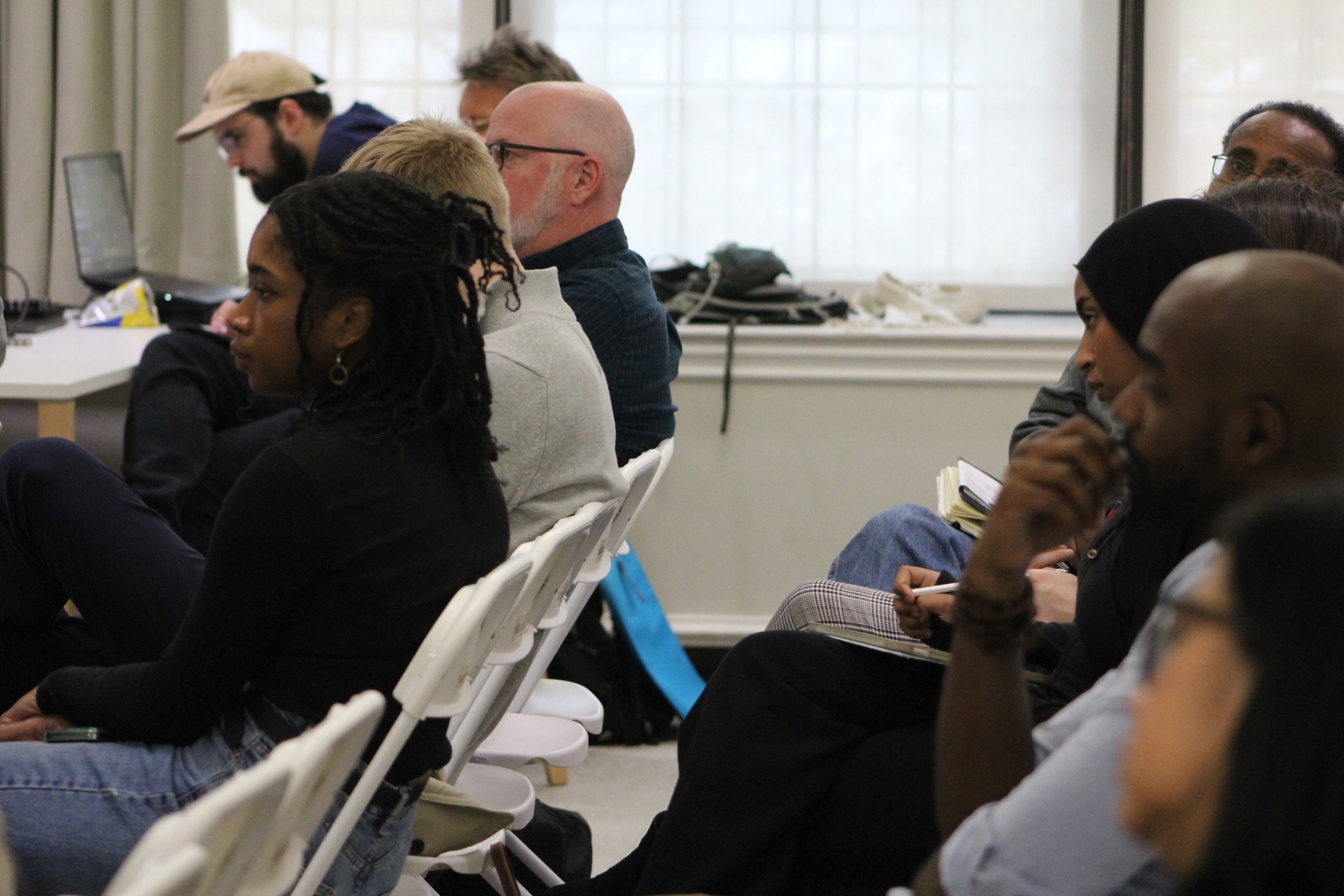
During the question-and-answer session, participants explored various aspects of the crisis, including environmental factors and the potential for activism. Prendergast addressed the role of climate change in the conflict, noting how “the climate-induced or climate is an integral factor in the roots of why we are where we are today in Sudan.”
The event demonstrated the Pardee School’s commitment to examining complex global issues that may not receive adequate media attention. As Dean Taylor noted in his introduction, “It’s incumbent upon us to shine a light… to engage in dialogue, to provide perspectives on this largely unseen crisis.”
The discussion concluded with Prendergast suggesting potential solutions through financial pressure and international advocacy, while emphasizing the United States’ unique position of influence due to its control of global financial transactions: “65% of maybe more of the world’s commercial transactions are still conducted in the dollar.”
This event at the Pardee School’s Kilachand Honors College brought together students, faculty, and community members for a deeper understanding of Sudan’s crisis, fulfilling what Dean Taylor described as the school’s role in addressing “one of the most dire humanitarian crisis and severe conflicts in the globe today.
The full event was captured on YouTube.
“