“I Now Approach Complex Situations More Calmly and Strategically.” Why MET’s Program & Project Portfolio Management Degree Concentration was Right for Dr. Arjun Sharma
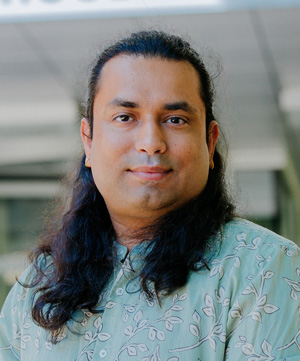 Dr. Arjun Sharma (MET’26)
Postdoctoral Research Scientist, Beth Israel Deaconess Medical Center
MS, Project Management, Program & Project Portfolio Management Concentration
What first drew you into your chosen field of study? What made BU’s Metropolitan College the right place for you to pursue an education in that field?
My interest in project and portfolio management came from hands-on experience rather than theory. Through my work in translational research and leadership roles, I was often responsible for coordinating people, timelines, resources, and competing priorities. I realized that many challenges were not technical, they were about decision-making, communication, risk, and aligning multiple efforts toward a common goal. That pushed me to pursue formal training in project, program, and portfolio management.
Boston University Metropolitan College felt like the right fit because of its practical, real-world focus. The MS in Project Management, Program & Project Portfolio Management concentration, offered exactly what I was looking for: a balance of strategy and execution, exposure to both agile and traditional approaches, and faculty with real industry experience. What really stood out to me was the strength of BU MET’s faculty. Many of them are well-recognized practitioners in the project management field, and learning from professors like Richard Maltzman and Vijay Kanabar, who consistently connect theory with real-world practice, added real depth to my experience and confirmed that Boston University was the right choice for me.
Were there specific developments or trends in your line of work (i.e., evolving best practices, new technological tools, or other catalysts) that prompted you to pursue a graduate education?
Yes. Through my research work in immunology and translational science, I became directly involved in managing complex, long-term projects that required coordination across labs, collaborators, and institutions. Projects involving animal models, advanced imaging, flow cytometry, and multi-phase experimental timelines demanded careful planning, risk management, and sequencing of interdependent tasks, often under strict funding and regulatory constraints. I also had to make portfolio-level decisions about which experiments to prioritize, delay, or redesign based on resource availability and emerging data.
Professionally, the program helped me move from managing individual projects to thinking more strategically about programs and portfolios, how decisions, trade-offs, and governance shape outcomes over time.
In parallel, I applied agile and data-driven approaches while leading large academic and student-governance initiatives and began experimenting with AI-enabled tools for planning and monitoring work. Seeing how rapidly best practices were evolving and how critical strong governance and strategic alignment were across both research and organizational settings made it clear that experience alone was not enough. This motivated me to pursue graduate education in project, program, and portfolio management to manage complexity more effectively and deliver sustained value.
Has your education brought you the growth, personal or professional, that you were looking for? What’s been your goal?
Professionally, the program helped me move from managing individual projects to thinking more strategically about programs and portfolios, how decisions, trade-offs, and governance shape outcomes over time. I became more deliberate in how I plan work, manage risk, communicate with stakeholders, and evaluate value rather than just delivery. On a personal level, the program gave me clarity and confidence. I now approach complex situations more calmly and strategically, whether in research, organizational leadership, or collaborative work. My goal has always been to connect my scientific and technical background with strong projects and portfolio leadership so I can create lasting, well-aligned outcomes. This program helped me do that in a more intentional and thoughtful way.
At BU MET, we talk about teaching relevant skills you can use on the job immediately—do you have any examples of lessons you learned in class that you were able to professionally leverage?
Several courses at BU MET had an immediate impact on how I worked. In Portfolio and Program Management (MET AD 646), I learned how to evaluate initiatives collectively rather than in isolation, which I applied when prioritizing parallel research projects and leadership initiatives based on impact, risk, and resource availability. This helped me make clearer trade-offs and focus effort where it mattered most.
I applied tools from Project Risk and Cost Management (MET AD 644) to identify likely bottlenecks such as animal availability, core facility scheduling, and regulatory approvals, and built contingencies into the plan to minimize delays. Agile Project Management (MET AD 649) shaped how I reviewed data in short cycles and adjusted the experimental plan as results emerged, instead of locking into a rigid schedule. Lessons from Project Leadership and Emerging Communication Technologies (MET AD 516) improved coordination with collaborators by clarifying roles, expectations, and decision points. These approaches were applied in real time and made the project more efficient and manageable from day one.
Congratulations on earning multiple PMI certifications. What motivated you to pursue these credentials alongside your academic work?
Thank you. I earned PMI certifications alongside my academic work because I wanted to reinforce theory with globally recognized professional standards. While the MS program gave me depth in strategy, governance, and portfolio thinking, the certifications helped me translate those concepts into practical frameworks and terminology used across industries. I am grateful to Associate Professor Vijay Kanabar and Lecturer Hatim Zariwala, whose guidance and encouragement consistently motivated me to pursue these credentials and thoughtfully connect certification learning with my coursework.
Each credential served a specific purpose, PMP and CAPM strengthened execution fundamentals, PMI-ACP supported agile and hybrid delivery, PMI-PBA sharpened requirements and stakeholder analysis, and PMI-CPMAI helped me understand how AI fits into decision-making and project governance. Together, they allowed me to immediately apply what I was learning in class to real projects, while also ensuring my skills remained aligned with evolving industry expectations.
In what ways did your coursework or faculty guidance help prepare you for success in earning these certifications?
My coursework at BU MET provided a strong conceptual foundation that aligned closely with PMI frameworks, which made certification preparation more structured and meaningful rather than purely exam focused. Courses such as Project Management (MET AD 515), Agile Project Management (MET AD 649), and Principles and Best Practices in Project, Program, and Portfolio Management (MET AD 807) helped me internalize PMI terminology, process groups, and mindset through real-world application rather than memorization.
Faculty guidance played an equally important role. Guidance from Associate Professor Vijay Kanabar and Lecturer Hatim Zariwala helped me think critically about how standards are applied in practice, encouraged disciplined preparation, and reinforced confidence in connecting academic learning with professional credentials. This combination of applied coursework and mentorship allowed me to approach the certifications with clarity, context, and a strong sense of purpose.
What were your expectations of the BU MET faculty coming in, and how did the reality compare? Did any faculty members make a particular impact on you?
When I entered the program, I expected the faculty to be knowledgeable and experienced, but I was pleasantly surprised by how approachable and practically engaged they were. Rather than focusing only on theory, the faculty consistently emphasized how concepts are applied in real organizational settings, which made the learning immediately relevant.
Several faculty members had a meaningful impact on me. Master Lecturer Richard Maltzman influenced how I think about ethics, sustainability, and long-term value in project and portfolio decisions, particularly through my directed study. Associate Professor Vijay Kanabar played a key role in motivating and guiding me, especially in connecting academic concepts with professional standards and certifications. Lecturers Hatim Zariwala and Jason Wong strengthened my analytical thinking through agile, structured, real-world problem solving, while fellow lecturer Valorie Luther emphasized business, marketing, and innovation in project execution. Together, their guidance shaped how I approach leadership, strategy, and continuous learning.
What course made the biggest impact on you? Did you complete any particularly memorable or rewarding class projects?
The course that made the biggest impact on me was Principles and Best Practices in Project, Program, and Portfolio Management (MET AD 807), taught by Lecturer Jason Wong. The course helped me step back and see how individual projects fit into a larger organizational system. It was taught through real-world case scenarios. The course focused on practical, hands-on problem solving, how to analyze complex situations, make trade-offs, and address real organizational challenges rather than just learning theory. The discussions and case-based approach reshaped how I evaluate trade-offs and success across programs and portfolios.
One of the most memorable and rewarding experiences was my directed study with Master Lecturer Richard Maltzman, where I worked on “Strategic Portfolio Shifts in Big Pharma Post-COVID: A Case Study of Pfizer and Moderna.” This project allowed me to combine my research background with portfolio management theory, analyzing how large pharmaceutical organizations reprioritized research and development, managed risk, and balanced speed with sustainability after COVID.
It was especially meaningful because it connected real-world strategy, ethics, and long-term value, bringing together everything I had learned throughout the program in a practical and intellectually engaging way.
Now that you’ve earned your MS in Project Management, Program & Project Portfolio Management Concentration, what’s the most valuable thing BU MET provides you with? What’s next?
The most valuable thing BU MET gave me is the ability to think beyond individual projects and focus on patient-centered impact on scale. Coming from a medical and research background, I was deeply involved in experiments and studies, but the program taught me how decisions at the program and portfolio level shape clinical timelines, regulatory readiness, resource allocation, and ultimately patient outcomes. That shift in perspective has fundamentally changed how I approach my work.
What’s next for me is applying these skills in clinical trials, pharmaceutical research and development, and healthcare operations. I want to help design and manage clinical and translational programs that move efficiently from discovery to delivery balancing speed, quality, ethics, and compliance. Whether it’s prioritizing trial portfolios, managing cross-functional teams, or optimizing healthcare initiatives, the foundation I gained at BU MET gives me the confidence to contribute meaningfully to complex, real-world healthcare challenges.
What advice would you give to someone considering the program?
For clinicians and researchers considering the program, my advice would be to see it as a complement to your technical training, not a departure from it. In medicine and research, we are trained to focus deeply on individual studies, patients, or experiments, but many of the challenges we face are really about coordination, prioritization, and decision-making across multiple efforts.
I would encourage you to bring your real projects, clinical studies, lab work, quality initiatives into the classroom and actively apply what you are learning. That’s where the program becomes most powerful. Also, take advantage of the faculty’s openness and practical experience; their guidance helped me connect project and portfolio management directly to clinical and research environments. If you engage fully, the program can meaningfully change how you lead complex scientific and healthcare initiatives.