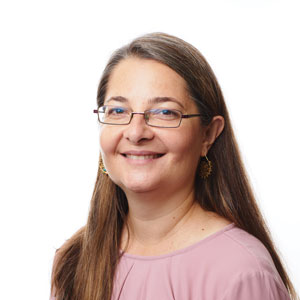
Yeşim Sungu-Eryilmaz
Assistant Professor, Applied Social Sciences Director, City Planning & Urban Affairs
Yeşim Sungu-Eryilmaz trains the focus of her urban and regional planning research on sustainability—particularly those factors that influence the economic, social, and environmental sustainability of cities. A seasoned professional with more than 15 years of experience and research contributions in the field of city planning and urban affairs, she has served as a consultant for numerous public and nonprofit organizations. Dr. Sungu-Eryilmaz first joined Boston University in 2011. She has taught at Brown University, where she was recognized with the Engaged Scholars Award in 2016, and has been a visiting scholar at Tufts University and a research associate at the Lincoln Institute of Land Policy, Cambridge, Mass. Beyond urban sustainability, she specializes in planning for equity, urban economics, geographic information systems, and quantitative and qualitative research methods. Sungu-Eryilmaz teaches in the Metropolitan College City Planning and Urban Affairs program, where she incorporates geographic information systems to city and regional planning lessons.
Research Interests
- Urban Sustainability
- Planning for Equity
- Geographic Information Systems
- Quantitative and Qualitative Research Methods
- Urban Economics
Courses
-
- MET UA 589 – Research and Evaluation
- MET UA 591 – Applied Analytical Methods
- MET UA 598 – Foundations of GIS and Spatial Analysis
- MET UA 642 – Geospatial Intelligence for Urban Analysis
Scholarly Works
Articles, Book Chapters, and Edited Books
Moyer, J., and Sungu-Eryilmaz, Y. “Understanding Local Control in the Wake of State Adult-Use Cannabis Liberalization: A Content Analysis of State Statutes.” Public Administration Quarterly 47, no. 3 (2023): 284–299. https://journals.sagepub.com/doi/10.37808/paq.47.3.3
Konak, Nahide, and Yeşim Sungu-Eryilmaz. “Does Small Run-of-River Hydro Power Development in Turkey Deliver on its Sustainability Premise?” Society & Natural Resources 29, no. 7 (2016). DOI:10.1080/08941920.2015.1086459
Tasan-Kok, Tuna, and Yeşim Sungu-Eryilmaz. “Exploring Innovative Instruments for Socially Sustainable Waterfront Regeneration.” In Transforming Urban Waterfronts: Fixity and Flow, edited by Gene Desfor, et al., (New York: Routledge, 2010).
“Town-Gown Collaboration in Land Use and Development.” Policy focus report. Lincoln Institute of Land Policy, Cambridge, Mass., 2009.
“Local and Nonlocal Geography of Technological Innovation in Developing Countries.” Projections—MIT Student Journal of Planning 7 (Spring 2008): 92–114.
Sungu-Eryilmaz, Yeşim, and Rosalind Greenstein. “National Study of Community Land Trusts (CLTs).” Working paper. Lincoln Institute of Land Policy, Cambridge, Mass., 2007.
Greenstein, Rosalind, and Yeşim Sungu-Eryilmaz. “Recycling the City: The Use and Reuse of Urban Land.” Lincoln Institute of Land Policy, Cambridge, Mass., 2004.
Comfort, Louise K., and Yeşim Sungu. “Organizational Learning from Seismic Risk: The 1999 Marmara and Düzce, Turkey, Earthquakes.” In Managing Crisis: Threats, Dilemmas, Opportunities, edited by U. Rosenthal, A. Boin, and L. K. Comfort (Springfield, Illinois: Charles C. Thomas, 2001).
Comfort, Louise K., Yeşim Sungu, David Johnson, and Mark Dunn. “Complex Systems in Crisis: Anticipation and Resilience in Dynamic Environments.” Journal of Contingencies and Crisis Management 9, no. 3 (2001): 144–158.
Research Notes/Magazine Articles
Sungu-Eryilmaz, Yeşim, and Rosalind Greenstein. “Town-Gown Cooperation in Community Development.” Communities and Banking 21, no. 3 (Federal Reserve Bank of Boston, 2010): 8–11.
Greenstein, Rosalind, and Yeşim Sungu-Eryilmaz. “Community Land Trusts: A Solution for Permanently Affordable Housing.” Land Lines 19, no. 1 (Lincoln Institute of Land Policy, 2007).
Greenstein, Rosalind, and Yeşim Sungu-Eryilmaz. “Recycling Urban Vacant Land.” Communities and Banking 17 no. 2 (Federal Reserve Bank of Boston, 2006): 18–20.
Greenstein, Rosalind, and Yeşim Sungu-Eryilmaz. “Community Land Trusts: Leasing Land for Affordable Housing.” Land Lines 17, no. 2 (Lincoln Institute of Land Policy, 2005).
Conferences and Lectures
Sungu-Eryilmaz, Yeşim, and Emily E. Earle. “How Does the Municipality-Based CLT vs. the Community-Based CLT Differ in Its Effectiveness?” Paper presented at the annual meeting of the Association of American Geographers, February 24–28, New York, N.Y., 2012.
Konak, Nahide, and Yeşim Sungu-Eryilmaz. “Water and Renewable Energy Policy: A case Study of Small Hydro Power (SHP) Development Conflict in Turkey.” Paper presented at the annual meeting of the Association of American Geographers, New York, N.Y., February 24–28, 2012.
Konak, Nahide, and Yeşim Sungu-Eryilmaz. “Framing Water: A Case Study of Small River-Based Hydro Energy Development Conflict in Turkey.” Paper presented at the 17th annual International Sustainable Development Research Conference, Columbia University, New York, N.Y., May 8–10, 2011.
Sungu-Eryilmaz, Yeşim, and Rosalind Greenstein. “Foreclosure Prevention and Intervention Activities of Community Land Trusts.” Paper presented at annual meeting of the Association of American Geographers, Washington, D.C., April 14–18, 2010.
Sungu-Eryilmaz, Yeşim, and Rosalind Greenstein. “CBOs in Foreclosure Prevention and Intervention.” Paper presented at annual meeting of Association of Collegiate Schools of Planning, Crystal City, Va., October 1–4, 2009.
Tasan-Kok, Tuna, and Yeşim Sungu-Eryilmaz. “Challenges of Waterfront Development in European Cities: Any Room for Socially Innovative Instrument?” Paper presented at The Fixity and Flow of Urban Waterfronts, Hamburg, Germany, October 10–11, 2008.
Sungu-Eryilmaz, Yeşim, and Rosalind Greenstein. “Third Way Affordable Housing Instrument: Community Land Trusts in the United States.” Paper presented at Annual Meeting of the Association of American Geographers, Boston, Mass., April 15–19, 2008.
“National Status of Community Land Trusts in the United States.” Lincoln lecture. Lincoln Institute of Land Policy, Cambridge, Mass., 2007.
“The Role of Local and Nonlocal Networks in Building Innovative Capability in Developing Economies: A Comparative Case Study of Two Regions in Turkey.” Paper presented at Annual Meeting of Association of Collegiate Schools of Planning, Milwaukee, Wis., October 18–21, 2007.
“Alternative in Affordable Housing: Community Land Trusts and Inclusionary Housing.” Paper presented at Annual Meeting of Association of Collegiate Schools of Planning, Milwaukee, Wis., October 18–21, 2007.
Sungu-Eryilmaz, Yeşim, Rosalind Greenstein, and Harini Venkatesh. “What Can Planners Learn from Community Land Trusts (CLTs)?” Paper presented at Annual Meeting of Association of Collegiate Schools of Planning, Kansas City, Mo., October 27–30, 2005.
Konak, Nahide, and Yeşim Sungu-Eryilmaz. “Translating Theory into Policy: Environmental Sociology and Environmental Policy.” Paper presented at the 75th Annual Meeting of the Eastern Sociological Society, Washington, D.C., March 17–20, 2005.
“Beyond Locality: Mixed Innovation Networks in Newly Industrializing Countries.” Paper presented at Centennial Meeting of the Association of American Geographers, Philadelphia, Pa., March 14–19, 2004.
“Linking Innovation Policy to Local and Global Context.” Paper presented at Annual Meeting of the Urban Affairs Association, Washington, D.C., March 31–April 3, 2004.
Greenstein, Rosalind, and Yeşim Sungu-Eryilmaz. “Contextualizing Brownfield Redevelopment: The Importance of Local Economic Context for Brownfield Redevelopment in Underinvested Neighborhoods.” Paper presented at Annual Meeting of the Urban Affairs Association, Washington, D.C., March 31–April 3, 2004.
Service and Professional Associations
Member, Best Practices Committee, National CLT Academy (2007–2011).
Alumna, Summer Institute in Economic Geography (2006).
Contributing editor, Journal of Public and International Affairs (2004).
American Collegiate Schools of Planning.
Association of American Geographers.
Q&A
What first drew you to the field of city planning and urban affairs?
Honestly, I stumbled onto the fact that there’s even a field called “city planning.” So much of our daily life is shaped by planning decisions, yet we rarely notice them. It felt almost like a fish not knowing it was in water. Growing up, I was always aware of how the built environment shapes daily life, opportunity, experience, and equity, so discovering planning felt like finding a language for questions I had been asking all along. Once I realized in my second undergrad year that people actually spend their careers thinking about how cities work and how they could work better, I was hooked.
You’ve worked in both academic and applied settings—how do those experiences shape your approach as director of the program?
Having worked in practice, I understand the urgency and complexity of urban issues; in academia, I’ve seen how research and theory push boundaries and spark innovation. As the program director, I see my role as bridging the two. I want to make sure our City Planning & Urban Affairs programs train students in real-world challenges while also giving them the tools to think critically and creatively about solutions. A big part of that means supporting our students, who are balancing work, family, and graduate studies while still pushing themselves to achieve at the highest level.
Can you share any current research or recent publications?
Much of my work looks at urban conflicts and trade-offs as a way to understand how planning and policy shape cities and regions. When land, authority, or resources are redistributed, tensions inevitably emerge. I see these tensions as providing windows into governance, equity, and resilience, and into the trade-offs cities make in shaping their futures.
I recently published a study on the geography of local cannabis control, examining how planning decisions and local politics shaped where and how the industry took root. That article was selected as the “best paper” for Public Administration Quarterly. Right now, I’m diving into new projects on the use of AI in urban governance, trauma-informed planning, and community benefits from development. For me, these efforts are connected by one goal: demonstrating how conflicts over space and resources reveal the trade-offs behind our urban futures.
What excites you most about the future of Boston University’s City Planning & Urban Affairs programs?
I’m most excited about the energy and passion our students bring, and the program’s ability to adapt. Our students are really overachievers. They’re balancing work, family, and studies all at once, and still showing up with incredible drive and curiosity. What excites me is the chance to help them translate that energy into being practice-ready: equipped with the skills, tools, and confidence to step right into complex planning challenges. At the same time, we emphasize evidence-informed practice, so they’re not just reacting to problems but grounding their solutions in research, data, and lived experience. The balance between real-world readiness and critical reflection is what makes the future of our program so exciting.
How do you prepare students to address real-world urban problems in a classroom environment?
I try to make the classroom a place where everything connects. We emphasize applied and experiential learning that brings theory into practice. We use case studies, guest speakers, and community partnerships so students can immediately apply what they’re learning to the real challenges they already face in their workplaces and communities. I also emphasize evidence-informed practice: the idea that good planning blends real-world experience with solid data and research. That way, students build confidence in making decisions that are both practical and grounded. I want students to leave the classroom armed not only with knowledge but also with the confidence that they’ve already applied it.
What trends in urban planning do you think today’s students should pay particular attention to as they build their careers?
The intersection of technology, equity, and environmental stressors. AI and smart-city tools are reshaping how decisions get made, while challenges like flooding, extreme heat, and energy transitions are reshaping where and how people live. Students should pay attention to both the innovations and the inequities because the future of planning will be about ensuring that new solutions don’t leave vulnerable communities behind.
What advice do you share with graduate students entering this field?
City planning and urban policy decisions have real consequences, so grounding ideas in solid research and data matters. At the same time, I encourage students to approach all planning activities with a beginner’s mindset. I tell them to stay curious, stay humble, and always listen—especially to the communities they hope to serve. Never assume that they have seen it all. That combination of rigor and openness is what makes great planners.
Technical skills are very important, but trust, empathy, and adaptability are what make planners effective in the long run. Never lose the habit of listening deeply to the communities they serve. That’s where the best ideas come from.
Beyond your professional work, what do you enjoy exploring—whether in Boston or elsewhere?
I love exploring cities on foot, whether it’s Boston’s neighborhoods or new places when I travel. Walking is the best way to understand urban life.