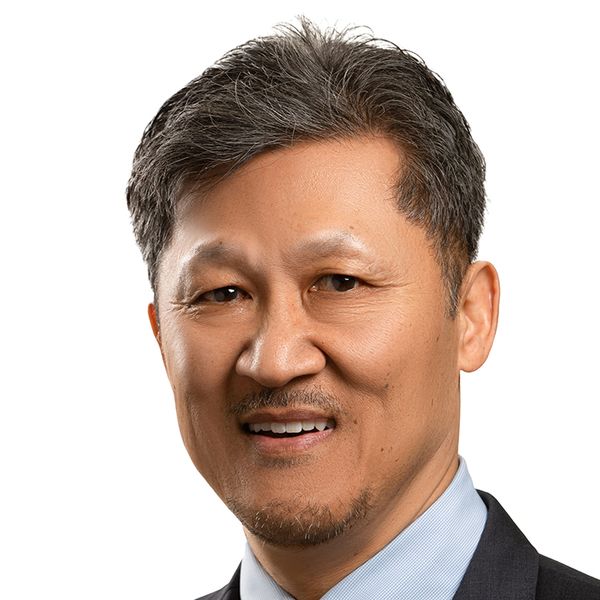
Fred Tung

Frederick Tung

Professor of Law

Professor of Law
Howard Zhang Faculty Research Scholar

AB, cum laude, Cornell University
JD, cum laude, Harvard Law School


Biography

Fred Tung is the Howard Zhang Faculty Research Scholar and Professor of Law at Boston University School of Law. Over the course of his career, he has researched and taught courses in the areas of international business transactions, international economic relations, corporations, and bankruptcy, as well as the governance of financial institutions. Prior to joining the BU faculty, he was the Robert T. Thompson Professor of Law and Business at Emory University School of Law. He has been a visiting professor at Harvard Law School, a Professor of Law and Dean’s Fellow at Loyola Law School, a Roger T. Traynor Professor in Corporate Law at Hastings College of the Law, and a fellow at the Searle-Kauffman Institute on Law, Innovation, and Growth. Professor Tung is a member of the American Law Institute. He testified in Congress before the Congressional Oversight Panel for the Troubled Asset Relief Program (TARP). He has also served as a consultant on law reform for the Ministry of Justice in Ethiopia, when it sought to revamp its commercial law and court systems. In addition, he worked with the Center for Commercial Law and Economics in Indonesia, with USAID sponsorship, to design a seminar series on corporate reorganization law for Indonesian government officials, academics, and lawyers. Professor Tung has been a permanent blogger with the popular corporate law blog Conglomerate. He has been a lecturer in the law department at Peking University, and has served on the Consumer Law Task Force of the Atlanta Legal Aid Society. Proficient in Mandarin, he was an interpreter for ABC News covering the Democracy Movement in Beijing.

Before entering law teaching, Professor Tung clerked for the Honorable Stanley A. Weigel in the US District Court for the Northern District of California, and practiced corporate and bankruptcy law with Gibson, Dunn & Crutcher in Los Angeles and San Francisco. He also worked as a software engineer in Silicon Valley before going to law school.

Professor Tung is a member of the Board of Directors for Breakthrough Greater Boston (BTGB), a nonprofit organization whose mission is to prepare low-income middle- and high school students for success in college.

Publications

Scroll left to right to view all publications

  • Frederick Tung, Do Lenders Still Monitor? Leveraged Lending and the Search for Covenants 47 Journal of Corporation Law (2021)
    Scholarly Commons
  • Frederick Tung, Financing Failure: Bankruptcy Lending, Credit Market Conditions, and the Financial Crisis 37 Yale Journal on Regulation (2020)
    Scholarly Commons
  • Frederick Tung & Mark J. Roe, Bankruptcy and Corporate Reorganization, Legal and Financial Materials, 4th ed. (2016)
    Scholarly Commons
  • Frederick Tung, Alane A. Becket, Sarah Bolling Mancini & Nick Wooten, Recent Developments in Bankruptcy Regulation: Mortgage Servicing Rules, the FDCPA, and the CFPB, 32 Emory Bankruptcy Developments Journal (2016)
    Scholarly Commons
  • Krishnamurthy V. Subramanian & Frederick Tung, Law and Project Finance 25 Journal of Financial Intermediation (2016)
    Scholarly Commons
  • M. Todd Henderson & Frederick Tung, Paying Bank Examiners for Performance 35 Regulation (2012)
    Scholarly Commons
  • Frederick Tung, The Puzzle of Independent Directors: New Learning 91 Boston University Law Review (2011)
    Scholarly Commons
  • Frederick Tung, Pay for Banker Performance: Structuring Executive Compensation for Risk Regulation 105 Northwestern University Law Review (2011)
    Scholarly Commons
  • M. Todd Henderson & Frederick Tung, Pay for Regulator Performance 85 Southern California Law Review (2011)
    Scholarly Commons
  • Frederick Tung, Bonding Bankers: Notes Toward a Governance Approach to Risk Regulation 4 Entrepreneurial Business Law Journal (2010)
    Scholarly Commons
  • Frederick Tung, Leverage in the Board Room: The Unsung Influence of Private Lenders in Corporate Governance 57 UCLA Law Review (2009)
    Scholarly Commons
  • Frederick Tung, The Great Bailout of 2008-09 25 Emory Bankruptcy Development Journal (2009)
    Scholarly Commons
  • Frederick Tung, The New Death of Contract: Creeping Corporate Fiduciary Duties for Creditors 57 Emory Law Journal (2008)
    Scholarly Commons
  • Joanna M. Shepherd, Frederick Tung & Albert H. Yoon, What Else Matters for Corporate Governance?: The Case of Bank Monitoring 88 Boston University Law Review (2008)
    Scholarly Commons
  • Joanna M. Shepherd, Frederick Tung & Albert H. Yoon, Cross-Monitoring and Corporate Governance (2007)
    Scholarly Commons
  • Frederick Tung, Gap Filling in the Zone of Insolvency 1 Journal of Business and Technology Law (2007)
    Scholarly Commons
  • Frederick Tung, Lost in Translation: From U.S. Corporate Charter Competition to Issuer Choice in International Securities Regulation 39 Georgia Law Review (2005)
    Scholarly Commons
  • Frederick Tung, After Orange County: Reforming California Municipal Bankruptcy Law 53 Hastings Law Journal (2002)
    Scholarly Commons
  • Frederick Tung, Passports, Private Choice, and Private Interests: Regulatory Competition and Cooperation in Corporate, Securities, and Bankruptcy Law 3 Chicago Journal of International Law (2002)
    Scholarly Commons
  • Frederick Tung, From Monopolists to Markets?: A Political Economy of Issuer Choice in International Securities Regulation 2002 Wisconsin Law Review (2002)
    Scholarly Commons
  • Frederick Tung, Fear of Commitment in International Bankruptcy 33 George Washington International Law Review (2001)
    Scholarly Commons
  • Frederick Tung, Is International Bankruptcy Possible? 23 Michigan Journal of International Law (2001)
    Scholarly Commons
  • Frederick Tung, The Future Claims Representative in Mass Tort Bankruptcy: A Preliminary Inquiry 3 Chapman Law Review (2000)
    Scholarly Commons
  • Frederick Tung, Limited Liability and Creditors' Rights: The Limits of Risk Shifting to Creditors 34 Georgia Law Review (2000)
    Scholarly Commons
  • Frederick Tung, Future Claims and Successor Liability in Bankruptcy 73 Annual Meeting of the National Conference of Bankruptcy Judges (1999)
    Scholarly Commons
  • Frederick Tung, Taking Future Claims Seriously: Future Claims and Successor Liability in Bankruptcy 49 Case Western Reserve Law Review (1999)
    Scholarly Commons
  • Frederick Tung, Confirmation and Claims Trading 90 Northwestern University Law Review (1996)
    Scholarly Commons

Activities & Engagements

No upcoming activities or engagements.

View All Activities & Engagements

Courses

LAW JD 605

Business Fundamentals

0 credits

In order to graduate, students must fulfill the Business Fundamentals Requirement. This is accomplished by taking Introduction to Business Fundamentals, an online, self-paced, asynchronous program. The curriculum consists of modules covering business basics, corporate finance and financial accounting, including the following subjects: capital markets; the basics of financial reporting; balance sheets; income statements and cash flow; business forms and organizations; financing organizations; discounting; and calculating risk, return and valuation. Assessment is based on multiple choice exams. Students may opt-out of the course if they score an 84 or better on the pre-course exam. A score of 70 or better on the post-course exam, following successful completion of the course, is necessary to meet the requirement. GRADING NOTICE: This course awards no credits and is graded P/F. Students may enroll in the program for the fall, spring or summer semesters, but should complete the course by the conclusion of the fall semester of the 3L year.


FALL 2026: LAW JD 605 OL, Aug 31st to Jan 4th 2026
Days Start End Credits Instructors Bldg Room
ARR 12:00 am 12:00 am 0 Madison Condon
SPRG 2027: LAW JD 605 OL, Jan 11th to May 17th 2027
Days Start End Credits Instructors Bldg Room
ARR 12:00 am 12:00 am 0 Madison Condon
LAW JD 816

Corporations

4 credits

Course about the legal structure and characteristics of business corporations. Topics include the promotion and formation of corporations; the distribution of power between management and shareholders; the limitations on management powers imposed by state law fiduciary duties and federal securities laws; shareholder derivative suits; capital structure and financing of corporations; and fundamental changes in corporate structure, such as mergers and sales of assets. Hirst's Section: This section covers similar topics, but has a different emphasis and approach, involving fewer cases, and more exercises and analysis of real-world transactions and documents, including from Tesla, Twitter, and Boeing. The course involves self-directed learning through the submission of multiple choice quizzes, and some use of corporate-finance-style numerical analyses. Laptops and similar devices are generally not permitted without an accommodation. The course serves as a prerequisite to advanced courses. PREREQUISITE: Business Fundamentals.


FALL 2026: LAW JD 816 A1, Aug 31st to Dec 3rd 2026
Days Start End Credits Instructors Bldg Room
Mon,Wed 2:10 pm 4:10 pm 4 Ayodeji Kamau Perrin
FALL 2026: LAW JD 816 M1, Aug 31st to Dec 3rd 2026
Days Start End Credits Instructors Bldg Room
Mon,Wed 4:20 pm 6:20 pm 4 Pierluigi Matera
FALL 2026: LAW JD 816 M2, Aug 31st to Dec 3rd 2026
Days Start End Credits Instructors Bldg Room
Tue,Thu 2:10 pm 4:10 pm 4 Pierluigi Matera
SPRG 2027: LAW JD 816 A1, Jan 11th to Apr 21st 2027
Days Start End Credits Instructors Bldg Room
Tue,Thu 10:40 am 12:40 pm 4 Madison Condon
SPRG 2027: LAW JD 816 P1, Jan 11th to Apr 21st 2027
Days Start End Credits Instructors Bldg Room
Mon,Wed 10:40 am 12:40 pm 4 Ayodeji Kamau Perrin
LAW JD 997

Jessup Moot Court: Problem Solving in International Law

2 credits

This course is restricted to students who applied and were accepted as participants for the Jessup Moot Court competition. A full description can be found here: https://www.bu.edu/law/current-students/jd-student-resources/legal-writing-appellate-advocacy-programs/appellate-advocacy-program-competitions/jessup-moot-court-competition/ PREREQUISITE/CO-REQUISITE: International Law (JD927). NOTE: This class counts toward the 6 credit Experiential Learning requirement.


FALL 2026: LAW JD 997 A1, Aug 31st to Dec 3rd 2026
Days Start End Credits Instructors Bldg Room
SPRG 2027: LAW JD 997 A1, Jan 11th to Apr 21st 2027
Days Start End Credits Instructors Bldg Room
ARR 12:00 am 12:00 am 2 Stefanie B. Weigmann
LAW JD 754

Review Banking and Financial Law -2L Journal Member

Var credits

Review Banking and Financial Law -2L Journal Member


FALL 2026: LAW JD 754 B1, Aug 31st to Dec 3rd 2026
Days Start End Credits Instructors Bldg Room
ARR 12:00 am 12:00 am Var
SPRG 2027: LAW JD 754 A1, Jan 11th to Apr 21st 2027
Days Start End Credits Instructors Bldg Room
ARR 12:00 am 12:00 am Var
SPRG 2027: LAW JD 754 B1, Jan 11th to Apr 21st 2027
Days Start End Credits Instructors Bldg Room
ARR 12:00 am 12:00 am Var
LAW JD 755

Review Banking and Financial Law -3L Journal Editor

Var credits

Review Banking and Financial Law -3L Journal Editor


SPRG 2027: LAW JD 755 A1, Jan 11th to Apr 21st 2027
Days Start End Credits Instructors Bldg Room
ARR 12:00 am 12:00 am Var
SPRG 2027: LAW JD 755 B1, Jan 11th to Apr 21st 2027
Days Start End Credits Instructors Bldg Room
ARR 12:00 am 12:00 am Var
LAW JD 789

Transaction Simulation: Forming and Financing a Start-Up Business

3 credits

Practice Areas: General Corporate and Corporate Finance This course is one of the semester-long transaction simulations offered as part of the Transactional Law Program. The simulated transaction is the formation and subsequent first-round venture financing of a new software business started by two entrepreneurs who are recent graduates of the California Institute of Technology. During this course, students will be exposed to, and will handle, the principal issues that arise in counseling entrepreneurs as to their emerging businesses, including key elements such as founders' arrangements, entity selection, governance, equity compensation, intellectual property protection, capital raising through SAFEs (which are simple agreements for future equity), convertible notes and preferred stock financing, capitalization/valuation/dilution and investment documentation based on industry-standard contracts. Through exercises both in and outside of class, as well as class discussions, students will simulate the work of practicing attorneys who counsel start-ups and their founders on a day-to-day basis. As part of these simulations, students will review sample agreements, draft and revise agreements and conduct negotiations. In addition, from time to time during the course, the instructors will address ethical issues and other practice points that can arise in connection with the simulated transaction or in transactional practice generally when working with emerging/start-up companies. The course grade will be based on attendance and class participation and three graded writing assignments. CLASS SIZE: 12 students. PREREQUISITE OR CO-REQUISITE: Corporations. Contract Drafting is recommended but not required. NOTES: This course counts toward the 6-credit Experiential Learning requirement and also satisfies the Transaction Simulation requirement of the Transactional Practice Concentration. GRADING NOTICE: This course does not offer the CR/NC/H option. ATTENDANCE REQUIREMENT: A student who fails to attend the first class or to obtain permission to be absent from either the instructor or the Registrar will be administratively dropped from the course. Students who are on the wait list are required to attend the first class to be considered for enrollment. Because the course involves regular in-class exercises, some of which are done in teams, and class participation is a significant component of a student's final grade, regular class attendance is essential and thus the course cannot accommodate flexibility in attendance.


SPRG 2027: LAW JD 789 A1, Jan 11th to Apr 21st 2027
Days Start End Credits Instructors Bldg Room
Wed 6:30 pm 8:30 pm 3 Dinesh MelwaniPerkins