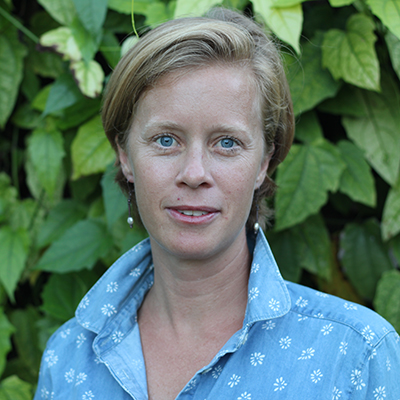
BU Law Celebrates 2026 Retiring Faculty
Two long-time tax law professors, Ted Sims and Alan Feld, are leaving after decades in the classroom.

BU Law Celebrates 2026 Retiring Faculty
Two long-time tax law professors, Ted Sims and Alan Feld, are leaving after decades in the classroom.
Boston University School of Law Professors Theodore S. Sims and Alan L. Feld, long-time faculty members and experts in tax law and policy with nearly a century’s worth of classroom experience between them, are retiring at the end of this academic year.
Feld and Sims joined BU Law in 1971 and 1996, respectively. In their scholarly and practical work, they have dealt with topics ranging from the taxation of capital income and the effects of tax policy on inequality to tax law’s influence in the art and nonprofit worlds. Most recently, they collaborated on a 2023 paper that examined the use of conservation easements as tax shelters.
Perhaps more importantly, Sims and Feld have taught and mentored generations of students and fellow faculty members.
Professor David I. Walker, who retired from the faculty last year after working with Sims and Feld for more than two decades, says his former colleagues were “such great mentors, both for teaching and for scholarship.” Early in his teaching career, when Sims and Feld were already well established on the faculty and in the field, the pair would meet with Walker over lunch to talk about tax issues and questions.
“They read numerous drafts of my articles and just provided terrific feedback,” Walker says. “They were kind of a safe space; I didn’t have to worry I was going to embarrass myself in front of them.”
‘Enamored’ with Tax Law

After graduating from Harvard Law School, Feld was assigned to the tax law practice at Paul, Weiss. The field hadn’t been his first choice—he had hoped to land in the litigation or general business departments—but he soon was “enamored.”
“Tax is rigorous, complex, sometimes not totally rational, and also ubiquitous,” he says. “You can’t settle a tort case or have a divorce or do a lot of other business transactions without taking into account fully the tax effects on the various parties.”
After practicing at Paul, Weiss and another firm, Feld joined BU Law.
“I had always had in the back of my head that I wanted to do some writing and teaching,” he recalls. “Also, one of the constraints of practice is that you have a client who wants something. You’re constrained to look at the world in that light. I wanted to have my own independent judgment about hard questions and problems.”
Over the years, Feld explored topics such as the former deductions available for childcare and household services and church tax exemptions. He is also an expert on art law and corporate taxation. With the late William D. Andrews, Feld co-authored a major corporate tax casebook, Federal Income Taxation of Corporate Transactions. He also co-wrote Patrons Despite Themselves: Taxpayers and Arts Policy, which examined indirect subsidies in the arts.
In the classroom, Feld was “amazing,” says Jacob Nielsen (JD’21, LLM’21), a student who coauthored the conservation easements piece with Feld and Sims. Nielsen took an introductory class with Feld and a later class on corporate income taxation. He says Feld was like a “sensei trying to invite you into the art of tax law.”
“He has this deadpan sense of humor that is just delightful,” adds Nielsen, now an associate in the tax practice at Ropes & Gray. “More than concepts and ways of thinking, he introduced us into the history and tradition of practicing tax law.”
Feld, who won BU Law’s Michael Melton Award for Teaching Excellence in 2002, says students were a highlight of his career.

“The questions students ask… can get you to think of things in new ways,” he says.
Feld also appreciated his colleagues. He participated in a “really low stakes” poker game for many years with fellow faculty members, including Professors Jack M. Beerman and Larry Yackle.
Asked in an interview shortly after he taught his last class as a full-time faculty member whether he was net up or down at the table, Feld demurred. “I was net happy,” he says with a smile.
‘Loveable, Eccentric Genius’
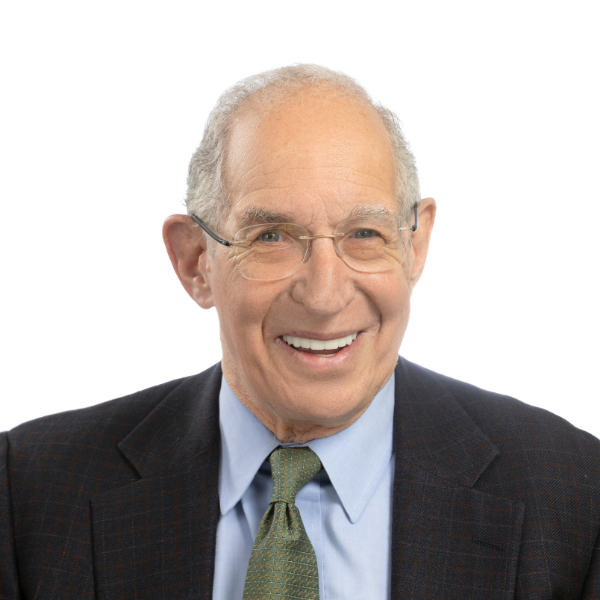
Sims graduated from the University of Chicago Law School in 1970 after studying music and eventually majoring in history at Columbia. Following law school, he clerked for Judge John Godbold of the Fifth Circuit and then went to work at Wilmer Cutler & Pickering (the D.C. predecessor of Wilmer Hale).
Sims had an interest in tax but began his career in litigation. In 1977, while handling discovery in an antitrust lawsuit, he got a job offer from Daniel Halperin, who had recently joined the Carter Administration as the Treasury Department’s Tax Legislative Counsel. Sims spent four years there working on, among other things, the taxation of aspects of capital income, the income taxation of life insurance companies and their products, and the treatment of charitable contributions and tax-exempt organizations.
Sims left in 1981 to teach at George Washington University. After being awarded tenure in 1986, he used a sabbatical to pursue a PhD in economics at the Massachusetts Institute of Technology, which he completed in 1995. (As he noted in the preface to his dissertation, buying a Porsche would have made for a far less expensive, and less painful, mid-life crisis.)
Ted’s first encounter with BU Law occurred in the spring of 1990, when he was invited to fill in for Feld, who was visiting that year at Harvard. In 1996, Sims moved permanently to BU, where his wife was then an assistant professor in the economics department.
Over the course of 30 years, Sims has taught, in addition to federal income taxation, the taxation of financial instruments and federal tax policy, courses in trusts and estates, in analytic methods for lawyers, and, more recently, in corporate finance.
Sims’ research has focused principally on the taxation of capital income, including in particular the taxation of financial instruments, the nature and functioning of leveraged tax shelters, the relationship more generally between methods of cost recovery and the accrual of capital income, the importance of timing in the taxation of capital income, and the significance of income taxation and risk. He has also written on timing in wealth transfer taxation, the taxation of life insurance companies, and the impact of taxation on inequality.
Sims has always enjoyed teaching tax, especially large classes.
“Tax is initially alien to many if not most law students, who regard having decided to attend law school rather than, say, business school, as permanently exempting them from having to do arithmetic ever again in their lives,” he says. “But taxes, which are toted up in dollars, require arithmetic. A large class is more likely to contain a sufficient number of students who are unafraid of numbers to get the ball rolling in class.”
Nielsen, who worked as Sims’ research assistant as well as his co-author, described Sims as a “loveable, eccentric genius” who “really wants to help [his students] excel.” When he was excited about an idea or issue, Nielsen says, Sims would send emails at two or three in the morning or talk on the phone late into the night.
“Sims really believes in getting tax right by thinking down to the first principles of taxation and reasoning from there to a more efficient and just system,” Nielsen says. “He had this idea that if you could understand the theoretical concept of tax basis, then you could basically feel what the rule should be even if you didn’t know what the rule was.”

Reflecting on his former professors, Nielsen says “there will never be another Ted Sims or Alan Feld.”
“Those guys are two of a kind,” he says. “They love tax law, they were masters at what they were doing, and they had that kind of almost-grandfather-like care for their students.”
BU Law Professor Steven Dean, who joined the full-time faculty in 2023, agrees.
“The amount of collective wisdom and knowledge that will be lost when these two retire is painful to contemplate,” Dean says. “We won’t ever be able to replace them.”
Oh, about that “really low stakes poker game” with the likes of Beerman and Yackle that Feld mentioned: on first joining BU, Sims was duly invited to join; knowing that he was okay at bridge but really bad at poker, Sims politely declined. A bit later, when someone new joined the faculty, Sims was the (undoubtedly inadvertent) recipient of an email from Yackle to Beerman and Feld, mentioning that it created an opportunity for a “fresh victim to be invited into our wealth redistribution endeavors.” Sims hit “Reply all”, and sent a two-word message: “Suspicions confirmed.”