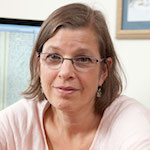
Professor of Religion and History
Deeana Copeland Klepper, Professor in the Departments of History and Religion, holds a PhD in Medieval European History from Northwestern University. Professor Klepper teaches courses on Christianity, Judaism, and medieval and early modern European religious history. Her research focuses on medieval religious identities, cultures, and interreligious encounters. Her first book The Insight of Unbelievers: Nicholas of Lyra and Christian Reading of Jewish Texts in the Later Middle Ages (University of Pennsylvania Press) explores the complicated and contradictory attitudes toward Jewish tradition held by Christian scholars and shows how the Franciscan Bible commentator Nicholas of Lyra came to serve as an important mediator of Hebrew and Jewish tradition for Christian Europeans. Her second book, Pastoral Care and Community in Late Medieval Germany: Albert of Diessen’s “Mirror of Priests” (Cornell University Press) brings to light a Latin manual for German parish priests written (and revised) between 1370-77 and uses it to provide fresh perspectives on medieval religious culture. Through the lens of Albert of Diessen’s life and work, Klepper shows how “universal” religious ideals and laws were adapted, reinterpreted, and repurposed by those given responsibility to implement them, thereby crafting distinctive, local expressions of Christianity. She is currently at work on two projects that follow from the research of her second book. One explores the range of advice concerning interactions with Jews and Muslims offered in locally oriented manuals for parish priests, comparing works from Germany, England, Spain, and Italy. The other explores the category of demonic obsession as an explanation for mental illness in medieval Europe, focusing especially on pastoral and medical literature, attending carefully to terminology and its impact on individuals and communities. In 2024, she was elected to the Society of Fellows of the Medieval Academy of America, an honor that recognizes major long-term scholarly achievement within the interdisciplinary field of Medieval Studies.
Over the past year, thanks to the generosity of Al Tapper, Deeana Klepper developed two new history courses for Jewish Studies: a Topics in Jewish History courses on Jews in the Americas, expanding beyond the United States both north and south and covering 1492 to the present. She taught the other course on Sephardic History for the Madrid Study Abroad Summer Program, which included trips to Toledo, Burgos, and Córdoba, where students learned to reconstruct lost Jewish spaces through narrative maps.
With the help of Abigail Gillman and the EWCJS staff, Prof. Klepper organized a screening of the award-winning 2024 documentary Sabbath Queen and a Q&A with director Sandi DuBowski. Sabbath Queen follows the journey of Rabbi Amichai Lau-Lavie, the dynastic heir of 38 generations of Orthodox rabbis. As a young man, Lau-Lavie was publicly outed as gay, which set off a long quest to come to terms with himself, his family and his community. An exploration of LGBTQ multi-generational family relationships is a running thread throughout the film, and the love Amichai’s family has for him—and their gradual move toward acceptance and pride in him even when they don’t understand him—was deeply moving.
In March 2026, Prof. Klepper’s book chapter “Shared Scripture? Nicholas of Lyra’s ‘On the Difference between the Hebrew Letter and Our Translation’” was published in Shared Scripture – Divided Faiths: The Medieval Jewish-Christian Encounter over the Hebrew Bible / Old Testament, edited by Frans van Liere and published by Brill. Prof. Klepper spent much of the year working on an article, “Regulating Christian Coexistence with Jews and Muslims in Late Medieval Advice Literature for Priests,” which explores four works of advice literature for priests to consider the treatment of Jews and Muslims in different geographical, temporal, and political contexts.