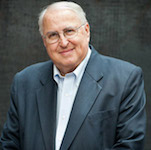
Professor of Religion; Alvin J. Slater and Shirley Slater Chair in Jewish Holocaust Studies
Steven T. Katz, Founding Director of the EWCJS, is an expert in modern Jewish thought and comparative mysticism. The first of a three-volume study on the Holocaust in Historical Context appeared in 1994. Katz is the editor of the journal Modern Judaism. He has held fellowships and lectured at universities all over the world, including Australia, China, England, Israel, and South Africa. In December 2010 he was appointed Academic Adviser to the International Task Force on the Holocaust, sponsored by the European Union. In 2011-2012, he was the Levine Invitational Fellow at the US Holocaust Museum in Washington D.C.
Courses in Jewish Studies
- Introduction to Judaism (RN 216)
- The Holocaust (RN 384/684)
- Introduction to Classical Jewish History (RN 218)
- Judaism in the Modern Period (RN 328/628)
- Jewish Mysticism (RN 325/625)
In 2025-26, Professor Katz has continued teaching his popular Holocaust and Jewish history courses, and his extensive pro bono work with national and international organizations also continues unabated. He remains a member of the U.S. State Department delegation to the International Holocaust Remembrance Alliance, serves on the academic committee of the U.S. Holocaust Memorial Museum, and chairs the Kagan International Holocaust Fellowship program sponsored by the Claims Conference. He also acts as an advisor to the March of the Living, and in June 2026, on behalf of MOL, he lectured to congressional interns in Washington DC, with the aim of giving them a new level of appreciation and understanding regarding both racism and antisemitism. The interns then jointly visited the Holocaust Museum and the Museum of African-American history.
On the publishing side, Prof. Katz continues with his own research, comparing and contrasting the Holocaust with other historical events. He edits Modern Judaism (published by Oxford UP), and this past year he finally completed a multi-year project for Cambridge University Press. This 3-volume undertaking, The Cambridge History of Antisemitism, of which he is the sole editor, involved coordination with 128 authors. Editing is a complicated business and can be affected by current events. Approximately one-sixth of the original contributors were forced to withdraw during the course of the project owing to death, illness, or situations surrounding the Gaza war. This provided the challenge of finding replacements. The final manuscript was sent to Cambridge this past summer and we look forward to seeing the volumes in libraries and bookstores early next year.