News

A Future Flying Free of Fossil Fuels
A team of just-graduated BU engineers won a NASA competition with a proposal to make airplanes run on aluminum powder combustion. More

The Right Formula
“I wasn’t allowed to drive a car; now I build them for a living." More
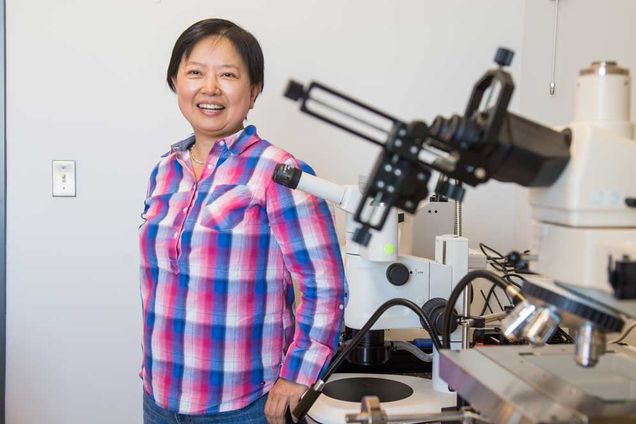
Xin Zhang Wins STAT Madness 2023 All-Star Award
Professor Xin Zhang has won the 2023 All-Star Award at STAT Madness, a bracket-style contest for innovative projects in science and medicine. More
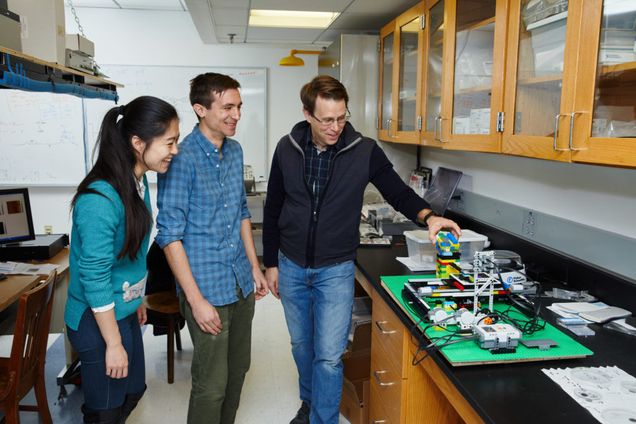
Sean Andersson Appointed Mechanical Engineering Chair
Andersson has been appointed chair of the Mechanical Engineering department, after serving as interim chair “with poise and impact." More

Park’s Project Aimed at Nimbler, Fuel-Frugal Fighter Jets
Harold Park and team won a MURI grant from the DoD to revolutionize the passive control of aerodynamic flows, aiming to make airplanes more fuel-efficient and maneuverable. More
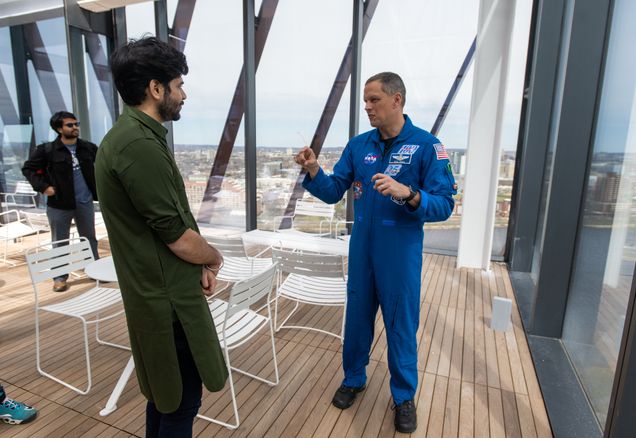
A Journey to Space, and a View of a Fragile Planet
NASA astronaut Robert Hines (ENG’97) returned to Boston University to recount his six-month space voyage aboard the International Space Station last year, and the long journey before blast-off. More

Tomorrow’s Problem Solvers
The College has begun offering convergent-themed fellowships to PhD students who are aligned with the college’s cross-disciplinary research strengths. More

Delivery Drones and Rotor-Powered Rideshares Sound Great—and Noisy
Combining expertise in mechanical engineering, fluid mechanics, and urban hydrology, BU researchers with NASA funding will lead a multimillion-dollar, multi-institution project to help develop quieter vertical lift air vehicles More

New Bubble Popping Theory Could Help Track Ocean Pollution and Viruses
Bubbles are fun for everyone. But, it turns out, they can also be little menaces. When a bubble pops, it can concentrate and aerosolize any particles stuck on it. Not a big deal when it’s a store-bought soapy bubble bursting in the yard or on your hand. But it’s a major concern when the particles it carries are potentially hazardous: bubbles caught in a crashing wave can send vaporized microplastics into the air where they might mess with the Earth’s atmosphere; bubbles burst by a flushing toilet can fling bacteria meters and onto nearby surfaces; a frothing cruise ship hot tub was once shown to be a Legionnaires’ disease super-spreader. More
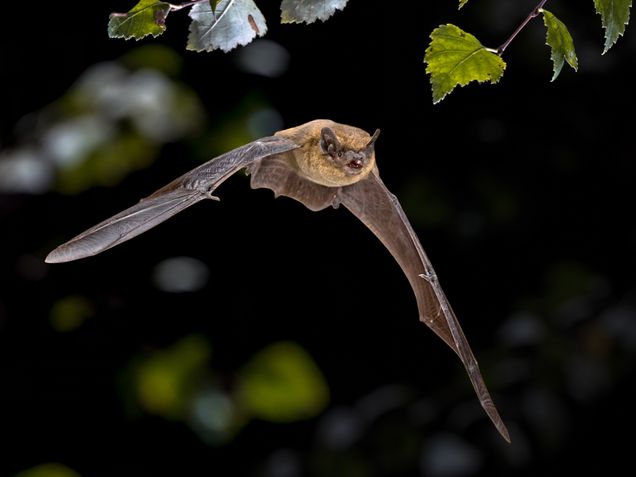
Learning From Animal Behaviors to Inform Control Systems
Research by Distinguished Professor of Engineering John Bailleul questions how animals operate and how you might use animal behaviors to design control systems. More