
Program at a glance
- No GRE required
- Length: three semesters
- Scholarships: Merit scholarships available, with no additional application needed
- Current BU students + alumni: learn about the Double Terrier scholarship
- Internship and fellowship opportunities available through WBUR, the Pulitzer Center, the Statehouse Program, and more
What does it take to become a journalist?
You want to know what happened. Why it happened. Who was there. What makes it matter. And what everyone else might have missed.
At BU, you’ll learn how to turn that curiosity into accurate, compelling journalism. You’ll develop the judgment to recognize a story, the persistence to pursue it, and the skills to tell it in whatever format serves it best.
Whether you’re coming straight from college or changing careers, you don’t need to arrive with a journalism degree. Our students bring different academic backgrounds and experiences to the newsroom, and those perspectives help shape the stories you tell.
Start reporting. Keep getting better.
You can learn a lot about journalism by getting a job and starting to report. But your first job may not give you the chance to explore different beats, experiment with formats, or develop your skills under the guidance of experienced editors.
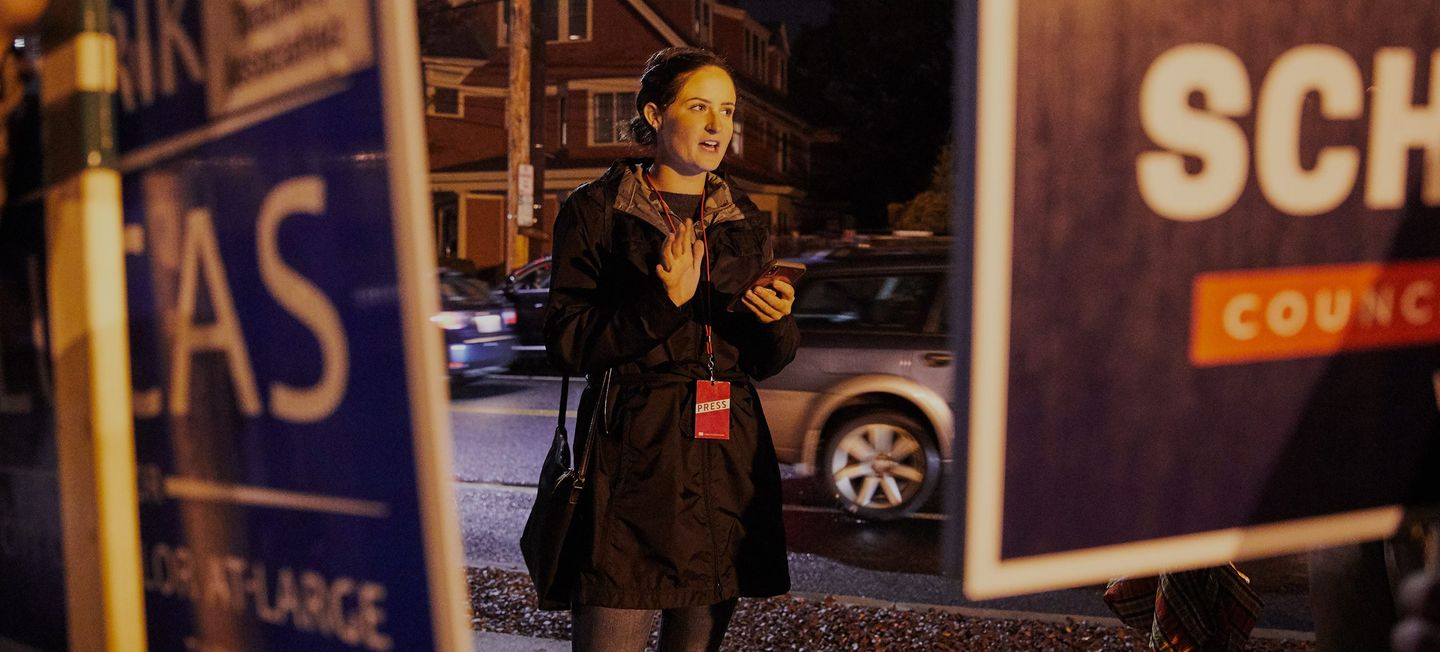
At BU, you’ll spend three semesters doing exactly that. You’ll pitch stories, interview sources, verify information, meet deadlines, and learn how to make each story stronger through editing and feedback. You’ll have opportunities to try investigative reporting, documentary storytelling, data journalism, broadcast news, sports reporting, and more.
As your skills grow, you’ll take on more ambitious assignments and develop a body of work that reflects your abilities and interests.
Report for professional newsrooms while you’re still in school.
Through COM’s Newsroom Initiative, students work with an in-house editor and contribute to professional news organizations across New England, earning academic credit for their work.
You’ll develop story ideas, navigate the editorial process, and have opportunities to see your work published by established news outlets. Experience the expectations of a newsroom, with experienced journalists helping you improve along the way.
You’ll also have access to industry-standard production facilities, including TV Studio West, where you can develop broadcast and production skills on equipment you’ll use on the job.
Take your reporting beyond campus
Some stories will take you across Boston. Others could take you to the Massachusetts Statehouse, Washington, D.C., or overseas.
BU gives you opportunities to explore new places, cover unfamiliar subjects, and learn from the communities and people at the center of the news.
- Massachusetts Statehouse Program: Cover politics, public policy, and breaking news from Beacon Hill.
- Washington, D.C. Program: Spend a semester reporting from the nation’s capital.
- Conflict + Crisis Reporting: Travel to Padua, Italy, for an immersive summer experience focused on reporting global crises.
- Pulitzer Center partnership: Pursue sponsored investigative reporting opportunities through COM’s partnership with the Pulitzer Center and its Program on Global Health Storytelling.
- Power of Narrative conference: Learn from leading narrative journalists and long-form storytellers from around the world.
Boston is full of stories. Go find them.
Boston is one of the country’s top media markets, but that’s only part of what makes it an exciting place to study journalism.
There’s politics on Beacon Hill, groundbreaking research in biotech, hospitals, and universities, major league sports, arts and culture, and communities whose stories deserve more attention. It’s a city where local issues often connect to national and international conversations.
It’s also home to The Boston Globe, WBUR, GBH News, and major commercial television newsrooms, with organizations such as Axios and Politico covering the region.
You’ll have plenty of chances to find stories, build relationships with sources, pursue internships, and connect with journalists working in the field.
Your reporting opportunities aren’t hypothetical. They’re walkable.
Publish your work before you graduate.
Your work doesn’t have to wait until graduation to find an audience. Through COM-sponsored and student-run media organizations, you can pitch ideas, collaborate with other journalists, meet publication deadlines, and share your stories with audiences across Boston and beyond.
- BU News Service (BUNS): Report and publish digital news stories across multiple platforms.
- BUTV10: Create television news and other programming through BU’s award-winning student television station.
- WTBU: Develop audio storytelling and live radio experience.
- The Daily Free Press: Contribute to BU’s independent student newspaper, which has been publishing since 1970.
BU offered an incredible hands-on lab setting, all in the heart of one of the most beautiful cities in the country. I loved that it would afford me more time for internships, training, and networking to really curate a graduate school experience for myself. I looked at my time in Boston as a time period where I was totally redefining my trajectory, and BU was the perfect setting for that story to unfold.
Ashley Davis, Alumna and Senior Producer at CNN
What you’ll learn in the MS in Journalism
The three-semester MS in Journalism combines foundational coursework, specialized electives, and an original professional project.
- Semester 1 (fall): Build your reporting foundation. Study news judgment, writing, interviewing, research, media law, ethics, and multimedia storytelling. You’ll practice gathering and verifying information, meeting deadlines, and producing clear, accurate journalism.
- Semester 2 (spring): Find your focus. Explore advanced coursework in investigative reporting, data journalism, sports broadcasting, documentary, photojournalism, and other specialties. You can also gain experience beyond campus through COM’s Newsroom Initiative and its partnership with Boston Neighborhood Network Media.
- Semester 3 (fall): Produce your Master’s Professional Project. Pursue an original, deeply reported story under faculty mentorship, bringing together the skills and interests you’ve developed throughout the program.
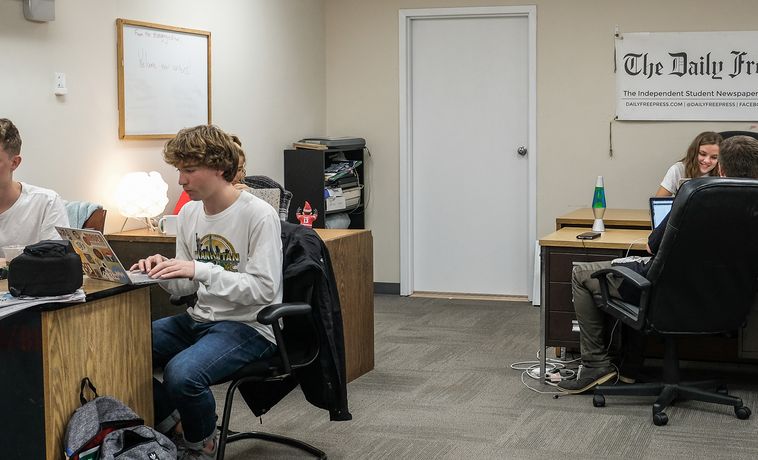
The Daily Free Press
The Daily Free Press is the independent student-run newspaper at Boston University. Founded in 1970, the paper is published by Back…
Learn from journalists who are still doing the work.
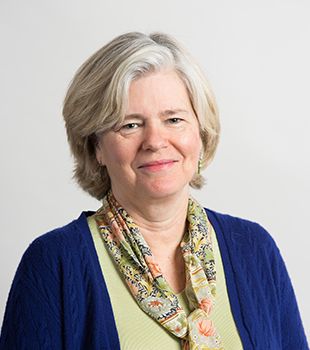
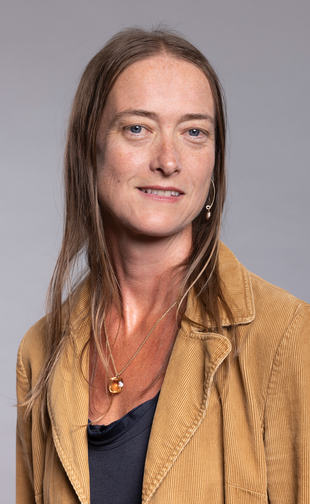
Your professors are reporters, editors, photographers, documentary filmmakers, and authors who know what it takes to find a story, earn a source’s trust, and meet a deadline.
They’ll challenge your assumptions, ask tougher questions, and help you recognize what’s missing from your work. That kind of editorial guidance is hard to replicate on your own, and it’s an important part of how you’ll grow as a journalist.
COM faculty and alumni have earned 21 Pulitzer Prizes, a reflection of the journalism tradition you’ll become part of.
Meet our Pulitzer Prize winners.
In the study of journalism, we ask people to tell us their stories. Sometimes the best way to learn how to do that is to practice telling your own. Two BU COM professors helped me to do that—and I now bring those concepts into my own classroom and encourage my students to focus on the bits of wisdom and pieces of humanity that bind us together.
Noelle Graves, Alumna, award-winning journalist, and senior lecturer, Department of Journalism


Where will your journalism career take you?
BU journalism graduates work in newsrooms, public media, sports journalism, documentary production, investigative reporting, and digital media organizations across the country and around the world.
Where our graduates work
- Investigative + national news: The New York Times, Los Angeles Times, San Francisco Chronicle, The Guardian, ProPublica, CNN, ABC News, Bloomberg, NBCUniversal, US Department of State
- Public media: NPR, PBS, WBUR, GBH News
- Sports media: ESPN, FOX Sports, USA Today Sports, The Boston Globe, the New England Patriots, Boston Red Sox, Texas Rangers
- Documentary + long-form: CNN, PBS, WBUR’s Kind World, Condé Nast International
Roles our alumni hold
- Reporting + editing: correspondent, editor, reporter, investigative journalist, broadcast journalist
- Visual + documentary: photojournalist, documentary filmmaker, producer, video editor
- Digital + data: data journalist, multimedia journalist, audience/digital producer
Graduate with work you can show.
By graduation, you’ll have spent three semesters asking questions, chasing leads, meeting deadlines, and learning from the stories that challenged you most. You’ll have an original Master’s Professional Project, a stronger sense of your interests and abilities, and work you can share with editors and prospective employers.
And you’ll have a clearer idea of the journalist you want to become.
Frequently asked questions about the MS in Journalism at BU
Why get a master’s in journalism instead of going straight to work?
You don’t need a master’s degree to become a journalist. If you already have a reporting job with strong mentorship and opportunities to grow, starting your career right away may make sense.
Graduate school gives you the chance to concentrate a great deal of professional development into three semesters. At BU, you can explore different beats and formats, take on increasingly ambitious assignments, and receive consistent editorial guidance from experienced journalists.
You’ll also have the freedom to experiment, discover new interests, and develop your skills in ways that may be difficult in a single entry-level position.
Do I need a journalism background to apply?
No. Students come to BU from a wide range of academic and professional backgrounds.
We look for strong writing, curiosity, and a clear interest in reporting and storytelling. Previous professional journalism experience isn’t required.
How much professional reporting will I do during the program?
You’ll begin reporting in your first semester and continue building your experience throughout the program. In addition to producing stories for your courses, you can contribute to student media, report for professional news organizations through COM’s Newsroom Initiative, and pursue internships or specialized reporting opportunities.
You’ll also complete an original Master’s Professional Project under faculty mentorship.
Will I graduate with published work?
You’ll have multiple opportunities to publish your journalism through student media and professional news organizations connected to COM’s Newsroom Initiative.
Publication depends on the project and outlet, but the program is designed to help you develop a portfolio of work for real audiences.
How does BU prepare students for a changing journalism industry?
The tools, platforms, and business models of journalism are constantly evolving. BU prepares you to adapt by emphasizing skills that remain essential: finding compelling stories, asking good questions, verifying information, exercising sound editorial judgment, and communicating clearly.
You’ll also gain experience with different media formats and have opportunities to explore areas such as data journalism and multimedia storytelling.
What is the Master’s Professional Project?
The Master’s Professional Project is an original, deeply reported piece of journalism completed during your final semester under faculty direction.
It’s an opportunity to pursue a story in depth, apply the skills you’ve developed throughout the program, and create a substantial piece of work for your professional portfolio.
Can I specialize in a specific type of journalism?
Yes. You’ll have flexibility to explore areas such as investigative journalism, sports journalism, broadcast journalism, photojournalism, documentary journalism, data journalism, and more.
Your academic advisor can help you select courses that align with your interests and professional goals.
Can I report outside Boston?
Yes. BU offers opportunities to report from the Massachusetts Statehouse, spend a semester in Washington, D.C., and participate in summer Conflict + Crisis Reporting study in Padua, Italy.
Additional reporting experiences may be available through internships, fellowships, and partnerships.
What fellowships are available?
COM works with organizations including the Pulitzer Center and WBUR to connect students with fellowship and reporting opportunities, including sponsored investigative projects.
Availability, eligibility, and selection processes vary by opportunity.
Are merit scholarships available?
Yes. COM offers merit scholarships to eligible graduate students, and no separate scholarship application is required.
You can also explore additional financial aid options and estimated costs before making your enrollment decision.
Explore graduate tuition, scholarships, and financial aid.
See all MS in Journalism’s Frequently Asked Questions.
Also worth exploring
Interested in other areas of communication and media? Learn more about our other graduate programs, including:
- MS in Television: For students interested in creative producing, developing television projects, and the business of entertainment.
- MS in Public Relations: For students interested in media relations, strategic communication, reputation management, and digital strategy.
- Graduate Certificate in Civic Science Communication (online): A four-course online certificate for students who want to communicate science and complex issues to public audiences.


