
The Emerging Media Studies PhD program is not accepting applications for the fall 2026 admissions cycle. Please check back for future cycles.
Program Notes
- Degree: Doctor of Philosophy (Ph.D.) in Emerging Media Studies
- Credits: 68
- Format: On campus, full time
- GRE: Required
- Prerequisites: Master’s degree required
- Funding: Full tuition + stipend + health insurance, up to 5 years
- Teaching: Teaching fellow appointments required (minimum 2)
- Applications: Not accepting applications for fall 2026; check back for updates
The Doctor of Philosophy (Ph.D.) in Emerging Media Studies at Boston University is a research-intensive doctoral program designed for students who want to conduct original research on how technology influences human behavior, communication, and society. As one of the premier doctoral programs of its kind, our curriculum prepares scholars to conduct original research at the intersection of communication technology, data science, and behavioral psychology.
Whether you aspire to a tenure-track faculty position, a postdoctoral fellowship, or a research leadership role in industry, you’ll graduate prepared to produce original scholarship that advances both theory and practice.
Why pursue a Ph.D. in Emerging Media Studies at BU?
Fully funded doctoral fellowships
We believe advanced scholarship requires complete institutional support. Boston University guarantees up to five years of full funding for all admitted Ph.D. students in good academic standing. This comprehensive support package includes:
- Full tuition coverage and mandatory university fees.
- A generous annual living stipend.
- Comprehensive student health insurance.
- Dedicated travel grants to present original research at national and international conferences.
Lead real research
Unique to our doctoral program, Ph.D. candidates don’t just study research management—they execute it. You’ll serve as a project manager and research mentor within the Master’s Collaboratory in Emerging Media, leading cross-functional teams of master’s students on data analytics and empirical research projects for corporate, civic, and nonprofit sponsors.
This leadership track culminates in #ScreentimeBU, the program’s annual student-led research conference. As a Ph.D. candidate, you’ll help anchor this event—presenting your advanced empirical findings, chairing panels, and defending data visualizations to industry experts and communication scholars. This builds advanced project leadership capabilities highly valued by both academic search committees and global industry research labs.
Advanced research infrastructure
Our doctoral students conduct original behavioral, physiological, and computational research inside the Communication Research Center (CRC), COM’s flagship advanced research hub established in 1959. You’ll conduct research using advanced technologies and specialized facilities, including:
- The iMotions Biometric Suite: Integrating eye-tracking, facial expression analysis, and galvanic skin response to measure real-time cognitive and psychological responses to digital platforms.
- The Zimmerman Family Social Activation Center: A high-tech space built for real-time social media scraping, natural language processing, predictive trend tracking, and network visualization.
Program structure + requirements
The Ph.D. in Emerging Media Studies requires 68 credits of graduate coursework beyond the master’s degree. The curriculum prepares students to become independent researchers through advanced theory, computational methods, teaching, and original scholarship.
Core curricular pillars
Doctoral coursework bridges advanced theoretical paradigms with intensive computational and empirical methodologies:
- Advanced social science theory: Media psychology, structural network sociology, algorithmic governance, and human-computer interaction (HCI)
- Computational methods: Large-scale data scraping, text mining, automated content analysis, and machine learning methods
- Empirical research design: Advanced statistical modeling (SPSS, Stata, R), laboratory experimental design, and biometric measurement
Program milestones
- Coursework + qualifying examinations: Students complete comprehensive core seminars and specialized electives across Boston University, culminating in a rigorous qualifying examination to advance to candidacy.
- Teaching fellow appointments: To prepare candidates for competitive faculty markets, students are required to complete a minimum of two Teaching Fellow appointments, gaining structured pedagogical training and classroom management experience.
- The prospectus + dissertation: Candidates design, execute, and orally defend an original doctoral dissertation that makes a significant, novel empirical contribution to the field of emerging media studies. Recent dissertations have explored robot perception, the cognitive effects of binge-watching, and media framing of direct-to-consumer genetic testing.
Featured doctoral research + publications
Ph.D. candidates at Boston University don’t wait until graduation to lead the field. Our students routinely publish in premier journals—such as New Media & Society and the International Journal of Human-Computer Interaction (IJHCI)—and present at major global conferences, including NCA, AEJMC, and ICA.
Current research initiatives:
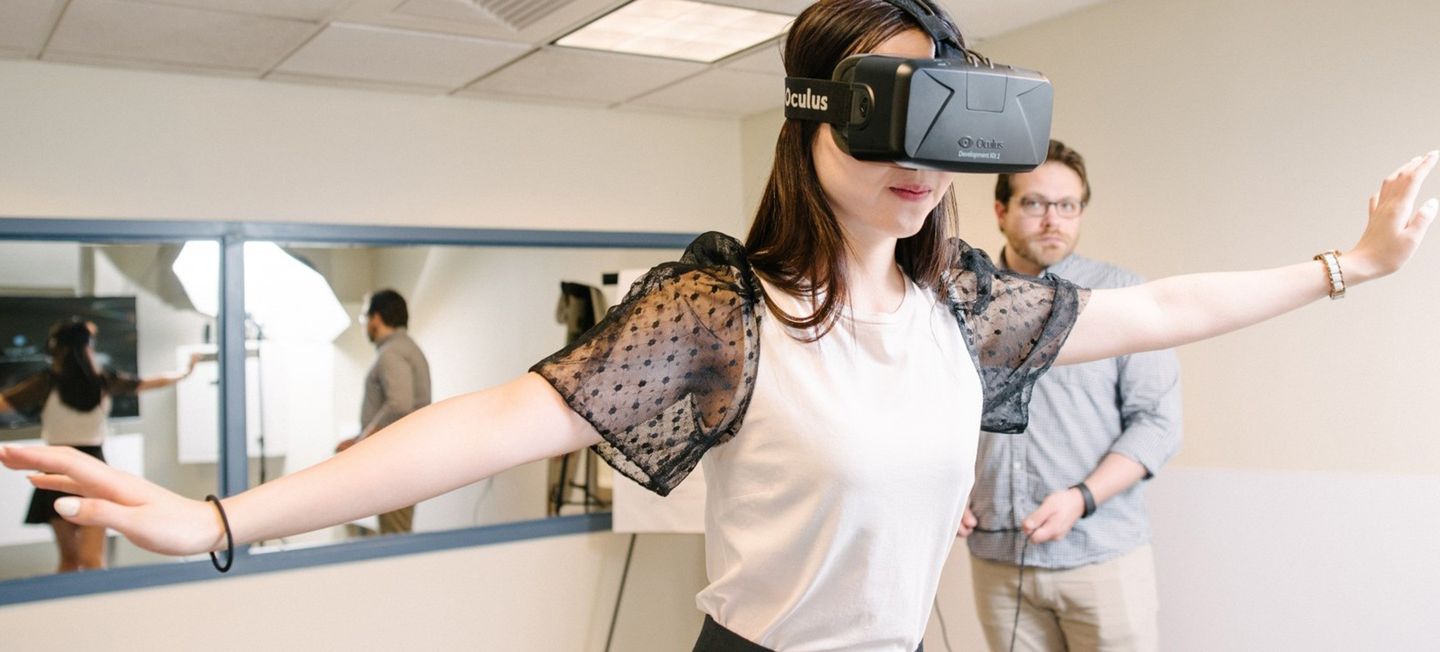
- Immersive Environments: How self-tracking wearables reshape identity, physical embodiment, and privacy negotiation in Virtual Reality (VR).
- Algorithmic Governance: AI ethics in automated news curation, driven by extensive field interviews with national editors.
- Media Psychology + Biometrics: Eye-tracking and biometric analysis mapping partisan cognitive differences during political advertisement processing.
Peer-reviewed conference presentations (ICA)
- Crissman, J. (June 2025). How European Union Media Frames the Challenges of the Artificial Intelligence Act.
- Jia, Y. D., & Wang, Y. (June 2025). Predictors and Effects of Short-Form Video-Induced Procrastination Among College Students.
- Mays, K. & Novozhilova, E. (June 2025). AI Humanizers, Pragmatists, Skeptics: A Cluster Analysis of Normative Attitudes for AI’s Capabilities and Roles.
- Yang, J., Wang-Sun, J., Wang, Y., & Lin, J. (June 2025). Don’t Browse It, Experience It: Spatial Presence Mediated the Effect of 3D Marketing Websites.
- Xu, K., Chen, Y., Li, J., Chan-Olmsted, S., & Liao, T. (June 2025). Tracked but Not Trapped in VR: Negotiating Body Tracking Technologies for Embodiment and Privacy Protection.
Career outcomes + placements
The Ph.D. in Emerging Media Studies prepares graduates for two primary career pathways: faculty appointments at leading universities and research leadership across technology, public policy, healthcare, and industry.
Postdoctoral fellowships: Harvard University, University of Michigan, University of Pennsylvania, Georgetown University, Northeastern University.
Recent alumni placements:
- Higher education: Georgetown University, Renmin University of China, Syracuse University, University of Vermont, Virginia Commonwealth University
- Research labs, technology + policy: Google, Meta Reality Labs, MIT Media Lab, Nielsen, Rafik B. Hariri Institute for Computing and Computational Science & Engineering, Center for Democracy and Technology, University of Virginia Law School’s Legal Data Lab
- Government, public policy + global organizations: National Institutes of Health (NIH), National Science Foundation (NSF), United Nations Development Programme (UNDP), Organization for Social Media Safety
- Roles: Assistant Professor, Research Scientist, Research Consultant, AI Researcher, AI Ethics Leader, Data Insights Director, Senior UX Researcher, Technology Policy Analyst
Graduates advance research and innovation in AI, digital media, technology policy, user experience, public health communication, and the societal impacts of emerging technologies at universities, research institutes, technology companies, and mission-driven organizations around the world.
Whether they pursue academic scholarship or applied research, graduates help shape the future of communication by advancing knowledge about emerging media, technology, and society.
“The doctoral program provided me with strong training in both theory and research methods. But perhaps more importantly, EMS showed me the importance of a respectful, collaborative, and kind learning community. I consistently felt supported, encouraged, and heard by the faculty and my peers.”
—Dr. Sarah Krongard, Alumna | Vice President of Programs, Organization for Social Media Safety

Led by innovative faculty
Our faculty are helping define one of communication’s fastest-evolving fields. Their research explores AI, human-computer interaction, digital trust, online communities, media psychology, and the societal impact of emerging technologies—contributing new knowledge that informs scholarship, industry, and public policy.
Throughout the program, you’ll work closely with faculty mentors on collaborative research, publications, conference presentations, grant-funded projects, and dissertation development.
A few examples of what our faculty are investigating right now:
Dr. Joan Donovan founded the Critical Internet Studies Institute to develop and test disinformation countermeasures, and has advised Congress on networked incitement and platform manipulation.
Dr. James Katz co-created the Robot Rights and Responsibilities Scale – the field’s first empirical metric quantifying global public support for granting automated systems civil rights.
Dr. James Cummings runs immersive lab studies tracking how VR spatial presence and smartphone task-switching influence empathy and persuasion, with implications for XR storytelling and design.
Dr. Ayse Lokmanoglu investigates how extremist ideologies spread online through state and nonstate actors, with research funding from the Global Network on Extremism and Technology (GNET) and the National Institute of Justice (NIJ).


Research opportunities in Boston
Boston is home to one of the world’s leading research ecosystems, bringing together universities, hospitals, technology companies, startups, and policy organizations. For doctoral students, that means exceptional opportunities to collaborate across disciplines, build research partnerships, and engage with scholars investigating the biggest questions in technology, communication, and society.
Common questions about the PhD in Emerging Media Studies
Do I need a master’s degree to apply to the Ph.D. program?
Yes. The Ph.D. in Emerging Media Studies is specifically designed for students who already hold a master’s degree, typically in communication, media studies, sociology, psychology, data science, or a closely related field.
Is the program fully funded?
Yes. All admitted doctoral students are awarded up to five years of funding that covers tuition, mandatory fees, and health insurance, alongside an annual stipend provided through graduate research or teaching fellowships.
How large are the cohorts?
Cohorts are kept intentionally small—typically limited to three or four students per year. This highly selective environment ensures close faculty mentorship, direct co-authorship opportunities, and deeply collaborative lab space.
What career paths do graduates pursue?
Our Ph.D. alumni hold placements across two major paths. Many secure tenure-track faculty appointments and postdoctoral fellowships at major research universities globally. Others move directly into research leadership positions, heading user experience (UX) research teams, data science divisions, and policy evaluation units for major tech platforms, think tanks, and global consulting firms.
What kinds of research topics do PhD students study?
Research topics span the entire lifecycle of human-centered tech: artificial intelligence, algorithmic platform governance, virtual and augmented reality metrics, digital politics, misinformation tracking, media psychology, human-computer interaction, and other emerging technologies shaping communication and society.
When is the next application cycle?
Please request information to be notified when the next cycle opens.


