
The EdM in Deaf Education prepares deaf educators using a multilingual ASL/English approach. This master’s program in Deaf Education offers three concentrations to students interested in Deaf Studies and Deaf Education: Deaf Education licensure; Dual licensure with early childhood education or special education (teaching students with severe disabilities); and research, advocacy, and leadership (non-licensure).
Whichever you concentration you choose, you’ll develop a strong foundation to support the learning and growth of Deaf children.
Program Pathways and Field Experiences
The Deaf Education master’s (EdM in Deaf Education) program can be taken fully in-person or in a hybrid format that allows students to take courses synchronously. However, there are required in-person components to the licensure tracks. Students can enroll either full- or part-time.
Deaf Education, licensure
Earn an initial Massachusetts teaching license in Deaf Education (PreK–12). Typically takes two years + one summer to complete.
Dual Licensure with Early Childhood Education or Special Education
Earn a dual license in Deaf Education with either Early Childhood Education (PreK–12) or Teaching Students with Severe Disabilities (ages 3-23). Typically takes two years + one summer to complete.
Research, Leadership, and Advocacy (non-licensure)
Focus on research, advocacy, or leadership roles within Deaf Studies and Deaf Education. This option does not lead to teaching licensure and may be completed in one academic year. Note: Students applying for Fall 2025 who are interested in the EdM in Deaf Education, specialization in Research, Leadership & Advocacy should apply for the Language & Literacy Education EdM, specialization in ASL & Deaf Studies.
Field-Based Experiences
Each semester, students in the master’s in Deaf Education have the opportunity to immerse themselves in a classroom in a different deaf school, for a total of five unique field experiences.
“I knew that pursuing my graduate degree here would not just prepare me professionally, but also empower me personally to become the kind of teacher who makes a lasting difference. I will always be grateful to BU Wheelock for providing the mentorship, training, and vision that helped me turn my passion into a clear, purposeful career.”

Career Outcomes in Deaf Education
Work toward an educational systems where all deaf children have access to language and the opportunity to thrive. After completing the EdM in Deaf Education, you’ll have the skills to:
- Demonstrate strong knowledge in areas relevant to Deaf Education
- Assess student learning and progress, adapt instruction, and provide constructive feedback
- Communicate professionally and collaborate effectively with families, caregivers, and community organizations
- Reflect and improve on teaching, advocacy, and leadership
Join Alumni in a Rewarding Career in Deaf Studies or Deaf Education
Graduates of our MA in Leadership, Policy, and Advocacy for Early Childhood Well-Being utilize their knowledge and skills in early childhood education, policy, leadership, or research in a variety of professions. BU Wheelock alumni go to to roles such as:
- Teachers at bilingual schools for deaf children
- Principals and directors at deaf schools
- Visual storytellers
- Advocate
“The practicum-based experience and language study was an incredible experience. The theory and support, as well as relationships built with the cohort, will stick with me as I try to help my students learn in the most effective way.”

Featured Faculty
When considering deaf education master’s programs, it’s important to look at the interests and experience of the faculty. Half of the Deaf Education faculty at BU Wheelock are deaf, and all are fluent in ASL. They conduct cutting-edge research on sign language acquisition, have developed some of the best curricula in deaf education, and have created some of the most widely viewed ASL literary works in the world.
-

Andrew R. Bottoms
Program Director, Deaf Studies
Senior Lecturer -

Naomi Caselli
Director, BU AI & Education Initiative
Director, BU Deaf Center
Associate Professor -

Todd Czubek
Senior Lecturer
-

Emily Glenn-Smith
Lecturer
-

Franklin Jones, Jr.
Lecturer
-

Amy M. Lieberman
Director, Doctoral Studies
Associate Professor -
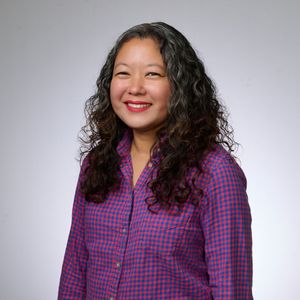
Anna Lim
Lecturer
Deaf Education Courses
Core courses in the master’s in Deaf Education include introductions to Deaf Education and to research. In addition to those courses, you’ll take classes in your concentration of choice on topics like:
This concentration includes a blend of required courses, electives, and a practicum. Required courses cover topics such as instructional methods, ASL literature, and elementary math. In addition, you’ll choose from electives such as:
- Disability Studies and Deaf Education
- Sign Language Structure
- Teaching English Language Learners
- Language Acquisition in Deaf Children
This concentration includes completing all the requirements for Deaf Education (licensure) as well as the requirements for the early childhood education or special education licensure. In addition, you’ll choose from additional courses, depending on which dual licensure you are pursuing.
- Topics in Child Development and Education
- Language Acquisition in Deaf Children
- Severe Disabilities: Assessment and Instruction
- Disability Studies and Deaf Education
This non-licensure concentration includes a variety of elective courses, such as:
- Social Psychology and the Deaf World
- Sign Language Structure
- Teaching ASL as a First Language
Scholarships Available
Ready to begin your Deaf Education master’s (EdM in Deaf Education)? Don’t let questions of funding hold you back. At Boston University, merit-based scholarships are available to graduate students.
Admissions & Dates
Fall 2026 Semester
Aug 15, 2025
Application Opens
Fall 2026 Semester
July 1, 2026
International Applicant Deadline
Fall 2026 Semester
Aug 1, 2026
Application Closes
Connect with BU Wheelock to learn more about the EdM in Deaf Education. Learn about application requirements and deadlines, sign up for an information session, or start your application today.