CPT Today
CPT Today is the blog of The Center for Practical Theology. Here you’ll find posts under the categories of Book Reviews, News and Events, Opportunities, Perspectives, Practical Theology Profiles, and Research Reflections. Interested in submitting? Please see our submission guidelines and feel free to be in touch with cpt@bu.edu with any questions!
Mid-term Voting Open for Members of the Association of Practical Theology
If you are a member of the Association of Practical Theology, take a moment to head to http://practicaltheology.bmeurl.co/8BD4682 to vote for Dr. Yara González-Justiniano (STH Practical Theology '19) for Secretary-Treasurer and Karen Mosby for Graduate Student/Member-At-Large! The membership is allowed to summit their vote for up to 30 days.
Congratulations, Graduates!
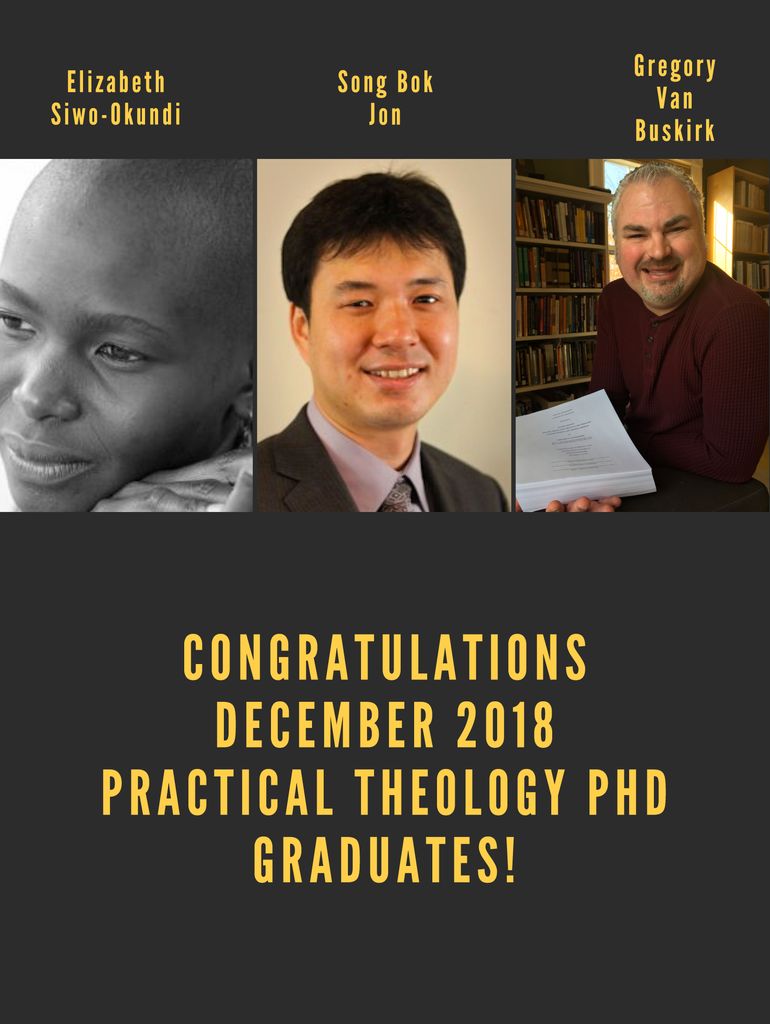
As the academic year begins to wind down, we are excited to celebrate students who completed their doctorates in Practical Theology in December 2018, as well as those who will graduate in just a few weeks. Please join us in celebrating December 2018 graduates Drs. Song Bok Jon, Gregory P. Van Buskirk, and Elizabeth Siwo-Okundi!
Dr. Song Bok Jon: “A Wesleyan Theology of Law and Gospel for Narrative Preaching"
Creative Callings Innovation Hub Teams Gather at the School of Theology
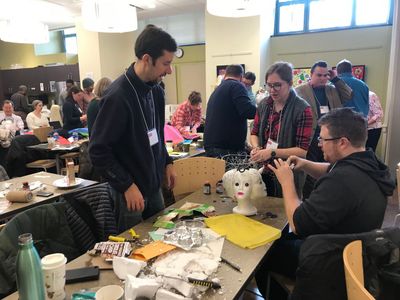
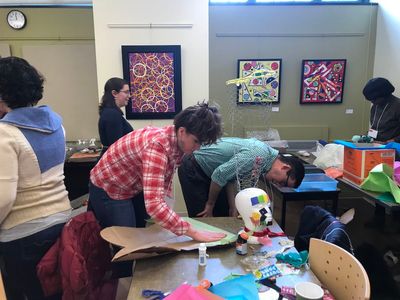
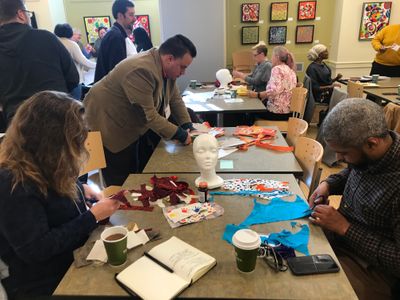
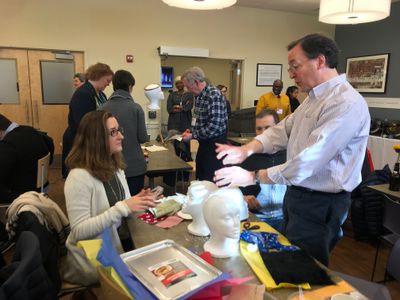
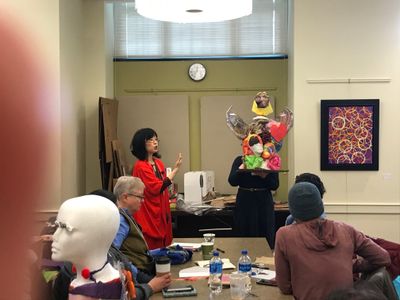
On February 2, the thirteen Creative Callings congregational teams gathered at the School of Theology for the second "all-hub" gathering as part of the first year of the Creative Callings Innovation Hub. Through structured workshops and informal conversations, teams surfaced the questions enlivening their congregational life together and discussed future questions, ministry opportunities, and possibilities for connecting more deeply with and in their communities.
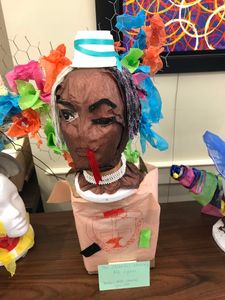
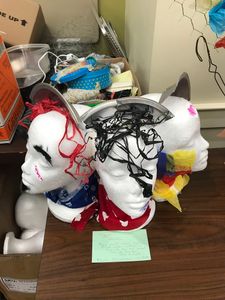
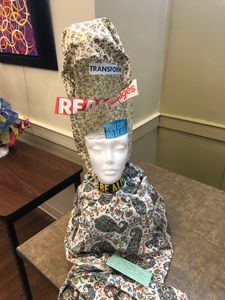
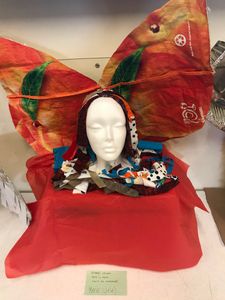
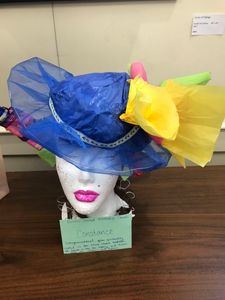
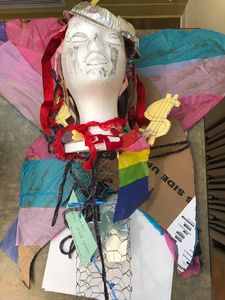
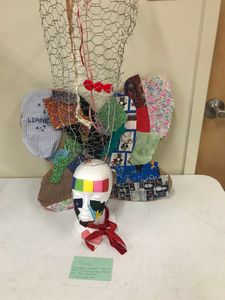
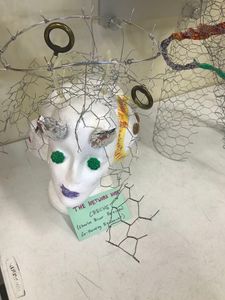
Creative Callings Leadership Team faculty Dr. Courtney Goto began the gathering with the workshop "What is the 'Angel' of Your Congregation?" Drawing from Dr. Walter Wink's essay "The Angel of your Congregation," teams reflected on how envisioning the "angel" of their congregation generated reflections on the hopes, challenges, and questions with which congregations are wrestling. Teams designed and constructed mixed media sculptures portraying the angels of their congregation (pictured below).












Dr. Stephanie Arel organizes Syndicate Symposium
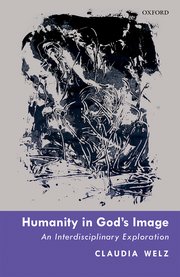
Dr. Stephanie Arel (STH Practical Theology '14), an Andrew W. Mellon Postdoctoral Fellow at the National September 11 Memorial and Museum, recently curated a Syndicate Network Symposium engaging Humanity in God's Image: An Interdisciplinary Exploration by Claudia Welz. Arel introduced Welz's work, highlighting Welz's approach to dignity. Arel writes,"In Humanity in God’s Image: An Interdisciplinary Exploration, Claudia Welz interprets the theological notion of the imago Dei. She does this with innovation and grace, leading the reader through a multidimensional interpretation of what it means to be made in God’s image. Designed in a four-part sequence, Welz’s book questions not only how the state of being a reflection of God affects humanity but also how this reflection influences the perception of God." Respondents include:
- Melissa Raphael: "Was Woman Created in the Image of God, or Did God, in Genesis 2, Create the World’s First Idol?"
- Jeffrey Bloechel: "Philosophical Supplement to a Theory of Christomorphism"
- Jennifer Geddes: "Questions about Humanity in God’s Image"
- Andrew Benjamin: "The Presence of Dignity"
- Shelly Rambo: "Christaethics"
We invite you to view the full conversation on Syndicate.
AAR Call for Papers Announced
 The Annual Meeting of the American Academy of Religion will be held in San Diego November 23-26, 2019. The full Call for Proposals is available online, as well as in pdf form here. Proposals are due March 4, 2019! A few units of interest are included here, and all units can be viewed here.
Practical Theology Unit: This Unit engages practical theology and religious practice, reflects critically on religious traditions and practices, and explores issues in particular subdisciplines of practical theology and ministry.
We invite individual paper or set panel proposals on the two following topics:
● American theologian Mary McClintock Fulkerson's book Places of Redemption was a leading example in theological engagement with ethnography, pushing studies of ecclesial practices to be at the same time more robustly empirical and theological. She disrupts traditional modes of doing theological work by starting from "the place of a wound," attending to dynamics of race, gender, ability, and class as part of the lived experience of church, using her work to confront social brokenness and pursuing liberating practices. Further, her insertion of her own presence in the work problematizes the role of the theologian-ethnographer, raising challenging methodological as well as normative theological questions for future work in fields such as practical theology, ecclesiology, social ethics congregational studies, and the social sciences as they engage Christianity. The Practical Theology Committee welcomes papers that explore methodological as well as theoretical and/or substantial implications of her work for these various disciplines, and point to new areas that need to be explored in the future.
● The study and practice of Practical Theology includes the lived experiences of interreligious communities. Interreligious communities include those who are and are not religious and spiritual peoples. Interreligious communities are brought together in various ways, including through dialogue, practice, commitments to justice and peace, and lived experiences of hybridity and fluidity. The Practical Theology Committee invites proposals for papers and presentations centering on the practical theology of interreligious engagement. The committee is particularly interested in presentations discussing ongoing and completed cooperative community projects that bring insight to the discipline of inter-religious practical theology as a burgeoning field of study and meaning making. We welcome papers that explore methodological and theoretical implications for the study of practical theology, as well as substantial implications for inter-religious community engagement. Strategically partnered presentations and papers between scholars and practitioners are highly encouraged.
Ecclesial Practices Unit: Ecclesial Practices provides a collaborative space at the intersection of ethnographic and other qualitative approaches and theological approaches to the study of ecclesial practices.
We invite papers addressing intersectionality in the ethnographic study of ecclesial practices and/or the ethnographic theological interpretation of practice. Intersectionality theory analyzes how social identities are situated within dynamic matrices of oppression and privilege, constituted by ideological, economic, and political systems of power. Papers may reflect research employing intersectional analytic frameworks methodologically and/or research that deploys intersectionality theory interpretively, particularly to address categories such as power, race, ethnicity, class, gender, sexuality, age, or physical ability in relation to the field of study. We welcome papers addressing how intersectionality provides both the analytic tools for understanding contexts of Christian practices (such as worship, preaching, justice, congregational care, mission, etc.) and the ethical commitments toward which such practice might be aimed. We are also interested in how theological inquiry may enrich, challenge, or even controvert the prevailing conventions of intersectional theory. Nancy Ramsay will offer a response to the panel of papers.
● Building on the AAR’s theme focused on “creating, redefining, and expanding spheres of public discourse," we invite papers on San Diego’s Chicano Park and its mural paintings. This multi-unit co-sponsored session will likely be supplemented by a separate tour to the site. In 1970 Chicano Park emerged through the efforts of community activists responding to the fracture and displacement of Chicanx communities caused by the construction of the Interstate 5 freeway in the barrio of Logan Heights. On this freeway’s pillars, Chicano Park displays one of the largest assemblages of public murals in North America, inspired by Chicanx history. In 2018, the San Diego Tribune described the space as a “battleground” for cultural identity between right wing groups waving American flags and Chicanx groups waving flags of Aztlan. We welcome papers from multiple disciplinary vantage points. We are particularly interested in proposals that take an ecological approach by engaging both the manner in which the contested space informs religious/spiritual identities and practices and the manner in which Chicanx spiritualities have influenced this built environment. Likely co-sponsors include the following Units: Religion and Cities; Religions in the Latin Americas; Native Traditions in the Americas; Latina/o Religion, Culture and Society; Anthropology of Religion; Religion, Memory, History; Ecclesial Practices; and Latina/o and Latin American Biblical Interpretation (SBL).
Ecclesiological Investigations Unit: This Unit is a part of the Ecclesiological Investigations International Research Network, which seeks to serve as a hub for national and international collaboration in ecclesiology, drawing together other groups and networks, initiating research ventures, providing administrative support, as well as acting as a facilitator to support conversations, research, and education in this field.
Call for Papers:
● Joint Declaration on the Doctrine of Justification: Impact and Reception -
2019 marks the 20th anniversary of the Joint Declaration on the Doctrine of Justification (JDDJ) by the Lutheran World Federation and the Roman Catholic Church. With the World Methodist Council, the World Communion of Reformed Churches, and the Anglican Communion affirming the JDDJ, this bilateral agreement has now developed into a multilateral document. The JDDJ opened new ecumenical horizons, but has not led to visible structural Unity. It has also raised objections among some Lutheran theologians. In this session, we will consider the impact and the reception of the JDDJ in theological, magisterial, practical, and other terms. We invite papers that focus on JDDJ-related developments on the global, regional and/or local levels from a variety of perspectives (doctrinal, ecumenical, ecclesial, cultural, linguistic, methodological, etc.). One of the questions that could be explored is why the JDDJ has so far not been received (or is not even well-known) by the “local communities.” We are open to papers from scholars who belong to the signatory churches of the JDDJ and who are associated with traditions that have not signed the JDDJ. Such contributions could also examine the JDDJ's impact and reception in the wider ecumenical movement. We are also interested in studies that explore the methodology used in the JDDJ, the “differentiated consensus” it invokes, its impact on more recent dialogues, and its limitations and potential for future ecumenical dialogue, as well as in proposals for how this ecumenical methodology might be developed further.
● Doing Public Theology: Theologians and Theological Academic Institutions in Public Spaces -
In this session, we wish to explore the role of Christian theology and the institutions where it is developed in contributing to public theology. One area of interest here is the theologian as public intellectual, focusing on the personal and vocational consequences of her or his visible public engagement in this discourse. Questions that might be raised include: How do scholars navigate the costs and sacrifices (familial, professional, institutional) of public engagement in the interest of the church? Are churches truly engaged in protecting the role of the scholar in public? How do publicly engaged scholars understand their vocations/callings and sustain them? Do churches and academic/ecclesial-academic institutions provide theologians with the academic freedom necessary for public engagement and are they promoting new generations of theologians who will carry this engagement forward? A second area of interest is how theologians navigate public engagement and ecclesial ties. How does theological education for ecclesial ministry serve the public good? What happens when these types of service come into conflict? What patterns of theological discernment shape wisdom in different public spheres? Are there boundaries around the personal and the professional in the new territory of social media and civic protest? Finally, we are interested in proposals that explore the corporate, ecclesial contribution to public discourse, particularly in a post-truth and highly polarized and divisive context or in the face of shrinking public spaces and creeping authoritarianism globally.
● Crisis in the Church: Patterns of Abuse as Challenge and Opportunity for Reform (For a planned joint-session with the Vatican II Studies Unit) - The sexual abuse of minors and vulnerable adults, both past and present, and related patterns of abuse of power by church leaders who valued the protection of the institution over the needs of victims in country after country point to a systemic failure of church leadership, structures, and practices. Efforts to cover-up the full extent of abuse and misconduct perpetrated by the ministers of the church have given rise to an unprecedented crisis of confidence and sense of betrayal by Christians world-wide, and have profoundly damaged the church’s credibility as a witness to the gospel in the world. What might we learn from the broad history of Christianity, the Second Vatican Council, and the experience of ecumenical partners? What insights might present theology and teaching contribute to a substantial renewal of ecclesiology and to the reform of structures and practices so as to ensure greater accountability and transparency in church governance and in the administration of ecclesiastical justice? Where might the limits of contemporary theology and practice need to be met by new visions, complemented by the resources of the synodal tradition, or by the knowledge of contemporary sciences?
Co-sponsored Session: Christian Spirituality Unit and Contemplative Studies Unit
Call for Papers: Panel on Introducing Contemplative Studies by Louis Komjathy
Psychology, Culture, and Religion Unit: The PCR unit is comprised of scholars and practitioners in the fields of psychology, religious studies, and cultural analysis. The interests of our members range from Freudian and Jungian psychoanalysis to the practice of pastoral counseling, from object relations theory to cultural studies of trauma and healing. Our primary purposes are to foster creative research, encourage the exchange of ideas among the membership, and provide a forum within the AAR for people with shared backgrounds in the interdisciplinary study of psychology, religion, and culture. Please visit our Website at http://pcr-aar.org/ and join the PCR listserv at http://aarlists.org/listinfo/psychculturereligion.
The PCR Unit is comprised of scholars and practitioners in the fields of psychology, religious studies, and cultural analysis. The interests of our members range from Freudian and Jungian psychoanalysis to the practice of pastoral counseling, from object relations theory to cultural studies of trauma and healing. Our primary purposes are to foster creative research, encourage the exchange of ideas among the membership, and provide a forum within the AAR for people with shared backgrounds in the interdisciplinary study of psychology, religion, and culture.
● Psychological Interiority of Resistance -
This session explores the psychological dynamics, personal, professional, and social consequences that instructors and professors at all career stages experience when they address contested topics through teaching, research, and public engagement. We invite submissions that explore the inner experience and social consequences of engaging race, class, gender, sexuality, etc. in the classroom and beyond, especially when these perspectives may prove threatening, compromising, or hold social and political implications for the scholar. For example, what happens when a scholar who identifies as a racial/ ethnic/ sexual/ political/ ideological minority expresses their commitments in an institutional culture that is overwhelmingly opposed to these views? What is the resulting social experience? What is at stake psychologically, and what internal/external resources sustain teachers and scholars in their resolve? We are interested in papers that prioritize personal experience in conversation with religious and psychological theories and frameworks.
● Experimental Session on Psychologies of Religions: Decentering Christian and Jewish Models of Psychological Wellness - In the fields of psychology and religion, pastoral counseling, and spiritual care, Christian and Jewish paradigms of psychological illness and well-being have long dominated the discussion. This session seeks to foster a conversation that de-centers these dominant frames to explore notion of psychological (emotional, cognitive, behavioral, relational, communal) illness and wellness from the perspective of Hindu, Baha’i, Islamic, Buddhist, Jain, Aboriginal, and other religious frameworks.
● Climate Change Denial: How Religious & Psychological Perspectives May Expand Understanding and Foster Change - Americans remain polarized in their attitudes about global climate change. As many as 40% still deny its reality. Professional organizations in both religion and psychology are taking steps to understand and mitigate the problem of “climate change denial” that continues despite nearly universal scientific consensus on the problem. For more than 30 years theologians and scholars of religion have sustained a body of work on ecology and religion, work that explores the religious understandings of natural and built worlds. More recently psychological organizations and theorists in the Americas and Australia have taken up psychological questions about global climate change exploring risks, interpersonal and intergroup behaviors, psychological barriers, and coping mechanisms, among other topics. This call invites papers that explore the intersection of psychology and religion as they inform understandings of the endurance of climate change itself, explore the religious and psychological commitments that persist in denial of global climate change, and/or offer solutions for fostering healing and change for the planet and its inhabitants.
Church Planting in Post-Christian Soil: Theology and Practice (Homiletic Book Review)
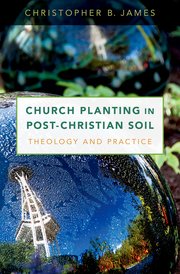
Nelson Cowan, a doctoral candidate in Liturgical Studies at BU School of Theology, recently reviewed Church Planting in Post-Christian Soil: Theology and Practice by STH Practical Theology alum Dr. Christopher James. Please see the beginning of Cowan's review below and visit the Homiletics website for the full review
Homiletic is a scholarly forum in homiletics and a review of publications in religious communication. It is a freely accessible, peer-reviewed journal. Homiletic is sponsored by the Academy of Homiletics.
Christopher B. James. Church Planting in Post-Christian Soil: Theology and Practice. New
York: Oxford University Press, 2018. 368 pages. $34.95.
Review Excerpt
Forecasts of church decline coupled with the rise of the “nones” and the “spiritual, but not religious” are commonplace as concerned pastors, leaders, and parishioners lament the future of U.S. Christianity. However, practical theologian Christopher B. James offers a glimpse of ecclesial hope and rebirth in the midst of such funereal predictions. A revised and expanded version of his doctoral dissertation at Boston University, Church Planting in Post-Christian Soil: Theology and Practice is a mixed-method, qualitative and practical ecclesiological analysis of Seattle new church-starts founded since January 1, 2001 and active through 2014 (243). More
Dr. Kathleen Cahalan presents the Center for Practical Theology’s Eleventh Annual Lecture

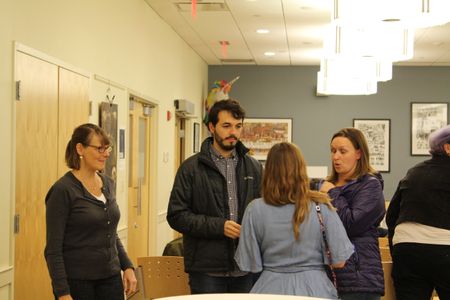
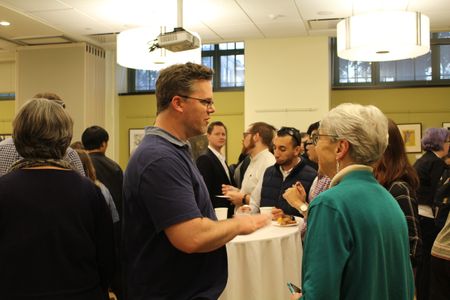
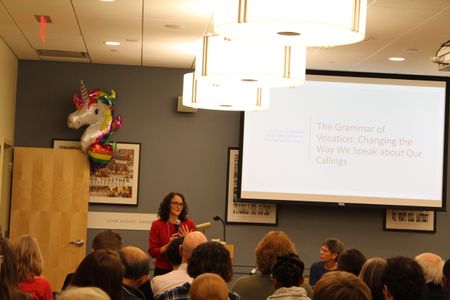
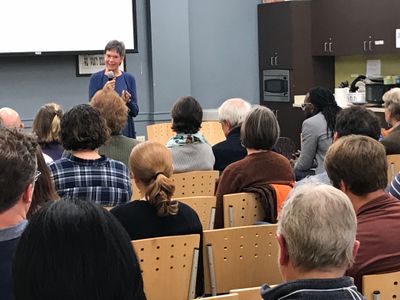
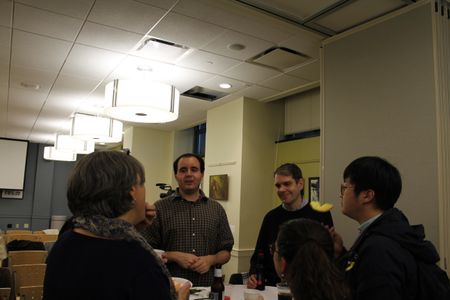
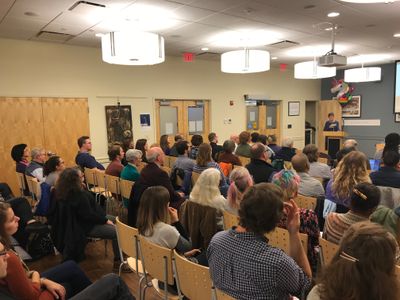
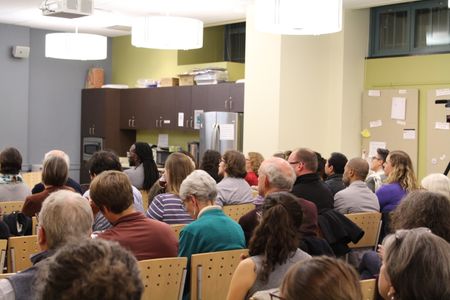
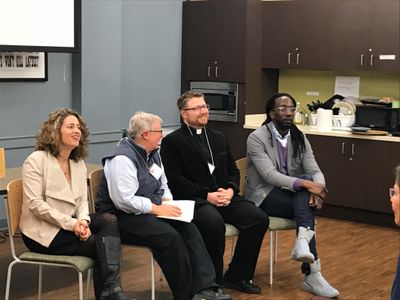
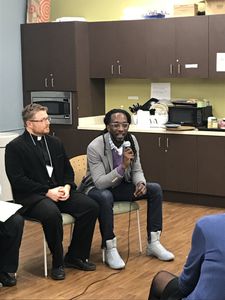
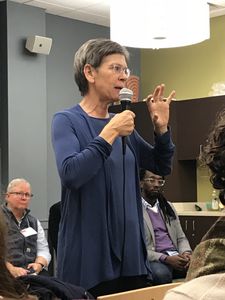
We were thrilled to welcome Dr. Kathleen Cahalan to the School of Theology on October 24, 2018, to give the Center for Practical Theology's Eleventh Annual Lecture. Dr. Cahalan presented the "The Grammar of Vocation: Changing the Way We Talk about Our Callings," and Creative Callings Innovation Hub pastors Rev. Laura Ruth Jarrett (Hope Central Church), Rev. Isaac Everett (CRECHE), Rev. Dr. Jay Williams (Union United Methodist Church), and Creative Callings Project Coordinator Rev. Kathryn House responded to Dr. Cahalan's lecture.
We were pleased to welcome our colleagues from BU School of Theology, Boston Theological Institute schools, and from the greater Boston community. A YouTube video of the lecture is available here. We are so grateful to Dr. Cahalan and respondents for sharing their insights with us. Special thanks also go to Paige Holaday, Sam Dubbelman, and Maggie Ward for their help with logistics, photos, technology, and many other details that made the night an excellent one! We hope you enjoy these photos from the evening.









Dr. Courtney Goto publishes ‘Taking on Practical Theology: The Idolization of Context and the Hope of Community’
 Congratulations to Dr. Courtney Goto on her recently published Taking on Practical Theology: The Idolization of Context and the Hope of Community. Published with Brill, in Taking on Practical Theology, Dr. Goto "explores the regnant paradigm that shapes knowledge production and that preserves power, privilege, and historic communal injury even as scholars intend to enlighten and transform communities." Congratulations, Dr. Goto!
Personal Money Management Seminar presented by Ted Daniels

The Center for Practical Theology and Boston University School of Theology are pleased to welcome Mr. Ted Daniels, President of the Society for Financial Education and Professional Development, Inc. (SFEPD), to lead a Personal Money Management Seminar. The seminar will be held in the School of Theology Community Center (B23/24) on Monday, November 5, 2018. Pizza and drinks will be served at 12pm, and the seminar will be presented between 12:30-2pm. Please RSVP to cpt@bu.edu, and we hope many of you can join for this valuable opportunity! The seminar is sponsored by the TD Charitable Foundation, and is presented as part of the School of Theology's Economic Challenges Facing Future Ministers initiative.
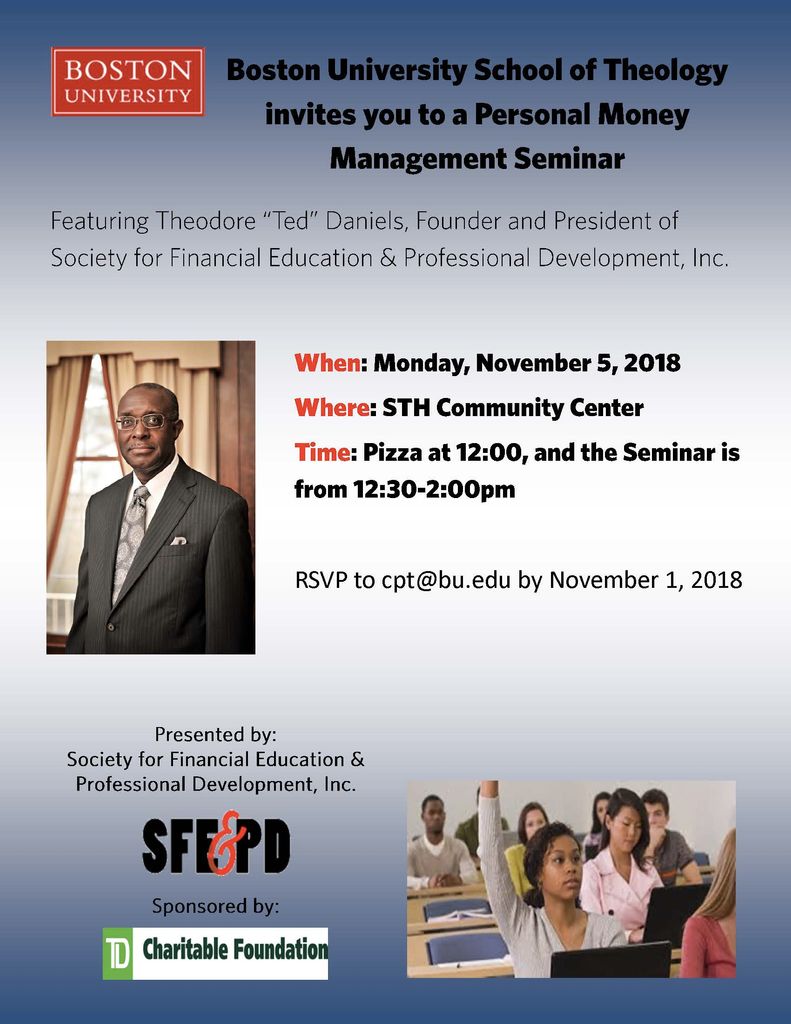
Established 1998, SFEPD is a non-profit organization whose mission is to enhance the level of financial and economic literacy of individuals and households in the United States and to promote professional development at the early stages of career development through mid-level management. Under Mr. Daniels's leadership, SFEPD has become one of the leading financial literacy and professional development organizations in the United States. He has received numerous awards and honors, including the 2009 Chairman's Award for Excellence and Innovation in Financial Education in recognition of his work providing financial literacy training to students of historically black colleges and universities. He also served on the President's Advisory Council on Financial Literacy under Presidents George W. Bush and Barak Obama.
A Look Back: The 2017 CPT Annual Lecture

In 2017, we were thrilled to welcome Dr. Elizabeth Conde-Frazier as the Guest Lecturer for the Tenth Annual Lecture. Dr. Elizabeth Conde-Frazier presented on "Wild Child Practical Theology," and doctoral candidate Yara González-Justiniano and Dr. Rady Roldán-Figueroa, STH Associate Professor of the History of Christianity, responded to Dr. Conde-Frazier's presentation. We were pleased to welcome our colleagues at BU School of Theology, Boston Theological Institute schools, and from the greater Boston community. A YouTube video of the lecture is available here. Thank you to the Brown Lecture fund for their generous support of this event. We are so grateful to Dr. Conde-Frazier, Ms. González-Justiniano, and Dr. Roldán-Figueroa for sharing their insights with us. A slideshow of pictures is included here as well.

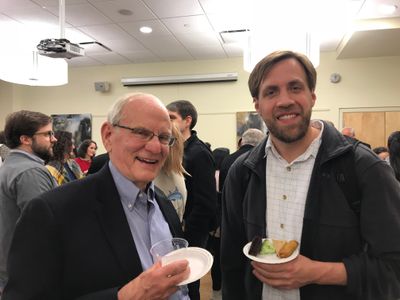


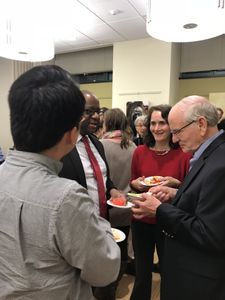


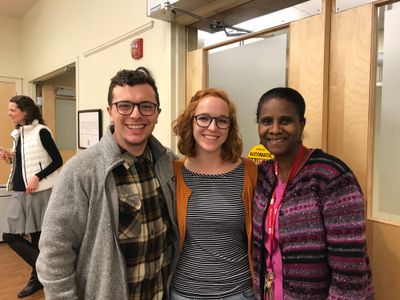

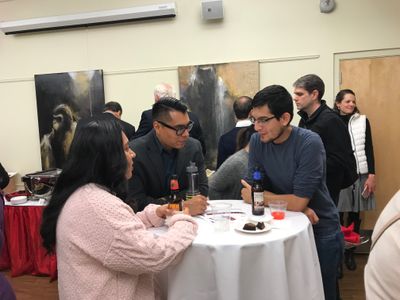
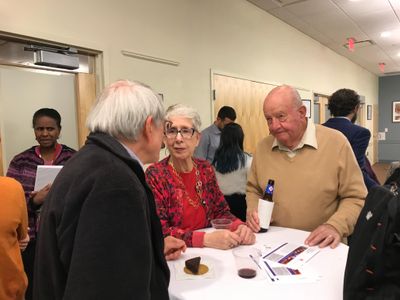


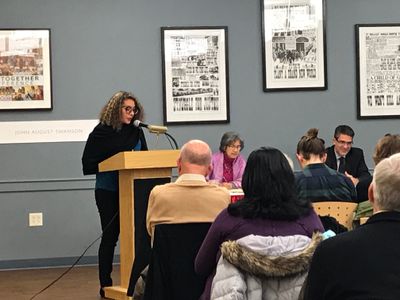

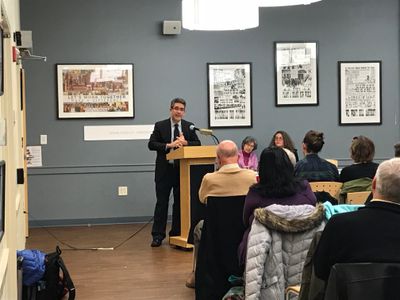

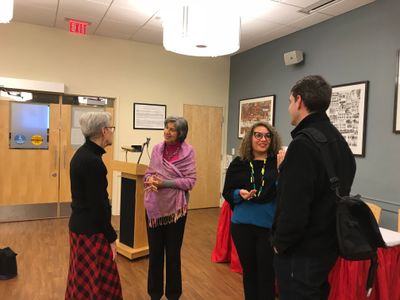

Next Wednesday, we'll welcome Dr. Kathleen Cahalan to present the Center for Practical Theology's 11th Annual Lecture. The lecture will be held in the STH Community Center (B23/24), beginning with a reception at 5.30pm. We look forward to seeing many of you next Wednesday! In anticipation of next week, we hope you'll enjoy this look back at last year's incredible lecture from Dr. Elizabeth Conde-Frazier.