2024 Annual Lecture
On November 13, 2024, Dr. Eunil David Cho, assistant professor at the Boston University School of Theology, joined the Center for Practical Theology as the speaker for the CPT’s 17th Annual Lecture.

Dr. Cho’s lecture titled, “Documenting the Undocumented stories: Migration, Ethnography, and Practical theology,” focused on ethnography as a valuable method in practical theology. He began with a brief historical review about the ethnographic turn in the field of practical theology, followed by a discussion of his own experiences with ethnography and qualitative research that was conducted with undocumented Korean American young adults who are DACA recipients.
In his conclusion, Dr. Cho contemplated the future trajectory of practical theology and proposed three key suggestions for ethnographic research in the discipline: embodying a posture of humility, practicing reflexivity, and engaging interdisciplinarity with the social sciences.
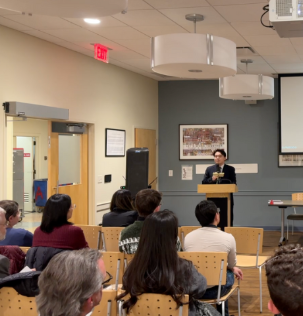
The event was moderated by Dr. Courtney Goto who gave introductions to both Dr. Cho and Linda Kwak, a PhD student in practical theology who served as a respondent to the lecture. The event opened in the Moore Community Center with hors-d’oeuvres, refreshments, and conversation before the formal lecture began.
In her response, Linda Kwak reflected on Dr. Cho’s concluding suggestions offering additional considerations that arise when adopting these approaches. She gave particular attention to how practical theologians can help mitigate harm done when conducting ethnography, for both the researcher and the participants, by being cautious about the potential harm in humility, understanding the pros and cons of insider positionality, and having confidence in our own abilities as pastoral theologians to produce incisive and meaningful scholarship.
The lecture and response were followed by a rich session of Q&A, actively engaged by the faculty and students in attendance, that furthered the conversation of interdisciplinarity and how to sensitively approach research in marginalized contexts.