CPT Today
CPT Today is the blog of The Center for Practical Theology. Here you’ll find posts under the categories of Book Reviews, News and Events, Opportunities, Perspectives, Practical Theology Profiles, and Research Reflections. Interested in submitting? Please see our submission guidelines and feel free to be in touch with cpt@bu.edu with any questions!
The Center for Practical Theology’s Thirteenth Annual Lecture with Dr. Heather Walton
 We were thrilled to welcome University of Glasgow's Dr. Heather Walton to give the Center for Practical Theology’s Thirteenth Annual Lecture on December 4, 2020. Dr. Walton presented “Body and Stone: Practical Theology as Creative Work,” and Boston University School of Theology’s Lecturer in Practical Theology Dr. Callid Keefe-Perry responded to the lecture.
We were pleased to welcome our colleagues from BU School of Theology, Boston Theological Institute schools, and from the greater community. The video is available here. We are so grateful to Dr. Walton for sharing her insights with us.
Below, PhD Student in Practical Theology, Vaughn Nelson, responds to Dr. Walton’s lecture.
By Vaughn Nelson
 As is now (almost) routine, attendees of the 13th Annual Lecture for the Center for Practical Theology gathered virtually on December 4, 2020, to hear from Dr. Heather Walton on the theme “Body and Stone: Practical Theology as Creative Work.” Dr. Walton has contributed deeply to the field of Practical Theology over several decades, and she is currently Professor of Theology and Creative Practice at the University of Glasgow School of Critical Studies. So, she is well positioned to reflect on the present state of practical theology as a discipline.
As Dr. Callid Keefe-Perry, PhD grad and newly appointed lecturer at STH, summarized in his response, Dr. Walton asks us to imagine what might be possible in Practical Theology if we put as much effort in developing aesthetic and creative capacities as we do in learning empirical research methods. What if, she wonders, Johannes van der Ven had declared forty years ago, not (only) that theology must become empirical, but (also) that theology must be creative? To be clear, she does not wish to undo the many gifts that the empirical and social scientific turns have offered Practical Theology, and she also confesses both her own “complicity” in and benefiting from the growing importance of these methods and methodologies. However, she does wish to name a concern that when social scientific enquiry becomes synonymous with Practical Theology, this disguises a move away from doing theology. Even as she wishes for the deconstructive blurring of many boundaries and binaries in the discipline (theory/practice, art/science, primary/secondary theology), she remains quite confident that if we are, in fact, theologians at all, then we have a responsibility to do something with our findings—something theological, creative, constructive.
It so happened that I logged on to Dr. Walton’s lecture while taking a break from the final weekend of writing my term paper in the Practical Theology doctoral seminar. This was, on the one hand, an unfortunate excuse for the always-lurking self-doubt to surface in that crucial final push toward any paper deadline (Am I doing the very things she’s critiquing?). On the other hand, I had method and meta-discipline on my mind, and the lecture and response hinted at the exciting beyond in this field in which I’m being formed—beyond coursework, beyond practical theology’s past and present. I appreciate Dr. Walton’s acknowledgment of the empirical turn’s gifts. Like so many of my fellow doctoral students, I have sought a home in practical theology because of the serious—read: social scientific—attention it gives to practice, experience, lived religion, and the ways this focus resonates with liberative theologies’ priority of praxis as locus theologicus. Yet, I also echo her desire that words like ‘aesthetics,’ ‘creativity,’ and ‘imagination’ be treated with the same seriousness. Listening to Dr. Walton, I was aware of an unexpected tension that has emerged in my second year of this degree: after becoming enchanted with the theological writing of Mayra Rivera in Poetics of the Flesh and Sharon Betcher in Spirit and the Obligation of Social Flesh, it is more difficult than I expected to integrate such enfleshed theology with my “research interests,” to know what to do with theology like theirs in a practical theological mode. I suspect this has much to do with the educational stage in which I find myself, but I am making note that something about the way we celebrate the empirical in practical theology seems to make it just a bit more difficult to locate the place for poetic theory-laden theological writing.
Fortunately, my new educational home here at STH shares, I sense, Dr. Walton’s hopes. While listening, I thought of my first Teaching Fellow assignment in Dr. Courtney Goto’s “Doing Theology Aesthetically” summer intensive course. Student made creative theological contributions, not only by reflecting on various art activities, but also by reflecting and expressing through such forms. An important question I will carry with me into further theological, teaching, and ministry contexts is, “What can a particular aesthetic experience say, theologically, that words cannot?” I also had in mind Dr. David Jacobsen’s passionate insistence in our doctoral seminar that practical theology is, in the end, lest we forget, theology. Dr. Walton would be pleased. Paired together, even just these two notions are challenging and inspiring. Practical Theologians, with all our careful, self-reflexive accounting of experience, ought to have something say—about God, about the world, and about their entanglements—and some things can best be said, or perhaps only be said, through aesthetic expression.
For her part, Dr. Walton attended to the form of her lecture as much as the content. She would speak, she promised, like a good preacher, in three parts—with points and illustrations. Before each part she repeated a variation on a litany that began, “Before I open my mouth to speak . . .” The opening third of her lecture consisted of excerpts from recent journal entries reflecting on her experience of the “troubles” (Donna Haraway) of recent months—time she spent on the east coast of Scotland, since remote teaching allowed such a change of scenery. These reflections then became entry points for critical engagement with the discipline of practical theology as the middle section. Finally, she offered us word images from those journal entries as “pebbles from the beach” where her reflections take place—imaginings of what might be in the beyond of practical theology. In Dr. Walton’s hands, life writing, in this case at least, is less the data she mines for qualitative themes, and more a capacious holder for expressions that do not have an obvious fit in the usual theological or methodological categories. (“Everything can fit in here: emotions are allowed, the body has entry, you can talk to God and to yourself and to others.”) Citing Dr. Claire Wolfteich’s influence, she says that for just this reason, her journals are an emerging source for her theology. Which leads me to wonder not only what this particular form of expression might say, theologically, that other forms cannot, but also what theologically potent forms we have yet to lend our ears, our eyes, or our touch. How might we, practical theologians, be positioned to help name and attend to those forms? Imaginative responses are, I gather, welcome.
Vaughn Nelson is a second-year PhD Student in Practical Theology, studying Religious Education as a source for embodied, liberative, and decolonizing pedagogies for navigating spirituality in (post)secular, pluralist contexts. He draws on liberation and postcolonial theologies, critical theories of disability and embodiment, theories of practices, and theories and research methods from the sociology of religion.
Practical Theology Students to Participate in This Year’s AAR-SBL Annual Meeting
 Due to the ongoing serious threat of Covid-19, this year’s annual joint meeting for the American Academy of Religion and the Society of Biblical Literature will be taking place entirely online. And although the meeting was initially set to take place here in Boston, the virtual nature of this year’s conference will allow what is one of the world’s largest gatherings of theologians and scholars of religion to take place without posing a health risk. The Center for Practical Theology will be well represented this year by a few of our own students, whose paper and session titles are listed below. Please join us in congratulating Dan Hauge, Britta Carlson, and Kate Common!
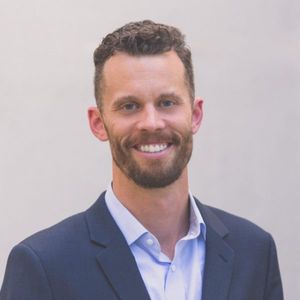
 Daniel Hauge
“Comfortable White Affect as Colonial Practice, and the Oppressive Power of Norms”
Unit: Practical Theology
Theme: Decoloniality, Religious Practices, and Practical Theology
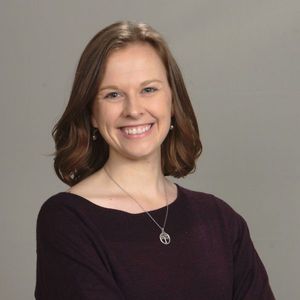 Britta Meiers Carlson
“Striving to be Mainline: White Performativity as a Barrier to Equity and Diversity in U.S. Progressive Christian Denominations”
Unit: Practical Theology
Theme: Decoloniality, Religious Practices, and Practical Theology
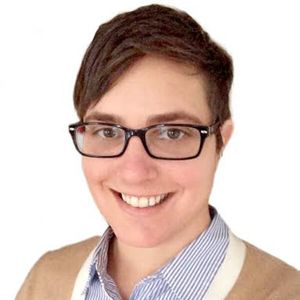 Kathryn Common
Panelist
Unit: Women’s Caucus
Theme: AAR/SBL Women’s Caucus Business Meeting
13th Annual Lecture for the Center for Practical Theology Announced
You are warmly invited to the Center for Practical Theology’s Thirteen Annual Lecture on Friday, December 4th, 2020 at 1pm on the zoom webinar platform. Dr. Heather Walton, Professor Theology and Creative Practice at the University of Glasgow School of Critical Studies, will present on “Body and Stone: Practical Theology as Creative Work.” Callid Keefe-Perry, Lecturer in Practical Theology at Boston University School of Theology, will offer a response following Dr. Walton's lecture. Please use this link to join the webinar. We hope to see you in December!

Creative Callings Innovation Hub Gathers Virtually

On October 3rd, the Creative Callings Innovation Hub gathered over zoom for their biannual meeting. Over 45 people, including lay and ordained leaders from twelve area congregations, BU STH faculty, and students from Dr. Wolfteich’s Vocation, Work, and Faith course, came together to reconnect and to reflect on the challenges and opportunities of discerning and embodying individual and communal vocation over the past 8 months. Through breakout discussions, activities, and worship, the gathering created space for sharing ideas, supporting each other, and asking hard questions.

Thank you to Dr. Claire Wolfteich, Dr. Teddy Hickman- Maynard, Dr. Jonathan Calvillo, Dr. Wanda Stahl, Dr. Courtney Goto, Jennifer Lewis, Cate Nelson, and Jamie Shore for making the event such a success!
The Creative Callings Project is funded by Lilly Endowment Inc. and fosters creative vocational discernment through an Innovation Hub of 12 Mainline Protestant congregation in the Boston area. Follow the link for more information about the Creative Callings Project: https://www.creativecallingsproject.org/project-details.
Welcome, New PhD Students!
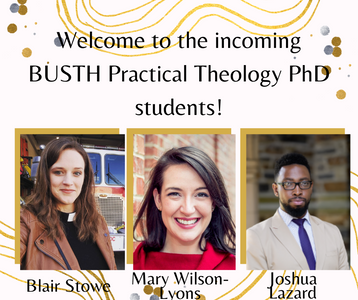
As the School of Theology launches into a new school year, the Center for Practical Theology is delighted to welcome our new PhD in Practical Theology students. Please join us in congratulating Blair Stowe, Mary Wilson-Lyons, and Joshua Lazard as they embark on their studies this year!
Congratulations to Practical Theology Alum, Dr. Julian Gotobed!
 Dr. Julian Gotobed (STH 03', STH 10') has been appointed as the Director of Practical Theology and Mission at the Westcott House in Cambridge, England. Congratulations!
Find more information about Dr. Gotobed's appointment and the Westcott House with the following link: https://www.westcott.cam.ac.uk/appointment-of-director-of-practical-theology-and-mission/
New Book by Visiting Researcher, Gail Cafferata, Featured on Faith & Leadership
“I didn’t know anyone else at that point who had closed a church, because no one in our diocese had done it,” she said. “And then I thought, ‘I wonder if anybody’s ever done a study?’”
This question, according to a recent article shared on Faith & Leadership (a resource for Christian leaders, from Leadership Education at Duke Divinity) prompted Gail Cafferata's newly released book, The Last Pastor: Faithfully Steering a Closing Church. Cafferata, a CPT visiting researcher, brought together her two decades of experience as a sociologist in higher education, with her personal experience as a pastor of a closing church, in order to research and reflect upon the phenomena surrounding the pastoring of closing churches.
The Center for Practical Theology congratulates Cafferata on the release of this book, as well as her feature on Faith & Leadership.
What Is The Point?: My Journey of Meaning Making in Practical Theology

By Farris Blount III, PhD Student in Practical Theology
Our world appears to be in steep decline. The global pandemic has laid bare the existing racial, social, and economic disparities in the United States, exacerbating the conditions in which millions were forced to live with prior to Covid-19. I live in Texas and have observed some troubling local realities as a result of this health crisis – possible evictions in the midst of rampant unemployment and reduced wages and increased exposure to food and “digital” deserts for children.
But what concerns me at a more fundamental, interpersonal level is what seems to be a pervasive lack of regard for human life. Despite data that demonstrates wearing masks can considerably reduce the spread of the virus, countless people have refused to do so. At the extreme, I have seen appalling videos of people coughing on others or engaging in behaviors that put people at risk. And lest we forget, we are also contending with another “pandemic” that has reared its head amid continuing police violence – the pandemic of racial injustice that has not valued Black lives since the beginning of America, often demonstrated through policies and practices that continue to emotionally, spiritually, psychologically, and literally kill African-Americans.
In times like these, I struggle to discern how to respond as a PhD student studying Practical Theology. I wonder, as I see friends advocating for police reform and budget changes or more equitable access to health-care in front of city councils or faith leaders preaching against the inequalities that permeate our culture, what my role in building the “beloved community” is as I spend the majority of my days reading and writing. If I am being honest, I have sometimes felt like I am not doing enough; it feels as if my work has no tangible impact on addressing the social ills of our time.
However, as I began to reflect more deeply on my discipline in this time of quarantine, I realized that it can offer hope and encouragement even in what appear to be hopeless times. In fact, Practical Theology has much to offer in how we must learn to live together as humans if we are to survive not only now but in the years to come.
Practical Theology, from definition to practice, is a collective endeavor. It is a field of study that attempts to describe what is happening in a given communal context in order to make claims about what should happen. It uses theological and sociological tools to understand human experience and chart a path forward in light of that experience. Practical Theology also, according to scholars such as Bonnie Miller-McLemore, is done by multiple persons; for example, believers within a faith community engage in practical theological work alongside pastors and clergy.[1] In Practical Theology, there are no gatekeepers to the work of making sense of our communities, no monopolies on who is allowed to voice their opinions on how our world should be transformed in light of our beliefs in and commitments to God and one another. In other words, Practical Theology’s focus on valuing all human life is inherent in its very DNA.
The discipline’s commitment to community, however, has a unique focus on drawing attention to those issues that prevent all human flourishing. Simply put, there is a branch of Practical Theology that can be considered liberationist. It is rooted in the belief that God is on the side of the oppressed, and Jesus came to liberate those who are on the margins of society.[2] Practical Theology uses this framework of Jesus as liberator to examine the unjust institutions that are causing harm. It applies a critical lens to discriminatory practices and policies in and outside of the church to critique but also to reimagine a world in which people, and Christians in particular, can be more faithful disciples to the call of Jesus to love our neighbors. It challenges us to consider that until all people are able to live free of fear of retaliation or violence, we have work to do.
In its commitment to liberation, Practical Theology makes the implicit statement that there is something wrong in how we often engage one another. When we value profits over people, mandating that businesses reopen in the midst of a pandemic without enough personal protective equipment to support those on the frontlines, something is wrong. When we demand that states rescind “stay-at-home” orders without adequately accounting for the disproportionate number of African-Americans that are suffering and dying from the coronavirus, something is wrong.
This particular understanding of Practical Theology has helped me process my role in this current pandemic and beyond. I do not have the exact response we each should have– speaking out against that which harms is exhausting, and people often have to self-reflect on their own level of commitment to establishing a more just society in the face of competing priorities. However, I do recognize that I have tools to examine critically why politicians are advocating for state re-openings despite the thousands of Black and Brown people who are at extreme risk of contracting a life-altering virus. I realize, through the foundational work of practical theologians such as Dale Andrews, there are supporting resources available as I work with colleagues to assess how our Christian commitments are either being weaponized to support a President whose actions are antithetical to the life of Jesus or utilized to imagine new ways for us to be in authentic and caring relationships with one another.
My journey as a practical theologian is far from over; in fact, it is just beginning. But I take solace in that I have embraced a discipline that provides a framework to question that which is in order to imagine what might be.
[1] Bonnie Miller-McLemore, ed., The Wiley Blackwell Companion to Practical Theology, (Indianapolis: Wiley Blackwell, 2014).
[2] Dale P. Andrews and Robert London Smith, Jr., Black Practical Theology (Waco: Baylor University Press, 2015).
Ministry in the Time of COVID-19: A Conversation with Nikki Young
Last Month, CPT Today Editor, Amy McLaughlin-Sheasby, reached out to Nikki Young to talk about the impact of COVID-19 on her work as a minister in Boston. Nikki just completed her second year in the Practical Theology PhD program at Boston University School of Theology, and also serves in ministry at Union Church.
-------
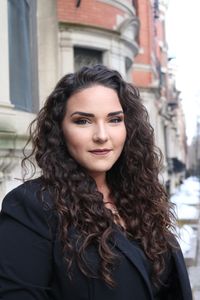 Amy: You are a PhD student in Practical Theology, but you are also a minister at a local congregation, so we are grateful for the opportunity to hear your unique perspective on ministry during this time of crisis. Could you begin by telling us about your church?
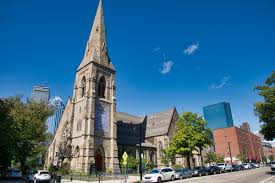
Nikki: Sure. Union is a vibrant faith community in the South End of Boston, that for over two-hundred years has remained committed to justice and liberation. Union is the first historically black United Methodist Church to become reconciling, which happened in the year 2000. The congregation itself emerged out of the struggles of slavery, and has developed and grown over time to be a really strong advocate, particularly in the South End, but also in the Greater Boston area as well. Union is a strong community of dedicated people, who worship in a building that now sits in a gentrified area of Boston, so we find ourselves in a place where our very DNA is multicultural, and incredibly diverse. So, while we stand in this African-American tradition of worship, we are now in a position where this history and tradition informs the way we think about intersectional justice. It’s really important to us, especially as United Methodists at this time. We are deeply committed to sharing stories, hearing stories, and developing new liberative narratives that actually serve as a witness, not only to our denomination, but the world.
Amy: When did you first get involved, and what is your current role?
Nikki: I first became involved at Union as a seminary student in my master’s program. Someone who is currently on the ministerial staff was in my orientation group at the School of Theology, and invited me to attend. So, I started worshiping for a year, did contextual education for the following year, and then was hired on staff shortly after. Now I serve as the Assistant Pastor at Union where I work with our lead pastor, Rev. Dr. Jay Williams, who is an elder in the United Methodist Church.
Amy: One of the reasons I reached out to you for this interview is because I follow your work closely as a friend and colleague, and I have seen you share on social media about how Union is adapting to COVID-19. How would you describe Union’s response to the pandemic, and how has the pandemic impacted your ministry?
Nikki: There’s a phrase that the saints used to say: “We’re gonna love everybody and we’re gonna treat everybody right.” I would say that has been our starting point for all of the ways in which we read scripture, do worship, engage in mission, etc. And I’m saying this particularly aware that the earliest phases of reopening Boston have involved reopening churches. I’m also aware that there have been faith leaders and colleagues here in Boston who have advocated for that to happen. At Union, we understand that people are vulnerable and that we have a responsibility to one another first and foremost, not just as Christians, but as human persons. So for us, it has been incredibly important to think about how we want to adapt in ways that keep people safe while also cultivating a spirit of worship in a new way.
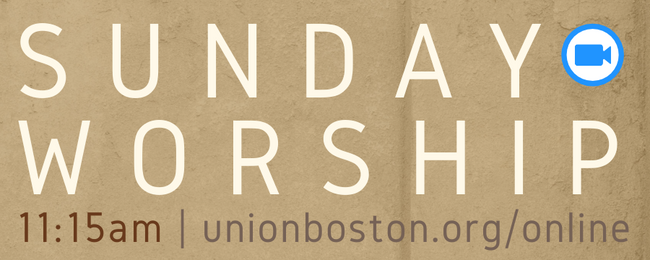
Our plan, first and foremost, is to keep our people safe. We are not interested in returning to “business-as-usual” if it means putting those most vulnerable at risk. Instead, we have begun exploring even more ways to get folx the resources they need to stay healthy, safe, and connected. For us it’s an act of faithfulness to stay closed. We have, and will continue to meet for worship on Zoom for as long as we feel we need to.
Amy: What have you observed about your congregation over the last couple of months as you all have adapted your worship practices, and embraced virtual platforms?
Nikki: One thing that I have observed is the way this situation deeply illuminates that the church is far more than a building. I have also observed how congregants and leaders at Union, whose gifts have not regularly been put to use in church services in the past, are now stepping up and showing out in amazing ways. We have a great team, which includes some people who have been in leadership at Union for years and years, and some who have stepped up to leadership in the last month or two, who see the ways in which technology facilitates meaning-making, purpose, and belonging. This team is working day in and day out to develop elements of the service that are very much in line with Union’s mission and identity. I have also observed that we are learning to adapt wherever we need to adapt. Our songs are not as long. Our sermons sound and look different when we are sitting in front of cameras. But interestingly enough, all the adaptations have revealed new opportunities to lean into our mission. We have far more people attending our online services now than had been gathering in person. It has been teaching us that when we go back to normal life, we are not going to be able to be church the same way as before, because we have seen how doing church online is opening up access to our mission in ways that meeting in person has not.
Amy: It sounds like your core mission at Union has remained consistent, and has largely guided your reactions to the pandemic. But even as you maintain your core mission, has your ecclesiology or understanding of ministry changed or transformed in some way?
Nikki: I think this crisis has served as a catalyst for things that we had already been envisioning. We have had an opportunity over the last several weeks to move in the direction we felt like God was inviting us into. We are under an immense amount of pressure where creativity has to happen, and where we are released for a brief time from all of the mundane, every-day, business-as-usual things that usually take up our time. As a result, we have begun to develop an interconnected web of relationships that are helping to sustain people throughout the week. We are asking questions like, what does it mean to gather in worship? How do we make sure people don’t feel isolated? How do we make sure that not only spiritual needs, but also basic needs are being met? And how do we hold one another accountable? More than ever, this has helped to reaffirm the notion that we are beholden to one another, not only as an act of faithfulness, but as an act of justice, to create actual systems of connection between people.
Amy: Has there been a moment or a distinct interaction that made you think, even in the midst of everything going on, “Yes—this is who the church is called to be in this moment, for this community”?
 Nikki: Yes. Two things come to mind. The first is a very practical, on-the-ground, missional aspect, which is that we have people working in our food pantry, still. Some of our members feel it is so important to be in this food pantry, that they continue to show up to do this work. Our volunteers are quite literally just out grinding every week, making sure people get fed. And this was never questioned, or up for debate. The only question they asked was simply, “Now that we are here, how can we adapt this ministry that we already have so that we are reaching the most amount of people?”
I’m also reminded of Mother’s Day Sunday, which landed on the Sunday just after Ahmaud Arbery’s video came out. It was in the news, there were hashtags, and for our community in particular, it hits not just close to home, but in the body. It became deeply important to tap into our traditions, to look to womanist theology, to listen to music that came from the saints before us, to communally lament on a day when we typically celebrate mothers. All of these activities became important sources of meaning-making, lamenting, and hope-building in the midst of absolute destruction. During the Mother’s Day service, you could see people weeping in their video windows on Zoom. I think it really touched people.
It occurs to me that there is a myth circulating out in the world that church online is somehow less church—like it’s the faux church that we have to do until we can get back to doing real church. But at the end of the day, it is still real human persons connecting to one another. We have to build hope, even as we are socially isolated.
Amy: When we originally scheduled this interview, I had expected to primarily address the impact of COVID-19, but now our nation has catapulted into some important acts of consciousness-raising concerning racism, white supremacy, and police brutality. Given Union’s longstanding dedication to justice in Boston and the broader world, would you like to speak to the present moment? How are you thinking about Union’s dedication to justice, even as we continue to endure this pandemic?
Nikki: On Pentecost Sunday, the Feast of Breath, we opened with a litany of lament. The gospel we proclaim is inextricably bound to a brown, Palestinian-born man who was terrorized and killed by the State. That the world watched as he breathed his last, that some shrugged at this while others wept, and that this Divine made flesh was not so easily loved by the world—we understand this because so many live it. I think, especially as a white pastor situated in a church like Union, the work is not just in condemning police brutality and white supremacy, it is in uprooting the long-lasting Christian theological strongholds that have always been inextricably bound to oppression. Because the Church cannot breathe with the weight of white supremacy on its neck.
Amy: Amen. May you all continue to find ways to live out your mission in this present moment. Thank you for taking the time to share with us at CPT Today.
CPT Co-Director, Courtney Goto, wins BU Metcalf Award for Excellence in Teaching
 Congratulations Dr. Courtney Goto!
The Metcalf Cup and Prize is the highest teaching honor at Boston University. Dr. Goto was nominated by students and vetted by a University team in an extensive process. We are so happy to celebrate alongside Dr. Goto and the rest of the BU STH community.
Read more about the Metcalf Award and ceremony, here.
Read Dr. Goto's profile in BU Today, here.