From COM to Career: Q&A With Victoria Rocha, BS Advertising
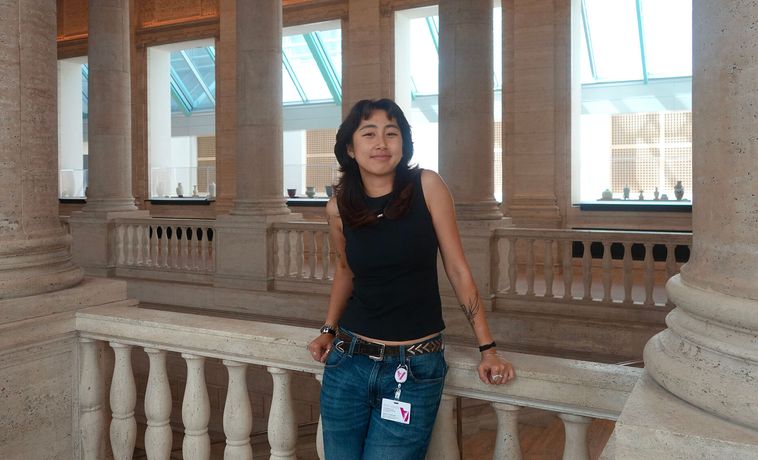
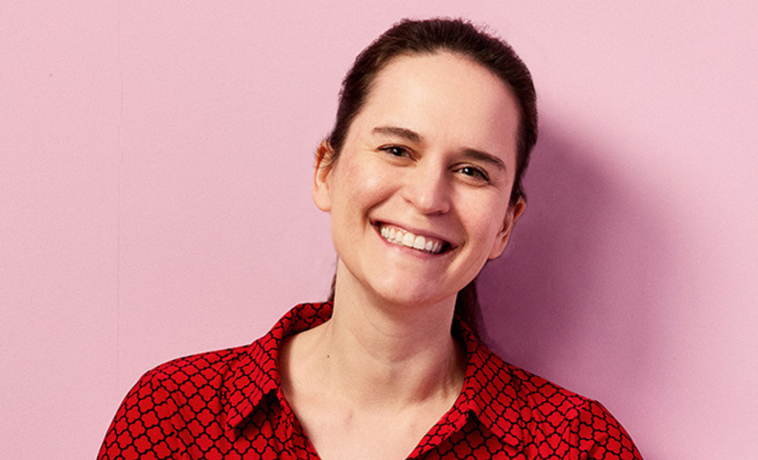
Before she set foot on the Boston University campus, Victoria Rocha knew she wanted a career in advertising. As an undergraduate, Rocha landed an internship with Mullen Lowe with the help of a COM professor with ties at the agency, and after graduation she headed to positions with Hill Holiday, FCB, David and now BBDO New York as an associate creative director. In her career, Rocha’s client list includes Pepsi, Michelob ULTRA, Spotify, Snickers and Clif Bar.
Rocha spoke with COM as part of a series of interviews with recent graduates from Boston University’s College of Communication.
Q&A
With Victoria Rocha
COM: What does an associate creative director do?
Victoria Rocha: I work in the creative department of an ad agency. A lot of my day revolves around thinking conceptually about client problems or any campaign briefings I receive. Initially, I come up with concepts and ideas, like brand platforms. After that, we hopefully get to present those to clients, who hopefully buy into the ideas. Then we go into production, whether it’s an activation or a commercial, for example. Filming a commercial on set is probably one of my favorite parts of the job—it’s really fun.
With my background in art direction, I also do a lot of design, so part of my day is making sure things look exactly how I want them to appear out in the world. Not only do I think about the campaign and big ideas conceptually, but I also consider how to bring these concepts to life visually in a way that makes the idea shine and works at its best. I spend a lot of time in Photoshop these days as well.
COM: You’ve worked at several prominent agencies in a relatively short time. Can you talk about that?
Victoria Rocha: I think I’ve learned a lot from all those experiences, and it’s been great. Personally, I never expected to move around so much, but it just so happened that many great opportunities came my way, whether it was the type of work or the clients.
Now at BBDO, I’m working on Pepsi, which is a huge brand to create campaigns for. I love it—it’s so much fun and feels like big work, which is something I’ve always wanted to do.
Originally, I’m from Brazil, and I think the job turnover there is slower than in the U.S., so that took me some getting used to at first.
COM: Why did you choose Boston University’s College of Communication?
Victoria Rocha: I came to the U.S. during my junior year of high school on an exchange program. I remember a few seniors I looked up to had gotten into BU, so it always felt like a place I could go. It was partly a personal, emotional decision.
But truly, I chose BU because of the advertising program. BU has an incredible communications school and a really strong advertising program. I’d heard so many stories of people from BU doing well in the industry. Since I knew early on that I wanted to work in advertising, it was important to me to pick a school with a good reputation in that major.
I’m so happy with my choice. It was everything I hoped it would be. I had high expectations for the ad major, and BU met them.
I also loved the campus itself and the city. I wanted a city campus, but not a place like New York City, which can be overwhelming at a young age with so much going on. Boston was the right amount of city—it felt lively but calm enough to really focus on school, which was ultimately why I was there.
COM: What was the most memorable part of your time at COM?
Victoria Rocha: So many things stand out. I had several professors who really stuck with me. I also minored in psychology and dance, so balancing those two minors with my major was interesting.
One professor I’ll never forget is the late Christopher Cakebread, who taught my COM 101 class—my very first COM class at BU. That was a really memorable moment, walking into the big auditorium and being captivated by such a passionate and masterful teacher. He was one of the reasons I fell in love with communications. I still get emotional talking about him.
COM: Are there other COM teachers who inspired you?
Victoria Rocha: I stayed in touch with another great professor, Doug Gould. I keep professional relationships close.
He taught a class on writing for advertising—like developing TV spots—and gave me a piece of advice I still use: good ideas should feel like a full hand.
What he meant was that a good idea isn’t just one finger or a palm alone; the concept (the palm) should expand into all the fingers, the different executions of the idea—films, print, activations, radio, PR, branding.
Every day when I’m brainstorming, I think about Doug’s “full hand” example. It helps me make sure ideas are strong conceptually and versatile across platforms.
COM: What specific skills did you gain from COM that later helped you in the real world?
Victoria Rocha: One thing I’m really proud of, and that COM developed in me, is strategic thinking. Even though I went to BU wanting to be a creative, I got a strong background in strategy and a broad view of communications—how agencies work and the advertising world overall.
Strategic thinking taught me how to analyze brands and identify brand problems we could then solve creatively. Many creative solutions come from solid strategic thinking—finding insights and solving problems in interesting ways.
Another class that really helped was the portfolio class. This class put all the classroom theory into practice. Professors gave us briefs to solve, simulating the real world. I still work the same way—receiving briefs and solving problems. The portfolio class was like a pressure test for what I was learning.
So, I’d say strategic thinking and creative problem-solving are key skills I developed, and the portfolio class helped me merge those two.
COM: You mentioned taking classes outside of COM. Can you tell me more about those?
Victoria Rocha: I’ve always been fascinated by psychology. Growing up, I struggled in school because I didn’t understand how my brain worked—having ADHD made things difficult. I was lucky to work with a psychopedagogue – a psychologist specializing in learning disorders and ADHD – who helped me learn how to organize my brain and myself, which made life and academics much easier.
That personal experience sparked my interest in psychology. I knew I didn’t want to be a psychologist, but I wanted to learn more. I was curious. That’s why I chose a psych minor.
It also helped me in advertising, since much of advertising is based on classical conditioning—building associations between a brand and positive feelings or memorable messages. Knowing psychology theories about how the brain creates associations has been invaluable to my career and daily life.
Personally, I also loved understanding more about learning disabilities, which spoke to me on a personal level. I took behavioral and cognitive psychology classes, and understanding how the brain works fascinated me.
COM: Was there a moment in college when you realized you’d chosen the right path?
Victoria Rocha: Honestly, I don’t remember a single defining moment because I pretty much knew what I wanted as a career from the beginning. That certainty was an advantage—I didn’t put pressure on myself trying to figure it out. I picked the right classes from the start—psych minor, strategy classes, portfolio class starting as early as sophomore year. That preparation helped me feel confident I was on the right path throughout college.
COM: What is your one piece of career advice for someone considering a career in communications or advertising?
Victoria Rocha: I have one, and it’s how I got my first job out of college at Hill Holiday: The worst thing that could happen is someone says “no.” It’s not so scary when you put it that way.
When you’re looking for a job, it’s so hard to navigate the market right after graduating. My grandma always told me to not be afraid to just ask. So, I did. I messaged the CCO of Hill Holiday on LinkedIn—I even paid for LinkedIn Premium just to send a longer message. I didn’t go through HR or a more traditional approach; I reached right out to the CCO. The worst response I could get was a “no.” So I wasn’t afraid to ask. If someone says “no”, you try somewhere else or try again later. There is nothing to lose.
So my advice is: Don’t be afraid to ask for the things you want.
COM: Your grandmother would be proud.
Victoria Rocha: Thank you!
This interview has been edited for clarity and brevity.